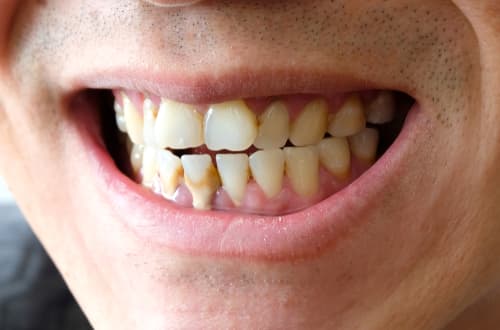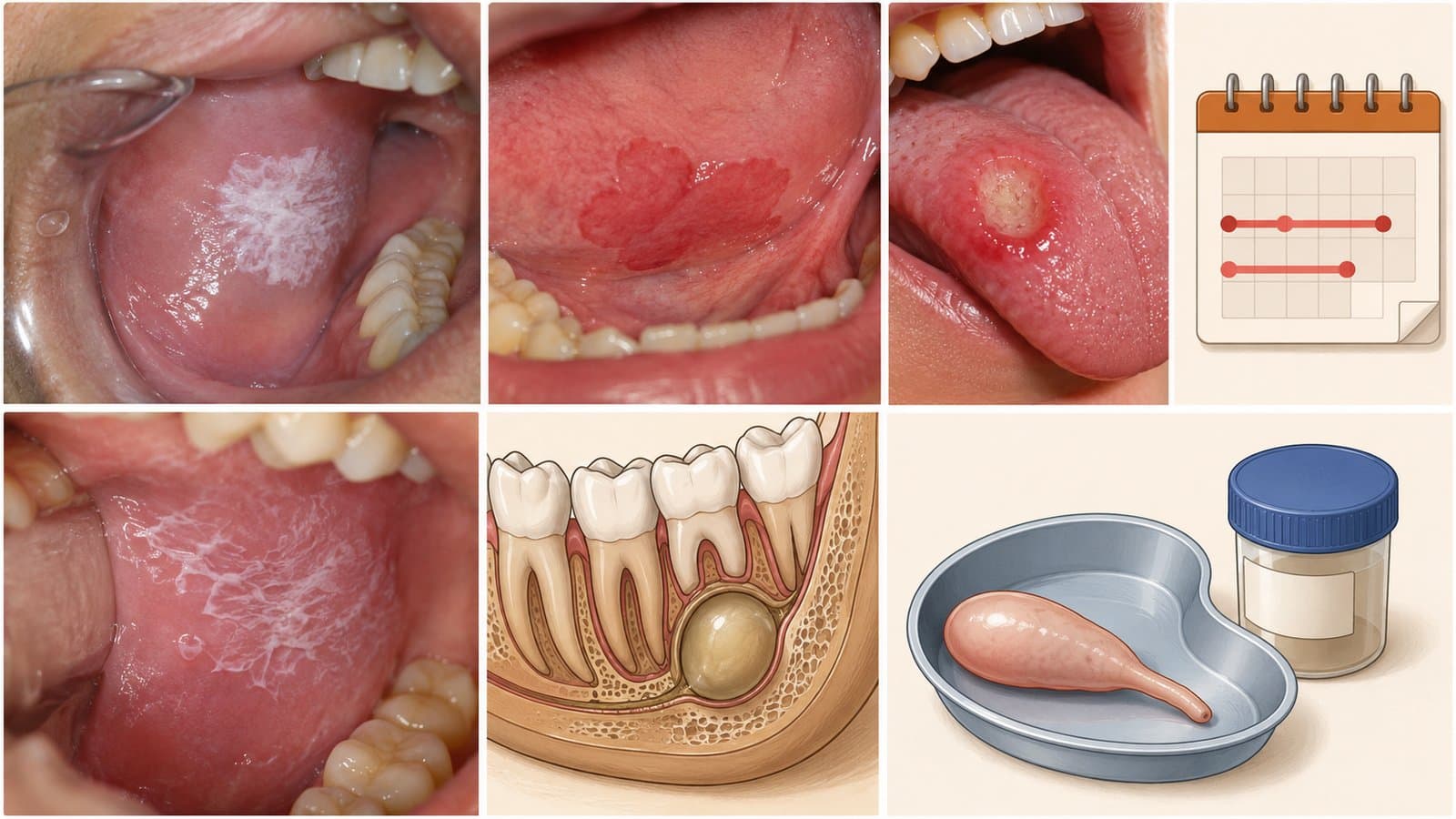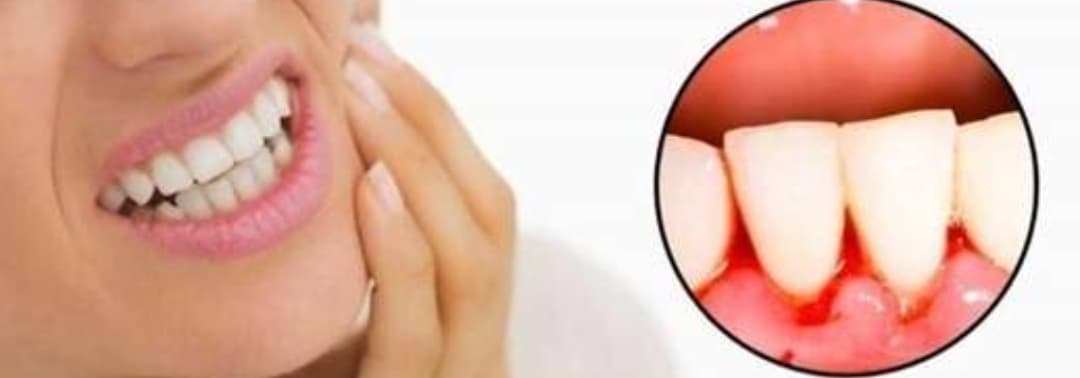
Gum bleeding is not just a common occurrence, but also a warning sign of potential periodontitis. By delving deeper into the reasons behind gum bleeding, we can uncover the hidden health information behind this symptom. Caught early, bleeding at the gingivitis stage can be fully reversed and periodontitis can be effectively controlled. However, if the disease progresses to a more severe stage, it may lead to tooth loss, requiring complex and long-term treatment. Additionally, periodontitis is associated with an increased risk of developing diabetes and other chronic illnesses. Therefore, gum bleeding is a health signal worth paying attention to and addressing early on.
When their gums bleed, many people's first instinct is to brush more lightly, skip that area or stop flossing — exactly the wrong move, because the bleeding site is where plaque has built up most and needs cleaning most. In this article the dental team at Home Dental Centre explains when you can manage bleeding yourself, when you need a dentist and when you actually need a doctor; how to tell eight bleeding patterns apart; a two-week self-test that gives you an answer; and why "no bleeding" does not always mean all is well.
Triage First: Which Kind of Gum Bleeding Is Yours?
- See a doctor (not a dentist) promptly — gums bleed on their own without brushing, or bleeding will not stop; together with unexplained bruising, nosebleeds that are hard to stop, persistent tiredness or fever. These may point to a blood or other general health problem and should be checked by your GP promptly.
- See a dentist soon — as well as bleeding there is pus, swelling, loose teeth, persistent bad breath or obvious gum recession; or one or two sites bleed repeatedly. For acute swelling with fever, contact our dental emergency service.
- Do the two-week self-test first — only a little blood when brushing or flossing, with no other symptoms. Clean as described below for two weeks, then decide whether you need a dentist.
On blood thinners? Warfarin, the newer oral anticoagulants or aspirin can make mild gum bleeding more noticeable, but the cause is still usually gum inflammation. Never stop the medicine yourself; keep cleaning and book a dental check, telling the dentist what you take.
Eight Bleeding-Gum Patterns Compared
| What you notice | Most likely cause | What you can do | When to be seen |
|---|---|---|---|
| A little blood every time you brush | Gingivitis: plaque along the gum margin | Soft brush angled at the gum margin, floss daily | Still bleeding after the two-week self-test |
| Bleeding for the first few days of flossing | The gaps were already inflamed — floss is not the cause | Keep flossing daily, gently | Not reducing after one to two weeks |
| After switching to a hard brush or brushing hard | Mechanical injury | Soft bristles, light pressure, no sawing | Sore not healed within a week |
| Much more bleeding in pregnancy | Hormones make gums react more to plaque | Keep cleaning; scaling in pregnancy is safe | See pregnancy gingivitis |
| More bleeding on blood thinners | The medicine amplifies mild inflammation | Do not stop the medicine; keep cleaning | Book a dentist and mention your medication |
| One or two sites bleed and swell repeatedly | Local tartar, a pocket, a wisdom tooth or a filling margin | Clean that gap carefully with an interdental brush | See a dentist soon |
| Bleeding plus bad breath, recession or loose teeth | Periodontitis has developed | Do not wait | Book a periodontal assessment and treatment |
| Bleeding without brushing, unexplained bruising | Possibly a non-dental cause (such as a blood disorder) | — | See your GP promptly |
Smokers take note: nicotine constricts the gum's blood vessels, so smokers' gums often bleed little, yet their risk of gum disease is about twice that of non-smokers — little bleeding does not mean healthy gums.
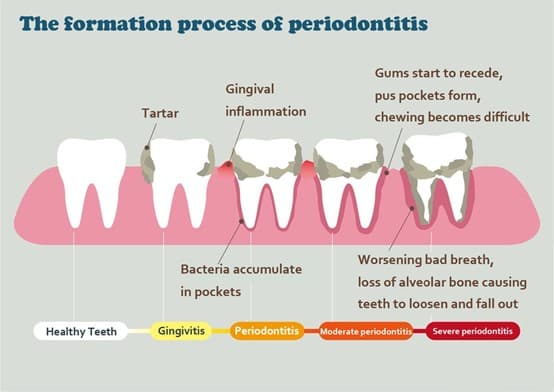
Is Periodontitis a Gradual Development Rather Than an Overnight Issue?
Periodontitis is not a problem that forms overnight. It is a gradual development. Many people may experience some degree of gum disease in their lifetime, and the prevalence increases gradually with age. Especially in the population over 65 years old, it is possible that more than half of them have moderate to severe periodontitis.
Before periodontitis forms, it usually starts with mild gingivitis caused by plaque. When plaque accumulates at the gum-tooth interface, it can trigger gingivitis. If not promptly cleaned, the bacteria in the plaque can lead to an inflammatory response in the gum tissue. For the difference between gingivitis and periodontitis and the effects on general health see gingivitis and your whole body; for why some people are more prone to gum disease see causes and 10 risk factors of gum disease.
The Two-Week Self-Test: Check Whether It Is Gingivitis Yourself
A classic study (Löe et al., 1965) showed that gingivitis develops within 10–21 days of stopping oral hygiene, and that the gums return to health once thorough cleaning resumes. In other words, bleeding from simple gingivitis should fall clearly within one to two weeks of careful cleaning.
- Brush — twice a day for two minutes, soft brush angled at 45° to the gum margin with gentle vibrating strokes (proper brushing technique). Brush the bleeding sites too.
- Clean between the teeth — floss or interdental brushes once a day, every gap, even if it bleeds.
- Do not mask the problem — avoid relying on mouthwash for these two weeks, or you will not see the true picture.
- Keep a record — look at the sink every night after brushing: 0 = no blood, 1 = a little, 2 = obvious.
Reading the result: if the score falls to 0 within two weeks, it is most likely gingivitis — keep it up and arrange regular scaling; if it still bleeds or gets worse, there may already be tartar or pockets that cleaning cannot reach, so book a dental examination.
Is Gingivitis Traceable? How Can It Be Improved?
Noticing bleeding gums while brushing or after brushing could be the initial sign of unhealthy gums. Gingivitis typically manifests as swollen, shiny, and smooth gums, whereas healthy gums appear coral pink with slightly orange-peel textured surfaces.
| Healthy gums | Inflamed gums | |
|---|---|---|
| Colour | Coral pink | Bright or dark red |
| Surface | Matt, orange-peel stippling | Smooth and shiny |
| Shape | Thin, pointed, hugging the tooth | Swollen, rounded, pulling away |
| Bleeding | No bleeding with brushing or flossing | Bleeds when brushing or flossing |
| Feeling | Nothing | May itch or feel full, but usually not painful |
To enhance gum health, maintaining good oral hygiene habits on a daily basis is crucial. Thoroughly brushing your teeth and using dental floss regularly can effectively promote gum recovery. The mild abrasive agents in toothpaste aid in removing dental plaque, while fluoride-rich toothpaste helps prevent dental caries and other oral issues.
Although some advocate for saltwater rinses to remove dental plaque, toothpaste proves to be more advantageous in effectively eliminating plaque, especially fluoride toothpaste, which also reduces the risk of tooth decay.
When brushing your teeth, ensure gentle brushing along the gumline to ensure the bristles reach the gum tissues. If gum bleeding persists, it is advisable to undergo professional dental cleaning to remove plaque buildup in hard-to-reach areas and thereby enhance oral health.
Why "No Bleeding" Does Not Always Mean All Is Well
At a periodontal examination the dentist gently measures the pocket around every tooth with a probe and records which sites "bleed on probing". Research (Lang et al., 1990) found that sites that consistently do not bleed on probing remain stable 98% of the time — so bleeding is one of the dentist's most important markers of active inflammation, and more accurate than what you can see yourself.
- Smoking masks bleeding, so gum disease can progress unnoticed.
- Periodontitis causes no pain most of the time; many people only notice when teeth loosen.
- Bleeding deep between the teeth may not show when you brush.
So even if you do not bleed when brushing, regular check-ups matter. If you have already had periodontal treatment, see periodontal maintenance and review intervals for how bleeding data are used to judge stability or relapse.
What are the Consequences of Persistent Gingivitis?
If you neglect regular brushing and flossing, gingivitis may gradually progress to chronic periodontitis. Chronic periodontitis is caused by continuous inflammation leading to the breakdown of the alveolar bone (the bone that supports the teeth).
This can result in gum recession, making the teeth appear longer. Without adequate support, the teeth may become loose. This stage is often still not painful until a periodontal abscess or acute swelling develops, when it can become very painful — so do not wait for pain before acting.
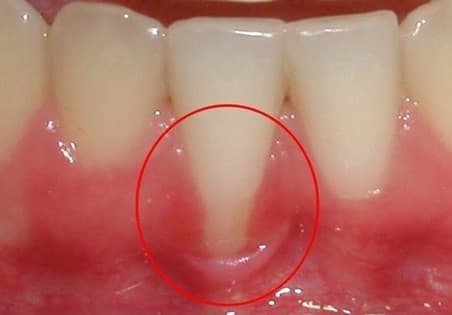
Once the pathogenic bacteria of periodontal disease settle in, they are difficult to remove. Current treatments for chronic periodontitis include intensive cleaning therapy and sometimes gum surgery. Patients with chronic periodontitis usually require regular and ongoing professional dental treatment to prevent further deterioration of the disease. See deep scaling and root planing for the treatment steps, periodontal surgery for residual deep pockets, and can periodontal disease heal on its own.
Five Common Mistakes When Your Gums Bleed
- Not brushing the bleeding area — plaque builds up further and bleeding worsens.
- Stopping flossing — bleeding for the first few days is normal; stopping means it never settles.
- Relying on mouthwash — it is only an adjunct and cannot remove plaque between the teeth or at the gum margin (how to choose a mouthwash).
- Blaming "heatiness" and drinking herbal tea — the real cause of red, bleeding gums is plaque; see gum inflammation is not just heatiness.
- Self-medicating with anti-inflammatories — it does not treat the cause and may delay care; for red, swollen, sore gums see 9 common questions about swollen gums.
Prevention and Regular Check-ups
When discussing the prevention of periodontitis, there are some remarkably simple yet vital guidelines to consider! Cultivating excellent oral hygiene habits, along with regular dental check-ups, serves as the cornerstone for a healthy smile. During these check-ups, dental professionals also provide valuable care tips to assist you in mastering brushing and flossing techniques more effortlessly. Let your smile radiate with the glow of health, as you deserve to possess a healthy and confident smile. Through these recommendations, let us join forces to uphold your periodontal health and pursue a beautiful smile together!
If your gums bleed regularly when brushing, or have stayed red and swollen for more than a week or two, arrange a periodontal assessment so a dentist can measure your pocket depths and tell whether it is gingivitis or has progressed to periodontitis. To check yourself against the other warning signs of gum disease (bad breath, receding gums, loose teeth), see our 8 warning signs self-check guide. Appointments are available at our Causeway Bay and Tsuen Wan dental centres.
Fee Guide for a Bleeding-Gum Check
Home Dental Centre's current published fees: professional scaling HK$800 with a dental hygienist or HK$980 with a dentist. If the examination finds periodontal pockets that need further treatment, the dentist will set out the procedure and fees clearly for your case and start only with your consent. See our fee transparency commitment.
Book a Bleeding-Gum Check
Open seven days a week, with earlier slots at our Causeway Bay and Tsuen Wan dental centres. When you book, please tell us how long the bleeding has lasted and whether you smoke, have diabetes, are pregnant or take any medicines.
Why Choose Home Dental Centre?
- A team of 31 dentists — general dentists, dental hygienists and periodontists in one team, so scaling, examination and treatment connect.
- Finding the cause first — full-mouth pocket measurement and bleeding scores tell gingivitis from periodontitis, rather than a scaling for everyone.
- Arrangements for medication and chronic conditions — blood thinners, diabetes and pregnancy are planned around your history.
- Transparent fees — after the examination we explain the procedure and fees clearly, and start only with your consent.
- Open seven days — same-day slots at both our Causeway Bay and Tsuen Wan dental centres.
Medical References
The general clinical principles in this article draw on the following professional sources; actual diagnosis and treatment must be decided by a dentist for each individual case:
- Oral Health Education Unit, Department of Health, Hong Kong: Periodontal disease
- Löe H, Theilade E, Jensen SB (1965): Experimental gingivitis in man. Journal of Periodontology 36:177–187 — gingivitis developed within 10–21 days of stopping oral hygiene and reverted to health once hygiene resumed
- Lang NP, Adler R, Joss A, Nyman S (1990): Absence of bleeding on probing — an indicator of periodontal stability. Journal of Clinical Periodontology 17:714–721 — sites with no bleeding on probing had a 98% negative predictive value for progression
- US Centers for Disease Control and Prevention (CDC): Smoking, Gum Disease, and Tooth Loss
- NHS: Symptoms of acute myeloid leukaemia — "bleeding or bruising easily or for no reason" warrants an urgent GP appointment
Medical information notice: this article provides general dental health information and is not a substitute for an examination. The two-week self-test is for guidance only; if you have spontaneous bleeding, unexplained bruising, nosebleeds that are hard to stop, fever or pus from the gum, seek care promptly. Do not stop any prescribed medicine on your own.