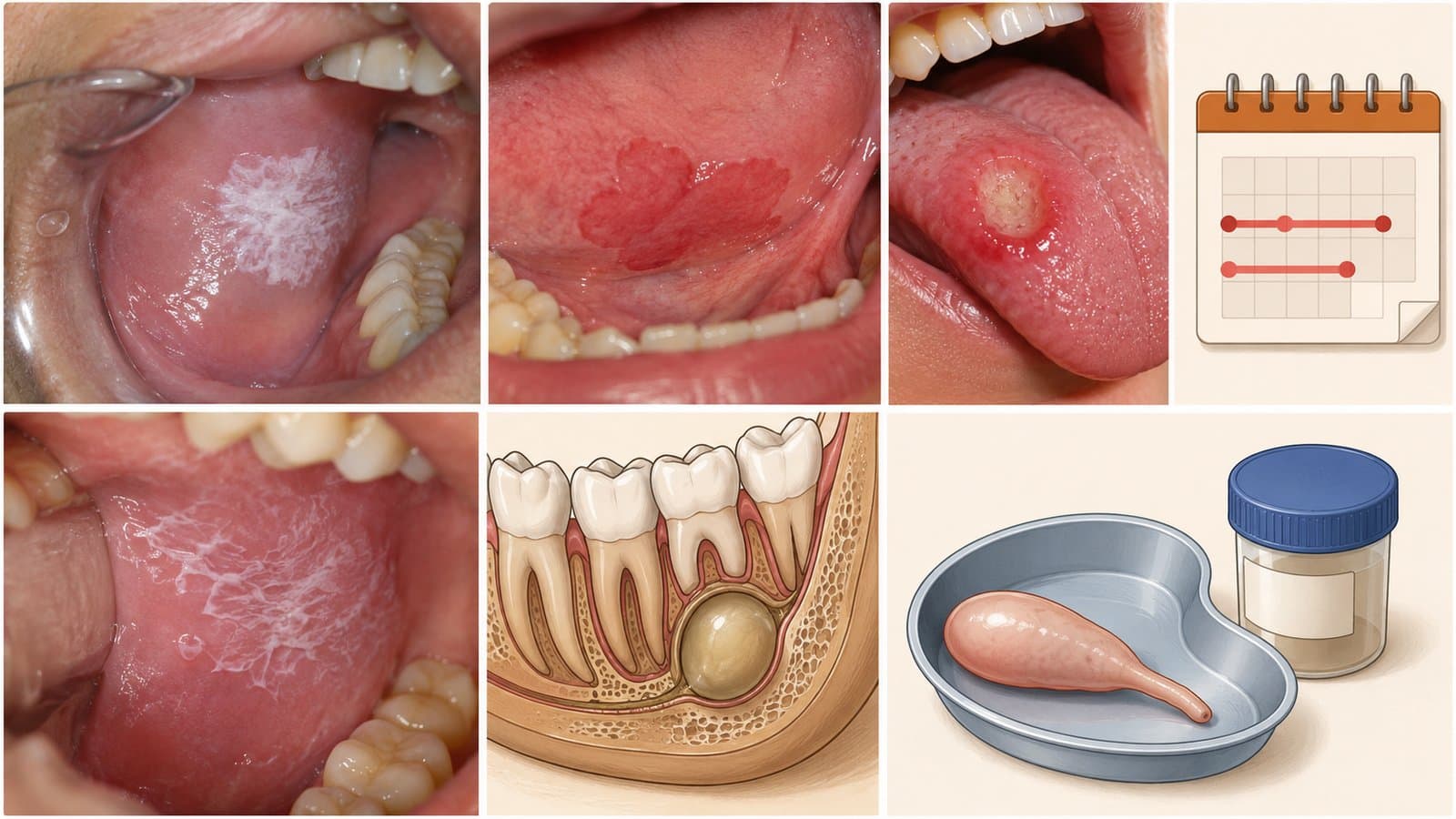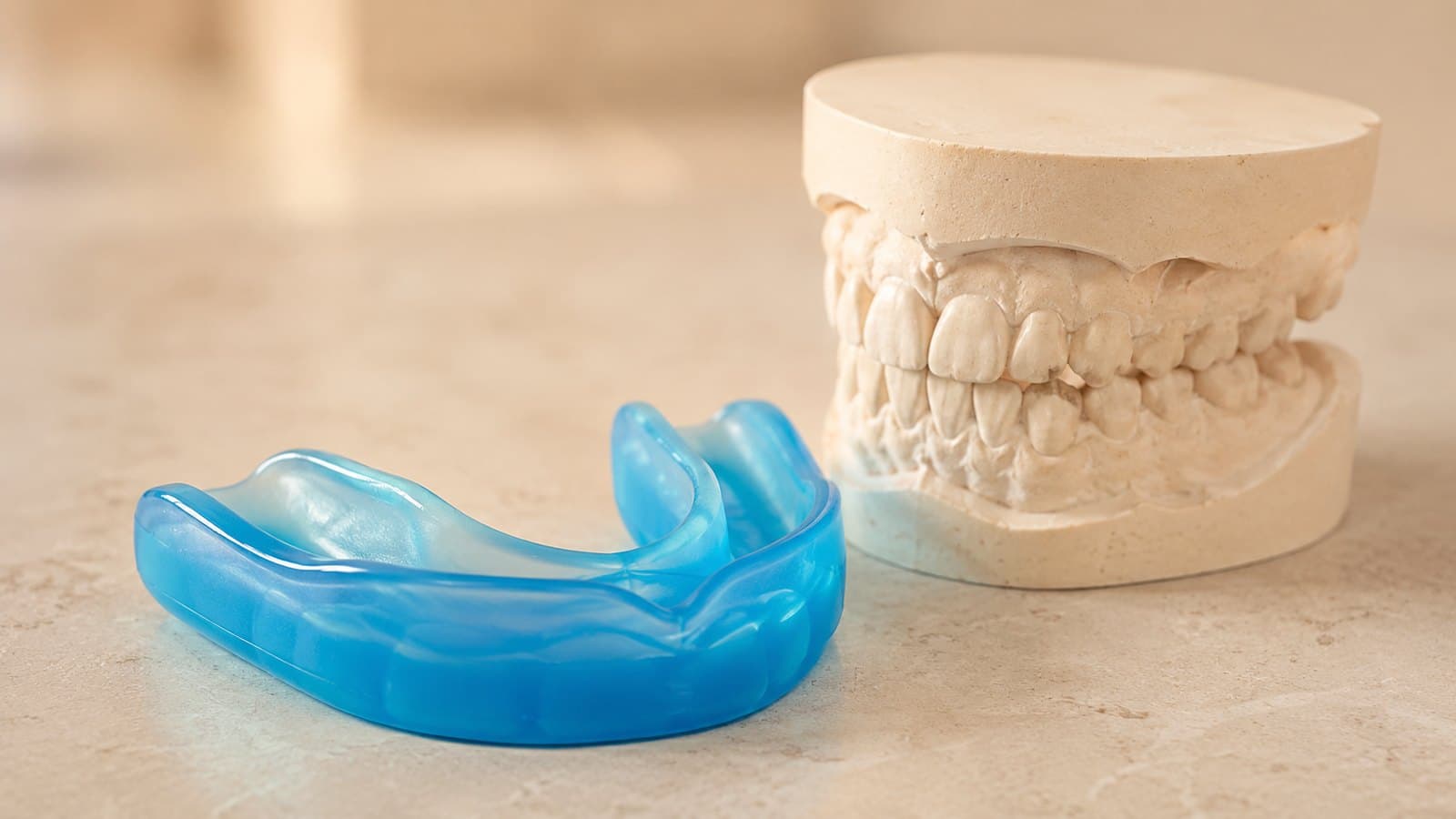
Many patients who have completed periodontal treatment ask the same question: once the root planing is done, is the gum disease gone for good? Periodontal disease is a chronic condition, and treatment has to be followed by ongoing maintenance and review before it can be kept stably under control. But "regular reviews" is where most clinics stop explaining — how often? Decided how? What does the dentist actually do in those 45 minutes? What happens if you skip a year? In this article the dental team at Home Dental Centre sets it all out: the risk of recurrence, how maintenance differs from an ordinary scaling, a recall interval worked out from your own risk, the objective markers of stability and relapse, a timeline of what happens when reviews stop, and a schedule for the first year after treatment.
After Treatment: Which Group Are You In?
- Contact the dentist the same day — sudden gum swelling, pus, facial swelling or fever during the maintenance period, or a tooth that suddenly becomes noticeably loose. This may be a periodontal abscess and cannot wait for the next review; contact our dental emergency service.
- Bring your review forward — bleeding on brushing that has persisted for more than a week, bad breath returning, obvious gum recession, gaps between the teeth widening, or you are more than three months past your recommended interval.
- Attend at your interval — none of the above: come back at the interval worked out below (3, 4, 6 or 12 months). Feeling fine is not the same as being stable — periodontal inflammation causes no pain most of the time.
Why Gum Disease Can Come Back
Periodontal disease is caused mainly by the bacteria in dental plaque. Even after treatment, the pockets between the teeth and gums readily accumulate plaque and calculus again. If daily cleaning falls short, bacteria re-accumulate and the periodontal tissues become inflamed once more.
- Inadequate brushing and flossing, so plaque is not effectively removed
- Smoking slows gum healing and increases the risk of inflammation
- Systemic conditions such as diabetes lower the body's resistance
- Not attending reviews as advised, so problems are not caught early
Why "control" rather than "cure"? Periodontal treatment (deep cleaning, root planing and, where needed, surgery) removes the calculus and bacteria below the gumline so that inflammation stops and pockets shrink — but bone that has already been lost does not grow back, and residual pockets and exposed root surfaces are exactly where bacteria settle again most easily. Studies show that the bacterial community inside pockets can return to pre-treatment levels within weeks to months of treatment; so a single clean is not the finish line — maintenance is. For what the stages of periodontitis and pocket depths mean, see can periodontal disease heal on its own.
What Periodontal Maintenance Involves — and How It Differs from an Ordinary Scaling
Periodontal maintenance (commonly called "gum maintenance", professionally "supportive periodontal care") is the continuation of treatment, aimed at keeping the periodontal tissues stable. It generally includes:
- Measuring pocket depths and recording whether the gums bleed or are inflamed
- Removing plaque and calculus from the tooth surfaces and inside the pockets
- Checking tooth mobility and the bite
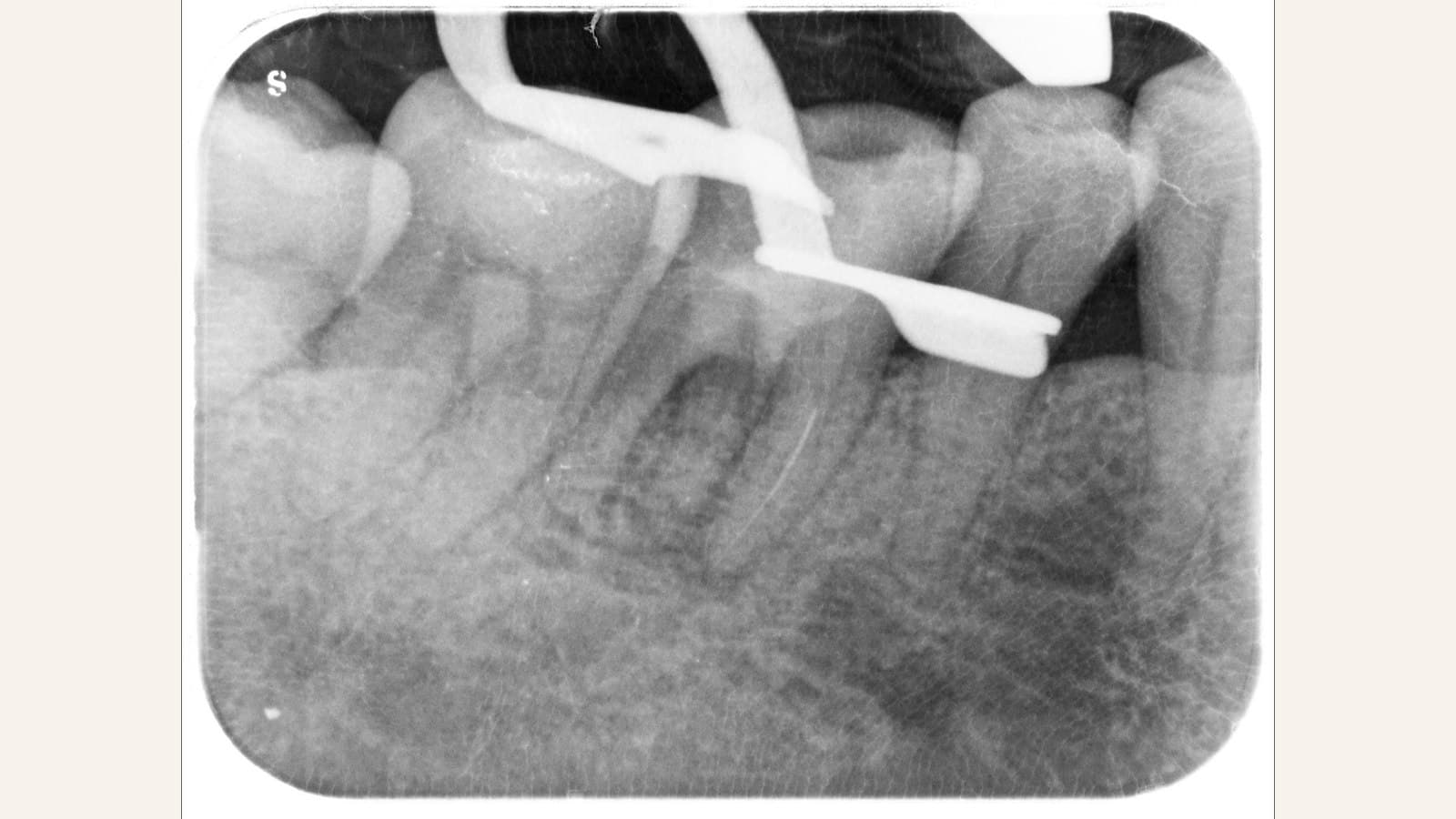
- Taking X-rays when needed to monitor changes in the supporting bone
- Personalised oral hygiene instruction
Many patients assume "maintenance" simply means a scaling, and after treatment go back to one ordinary scaling a year — the most common starting point for relapse. This is the difference:
| Ordinary scaling | Periodontal maintenance | |
|---|---|---|
| For whom | People with healthy gums or gingivitis only | People who have completed periodontal treatment and have residual pockets or bone loss |
| What is cleaned | Above the gumline and at the gum margin | Above the gumline plus the root surfaces inside every residual pocket (4 mm or more) |
| Examination | Visual plus basic probing | Full-mouth periodontal charting (6 sites per tooth): pocket depth, bleeding on probing, recession, mobility, furcation involvement |
| Records | Usually none | Every visit compared with the last, to judge stable vs deteriorating |
| Time | About 30 minutes | About 45–60 minutes |
| Interval | Usually 6–12 months | 3–12 months according to individual risk |
| Who | Dental hygienist or dentist | Dentist or hygienist following the periodontal plan; complex cases followed by a periodontist |
Through regular maintenance the dentist can detect signs of inflammation early and deal with them, reducing the chance of the condition worsening. For more on periodontal care, see our periodontal treatment articles.
What the Dentist Actually Does in Those 45 Minutes
- History (5 min) — any bleeding, looseness or bad breath; new medications; changes in blood sugar; how much you smoke.
- Full-mouth periodontal charting (10 min) — pocket depth and bleeding on probing at six sites per tooth, compared site by site with the previous record. This is the core of maintenance: a pocket going from 4 to 5 mm, or a site that did not bleed before starting to bleed, is early relapse that the eye cannot see but the probe can measure.
- Removal of plaque and calculus (20–30 min) — ultrasonic and hand instruments above the gumline; the root surfaces inside residual pockets cleaned tooth by tooth; local anaesthetic where needed.
- Local treatment (as required) — re-instrumentation of individual deteriorating pockets, or placement of a local antimicrobial.
- Hygiene coaching (5 min) — using your chart to point out the sites you are missing and whether your interdental brush sizes are right.
- Setting the next interval — 3, 4, 6 or 12 months, based on today's data and your risk assessment.
X-rays are generally taken every one to two years, or when a particular tooth has changed.
Recommended Review Intervals — Worked Out from Your Own Risk
Review intervals must be set for each patient individually. In general, dentists recommend more frequent reviews immediately after periodontal treatment, then adjust gradually once the condition is stable. Common reference points:
- Active disease or higher risk: usually a shorter interval
- Stable condition: the interval can be extended moderately
- Risk factors such as smoking or diabetes: the dentist may advise closer follow-up
The European Federation of Periodontology's 2020 clinical practice guideline (S3 level) recommends that supportive periodontal care be scheduled according to individual risk, at intervals from 3 to a maximum of 12 months. One method dentists use is the Lang and Tonetti periodontal risk assessment, which looks at six factors. You can check yourself against it first:
| Risk factor | Low | Moderate | High |
|---|---|---|---|
| Bleeding on probing (BOP) | Below 10% | 10–25% | Above 25% |
| Residual pockets (5 mm or more) | Fewer than 4 sites | 4–8 | More than 8 |
| Teeth lost (excluding wisdom teeth) | Fewer than 4 | 4–8 | More than 8 |
| Bone loss relative to age | Slight | Moderate | Marked |
| Systemic condition | None | — | Diabetes (especially with poor glycaemic control) |
| Smoking | Non-smoker / quit more than 5 years ago | Fewer than 10 a day | 10 or more a day |
Rough mapping: all low, or only one moderate → about 12 months; two or more moderate → about 6 months; any high → 3–4 months. In the first year after treatment, most patients are seen every 3 months regardless of risk, and the interval is extended only once stability is confirmed. The actual interval should be assessed by your dentist from your periodontal condition; never stop attending simply because you feel fine.
How Do You Know Whether You Are "Stable" or "Relapsing"? Four Objective Markers
"Stable" is not a feeling; it is data. At every review the dentist compares four things with your previous record:
| Marker | Stable | Watch | Relapse / deterioration |
|---|---|---|---|
| Bleeding on probing (BOP) | Fewer than 10% of sites bleed | 10–25% | More than 25%, or the same site bleeding at two consecutive visits |
| Pocket depth | All 4 mm or less, or unchanged from last time | Isolated 5 mm sites that do not bleed | Any site deepening by 2 mm or more; over 5 mm and bleeding |
| Recession / bone | Bone level unchanged on X-ray | Slight increase in recession | Continuing bone loss on X-ray |
| Mobility | Unchanged | Slight increase | Marked increase or tooth movement |
Intervening at the "watch" stage — a shorter interval, re-instrumenting the site, correcting the cleaning technique — usually pulls things back; once "relapse" is reached, deep treatment may need to be repeated, or periodontal surgery considered. That is why the interval cannot be stretched on your own.
What Happens If You Stop Attending? A Timeline
- 3 months — the bacterial community in residual pockets has returned to something close to its pre-treatment composition; the gums may not yet look red or swollen.
- 6–12 months — calculus re-forms below the gumline and bleeding on probing increases; you may notice only occasional blood on brushing.
- 1–2 years — pockets that were 4 mm deepen to 5–6 mm and bone loss resumes; this loss is irreversible.
- 3 years and beyond — teeth loosen, gaps widen, recession becomes obvious; some teeth may no longer be saveable, and implants or other replacements have to be considered.
What the long-term research says: a Swedish study that followed adults for 30 years (Axelsson et al., 2004) found that people who received continuous risk-based maintenance and hygiene coaching lost on average fewer than two teeth per person over the 30 years, with almost no change in periodontal attachment — a very large gap compared with the general population. Conversely, studies consistently show that patients who do not attend regular reviews after treatment lose teeth at several times the rate of those who do.
And it is not only about the teeth. Periodontal inflammation and diabetes are linked in both directions — treating and maintaining periodontal health improves blood-sugar control (randomised-trial evidence) — and large studies show associations with heart disease, stroke and dementia. If you have a chronic condition, maintenance is the last thing to let lapse. See gingivitis and your whole body: diabetes, heart disease, stroke and dementia for the evidence.
Your First Year After Treatment
| When | What | Goal |
|---|---|---|
| 6–8 weeks after treatment | Re-evaluation: full-mouth charting compared with pre-treatment | Confirm pockets have shrunk and bleeding reduced; decide which sites need re-instrumentation or surgical assessment |
| Month 3 | First maintenance visit | Establish the "stable baseline"; fine-tune cleaning technique |
| Month 6 | Second maintenance visit | If BOP is below 10% and no pocket has deepened → consider extending to 4–6 months |
| Month 9 | Third maintenance visit (higher-risk patients) | Smokers, diabetics and those with residual deep pockets stay at 3-monthly |
| Month 12 | Annual review plus X-rays | Compare with pre-treatment X-rays to confirm bone is stable; repeat the risk assessment and set the second-year interval |
Risk is reassessed every year thereafter; the interval can lengthen as risk falls, and will shorten if risk rises (for example blood sugar going out of control, or a return to smoking).
The Key Role of Daily Home Care
The success of periodontal maintenance depends heavily on daily home care. However diligently you attend reviews, plaque will keep accumulating if daily cleaning is poor. We recommend:
- Brushing at least twice a day, using a technique that cleans the gum margin (see proper brushing technique)
- Cleaning between the teeth daily with floss or interdental brushes (after periodontal treatment the gaps are usually wider, so interdental brushes work better than floss — sizes should be fitted by the dentist or hygienist)
- Stopping or cutting down smoking, which helps the gums heal
- A balanced diet and control of general health, including blood sugar
Three details specific to periodontal patients: ① exposed root surfaces are softer than enamel, so use a soft brush and light pressure and avoid horizontal scrubbing, which worsens recession (for marked recession see gum recession causes and gum grafting); ② electric toothbrushes have a slight advantage for periodontal patients, but technique matters more than the tool; ③ mouthwash is only an adjunct, and chlorhexidine should be used short-term and only on the dentist's instruction (how to choose a mouthwash). For more oral health reading, browse our dental blog.
When to Seek Care Early
If any of the following occur during the maintenance period, we recommend contacting your dentist for a check-up as soon as possible:
- Persistent bleeding when brushing
- Red, swollen, painful gums or the presence of pus
- Teeth that feel loose or have shifted position
- Persistent bad breath
- Gum recession or increased sensitivity due to exposed roots
Seeking early attention helps keep the condition under control and prevents it from deteriorating further. For the causes behind bleeding on brushing see what bleeding gums mean; for an item-by-item self-check of the eight warning signs see periodontal disease warning signs; for home relief of acute gum pain see seven steps to relieve gum pain at home.
Fee Guide for Periodontal Maintenance
The fee for periodontal maintenance depends on the number of residual pockets, the extent to be cleaned and whether local anaesthetic is needed, and is generally higher than an ordinary scaling (Home Dental Centre's current published fees: professional scaling HK$800 with a dental hygienist or HK$980 with a dentist). The actual maintenance fee is explained clearly according to your plan after re-evaluation — see periodontal treatment: procedure and fees and our fee transparency commitment.
Is it worth it? The total cost of three or four maintenance visits a year is generally far below the cost of replacing a single tooth lost to relapse (an implant or bridge). Maintenance is the cheapest way to keep your teeth.
Book Your Periodontal Maintenance Review
Open seven days a week, with earlier slots available at our Causeway Bay and Tsuen Wan dental centres. When you book, please tell us when your last periodontal treatment was and whether you smoke or have diabetes.
Why Choose Home Dental Centre for Periodontal Maintenance?
- A team of 31 dentists — including periodontists and dental hygienists, so periodontal treatment and maintenance connect within the same team, with no new waiting list for complex cases.
- Maintenance with data — full-mouth charting at every review, compared with the last; intervals set by risk assessment, not a one-size-fits-all six months.
- Arrangements for chronic conditions — review timing, bleeding control and medication arrangements for patients with diabetes or cardiovascular disease are adjusted to your history.
- Transparent fees — after re-evaluation we explain the procedure and fees clearly, and start only with your consent.
- Open seven days — earlier slots for acute swelling or pain during maintenance, with same-day appointments at both our Causeway Bay and Tsuen Wan dental centres.
Book a Periodontal Examination
Although gum disease can recur, it can in most cases be kept stable with appropriate maintenance and regular reviews. Home Dental has clinics in Causeway Bay and Tsuen Wan. If you would like to arrange periodontal maintenance or a dental examination, message us on WhatsApp or book an appointment online, and our dentist will assess your oral condition for you.
Medical References
The general clinical principles in this article draw on the following professional sources; actual diagnosis and treatment must be decided by a dentist for each individual case:
- Oral Health Education Unit, Department of Health, Hong Kong: Periodontal disease
- Sanz M, Herrera D, Kebschull M, et al. (2020): Treatment of stage I–III periodontitis — The EFP S3 level clinical practice guideline. Journal of Clinical Periodontology 47(S22):4–60 — step 4, supportive periodontal care: recall intervals of 3 to at most 12 months, tailored to individual risk
- Axelsson P, Nyström B, Lindhe J (2004): The long-term effect of a plaque control program on tooth mortality, caries and periodontal disease in adults — results after 30 years of maintenance. Journal of Clinical Periodontology 31(9):749–757
- Lang NP, Tonetti MS (2003): Periodontal risk assessment (PRA) for patients in supportive periodontal therapy (SPT). Oral Health & Preventive Dentistry 1(1):7–16 — the six-factor risk assessment
- American Academy of Periodontology: Gum Disease Information
Medical information notice: this article provides general dental health information and is not a substitute for an in-person examination, periodontal probing or imaging. The risk table and review intervals given here are for guidance only; your actual interval is decided by your dentist from your clinical data. If you have facial swelling, fever, pus from the gum, severe pain or a suddenly loose tooth, seek care promptly.