Complete Guide to Dental Veneers in Hong Kong
What are Dental Veneers?
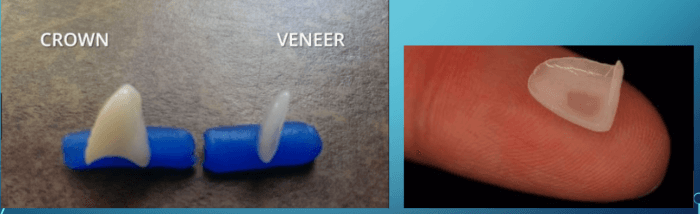
Dental veneers are thin, custom-made porcelain shells that cover the front surfaces of teeth to enhance their appearance. Made from porcelain composite, they effectively address cosmetic concerns like discoloration, chips, gaps, and misaligned teeth, providing a natural look. The application process involves a consultation, preparation of the teeth, and bonding the veneers, resulting in a quick smile transformation.
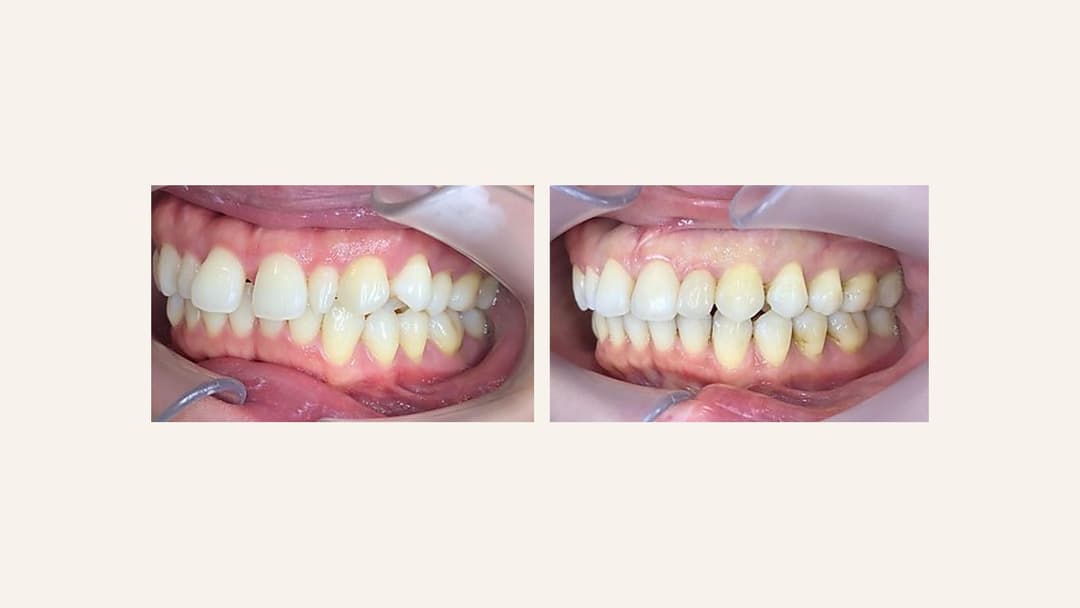
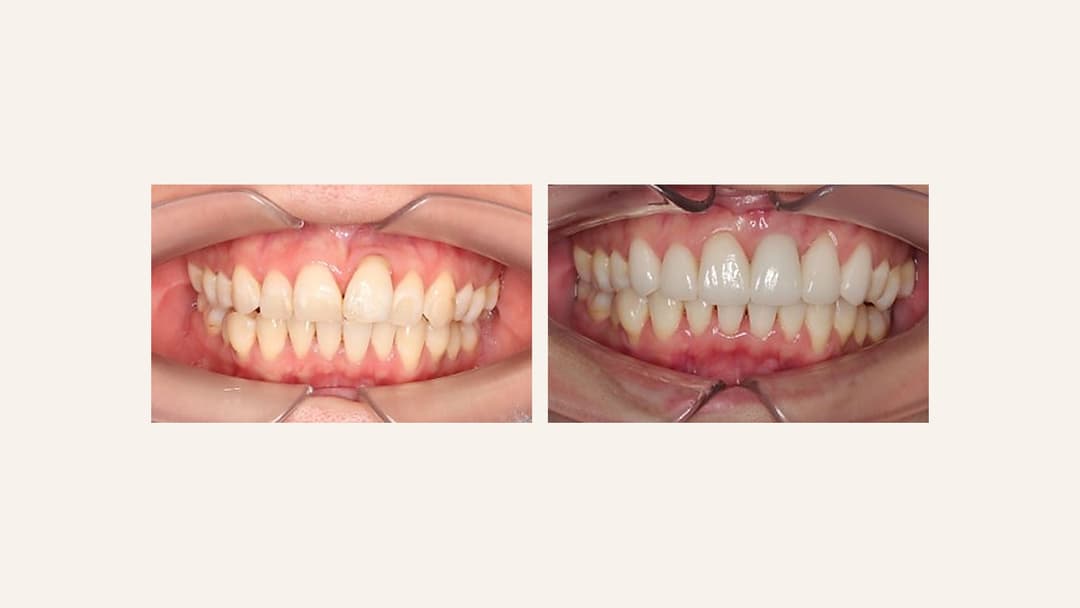
Real case: localised orthodontics first, then veneers — before (left) and on completion (right). See Case One below. Individual cases vary.
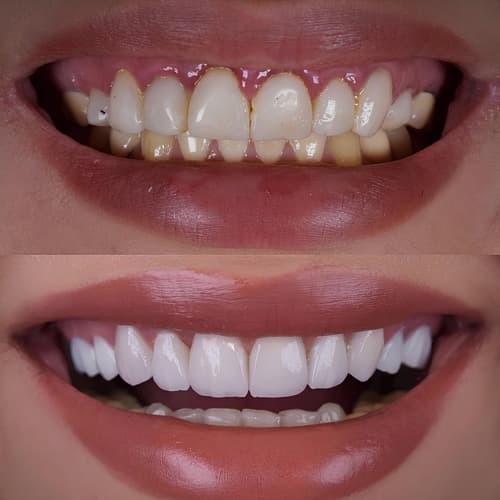
Real case: gum condition treated first, veneers completed alongside an implant crown. See Case Three below. Individual cases vary.

The Benefits of Dental Veneers?
- Natural Appearance: These enhancements mimic your existing teeth's colour and shape, ensuring a seamless smile that boosts confidence and is hard to detect.
- Stain Resistance: Made with advanced materials, these treatments resist staining, letting you enjoy coffee, tea, or red wine without worrying about discoloration.
- Quick Application: With just two dentist visits—one for assessment and planning and another for application—this option fits easily into busy schedules.
- Improved Oral Hygiene: By concealing imperfections and providing a smoother surface, these treatments make cleaning easier, reduce plaque buildup, and enhance overall dental health.
Who is Suitable for Veneers?
Veneers are an excellent option for:
- Individuals facing cosmetic dental concerns like discoloration, misalignment, or gaps between teeth.
- Those looking to enhance the aesthetic appeal of their smile.
Who is Not Suitable for Veneers?
Veneers may not be appropriate for:
- Patients experiencing significant tooth decay or gum disease.
- Individuals lacking sufficient tooth enamel to support the veneers effectively.
What Can Home Dental Offer?
At Home Dental, we provide a comprehensive range of services that prioritize your unique dental needs.
- Comprehensive Consultation and Assessment for Veneer Suitability: Our experienced general dentists and specialists conduct thorough consultations to assess your dental health and determine the best veneer options for you. We consider your specific facial features and preferences, ensuring a tailored approach that aligns with your individual aesthetic goals.
- Customized Veneer Options to Suit Your Unique Needs: We offer a variety of veneer styles and materials, allowing us to create a customized solution that fits your lifestyle and desired outcome. With access to the latest advancements in dental technology, our team takes the time to discuss your options, ensuring you feel informed and confident in your choices.
- Advanced Veneer Application for a Natural-Looking Smile: Our highly skilled specialists adhere to the highest standards of quality and precision during the veneer application process. We focus on achieving a natural look that complements your smile while enhancing your overall appearance.
The Question Everyone Asks First: Do My Teeth Need to Be Trimmed?
In most cases, yes. This deserves to be said up front, because preparation is one of the irreversible parts of the decision.
The amount removed is usually measured in fractions of a millimetre, and the aim is to stay within enamel — enamel is what the veneer bonds to, and once preparation cuts into dentine, the reliability of the bond declines.
“So can it be done with no trimming at all?” That claim certainly appears in advertising. The answer: it can, in selected cases — but suitability needs clinical assessment, and the cost of getting it wrong shows up not on the day of treatment but in the years after. This deserves its own section.
Preparation cannot be undone. So the real question is not “how much” but “whether this step is needed at all”.
“No-Prep Veneers” Sound Appealing — but Suitability Depends on Specific Conditions
No trimming, reversible, quick — commercially this is a very effective pitch, and it is one of the most common questions we hear.
One physical fact cannot be avoided: the porcelain itself has thickness. If no tooth structure is removed, that thickness can only sit outside the tooth’s original contour. The tooth becomes thicker — and often at exactly the place it should not: the junction of the neck of the tooth and the gum.
Three possible consequences — two the patient can see, one they cannot:
- Over-contour — the facial surface bulges, and in profile the neck of the tooth protrudes, losing the natural emergence from the gum.
- A flatter, more opaque colour — the natural look of a tooth comes from the translucency of enamel and the layers beneath. With no space prepared, there is limited room for layering; if a darker underlying tooth also has to be masked, a more opaque material is needed and the result can look flat.
- The one patients cannot see: periodontal risk. A protruding margin at the neck can create an overhang that is hard to clean. Plaque accumulates, the gum can stay inflamed — bleeding on brushing, redness at the margin — and over time recession may follow. The process is usually painless, so it tends to be found late.
The difference matters: shape and colour can be redone later; damaged periodontal tissue is far harder to recover.
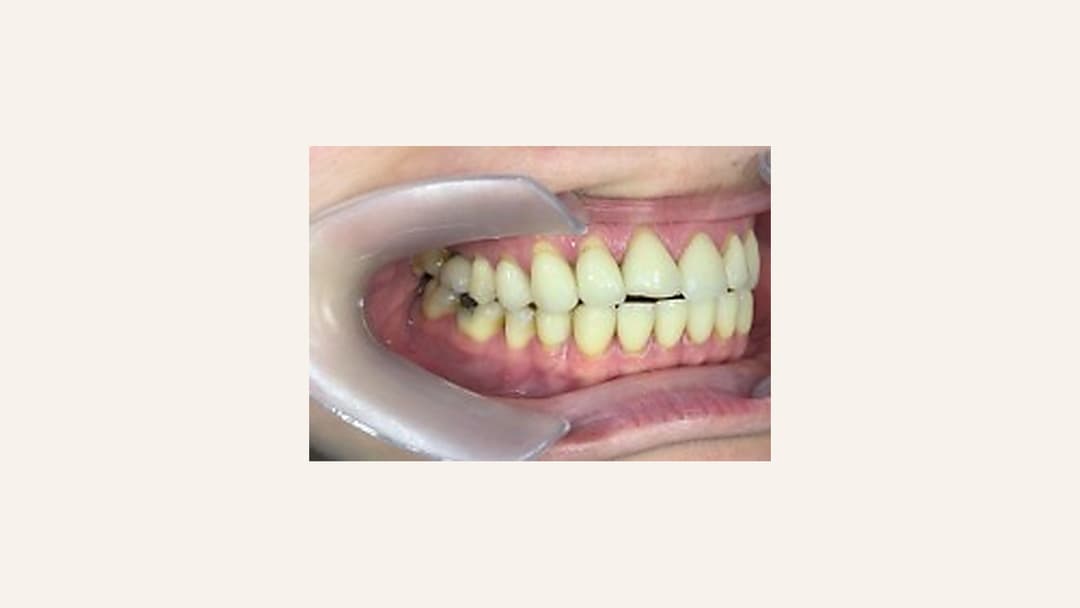
Profile view of no-prep veneers: the facial contour is thickened and the cervical area protrudes at the gum junction. Individual cases vary.
So Who Genuinely Suits No-Prep Veneers?
Some people do, and those results can be very good. What they share is this: the tooth itself lacks volume, so adding thickness restores rather than over-builds — for example teeth that are naturally small, positioned towards the tongue or clearly tilted inwards, wide gaps that need closing with volume, or edges shortened by wear.
If your teeth are normally aligned, normally positioned and of normal volume, “no trimming” is not necessarily the right direction, and it needs careful assessment with your dentist.
Between the Two: Minimal Preparation
Minimal prep removes just enough enamel to accommodate the porcelain. Tooth loss is kept to a minimum, yet the contour returns to normal, the cervical margin can be made smooth and cleanable, and there is room to build colour in layers. The case below shows no-prep veneers that had already been fitted, redone with minimal preparation.
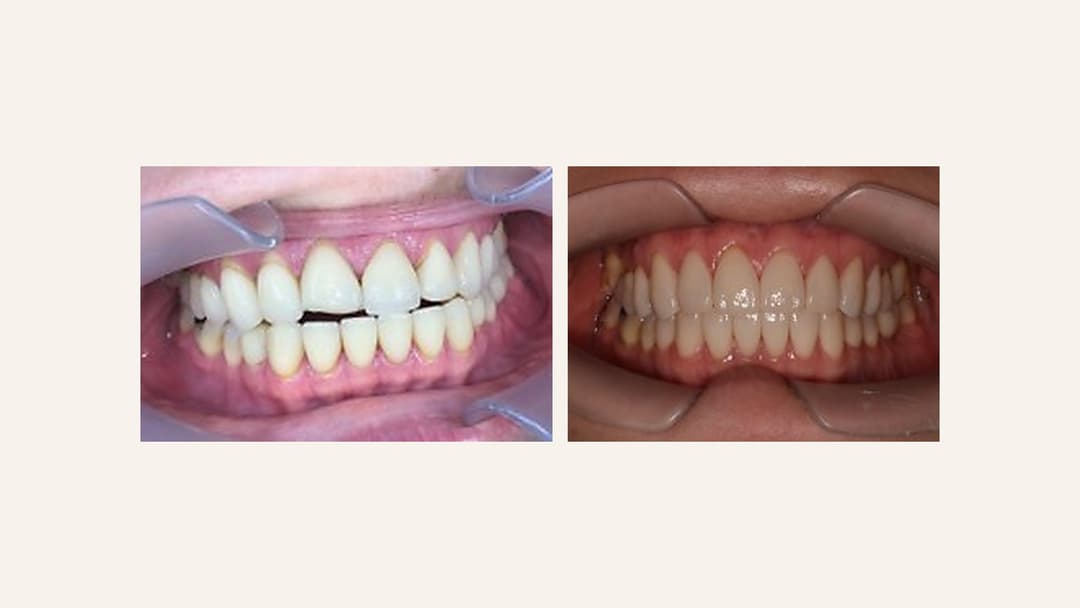
Frontal comparison: the original no-prep veneers (left) and after redoing with minimal preparation (right). Individual cases vary.
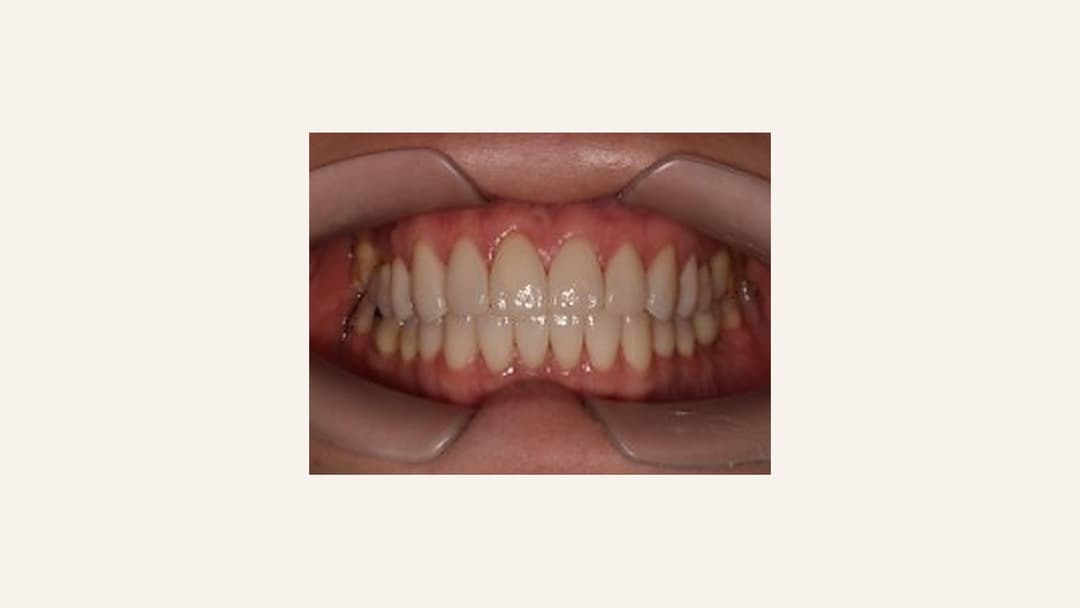
After minimal preparation: tooth contours return to normal proportions, with a smoother transition at the gum margin. Individual cases vary.
It should be said that redoing has its own cost — the existing veneers must be removed, and the tooth surface is inevitably involved. The way to save the most tooth structure is to choose the right approach the first time.
Is There a Less Invasive Route? Our Order of Assessment
Veneers are more conservative than crowns, but they are still irreversible. So our assessment starts with whether a less invasive method can achieve the goal:
- Cleaning and whitening — if the concern is purely colour and shape and alignment are fine, teeth whitening is often enough, with no trimming at all.
- Localised orthodontics — crowding, small gaps, minor misalignment. Moving teeth into position usually preserves more tooth than masking with porcelain; see orthodontic treatment.
- Composite bonding — chips, small gaps, minor reshaping, with the least removal.
- Porcelain veneers — when colour, shape and proportion need to change together and the methods above cannot deliver it.
- Crowns — when tooth loss is already extensive and the remaining walls cannot support a veneer; see crowns and bridges.
The order is not rigid, and combinations are common. The first case below is exactly that — localised orthodontics first, veneers after.
Case One: Align First, Then Veneer
This patient’s opening question was: “Can I skip the braces and just have veneers?”
Understandable — orthodontics sounds slow, veneers sound quick. But when the underlying positions are wrong, using porcelain to compensate puts the cost onto the tooth: protruding teeth need deeper preparation, retruded teeth need extra thickness to catch up, and the chance of cutting into dentine rises. In other words, the price of skipping alignment may be more tooth removed.
This case used localised orthodontics — treating only the front segment, not the whole mouth, over a period measured in months.
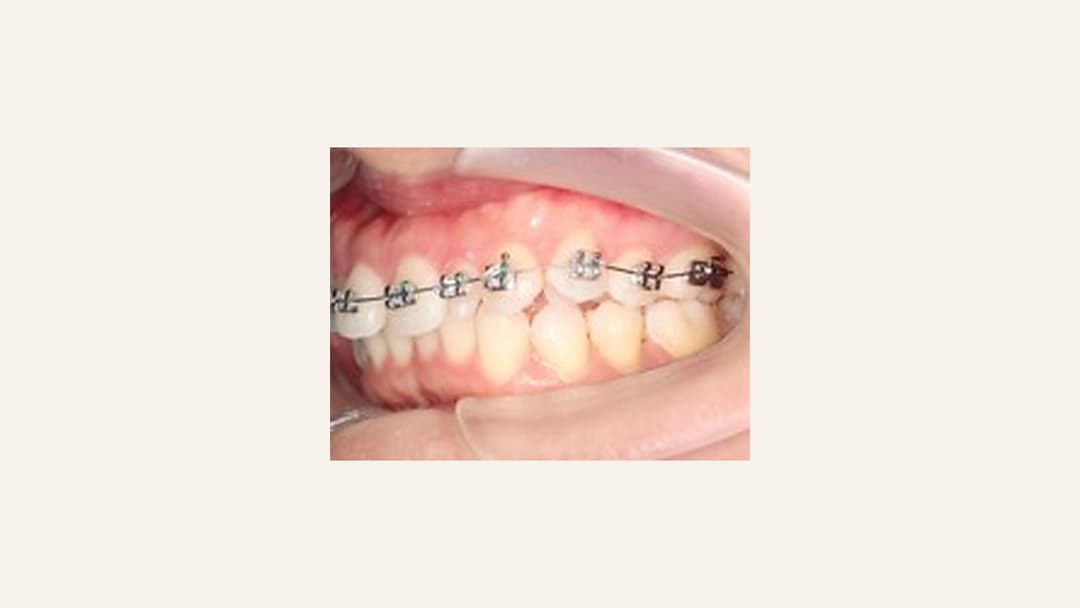
Localised orthodontic stage: only the alignment of the front segment is treated, not the whole mouth. Individual cases vary.
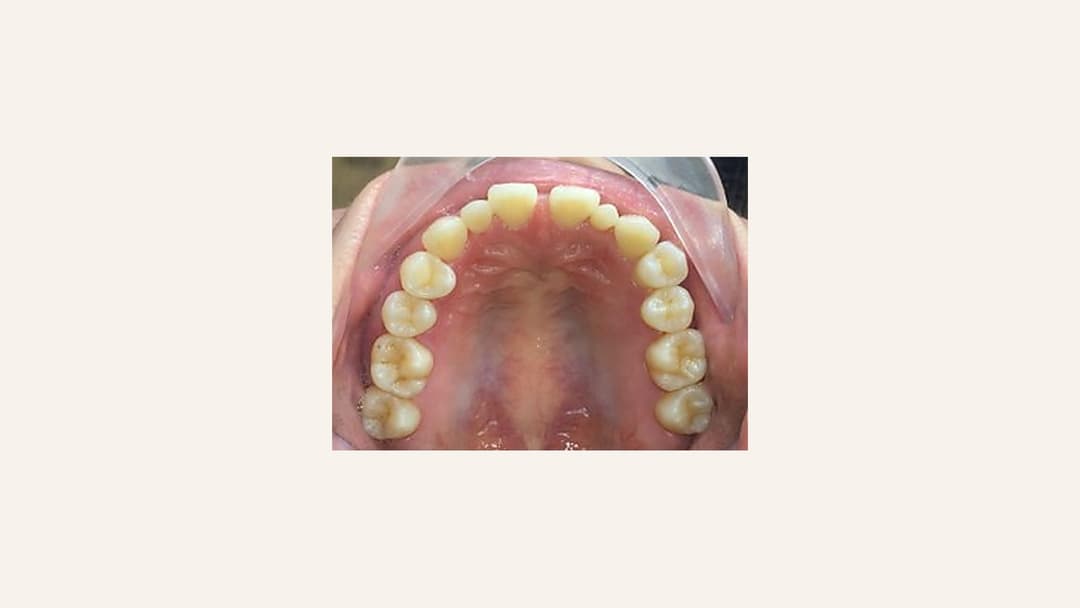
Occlusal record of the upper arch after alignment and before restoration. Individual cases vary.
The Most Critical Step in This Case Came Last: the Retainer
After orthodontics, teeth tend to drift back. That matters in any orthodontic case; in a case where veneers follow orthodontics, it matters even more.
The reason is direct: veneers are bonded to the tooth surface. If the teeth beneath slowly move, margins can open, contact points can change, and biting force can shift so that one veneer carries a disproportionate load.
In these cases, long-term retainer wear is not an optional extra to the orthodontics — it is an important precondition for the veneers staying stable. We say this before treatment starts, not after the veneers are bonded.
Case Two: A Single Veneer Is Technically More Demanding
“Do I have to do a whole row for it to look right?” No. How many teeth to treat should be decided by the clinical situation — and a single veneer is actually the harder exercise.
This patient’s front-tooth filling kept falling out — filled, lost, filled again. Repeated loss can involve bonding factors, but it is often about load. Examination showed craze lines — fine cracks within the enamel that usually need no treatment in themselves, but which can be one clue among several that the bite load is high, to be assessed together with the occlusion. In that loading environment, a filling held only at its margins struggles to stay put.
So the approach changed: not another filling, but a restoration that spreads the load across the whole facial surface.
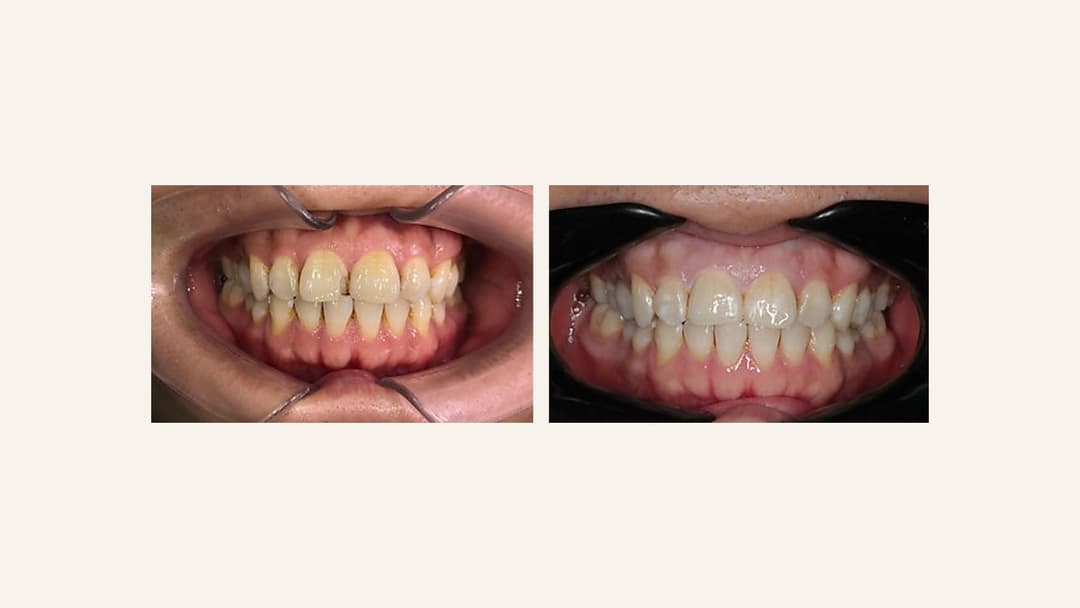
Before treatment (left) and on completion (right). Individual cases vary.
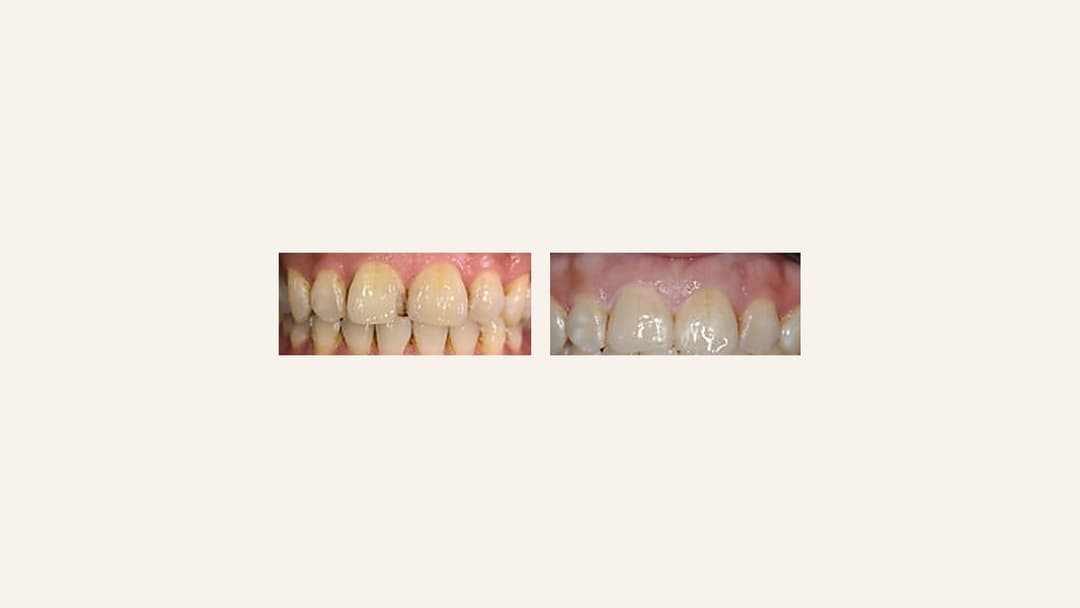
Close view of the upper front segment: a single veneer must match the adjacent natural tooth in colour, translucency and surface texture. Individual cases vary.
Why is one harder? With eight or ten veneers, everything comes from one design and one shade family, and the veneers match each other. With one, the match is the natural tooth next door — colour, translucency, surface texture, the way light scatters at the edge — with the original sitting right beside it for comparison.
Why Do Some Veneers Chip?
Chipping has multiple causes — material, bonding, design and occlusion can all play a part, and the bite is a common, easily overlooked one.
Veneers cover mainly the facial surface and the edge. If biting force concentrates on the edge, or the front teeth carry a disproportionate load in sideways movements, the veneer sits permanently in an unfavourable position. Night grinding or daytime clenching makes this more pronounced.
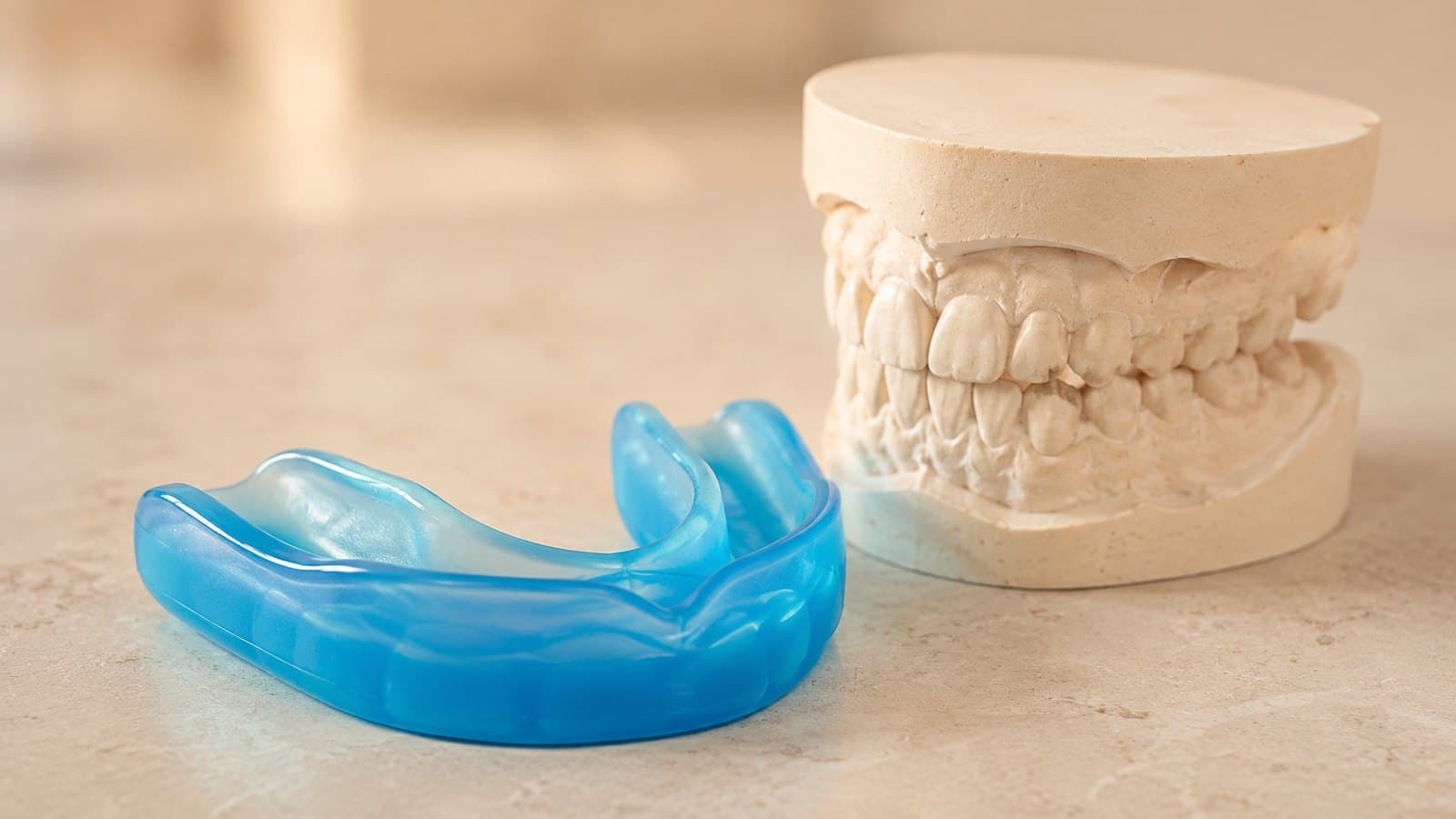
So at assessment we look beyond those few front teeth to the bite as a whole. If the occlusion itself is unbalanced, the order of treatment changes — see full mouth rehabilitation (occlusal reconstruction). For patients who grind, a night guard is usually built into the plan as reasonable protection for the restorations.
Case Three: Uneven Gum Levels — Veneers Alone Are Usually Not the Best Sequence
The gum line is the frame of the whole front segment. If gum heights are uneven to begin with, replacing the tooth surfaces with uniform veneers can make the asymmetry more obvious — every other line becomes straight, and the one crooked line stands out.
This patient’s situation involved two things at once: uneven gum levels, and one position that needed an implant crown. So the sequence was frame first, restoration second — gum condition and implant position resolved before the final restorations had a symmetrical foundation to sit on. How gum height is managed depends on the cause and may involve crown lengthening or other periodontal treatment.
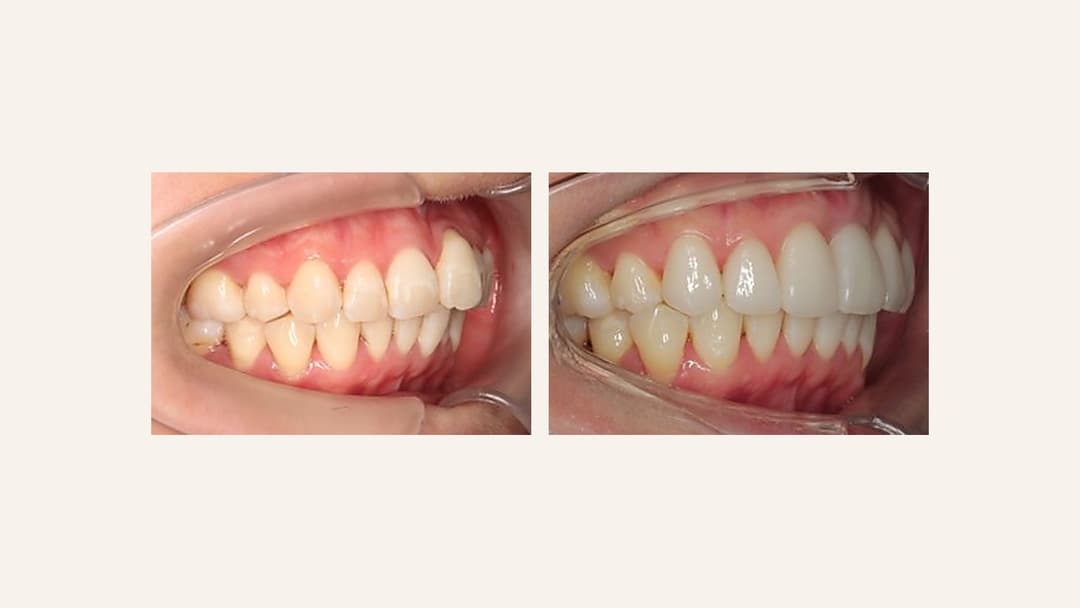
Profile comparison of the same case: before treatment (left) and on completion (right). Individual cases vary.
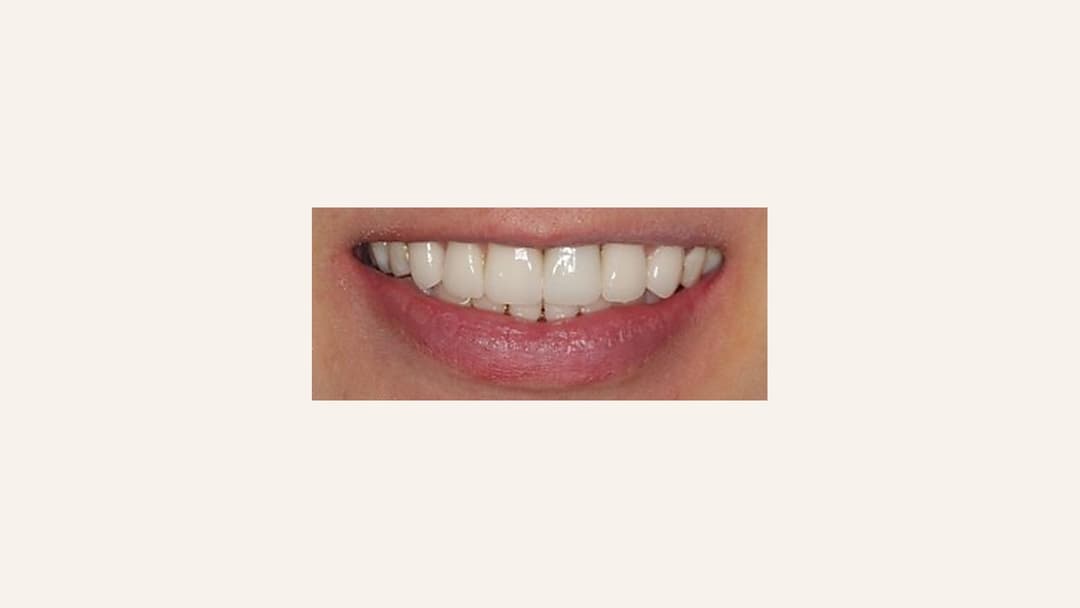
Smile-line view on completion. Individual cases vary.
The case shows one more thing: within one mouth, different teeth can need different restorations. The implant position needed a crown; other teeth needed veneers. What decides the type is how much tooth remains and what force it carries.
After Treatment: What Needs Maintaining
Veneers are not a one-off, maintenance-free restoration. They are a layer of porcelain bonded to a natural tooth, and the tooth, the gum and the bite all change with time. The following can occur, and do not necessarily mean the treatment failed: staining at the margins over the years, gum recession exposing the join, chipping or debonding (some can be rebonded, some need remaking).
Long-term care therefore includes: a night guard if you grind; a retainer if you have had orthodontics; not using front teeth on hard objects, ice or packaging; and regular reviews of marginal fit and gum condition.
One point of timing: whitening agents do not change the colour of porcelain. If you plan to whiten, finish whitening first, let the shade stabilise, then have veneers made to the final colour — otherwise the overall shade will not match later.
Situations Where We Would Advise Waiting
- Untreated decay or gum disease — restorations are not placed on unstable foundations; see periodontal treatment.
- Insufficient remaining enamel — bond reliability drops markedly, and a crown may be the more reasonable choice.
- Marked grinding without protection — the loading problem should be addressed first.
- The concern is purely colour — whitening is enough, with no trimming.
- The concern is mainly alignment — orthodontics (even localised) is usually more appropriate and preserves more tooth.
- A large gap between expectation and what is achievable — we say this plainly at assessment, and a trial mock-up can show you the likely result first.
Why Choose Home Dental? Four Things We Clarify First When Assessing Veneers
- Whether veneers are genuinely needed — if whitening, localised orthodontics or composite bonding can reach the goal, we say so first. Veneers are irreversible and should not be the first option proposed.
- Whether your tooth condition allows it — remaining enamel, decay and gum status, and bite load determine whether veneers will bond reliably and last.
- How many teeth it is reasonable to treat — as many as needed, and no more. We do not suggest extra teeth because “a full row is easier to match”; single-tooth cases are harder to match and we take them on.
- How they will be maintained — night guard, retainer and review arrangements are explained before treatment starts, not afterwards.
Assessment is carried out by our general dentists or specialists in prosthodontics, with treatment provided at our Causeway Bay and Tsuen Wan centres.
The Stages of Treatment
- Assessment and records — checking decay, gum condition, remaining enamel and the bite; photographs and models where needed.
- Design and trial — shape and proportion designed to your face and smile line, with a mock-up you can see in your own mouth first.
- Preparation and provisionals — preparation to the design, with temporary restorations fitted.
- Try-in and bonding — a trial placement before final bonding to confirm colour and form.
- Review and maintenance — checking margins, gum response and bite contacts, with a night guard or retainer as needed.
The number of visits depends on the scope of the case and whether other issues need treating first; your dentist will confirm after assessment.
FAQs
1. What is the lifespan of veneers?
A: Veneers can last anywhere from 10 to 15 years, or even longer, with proper care and maintenance. Regular dental check-ups, good oral hygiene practices, and avoiding hard foods can help preserve the longevity of your veneers, making them an effective and long-lasting solution for enhancing your smile.
2. Why should I be cautious about choosing a budget veneer clinic?
A: While a lower price can be attractive, it's important to consider a few factors when choosing a veneer clinic. Some budget clinics may use different materials, which can influence the longevity and appearance of your veneers. Additionally, the level of training among dental staff can vary. It is essential for patients to manage their expectations and understand their own needs when making this choice. Ultimately, the decision is yours, and being informed will help you make the best choice for your situation.
Not sure whether veneers suit you, or whether whitening or orthodontics would be enough? An assessment checks your enamel, gum condition, bite and gum line first, then walks through the differences and trade-offs of each option — so you decide with the full picture.
How to make an appointment?
1. WhatsApp button on the website (priority recommendation) - contact us instantly!
2. Call 3956 9387 (during office hours)
If you would like to learn more about cosmetic dentistry, read our educational articles.