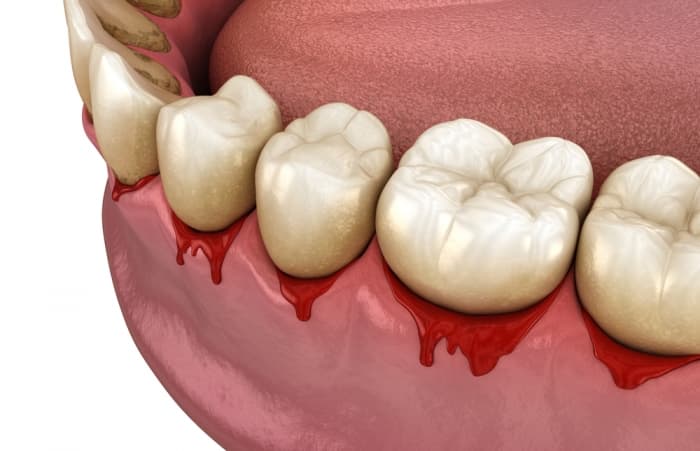
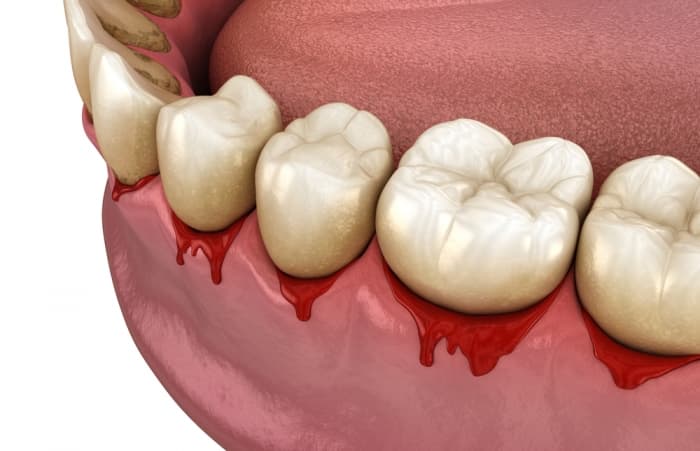
For patients with moderate to severe periodontal disease, or after deep root debridement, there are still deep periodontal pockets of more than 5 mm and accompanied by bleeding gums, they should consider another way to treat periodontal disease. Surgery is not the starting point: the non-surgical stage is completed first and often resolves the disease.
But "periodontal surgery" is where most clinic pages stop at a single sentence — "severe cases need surgery". Who actually needs it? How many kinds are there, and which suits which situation? What happens on the day, and over the six months after? Will the teeth look longer, will gaps open up? When is a tooth kept and when is it removed? In this article the periodontal team at Home Dental Centre sets it all out, including the limits of surgery and what to expect honestly.
Do You Really Need Periodontal Surgery? Three Conditions to Check First
- You have not had non-surgical treatment — surgery is not the starting point. Periodontal treatment always begins with deep scaling and root planing, and most moderate cases are stable after the non-surgical stage without any surgery. See our periodontal treatment procedure.
- Re-evaluation 6–8 weeks after non-surgical treatment — this is the moment the decision is made: the dentist re-charts the whole mouth and compares it with the pre-treatment record. Only pockets still 6 mm or deeper that bleed on probing, or X-ray evidence of intrabony defects or furcation involvement, lead to a surgical assessment.
- Acute swelling, pus, facial swelling or fever — that is a periodontal abscess, not something to schedule surgery for; contact our dental emergency service the same day.
The European Federation of Periodontology's 2020 clinical practice guideline (S3 level) sets out treatment in four steps; surgery is step three, and applies only to pockets that remain deep after non-surgical therapy. Re-evaluation findings and the usual recommendation:
| Re-evaluation (6–8 weeks after non-surgical treatment) | Usual recommendation |
|---|---|
| All pockets 4 mm or less, no bleeding on probing | Move to periodontal maintenance; no surgery needed |
| 4–5 mm with bleeding on probing | Repeat subgingival instrumentation at those sites, then re-evaluate |
| 6 mm or more with bleeding on probing | Surgical assessment: access flap, resective or regenerative surgery |
| Intrabony defect of 3 mm or more on X-ray | Regenerative surgery considered first |
| Class II furcation involvement of a molar | Regenerative or resective surgery depending on site |
| Severe mobility, bone loss beyond two-thirds of the root | Assess whether the tooth is worth keeping; extraction may be advised (see below) |
For what pocket depths and the stages of periodontitis mean, see can periodontal disease heal on its own.
Opening the Gum: Open-Flap Debridement
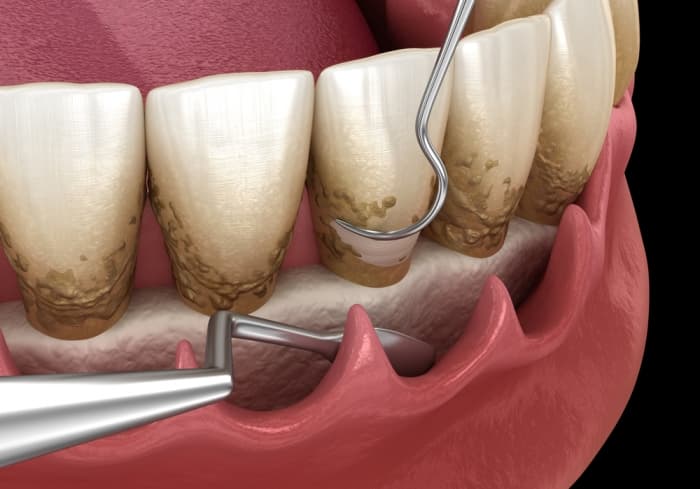
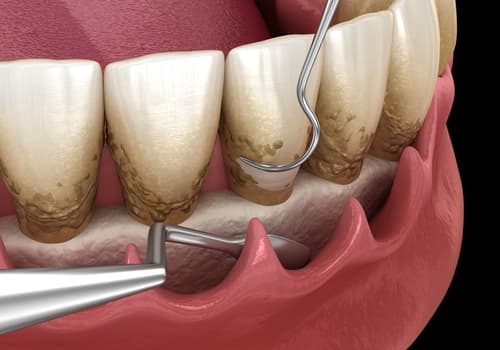
When the deep part of the periodontal pocket cannot be completely removed by mean of root debridement, open-flap debridement is required. This operation is the most common periodontal surgery. After turning over the gum under local anesthesia, the calculus and inflamed tissue on the surface of the tooth root are more thoroughly removed under the condition of direct vision, and then the wound is sutured. Periodontal surgery results in better access to furcations, complex root surfaces, and infrabony pockets (those apical to the crest of bone, surrounded by bone on one or more sides), areas that are the most difficult to treat by scaling and root planing.
Why open the gum at all? Once pockets exceed 6 mm, cleaning "blind" beneath the gum becomes markedly less effective, especially in root concavities and molar furcations. Lifting the flap gives direct vision of the root so that it can be cleaned properly. The aim of open-flap debridement is to reduce pocket depth so that you and your dentist can keep the area clean in future; it does not regrow bone that has been lost.
Honest expectations: part of the pocket reduction comes from the gum shrinking back and re-adapting — so after surgery the gum margin may sit lower than before, the teeth may look longer, "black triangles" may appear between them and the roots may be sensitive at first. These are normal consequences of pocket reduction, not complications; where recession is marked and affects appearance, gum grafting can be assessed later.
Regrowing Tissue: Guided Tissue Regeneration
If clinical conditions allow, artificial bone material and/or regeneration membranes and other biological materials can be implanted in the part of the bone defect when the gum is opened, thereby inducing the regeneration of periodontal cells, repairing the previously damaged alveolar bone, and restore the function of teeth. This kind of surgery is called regeneration surgery. The purpose of the surgery is to promote the regeneration of alveolar bone. Compared with only performing debridement, a better treatment result can usually be obtained. However, it should be noted that not all bone defects can be repaired. Whether the shape of the bone defect is properly placed with regenerative materials is a factor that affects the possibility and effect of regenerative surgery.
Which defects can regenerate? Regenerative surgery depends above all on the shape of the defect:
- Intrabony (vertical) defects — a "well" beside the root surrounded by bone; those with three bony walls and a depth of 3 mm or more regenerate most predictably, and the fewer the walls, the less certain the result.
- Furcation involvement — bone loss between the roots of a molar; class II (probe enters part-way) in lower molars responds best, while class III (through-and-through) is generally not a candidate for regeneration.
- Horizontal bone loss — bone lost evenly across a row of teeth leaves no "well" to fill, so regenerative material has nowhere to sit; open-flap or resective surgery is used instead.
What materials are used? Bone graft materials (synthetic, or processed donor or animal-derived bone), resorbable membranes and enamel matrix derivative (EMD), sometimes in combination. The material is not magic — the biggest determinants of outcome are the defect shape, your plaque control and whether you smoke.
When will you know it has worked? Regeneration takes time: the soft tissue heals in 4–6 weeks, but bone regeneration can only be assessed on X-ray after 6–12 months, and the dentist usually avoids probing the site in the meantime so as not to disturb the forming tissue.
The Four Types of Periodontal Surgery at a Glance
| Surgery | What is done | Suited to | Goal | Limits to know |
|---|---|---|---|---|
| Open-flap debridement (access surgery) | Gum lifted, root cleaned under direct vision, sutured | Residual pockets of 6 mm or more after non-surgical treatment | Reduce pocket depth so the area can be kept clean | Recession, longer-looking teeth, root sensitivity; bone does not regrow |
| Resective surgery (osseous recontouring) | Debridement plus reshaping of irregular bone margins so the gum re-adapts flat | Horizontal bone loss, uneven bone margins, furcations that need opening for cleaning | Eliminate pockets and create the easiest form to maintain | More recession than open-flap alone; used cautiously in the aesthetic zone |
| Regenerative surgery (bone graft / membrane / EMD) | Regenerative material placed in the defect after debridement | Intrabony defects of 3 mm or more; class II furcations | Regrow part of the periodontal support and bone | Outcome depends on defect shape; high failure rate in smokers; results seen only at 6–12 months |
| Mucogingival surgery (gum graft / root coverage) | Soft tissue from the palate or a substitute used to cover exposed roots or thicken the gum | Marked recession, root sensitivity, aesthetic concern, thin gum | Improve appearance and sensitivity, increase gum thickness | Done only once periodontal disease is stable; see gum recession and gum grafting |
One patient may have several approaches combined in a single operation — for example open-flap debridement across a quadrant with regeneration at one tooth. The actual plan is drawn up by a periodontist from your X-rays and periodontal chart.
What Happens on the Day
- Pre-operative checks — periodontal chart and X-rays reviewed; medical history and medications (blood thinners, diabetic control, osteoporosis drugs); your GP may be contacted where needed. Fasting is not usually required.
- Local anaesthetic — the same as for a filling; the surgery itself does not hurt, though pressure is normal. Patients with marked anxiety can discuss sedation.
- Flap and debridement (about 45–90 minutes per quadrant) — usually one or two quadrants per visit rather than the whole mouth, completed over two to four visits.
- Placement of regenerative material (where applicable) — bone graft, membrane or EMD placed in the defect.
- Suturing — fine sutures; in some cases a periodontal dressing (protective pack) is placed.
- Post-operative instructions and medication — painkillers and chlorhexidine mouthwash; antibiotics may be prescribed for regenerative or extensive surgery. Sutures are removed and the site checked at 7–14 days.
The Six Months After Surgery
| When | What you will feel | What to do |
|---|---|---|
| Days 1–2 | Swelling, mild to moderate discomfort, slight oozing; pain begins as the anaesthetic wears off | Ice packs (10–15 minutes at a time); painkillers as directed; soft, cold or lukewarm food; no sucking or vigorous rinsing; do not brush the surgical site |
| Days 3–7 | Swelling peaks on day 2–3 then subsides; bruising may appear | Continue chlorhexidine mouthwash (twice daily); brush all other teeth normally; avoid smoking, alcohol, spicy, hard or hot food |
| Days 7–14 | Sutures removed; gum surface initially healed | After suture removal, resume gentle brushing of the site with a soft brush as instructed; still no floss or interdental brushes at the site |
| Weeks 2–6 | Roots may be sensitive; gum position settles and teeth may look longer | Resume interdental brushes and normal cleaning; desensitising toothpaste for sensitivity; avoid hard horizontal scrubbing |
| Month 3 | First maintenance review; gum shape largely stable | Full-mouth charting (excluding regenerated sites); cleaning technique fine-tuned |
| Months 6–12 | Bone regeneration after regenerative surgery becomes assessable on X-ray | X-ray comparison; risk reassessed and the long-term recall interval set |
Aftercare: Do and Don't
Do: use ice packs for the first 24 hours; eat soft, cold or lukewarm food; take medication on time; use chlorhexidine mouthwash (usually 1–2 weeks); brush all other teeth normally to keep the whole mouth clean; for slight oozing, press gently with clean gauze for 20 minutes.
Don't: rinse vigorously, spit or use a straw for the first 24 hours; smoke (for at least two weeks, and ideally throughout healing after regenerative surgery) — smoking is the single biggest cause of surgical failure; drink alcohol; poke the wound with your finger or tongue; remove the dressing or sutures yourself; do strenuous exercise for the first 2–3 days.
Contact the dentist the same day if: bleeding will not stop; swelling is still increasing after day 3; you have a fever; pain is not controlled by the painkillers; the dressing or sutures come away and the wound opens. Outside opening hours, contact our dental emergency service.
Risks and Honest Expectations
Periodontal surgery is routine and serious complications are rare, but the following are worth knowing in advance:
- Gum recession, longer-looking teeth, black triangles — the most common, especially after resective surgery. Pocket reduction and gum recession are two sides of the same coin.
- Root sensitivity — sensitivity to hot and cold usually fades over weeks to months; persistent cases respond to desensitising toothpaste or fluoride varnish.
- Regeneration is not guaranteed — even with a suitable defect shape, the amount of bone regained varies; smoking, poor glycaemic control and poor plaque control sharply reduce success.
- Temporary increase in mobility — normal for a few weeks after surgery, then settles.
- Infection, persistent bleeding — uncommon; patients on blood thinners or with heart conditions are managed in advance.
- Surgery is not the end — without maintenance reviews, the pocket reduction gained is lost within one to two years (see below).
General health also matters: poorly controlled diabetes impairs healing, and the two-way relationship between periodontal inflammation, diabetes and cardiovascular disease is set out in gum disease and your whole body: the evidence.
Will Teeth Still Need to Be Removed?
However, if the bone around the teeth has been severely damaged and the periodontal tissue has been lost, there is no guarantee that those teeth that have serious problems will never fall out after the periodontal treatment is completed. Sometimes, the doctor may suggest that the patient remove the affected tooth in order to avoid further damage to the surrounding tissues. Considering the success rate of the operation and the predicted lifespan of the tooth, tooth removal may be a more recommended option. Bleeding gums are a late warning, and how the disease reaches the advanced stage shows what precedes it.
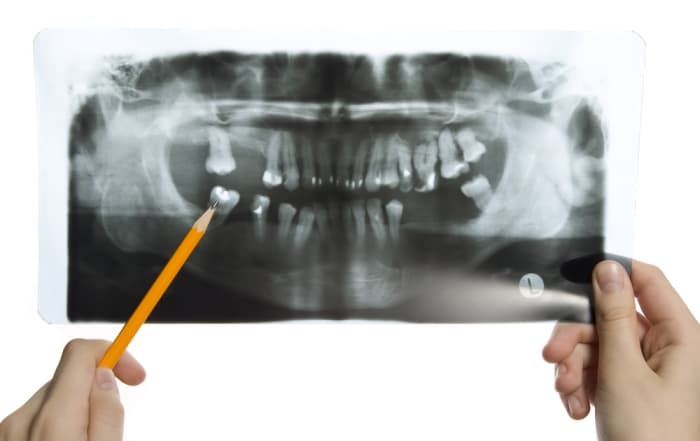
How does the dentist decide between keeping and removing? Not by a single number, but by weighing the following:
| Factor | Favours keeping | Favours removal |
|---|---|---|
| Extent of bone loss | Less than half | More than two-thirds, or reaching the root tip |
| Mobility | Slight or moderate | Grade III (moves vertically) |
| Furcation (molars) | Class I–II | Class III through-and-through, impossible to clean |
| Recurrent abscess | None | Repeated abscesses at the same tooth |
| Strategic value of the tooth | Key support for the bite, a denture or a bridge | No opposing tooth, no function |
| Patient’s cleaning ability | Achievable | Persistently inadequate, so surgical results cannot be maintained |
And after extraction? The gap can be restored with an implant, a bridge or a removable denture. One caution: patients with a history of periodontitis are at higher risk of peri-implantitis, a periodontitis-like condition around implants — so even after switching to implants, periodontal control and maintenance must not stop.
Is It All Over Once Surgery Is Done?
When the treatment is completed, the doctor will determine whether the patient can enter the maintenance phrase. Depending on the condition of each patient, the doctor will set the time for the patient's follow-up. The follow-up appointment is usually within three months after the completion of the treatment. After the condition is stable, the follow-up may be changed to every six months or one year. And when the periodontal health is satisfactory, if the patient wants to repair the appearance of the gum, the doctor can then evaluate the possibility of gum repair.
Maintenance after surgery determines the result more than the surgery itself. Long-term studies consistently show that patients who have surgery but do not attend reviews see their pockets deepen again within one to two years, while those in regular maintenance keep the benefit for ten years or more. How often to attend, what happens at a review and how to tell stability from relapse are set out in gum disease recurrence, maintenance and review intervals. For the methods and conditions of gum repair, see gum recession causes and gum grafting.
Daily Care After Surgery
- After suture removal, start with gentle brushing using a soft brush and gradually return to proper brushing technique; gaps at the surgical site are wider, so interdental brush sizes should be re-fitted by the dentist
- Chlorhexidine mouthwash is for short-term post-operative use only, as it stains with prolonged use; for everyday use see how to choose a mouthwash
- Stop smoking — critical for regenerative surgery in particular
- Keep blood sugar and general health under control
Persistent bleeding on brushing is the earliest sign of relapse — see what bleeding gums mean; for an item-by-item self-check of the eight warning signs, see periodontal disease warning signs.
Fee Guide for Periodontal Surgery
The fee for periodontal surgery depends on the type of surgery, its extent (how many quadrants), whether regenerative materials are needed (the cost of bone graft, membrane and enamel matrix derivative varies considerably) and whether it is performed by a specialist; it is usually charged per quadrant or per tooth. Because every case differs in defect shape and extent, Home Dental Centre sets out the procedure and fees clearly according to your plan after a specialist assessment (with X-rays and full-mouth charting), and starts only with your consent. For the non-surgical stage and its fees see periodontal treatment: procedure and fees; our fee transparency commitment applies to all surgery.
Book a Periodontal Surgery Assessment
Open seven days a week, with earlier slots available at our Causeway Bay and Tsuen Wan dental centres. When you book, please tell us whether you have already had deep cleaning and when, and whether you smoke, have diabetes or take blood thinners.
Why Choose Home Dental Centre for Periodontal Surgery?
- A team of 31 dentists — surgery is performed by periodontists, and periodontal treatment, maintenance and implants connect within the same team, with no new waiting list.
- Assessment first, not surgery first — re-evaluation 6–8 weeks after non-surgical treatment, with surgery recommended only for pockets that remain deep; cases that can be stabilised with maintenance are not sent for surgery.
- Multidisciplinary case conferences — whether to keep or remove a tooth, and whether to replace it with an implant or a bridge, is assessed jointly by periodontal, implant and restorative dentists.
- Transparent fees — after the specialist assessment we explain the procedure and fees clearly, and start only with your consent.
- Open seven days — earlier slots for post-operative bleeding or swelling, with same-day appointments at both our Causeway Bay and Tsuen Wan dental centres.
Medical References
The general clinical principles in this article draw on the following professional sources; actual diagnosis and treatment must be decided by a dentist for each individual case:
- Oral Health Education Unit, Department of Health, Hong Kong: Periodontal disease
- Sanz M, Herrera D, Kebschull M, et al. (2020): Treatment of stage I–III periodontitis — The EFP S3 level clinical practice guideline. Journal of Clinical Periodontology 47(S22):4–60 — step 3: surgical management of residual pockets of 6 mm or more after non-surgical therapy; recommendations for regenerative surgery of intrabony and furcation defects
- NHS: Gum disease — Treatment (severe gum disease may need deep cleaning, antibiotics, tooth removal or gum surgery)
- American Academy of Periodontology: Periodontal Treatments and Procedures
Medical information notice: this article provides general dental health information and is not a substitute for an in-person examination, periodontal probing or imaging. The indications, timeline and aftercare given here are for guidance only; your actual plan is decided by your periodontist from your clinical data, and post-operative medication should be taken as prescribed. If you have bleeding that will not stop, increasing facial swelling, fever or severe pain, seek care promptly.