Key takeaways
"Mouthguard" is not one thing. Clinically there are at least four distinct appliance families: sports mouthguards, night guards for grinding (occlusal splints), TMJ stabilisation splints, and mandibular advancement devices for sleep apnoea. Their material hardness, thickness, coverage and jaw position are each engineered for a different purpose — they are not interchangeable, and the wrong one can make a problem worse. Custom-making is also more than "taking an impression": accurate bite records, material quality, and above all occlusal adjustment at fitting plus follow-up as indicated are what determine whether the appliance actually works. This guide sorts out which is which — and which one fits you.
"I play basketball — I want a mouthguard." "I grind at night and my jaw aches — should I just buy a guard?" "Is a boil-and-bite one from the shop good enough?" We hear these daily. The answer always depends on which problem you are solving, because appliances for different purposes are genuinely different devices. Choosing the wrong one wastes money at best — and can aggravate symptoms at worst. Here is each family, one by one.
① Sports mouthguard: soft, thick, shock-absorbing
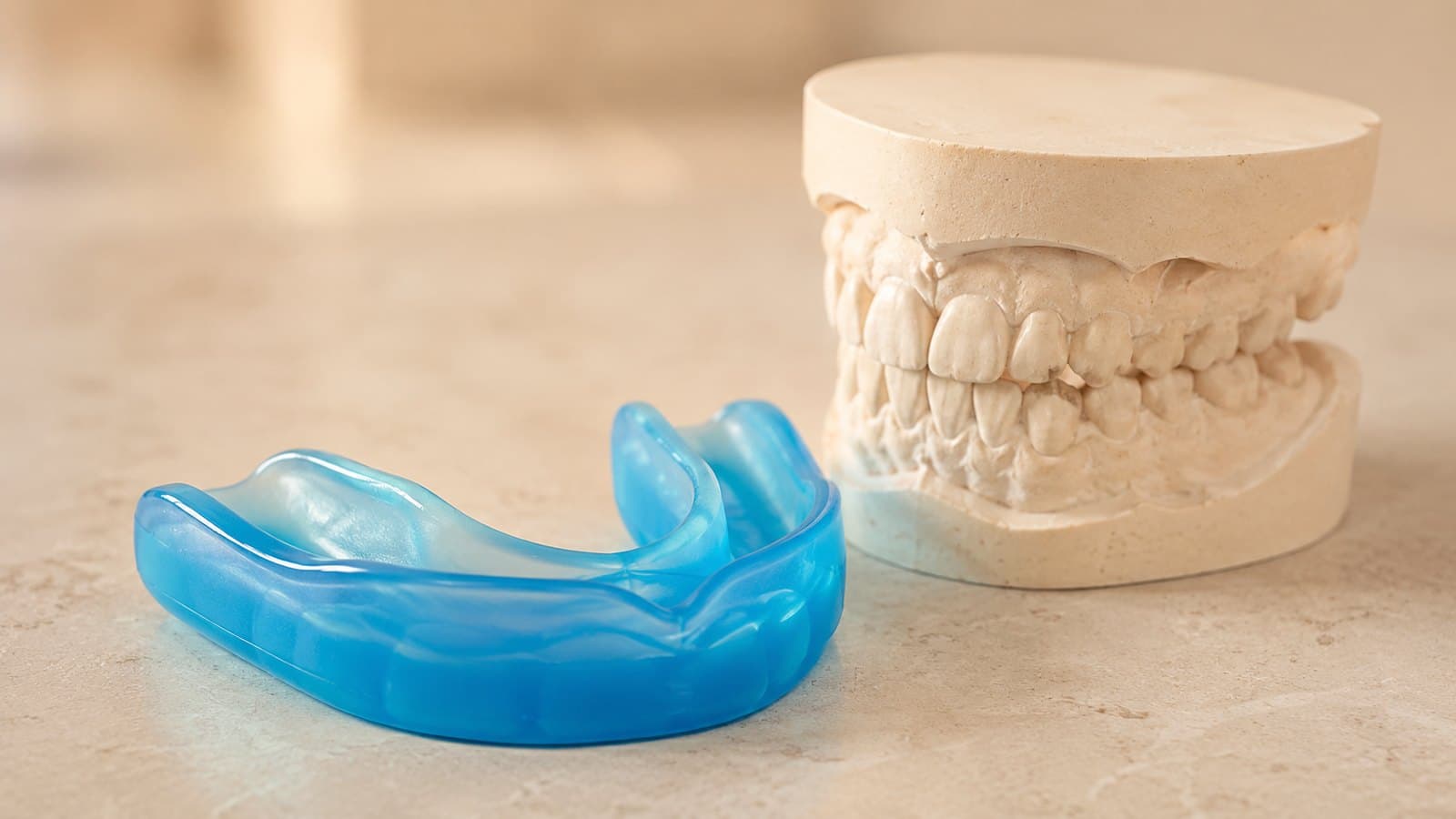
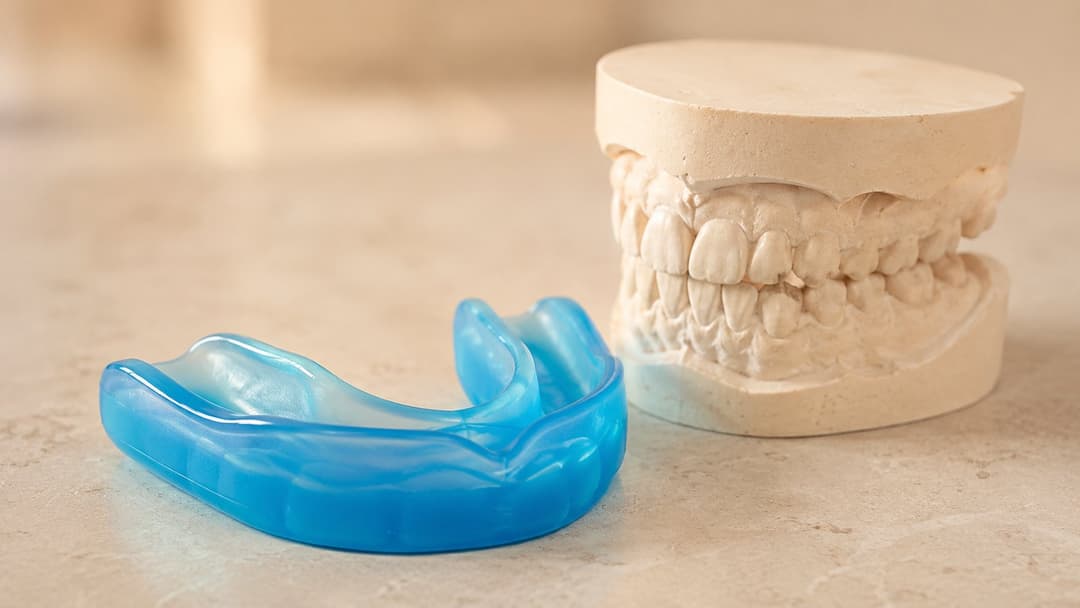
Its job is absorbing impact — protecting teeth, lips and jaws in basketball, boxing, rugby, cycling and any sport with collision or fall risk. That is why it uses softer EVA material, made thicker, with cushioning concentrated at the front teeth. A custom version made on your dental model fits securely with far less interference to speech and breathing — precisely what separates it from shop-bought boil-and-bite guards: a loose guard can shift on impact, and its protection drops sharply.
② Night guard for grinding (occlusal splint): hard, thin, protects against wear
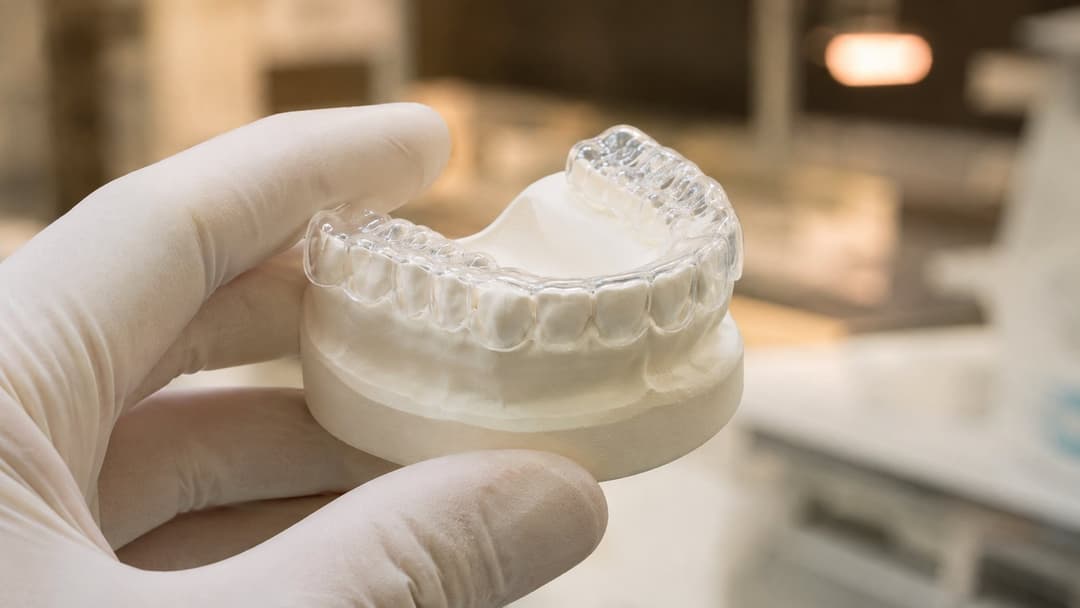
Night-time grinding (bruxism) wears teeth down, chips them and damages fillings. A night guard gives the teeth something to wear against that isn't tooth. It is the opposite of a sports guard — typically hard acrylic, made thin, with its surface adjusted so upper and lower contacts are even. Why hard rather than soft? Because a soft, chewy surface can act like gum — encouraging the jaw muscles to keep clenching and potentially making grinding worse. This is why many people who self-purchase a soft guard report feeling more jaw fatigue.
③ TMJ stabilisation splint: unloading the jaw joint and muscles
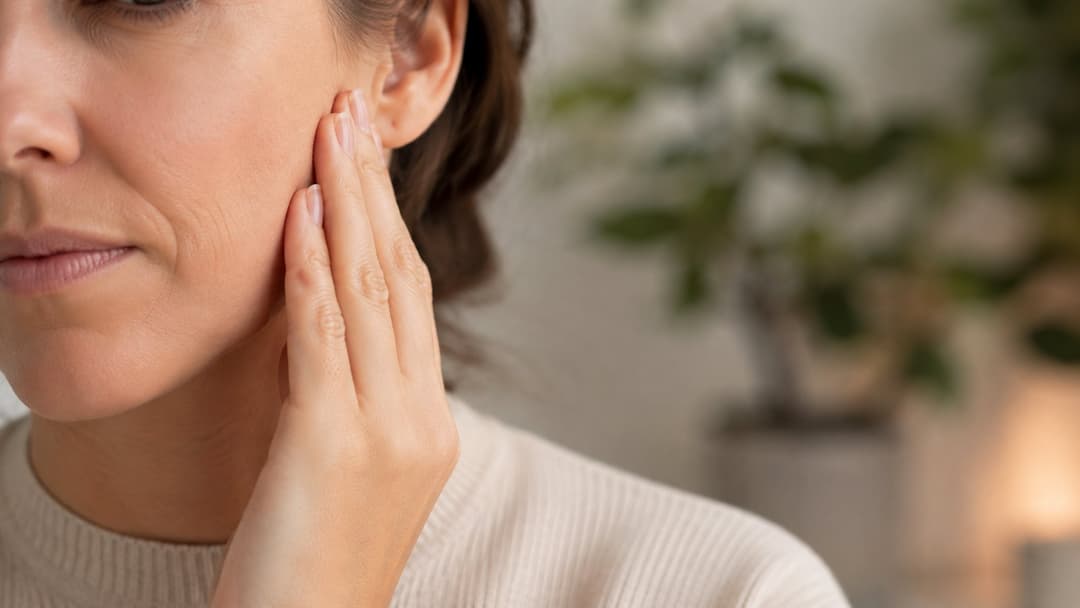
Jaw-joint pain, clicking on opening, aching facial muscles, morning jaw stiffness — for these temporomandibular (TMJ) problems, one treatment option is a stabilisation splint: hard, full-arch, its biting surface finely adjusted so every tooth contacts evenly and the lower jaw rests in a relaxed position, letting joint and muscles unload overnight. It looks similar to a night guard, but the adjustment goal differs — a TMJ splint's benefit depends heavily on the precision of its occlusal adjustment and subsequent follow-up, not merely on "having plastic in between". And to be clear: jaw pain has many causes (joint, muscle, bite, stress habits), and not everyone needs a splint — assess first, then decide.
④ Sleep apnoea oral appliance (mandibular advancement device, MAD): not tooth protection — airway opening
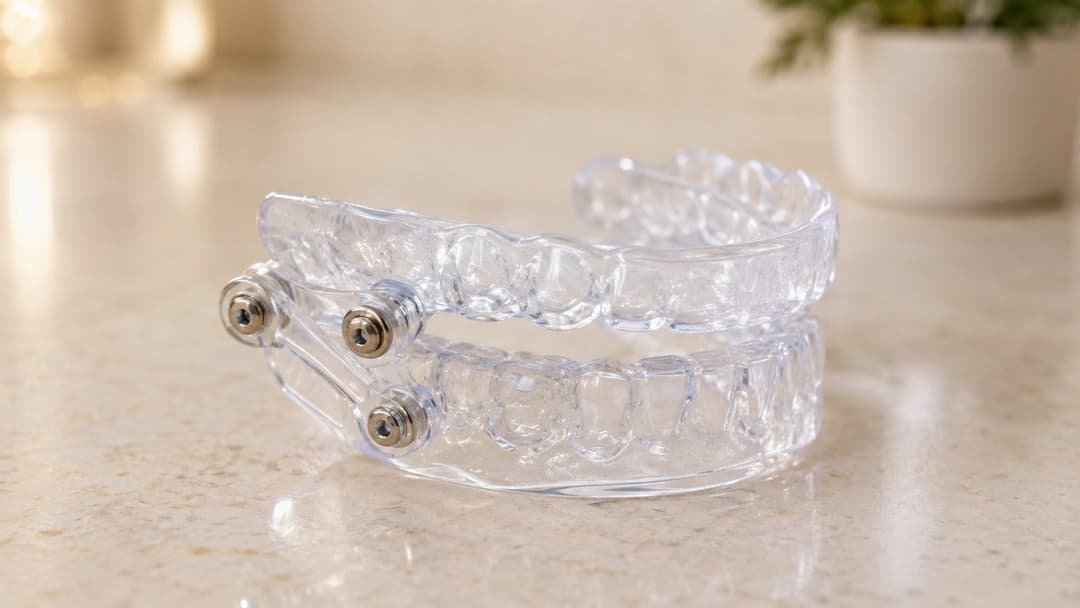
The most misunderstood of the four — it looks like a mouthguard but does something entirely different: a connected two-piece, adjustable device that holds the lower jaw slightly forward, widening the throat airway to improve snoring and mild-to-moderate obstructive sleep apnoea. Its essence is stepwise titration of jaw advancement under a dentist's follow-up — nothing to do with protecting teeth. Read our dedicated article: Sleep apnoea and oral appliances.
Why one cannot do the job of four
The four families differ deliberately across hardness, thickness, coverage and jaw position: sports guards are soft and thick (absorb impact); night guards and TMJ splints are hard and precise (distribute bite force, relax muscles); a MAD advances the jaw (opens the airway). Using a soft sports guard against grinding can make the muscles more active; using a one-size online guard for jaw pain, without occlusal adjustment, is of doubtful benefit and can even alter your bite. The appliance serves the diagnosis — never the other way round.
The impression is only half the job — quality, occlusal adjustment and review are the other half
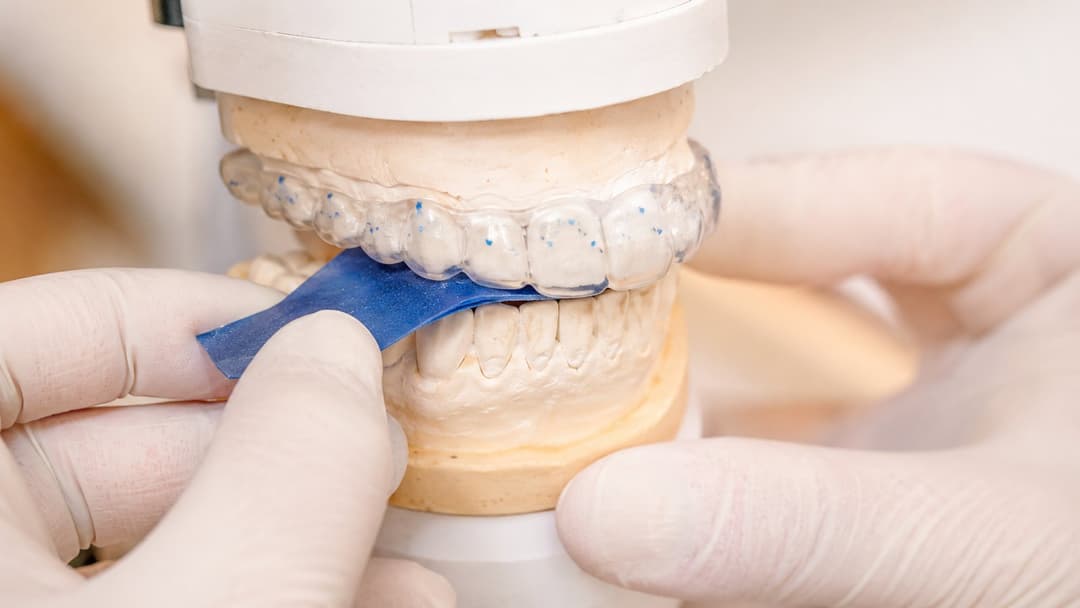
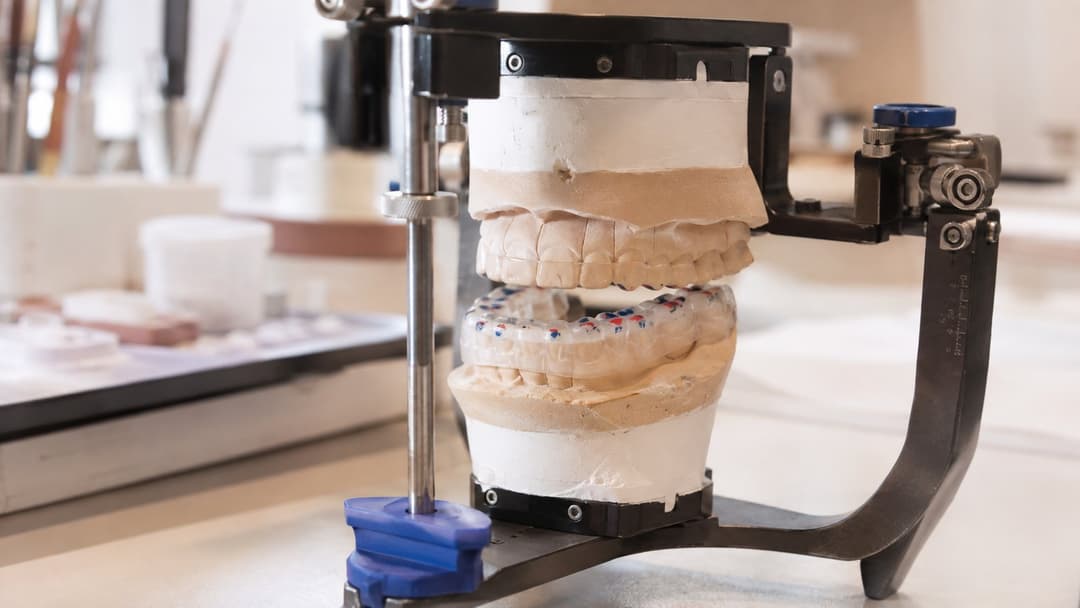
Custom fabrication is more than a mould: ① accurate models plus bite records (how your jaws relate); ② laboratory fabrication to prescription — material grade and precision directly affect durability and fit; ③ at fitting, point-by-point checking with articulating paper, grinding down high spots until contacts are even — for TMJ splints and night guards this step is the heart of the treatment; ④ review as indicated: as muscles and joints relax, the contact pattern changes and needs re-adjustment, and a MAD needs its advancement titrated in steps. Skip the adjustment and follow-up, and even a beautifully made appliance is only half-finished.
Who needs which? Assessment decides
Contact-sport habits → sports mouthguard. Visible wear facets, a partner who hears grinding, tired jaws in the morning → assess for a night guard. Jaw-joint pain, clicking, aching facial muscles → assess the TMJ cause first; a splint is only one of the options. Loud snoring, daytime sleepiness, suspected apnoea → a sleep assessment should come first, then whether a MAD suits you. At assessment the dentist examines teeth, bite, joints and muscles before recommending a device and material — talk the options and trade-offs through with a dentist you trust, and decide together.
Why choose Home Dental for custom guards and splints?
✓ All four appliance families — sports, grinding, TMJ, sleep apnoea — custom-made after case assessment, never one-size-fits-all
✓ Point-by-point occlusal adjustment with articulating paper at fitting, with review re-adjustment as clinically indicated
✓ TMJ cases assessed across joint, muscle and bite before any treatment direction; suspected sleep apnoea cases advised to undergo sleep assessment
✓ Materials and care explained in detail before treatment; fees clearly set out after assessment; Causeway Bay and Tsuen Wan
Book your professional dental care at Home Dental
You can arrange a same-day consultation via:
• The WhatsApp button on this page (recommended) — reach us instantly
• Calling 3956 9387 (during office hours)
Related reading: Sleep apnoea and oral appliances.