What Are Dentures and Dental Bridges?
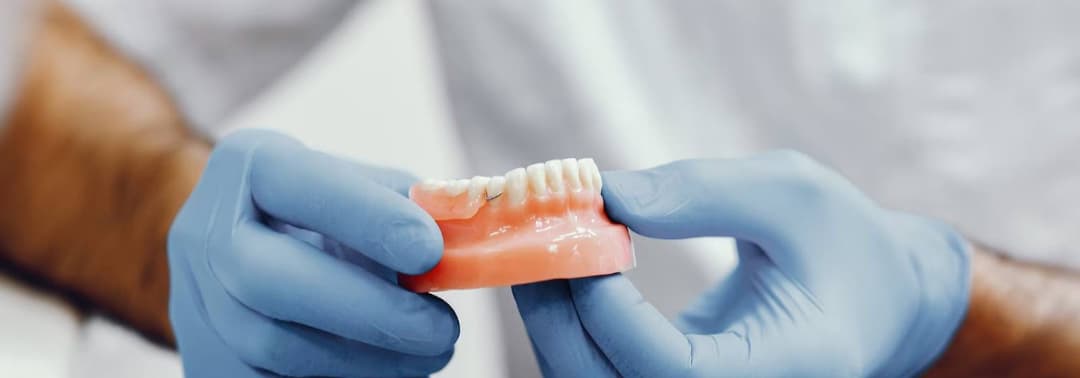
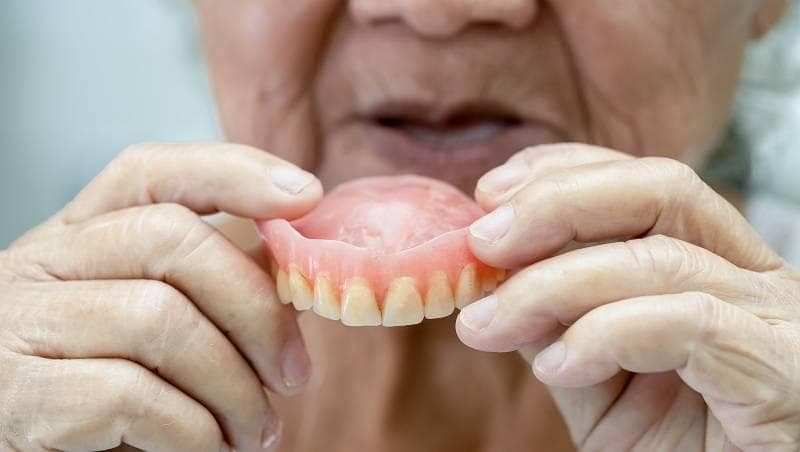
Dentures are removable appliances designed to replace missing teeth and restore your smile, available as complete (replacing all teeth) or partial (replacing a few missing teeth) options. Dental bridges, on the other hand, are fixed appliances used to replace one or more missing teeth, anchored to adjacent teeth. Both solutions aim to enhance oral function and aesthetics. For front teeth in particular, the aesthetic role of crowns and bridges matters as much as the mechanical one.
Why You Need Dentures and Dental Bridges?
If you are missing teeth, various options can help restore your ability to chew and speak effectively, enhance your facial appearance, and boost your self-confidence. Dentures serve as an excellent choice for individuals who may not qualify for dental implants, while bridges offer a dependable solution when implants are not viable. For a single damaged tooth, choosing between a filling, inlay, onlay or crown depends mostly on how much structure is left.
Who Are Suitable for Dentures and Dental Bridges?
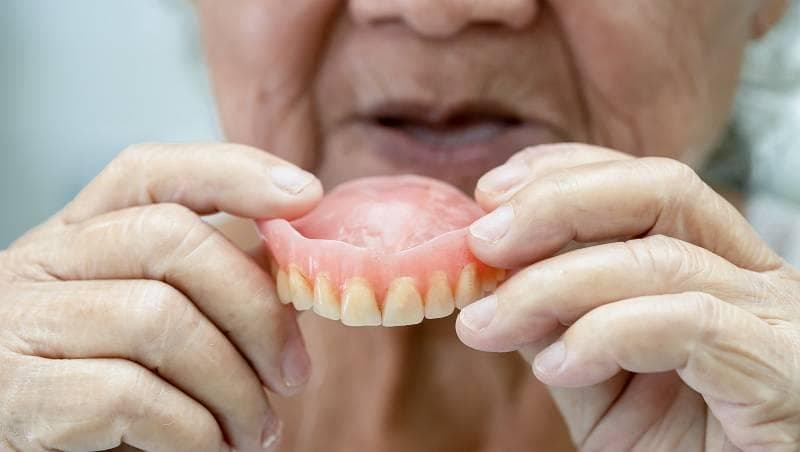
Dentures are ideal for individuals, especially the elderly, who have lost multiple teeth due to decay, injury, or other dental issues. Dental bridges are suitable for those with one or more missing teeth in good overall dental health, making them a viable alternative when dentures or implants aren’t feasible.
If you are arranging dentures for an older family member, see also our senior dental care page for how a whole-mouth assessment is arranged.
Can a Missing Tooth Be Left Alone for Now?
Some gaps need treatment; others can reasonably be monitored. Whether a tooth should be replaced depends on its position, the remaining bite, appearance, the condition of neighbouring teeth, how easily the area can be cleaned, and what matters to you day to day.
A missing front tooth usually affects appearance and speech, and losing a main chewing tooth can affect function. However, if only the most posterior molars are missing and the remaining bite is stable and sufficient, restoring the arch to a full set of teeth is not always necessary. Research on the shortened dental arch supports monitoring in selected cases.
If you decide to wait, these are the changes worth watching for:
- Neighbouring teeth may gradually tilt or rotate — some gaps change over time, though the speed and extent vary between individuals.
- The opposing tooth may over-erupt into the gap — this can reduce the space available for a restoration later.
- The distribution of biting force may change — if the main chewing area is reduced, some teeth may carry a more concentrated load.
- The ridge in the gap usually changes over time — bone volume can reduce after an extraction, to a degree influenced by site, time and individual factors.
An early assessment does not mean treatment must start immediately. Its real value is recording the space, bone, neighbouring teeth and bite, so you can see whether waiting would narrow your options later, and then decide when to act.
Five Common Options — Where Do They Actually Differ?
The list below is not a ranking. It compares the options by whether neighbouring teeth need to be prepared, whether the result is fixed or removable, whether surgery is involved, and what maintenance follows. The right choice still depends on the site, the remaining teeth, gum condition, bone, bite and your own priorities.
- Removable dentures — usually no full-coverage preparation, though some designs need small rest seats. Removable. Can address several gaps at once, are easier to modify or add to, and generally involve no surgery; but they require adaptation, chewing efficiency and stability are usually lower than fixed options, and periodic adjustment is needed.
- Resin-bonded bridges — minimal tooth preparation, depending on design. Fixed. Little tooth structure is lost and conversion to another option remains possible; but a suitable bonding surface and favourable loading are required, and debonding is a recognised technical complication.
- Magnet-retained overdentures — neighbouring teeth are not necessarily involved, but suitable roots must be retained and modified, usually requiring root canal treatment and metal copings. Removable, with attachments adding retention. Retained roots provide extra support; but few roots qualify, and strict cleaning and long-term maintenance are essential.
- Conventional bridges — one or more abutment teeth must be prepared, and this is irreversible. Fixed. No surgery and a relatively direct course of treatment; but the underside of the pontic needs a specific cleaning technique.
- Dental implants — generally no preparation of neighbouring teeth. Fixed. Provide independent support in the gap without involving adjacent teeth; but surgery, healing time, and bone and soft-tissue conditions are involved, along with long-term cleaning and review.
No single option is better than the others in every situation. What decides it is the current condition of your mouth.
Why Choose Home Dental? Four Things We Clarify First When Assessing a Missing Tooth
There is no single solution that suits everyone. The purpose of an assessment is not to select a denture, a bridge or an implant first, but to understand your current function, the condition of your mouth, and the trade-offs that matter most to you.
- Whether this gap really needs to be filled — not every missing back tooth requires immediate treatment. If the bite is stable, function is adequate and there is no concern about appearance or space, monitoring can be discussed. If the gap is affecting eating, speech, appearance or the space available later, the options should be compared.
- How much natural tooth and root can be kept — we look at whether the neighbouring teeth are intact or already heavily restored, and whether any retained roots are genuinely worth preserving. The aim is not to sacrifice healthy tooth structure in order to use one particular technique.
- What matters most to you — some patients value a fixed result above all; others prefer to avoid surgery, need a shorter course of treatment, or want something that can be modified later. These preferences genuinely change the recommendation.
- What maintenance will be needed — dentures may need adjustment or relining; bridges need the pontic base cleaned; implants need long-term review. Maintenance and the possibility of remaking should be explained at the assessment, not afterwards.
Treatment is provided at our Causeway Bay and Tsuen Wan centres. Where wear, fractures and missing teeth are affecting several teeth at once, the case falls under full mouth rehabilitation. You may want to read Full Mouth Rehabilitation (Occlusal Reconstruction) first, or see the wider scope of our restorative dental services.
What We Offer at Home Dental?
- Comprehensive Services: At Home Dental, we offer a wide range of denture and bridge options, including full dentures, partial dentures, and fixed bridges. Our dedicated team of general dentists and specialists collaborates closely with you to develop tailored solutions, such as custom-fitted dentures designed to improve your oral health and functionality.
- Personalized Solutions: Recognizing that each patient is unique, we customize our services to meet your specific needs. For example, if you have sensitive gums, our skilled professionals will prioritize gentle fittings and materials that enhance your comfort during the entire process, ensuring a seamless fit that feels natural.
- Enhanced Functionality and Appearance: Our dentures and bridges not only restore your ability to chew effectively—allowing you to enjoy foods you love, like apples or steak—but also improve your smile's appearance. By helping you regain your confidence with a natural-looking smile, our high-quality solutions significantly contribute to your overall well-being and satisfaction.
Dentures: Easier Across Several Gaps, and Easier to Modify Later
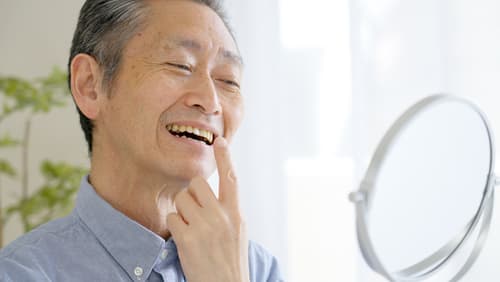
Dentures are sometimes seen as a fallback. In practice, for patients with several missing teeth, gaps spread across different areas, medical conditions that make surgery unsuitable, or a wish to keep future options open, a denture can be a sound and practical choice.
A denture usually avoids the extensive preparation a conventional bridge requires, although some designs still need a small amount of tooth preparation so that rests and clasps sit securely.
The adaptation period should be described honestly. Early on there may be a sense of bulk, altered speech, increased saliva and unfamiliar chewing. Some patients adapt within a few weeks; others need longer and several adjustments. The goal is improved chewing, appearance and speech, but actual chewing ability is influenced by the ridge, the design, muscle control and the remaining teeth, and should not be expected to equal natural teeth.
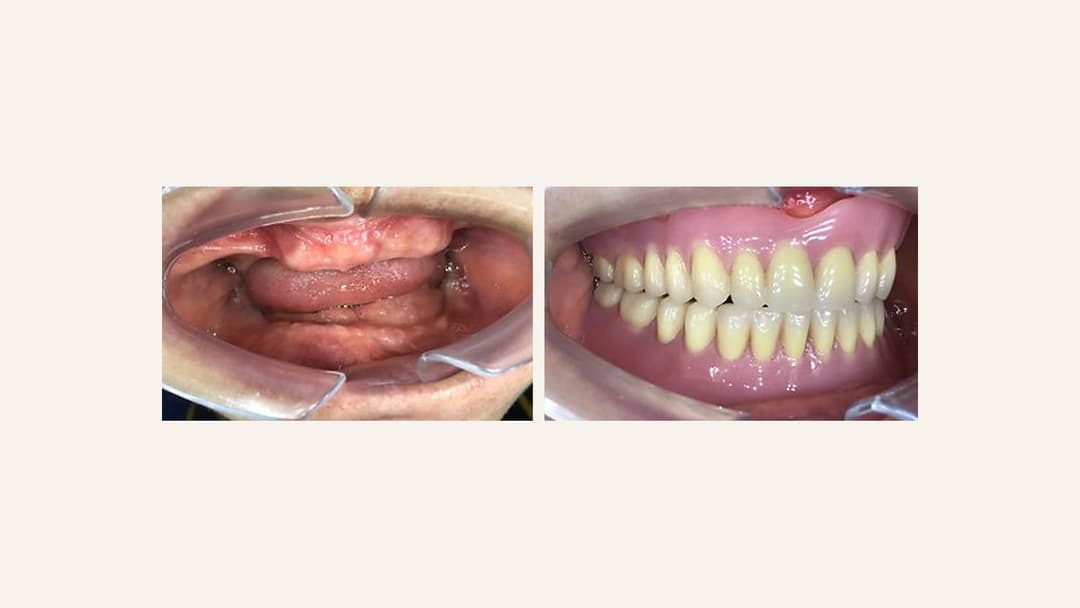
Pre-treatment ridge record compared with the result after complete dentures were fitted. Individual cases vary and results are not representative of other patients.
Why a Denture That No Longer Fits Should Be Checked
A denture is not a one-off. The ridge continues to change over the years, so a denture that fitted well at first may no longer fit a few years later.
- Sore spots and ulcers — a border rubbing the same area over time can create an ulcer. Occasional soreness can be adjusted, but an ulcer that does not heal should be examined promptly.
- Concentrated loading — when a denture no longer fits, force may concentrate on a few points, increasing soreness and pressure on part of the ridge and making eating and cleaning harder.
- Decay and gum problems — food and plaque collect around clasps and beneath the base, and the necks of covered natural teeth carry a higher risk of decay.
- A narrowing diet — when a denture is loose or sore, harder or more fibrous foods are often avoided. If weight, nutrition or daily eating is affected, this should be addressed early.
A denture that has become loose, sore or repeatedly ulcerating needs to be checked. The answer may be a local adjustment, a reline, a repair or a remake, depending on the age of the denture, the bite, the base and how the mouth has changed. Needing a reline after some years is not unusual and usually reflects normal tissue change rather than a fault in the original work.
Where Roots Can Still Be Saved, an Overdenture May Be an Option
For patients whose crowns are badly broken down but whose roots and surrounding tissues are still worth preserving, an overdenture supported by those roots can be assessed. The principle is simple: even when the crown of a tooth is beyond repair, the root itself may not need to be removed immediately. After root canal treatment, a metal coping is fitted to the root and a magnet is set into the corresponding position in the denture, creating retention between the two.
Whether a root is worth keeping is judged on periodontal support, root structure, whether root canal treatment is feasible, decay risk, position and the patient’s ability to clean the area.
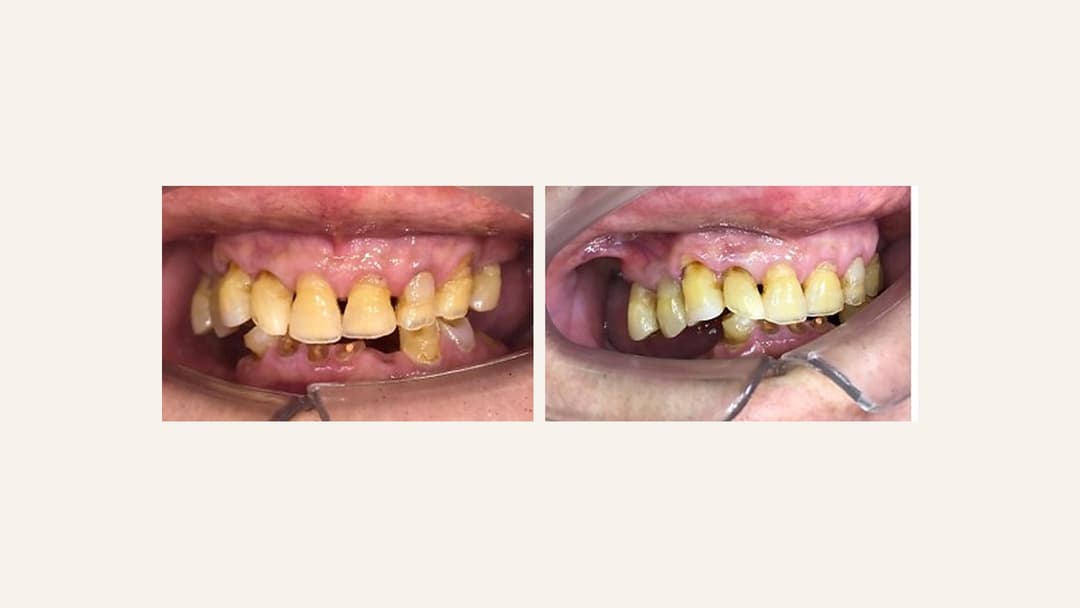
Pre-treatment records: the crowns of the remaining teeth are severely broken down. Individual cases vary and results are not representative of other patients.
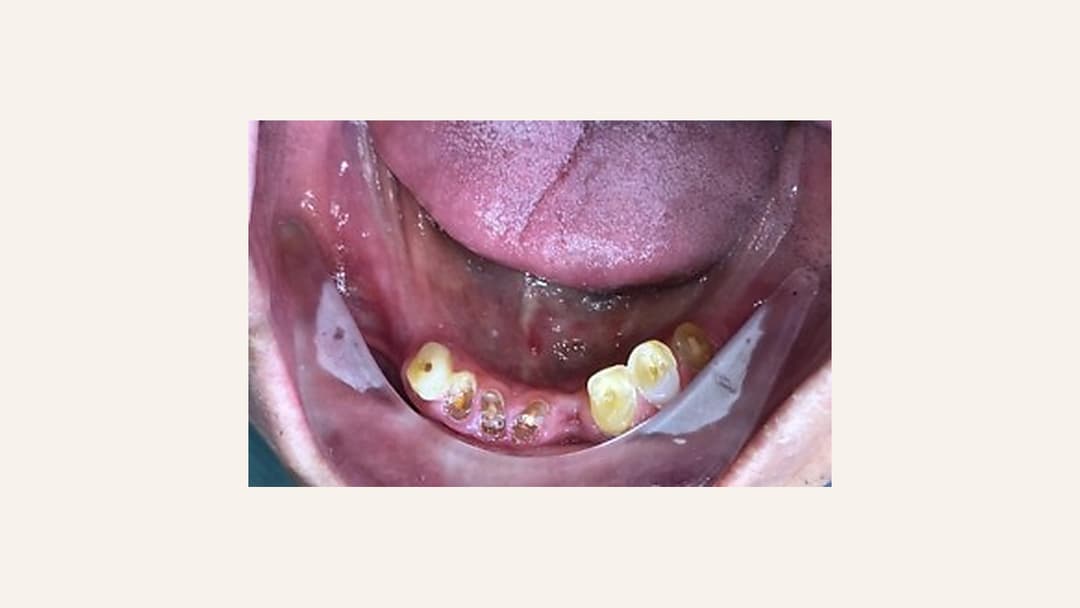
Pre-treatment record of the lower arch in the same case. Individual cases vary.
Retained roots may help in three ways:
- Helping preserve part of the ridge and proprioceptive feedback — a natural root retains its periodontal ligament, which can support the overdenture and reduce loading on part of the ridge; this does not guarantee that bone volume will stop changing.
- Providing additional support — roots or attachments can share part of the vertical load and improve stability, to an extent that depends on the number and position of the roots and on the design.
- Adding a sense of retention through magnets — this can reduce movement while speaking or eating, although actual retention is also influenced by the ridge, saliva, the denture base and other attachments.
To be clear: magnets provide limited retention, and the retained roots still carry functional load, so the roots, copings, magnets and surrounding tissues must be reviewed regularly.
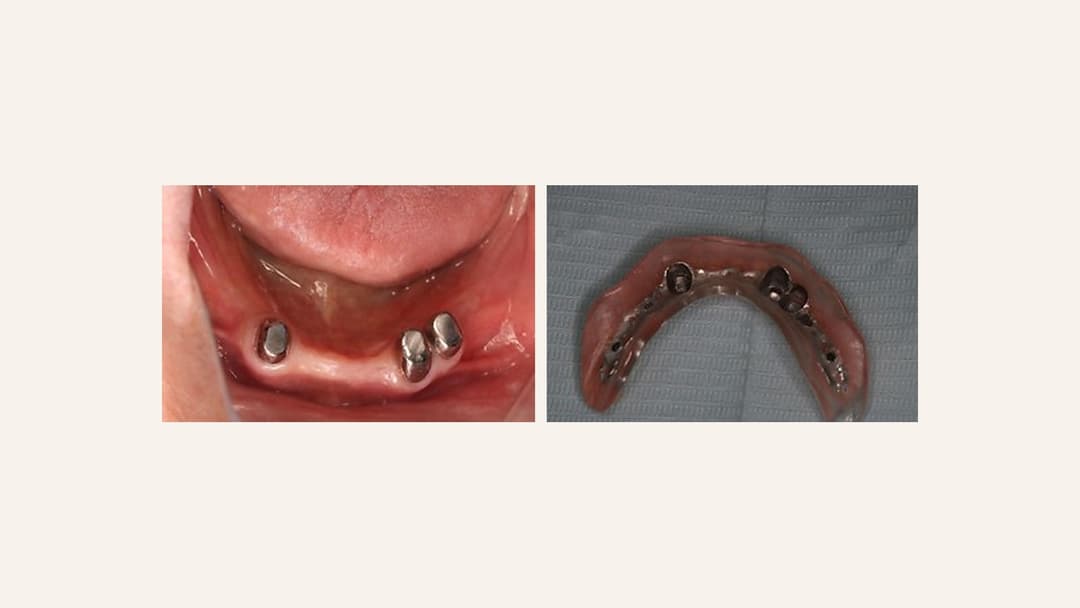
Metal copings are fitted to the retained roots, with corresponding magnet housings set into the denture base. The image illustrates the design. Individual cases vary.
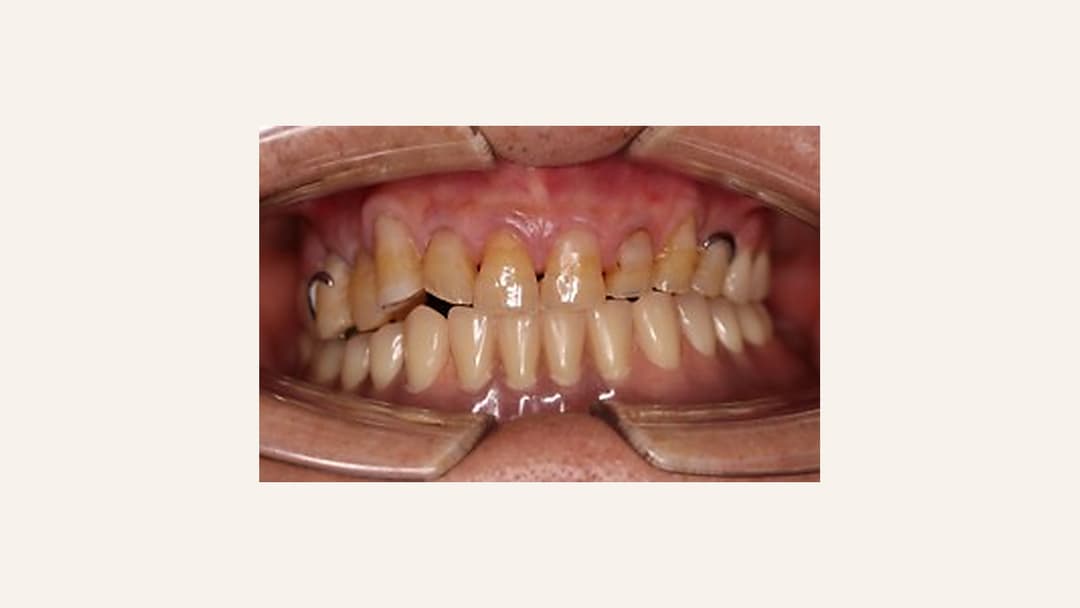
Frontal view on completion. Individual cases vary and results are not representative of other patients.
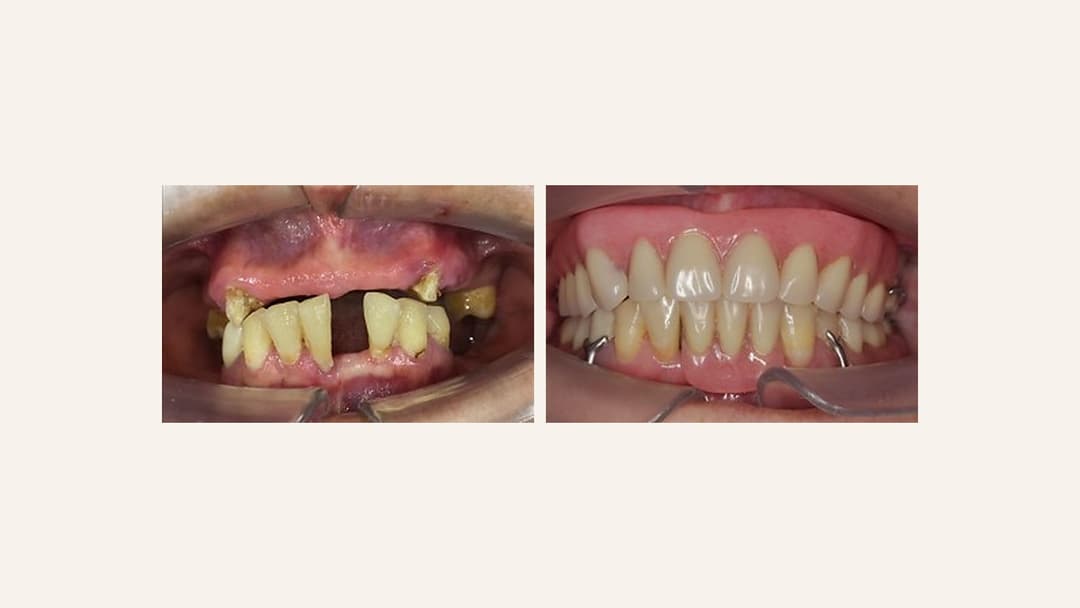
A second case: before treatment and on completion. Individual cases vary; the right approach must be determined by assessment.
It is not a cost-free option. Most supporting roots need root canal treatment and a coping first; decay risk around the roots is higher and strict daily cleaning is required, with high-fluoride toothpaste or other preventive measures advised where risk warrants it; magnets and copings wear with use and may need replacing; and a retained root can still decay or fracture, at which point the case must be reassessed.
Conventional Bridges: Fixed, but Abutment Teeth Must Be Prepared
One common misunderstanding first: a bridge is not a replanted tooth. In a typical three-unit bridge, three crowns are joined together — a crown on each of the natural teeth either side acts as an abutment, with a suspended pontic filling the gap in between. Because the three are joined, colour, form and proportion must be matched to the remaining natural teeth in one go. The number of units depends on the gap and the abutments; it is not always three.
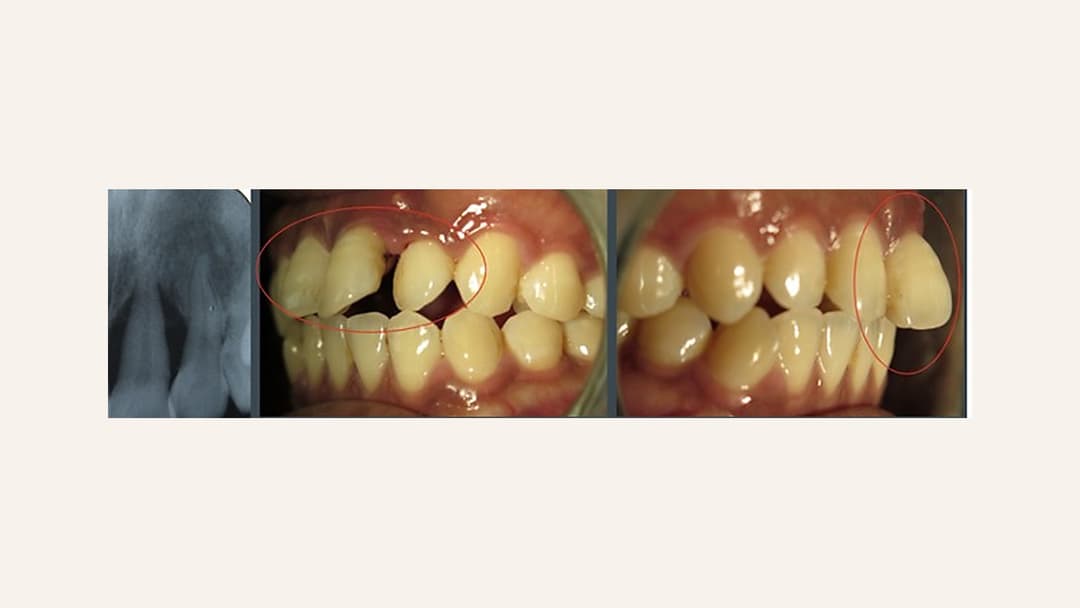
Diagnostic records: the radiograph shows severe bone loss around the affected teeth. The image illustrates the basis for diagnosis. Individual cases vary.
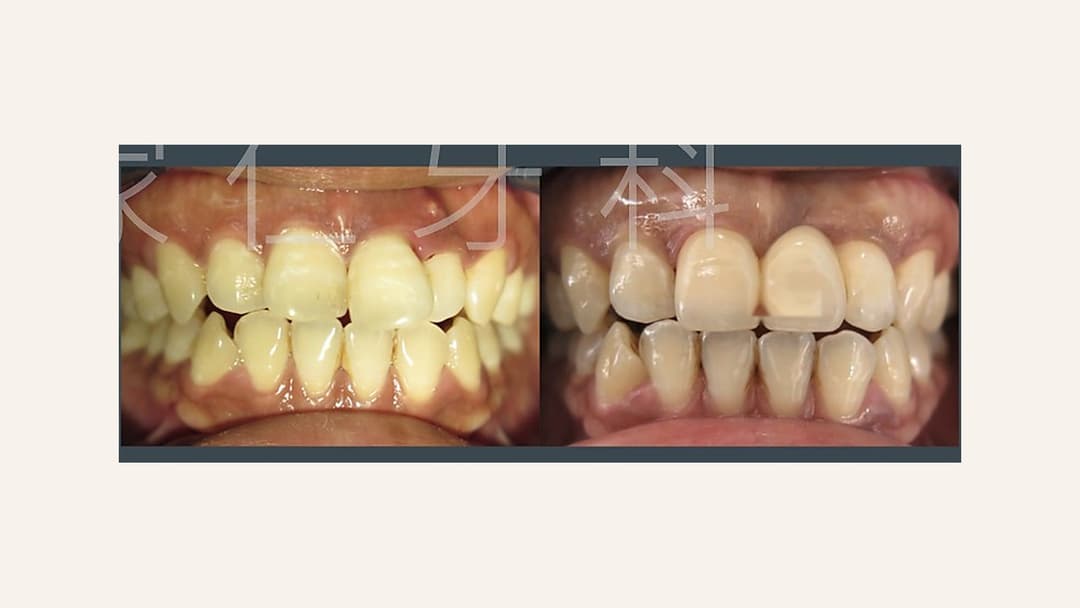
Before treatment and after the bridge was fitted. The three joined crowns must be matched to the colour and form of the remaining natural teeth. Individual cases vary and results are not representative of other patients.
Four things to know before choosing a bridge:
- Abutment teeth must be prepared, and this is irreversible. This is the point that deserves the most careful thought.
- Cleaning works differently. Ordinary floss cannot pass down through the joined section, so superfloss, interdental brushes or other aids are needed to clean beneath the pontic.
- A problem with one abutment widens the scope of treatment. If an abutment develops decay, gum or root canal problems, treatment may involve sectioning or removing the bridge, and in some cases remaking the whole restoration.
- Where a neighbouring tooth already has extensive restoration, cracks or another indication for a crown, the additional tooth structure lost by using it as an abutment may be comparatively small; even so, this should be weighed against a separate crown with an implant, a resin-bonded bridge or other options.
In addition, patients with a history of gum disease need the periodontal condition of the remaining abutments to be stable and able to carry the added load before a bridge is made.
Resin-Bonded Bridges: A Fixed Option With Minimal Preparation
If the cost of a conventional bridge is preparing the abutments, the resin-bonded bridge exists to keep that cost to a minimum. One or more thin wings are bonded to the inner surface of the adjacent teeth; common designs include a single-wing cantilever and a two-wing fixed form. The design depends on the site, the adjacent teeth, the material and the bite. In the front of the mouth a cantilever design is often considered, as it avoids the debonding risk created when two abutments move independently.
It is most often used for a single missing front tooth, where the adjacent tooth has a suitable enamel bonding surface without extensive fillings, and the bite leaves enough room for the wing. Some premolar or posterior cases may also be suitable, but the evidence and loading conditions differ and assessment must be more cautious. It is particularly relevant for younger patients: with minimal preparation, converting to an implant or another option later remains possible.
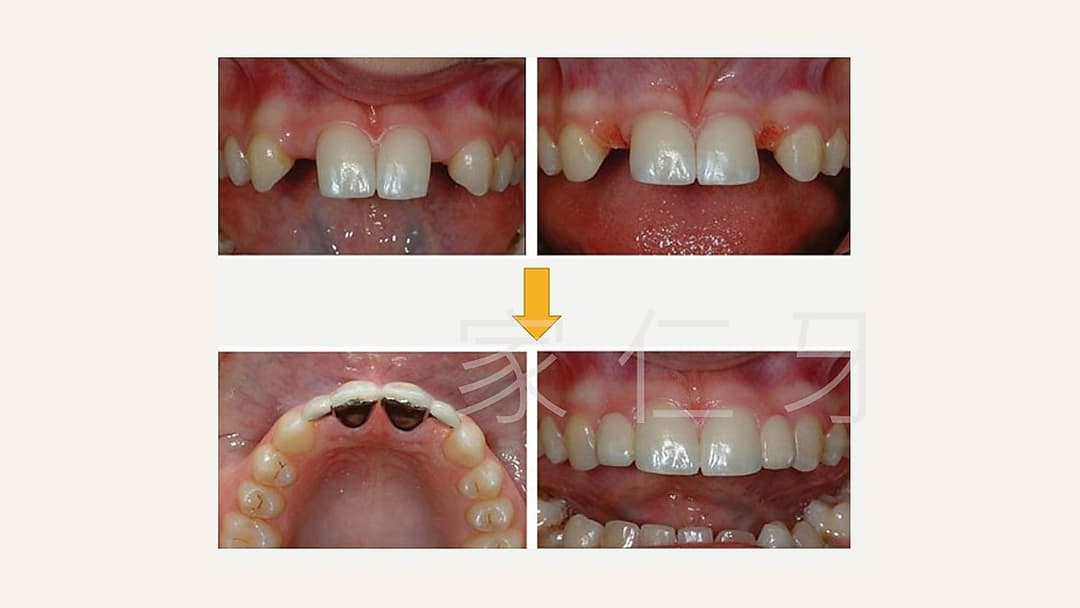
A resin-bonded bridge case: the gap before treatment, with the palatal wing and frontal appearance visible on completion. The image illustrates the design. Individual cases vary.
Its limitations should be stated plainly. Debonding is one of the more common technical problems; it can sometimes be rebonded, but the cause, any distortion and any decay must be checked first. A metal wing may cast a slight grey shade through the adjacent tooth, influenced by tooth thickness, wing position and material. Posterior sites, and patients who grind, need more cautious assessment. Minimal preparation does not make it a temporary or second-rate option — where the indication and design are right, a resin-bonded bridge can be a definitive, long-term restoration.
What About Implants?
An implant provides independent support in the gap and generally requires no preparation of neighbouring teeth. Bone around an implant still changes with healing, loading and long-term health, so implants also need continued cleaning and review. An implant is not the first step for every patient, nor the best answer at every site. Assessment considers bone volume, gum tissue, general health, smoking, cleaning ability, treatment time and whether grafting is needed. Where the neighbouring teeth are intact and healthy and bone and general health are favourable, an implant avoids preparing them; where a neighbouring tooth already needs a crown, a bridge may be a reasonable option.
Six Questions to Ask Your Dentist Before Deciding
- Does this gap really need to be filled?
- What options are available, and why are the others unsuitable for me?
- Which teeth would each option prepare, does it involve surgery, and which parts are irreversible?
- How many visits and how much time should I expect?
- What does the initial fee include, and how are later adjustments, repairs, relines or remakes charged?
- If I wait, what is most likely to change, and how often should it be reviewed?
If only one option is offered, it is reasonable to ask whether the others were considered and why they were ruled out. You are entitled to decide once you understand the reasonable options and their trade-offs, and to seek a second opinion before any irreversible treatment.
Day-to-Day Maintenance
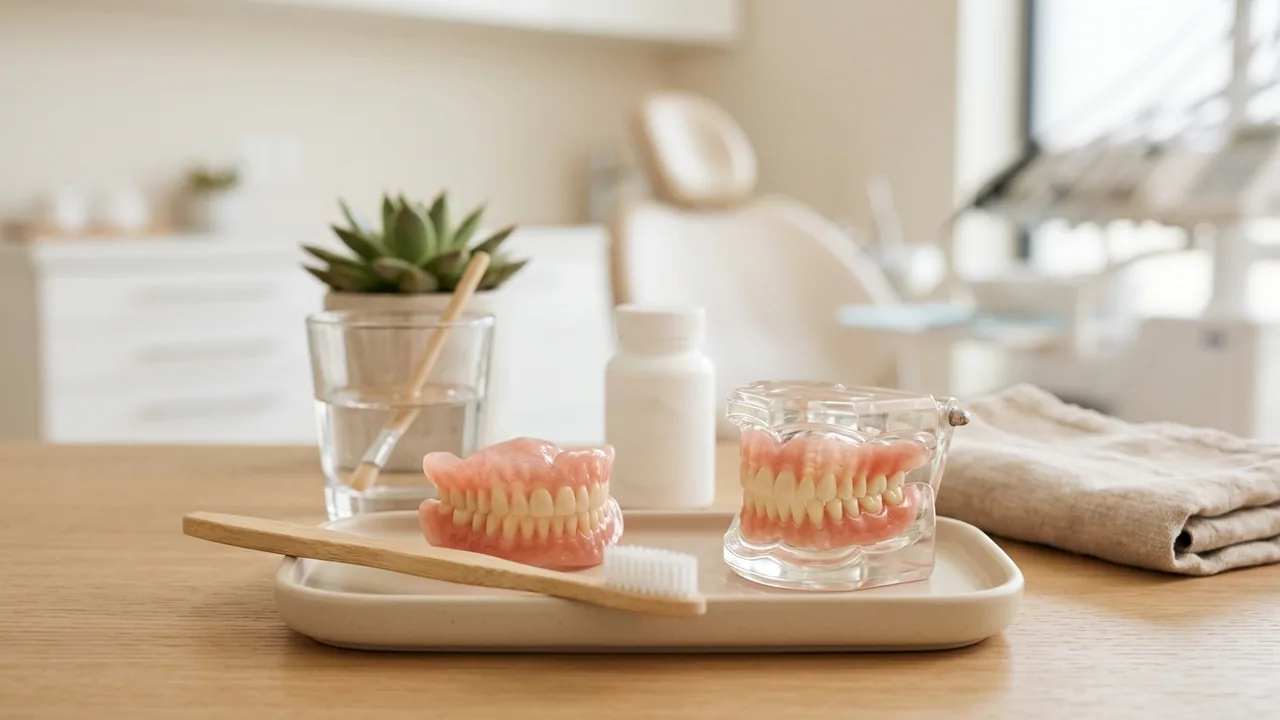
- Remove and clean daily with a soft brush and water or a denture cleaner. Do not use boiling water, which distorts the base. Avoid ordinary abrasive toothpaste, which scratches the surface.
- Unless your dentist advises otherwise for a particular reason, most removable dentures should not be worn continuously day and night, so the tissues can rest and be cleaned.
- Remaining natural teeth and retained roots still need brushing; where roots are retained or decay risk is high, high-fluoride toothpaste or other preventive measures may be advised.
- Bridges need superfloss, interdental brushes or other suitable aids to clean beneath the pontic; a water flosser can help but does not always replace floss or interdental brushes.
- Implants also need daily cleaning and regular review of the gums, bone and bite — placement is not the end of maintenance.
- Have the fit checked periodically. The ridge keeps changing, and a reline is normal maintenance, not a treatment failure.
FAQs
1. Can I eat with dentures or bridges?
Yes, both dentures and dental bridges are designed to enhance your ability to chew. They can significantly improve your eating experience, but it may take some time to adjust to them. Initially, you might want to start with softer foods and gradually incorporate more variety as you become comfortable with your new dental appliances. It’s also advisable to cut food into smaller pieces to make chewing easier.
2. Are dentures uncomfortable?
Initially, you may experience some discomfort as you adjust to wearing dentures. This is a common experience, and it usually subsides after a few weeks. However, at Home Dental, we ensure that your dentures are custom-fitted to maximize your comfort and minimize any discomfort. If issues persist, it's important to consult with your dentist, as adjustments may be needed to improve the fit.
3. How do I know if I need a denture or dental bridge?
Consulting with our dental professionals is the best way to determine the right option for you. They will evaluate your specific situation, including the condition of your remaining teeth, your oral health, and your personal preferences. This comprehensive assessment will help you make an informed decision about whether a denture or a dental bridge is more suitable for your needs.
Further Details? Please watch our exclusive video - Solving Common Dental Crown Issues? Expert Tips for Fixing Unsatisfactory Treatments
4. Why couldn't I go to the cheapest denture dentist?
While it may be tempting to choose the cheapest dentures, this can lead to poor quality and ill-fitting dentures, resulting in discomfort and additional costs over time. For example, low-cost dentures may require frequent adjustments or replacements, ultimately costing more than a higher-quality option. Quality dental care, such as customized dentures made from premium materials and crafted by an experienced prosthodontist, ensures effectiveness and comfort. Although choosing a reputable dentist may seem like a bigger investment initially, it can save you from complications, constant repairs, and the need for replacements down the line. Once a plate is fitted, daily denture care and adjustment determines how comfortable it stays, particularly for older patients.
Start your journey to transform your smile
Home Dental's dental team not only provides professional denture and bridge services, but also emphasizes the individual needs of patients. Contact Home Dental today to schedule a consultation and let us provide you with the most suitable treatment plan.
How to make an appointment?
1. WhatsApp button on the website (priority recommendation) - contact us instantly!
2. Call 3956 9387 (during office hours)
Where wear, fractures or missing teeth are affecting several teeth at once, the issue may not be a single tooth but the bite as a whole. See Full Mouth Rehabilitation (Occlusal Reconstruction), or browse our restorative dental services for the wider scope.
If you would like to learn more about dentures and bridges, read our educational articles for a quick look.