Periodontal disease does not develop overnight and is usually a result of cumulative oral issues over time. Early detection of problems can lead to targeted solutions. How can one determine if they have periodontal disease? Can periodontal disease heal on its own? This article will guide you through understanding the severity of periodontal disease by examining the depth of periodontal pockets. It will also provide care and treatment methods for different stages of periodontal disease, helping patients recover dental health promptly.
In this article the dental team at Home Dental Centre sets out which parts can recover and which cannot; what each pocket depth in millimetres means; how to read "Stage III" or "Grade B" in the 2017 international classification; why some people think their gum disease has "healed by itself"; and what counts as truly stable after treatment.
The 30-Second Answer: Which Parts of Gum Disease Can Recover?
Gingivitis is fully reversible; periodontitis does not heal on its own. At the gingivitis stage only the surface of the gum is inflamed, and it improves within one to two weeks once plaque is removed. Once periodontitis has developed, brushing cannot reach the tartar and bacteria inside the pockets, and bone that has been lost does not grow back by itself — but with treatment and regular maintenance most people can stop the disease progressing and keep their teeth long term. The goal is control, not waiting for it to heal.
Periodontal Disease Relationship with Gingivitis: Breaking Down the Three Stages of Periodontal Disease
Periodontitis is related to gingivitis, and its progression cannot be underestimated. The origin of gingivitis is the accumulation of dental plaque, which, if not thoroughly removed, accumulates into dental calculus, eventually causing periodontal disease. Periodontal disease significantly affects dental aesthetics—accumulated dental calculus creates periodontal pockets between teeth and gums, enlarging dental crevices, and causing teeth to become loose. Moreover, toxins produced by dental calculus can damage gum health. Over time, this accumulation can erode the bone tissue of the teeth, leading to weakened bones and, ultimately, tooth loss—the most noticeable oral feature in patients with periodontal disease.
Stages of Periodontal Disease
Periodontal disease primarily evolves through three stages: gingivitis, mild periodontitis, and severe periodontitis. How can we distinguish between these stages?
1. First Stage: Gingivitis
In this earliest stage of periodontal disease, dental plaque accumulates in the dental crevices, causing surface gum inflammation. Patients typically notice bleeding gums while brushing. However, during this stage, bone and periodontal tissue are not yet infected.
2. Second Stage: Mild Periodontitis
If gingivitis does not improve, it progresses to mild periodontitis. At this stage, bleeding gums persist, and both the dental bone and gum fibers start to deteriorate due to bacterial invasion. Bone loss occurs, and periodontal pockets begin to form gradually.
3. Third Stage: Severe Periodontitis
In severe periodontitis, much of the supporting bone has been destroyed by bacteria, making self-recovery impossible. Teeth may become loose or fall out, marking the most severe stage of periodontal disease.
Good to know: "periodontal disease" is an umbrella term covering gingivitis, which affects only the gum, and periodontitis, which has reached the bone. The three stages above are the simplest way to explain it; dental reports now mostly use the 2017 international classification, which divides periodontitis into Stages I–IV and Grades A–C (see the tables below).
The 2017 Classification: How to Read Stages I–IV and Grades A–C
If your dental report says "Stage III Grade B", the stage describes how severe the disease is now and how complex treatment will be; the grade describes the rate of progression and risk, which sets how often you need reviews.
| Stage I (initial) | Stage II (moderate) | Stage III (severe) | Stage IV (advanced) | |
|---|---|---|---|---|
| Interdental attachment loss (CAL) | 1–2 mm | 3–4 mm | 5 mm or more | 5 mm or more |
| Bone loss on X-ray | Within the coronal third of the root (under 15%) | Within the coronal third (15%–33%) | Extending to the middle third of the root or beyond | Extending to the middle third of the root or beyond |
| Teeth lost to periodontitis | None | None | 4 or fewer | 5 or more |
| Deepest pocket and complexity | 4 mm or less, mostly horizontal bone loss | 5 mm or less, mostly horizontal bone loss | 6 mm or more; may have vertical bone defects (3 mm or more) or furcation involvement | As Stage III, plus impaired chewing and need for complex rehabilitation (e.g. fewer than 20 teeth remaining) |
| Grade A (slow) | Grade B (moderate) | Grade C (rapid) | |
|---|---|---|---|
| Bone loss over five years | None | Less than 2 mm | 2 mm or more |
| % bone loss ÷ age | Under 0.25 | 0.25–1.0 | Over 1.0 |
| Smoking | Non-smoker | Fewer than 10 cigarettes a day | 10 or more a day |
| Diabetes | No diabetes | Diabetes with HbA1c below 7.0% | HbA1c 7.0% or above |
How to use these tables: the stage is not "downgraded" by treatment — lost bone does not grow back on its own, so Stage III remains Stage III after treatment, but it can become stable. The grade points to what you can change: stopping smoking and controlling blood sugar both directly affect the rate of progression. For why some people are more prone to gum disease, see causes and 10 risk factors of gum disease.
How to Determine if You Have Periodontal Disease? Periodontal Pocket Depth Reflects the Severity of Periodontal Disease
The symptoms of periodontal disease are diverse, including swollen or pus-filled gums, bleeding or painful gums, bad breath, loose teeth, increased dental crevices, receding gums, and more. From a medical perspective, the diagnosis of periodontal disease often involves measuring periodontal pockets. Periodontal disease causes gums to detach from teeth, forming periodontal pockets. If these pockets continue to deepen, they can adversely affect the dental pulp, leading to more severe problems. Periodontal pocket depth reflects the severity of periodontal disease. Periodontal pockets measuring 0 to 3 millimeters are generally considered normal, while pockets measuring 4 millimeters or more are defined as periodontal pockets.
Pocket Depth Chart: What Each Measurement Means and Whether It Can Recover
| Depth measured | Usually means | Will it recover on its own? | Usual management |
|---|---|---|---|
| 1–3 mm, no bleeding | Healthy | — (already healthy) | Keep cleaning and have regular scaling |
| 1–3 mm, bleeding | Gingivitis | Yes: careful cleaning restores it within one to two weeks (see the two-week bleeding-gum self-test) | Better cleaning plus scaling |
| 4 mm | An early pocket, or a "false pocket" from swollen gum | A false pocket shrinks once swelling settles; a true pocket does not | Dentist decides; deep cleaning if needed |
| 5–6 mm | A moderate pocket with attachment loss | No | Deep scaling and root planing, re-measured after about 2 to 3 months |
| 6 mm or more, still bleeding after deep cleaning | Deep pocket | No | May need periodontal surgery |
Note: a shallow pocket does not always mean all is well. Pocket depth is measured only from the gum margin to the base of the pocket; if the gum has receded, the pocket may be shallow even though a lot of bone has been lost. That is why dentists also record clinical attachment loss (measured from the junction of crown and root) and bone levels on X-ray to judge the true stage. Receding gums do not grow back on their own either.
What Can Recover and What Cannot — At a Glance
| Will it recover on its own? | What treatment can do | |
|---|---|---|
| Red, swollen gums that bleed on brushing | At the gingivitis stage, yes: improves within one to two weeks of removing plaque | At the periodontitis stage, the tartar inside the pockets must be removed before inflammation stops |
| Pocket depth | Does not become shallower on its own | After deep cleaning the gum tightens and partly re-adapts to the root, so pockets become shallower (deeper pockets reduce more) |
| Bone already lost | No | Mostly does not grow back; some vertical bone defects can be improved with regenerative surgery |
| Gum recession | No | Gum grafting can repair it where needed |
| Loose teeth | No | Some mobility reduces once inflammation settles; not if too much bone has been lost |
| Bad breath | No (mouthwash only masks it) | Usually improves clearly once pocket bacteria are removed |
Why Some People Think Gum Disease Has "Healed by Itself": 3 Common Illusions
- Less bleeding — smoking constricts gum blood vessels and masks bleeding, and inflammation deep between the teeth may not bleed when you brush. No bleeding does not mean no inflammation; see why "no bleeding" does not always mean all is well.
- The swelling went down — a periodontal abscess sometimes drains by itself and the pain eases quickly, but the bacteria and tartar are still in the pocket; it usually returns and destroys a little more bone each time. For acute swelling and pain, contact our dental emergency service.
- The pocket "got shallower" — gum recession makes the measured pocket shallower, but that is bone and gum being lost together, not healing.
If you have bleeding on brushing, bad breath, receding gums or loose teeth, check yourself against the 8 warning signs of gum disease and book a periodontal examination.
Can Periodontal Disease Heal on Its Own? How to Correctly Treat Periodontal Disease?
-
Establish Good Oral Hygiene Habits Early-stage periodontal disease patients can improve their condition by establishing good oral hygiene habits. Thoroughly removing dental calculus and preventing gum inflammation can help manage periodontal disease. Patients need to adopt correct toothbrushing techniques, use dental floss regularly, and ensure the complete removal of food debris to prevent dental calculus buildup.
-
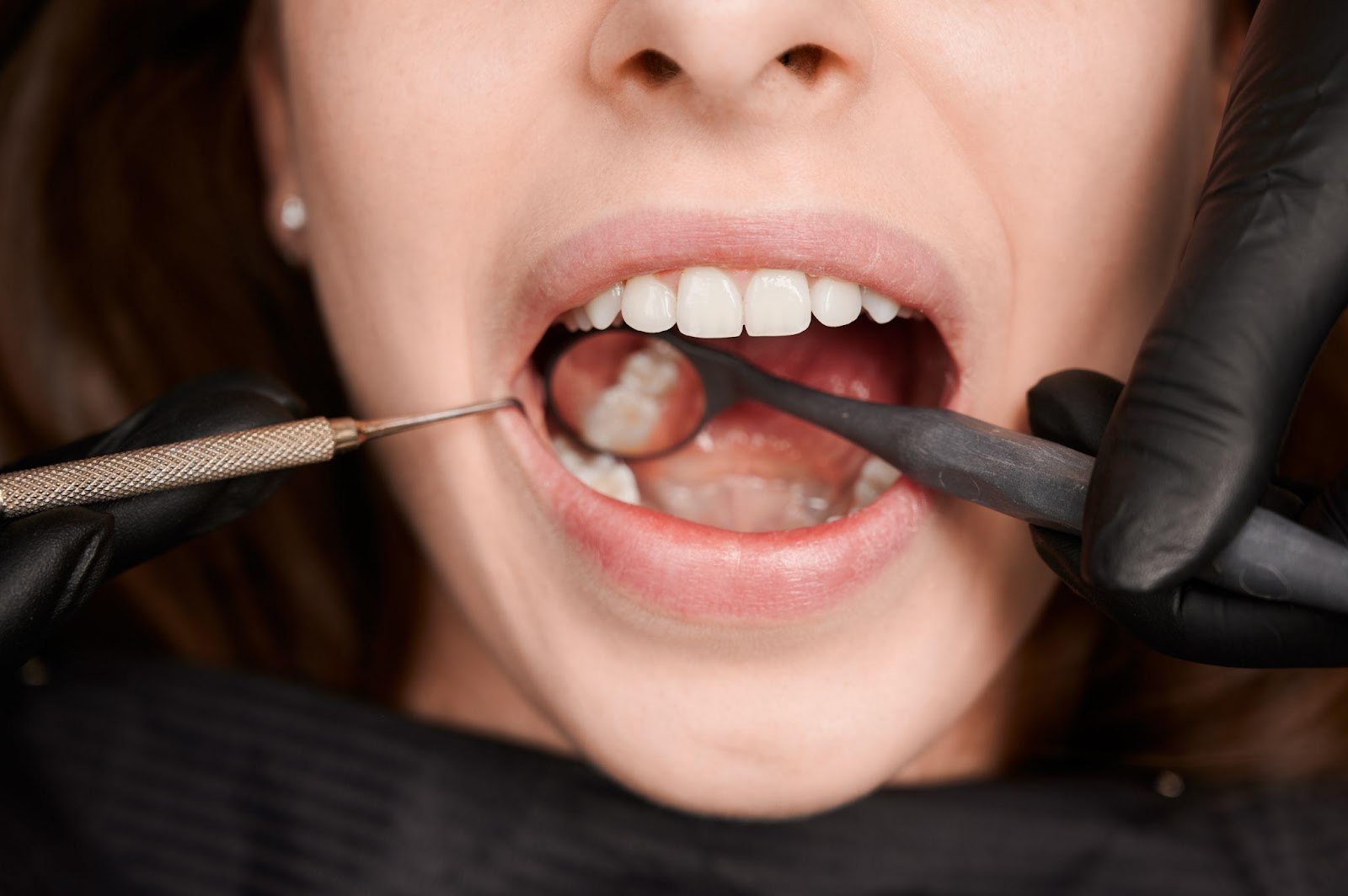
Undergo Professional Teeth Cleaning Regularly Professional teeth cleaning helps remove dental plaque and calculus accumulated near the gums, controlling bacteria and promoting gum health. For patients with periodontal disease, it is recommended to choose the services of a periodontal specialist for teeth cleaning. Unlike regular cleaning, periodontal specialists use elongated tools to clean deep portions of dental crevices, thoroughly removing oral bacteria such as dental plaque and calculus. This is one of the most common non-therapeutic treatments for periodontal disease.
In practice: proper brushing technique (soft brush angled at 45° to the gum margin) and daily floss or interdental brushes; mouthwash is only an adjunct and cannot replace cleaning (how to choose a mouthwash).
Seeking Periodontal Specialist for Diagnosis and Treatment
Both of the above methods are only suitable for patients with mild periodontal disease conditions. If your periodontal disease does not improve, and the periodontal pockets become larger, you must seek the diagnosis and treatment of a periodontal specialist. Patients need to undergo periodontal disease treatment, involving deep cleaning of bacteria and dental calculus at the base of the gums. A typical periodontal disease treatment course may take 2 to 3 months to observe the improvement of gum conditions after the removal of periodontal tissues. The inflamed and bleeding gum tissues should ideally adhere closely to the tooth root surface, thus restoring oral health.
When Does It Count as "Better"? Three Objective Targets
The aim of treating periodontitis is stability, not cure. Under the 2017 international classification, a successfully treated, stable periodontitis patient meets all of the following:
- Bleeding on probing at under 10% of sites — fewer than one in ten sites bleeds when the dentist measures.
- All pockets 4 mm or less — no deeper bleeding pockets remaining.
- No further deepening at review — pockets and bone levels unchanged compared with last time.
The guidance puts it plainly: "once a periodontitis patient, always a periodontitis patient." Even when all three are met, regular maintenance is needed, or plaque builds up again and the disease returns. For how often to attend and what happens at each visit see periodontal maintenance and review intervals; for whether residual deep pockets need surgery see periodontal surgery.
Differences Between Periodontal Specialists and General Dentists?
In fact, every registered dentist is legally allowed to perform all dental treatments. However, a general dentist, also known as a general practitioner, is responsible for providing comprehensive dental care for patients in their daily practice. On the other hand, a specialist dentist has rich research and clinical experience in a specific field, dealing with more complex cases.
Periodontal specialists are skilled in handling severe cases of periodontal disease, employing precise treatment methods tailored to the situation. This may include techniques such as deep scaling of the gums and the use of flaps to remove bacteria from periodontal tissues and the vicinity of teeth. These treatment methods are specifically designed for patients with infected gums or bones affected by periodontal disease. By using specialized and precise medical instruments, they thoroughly remove dental calculus from periodontal pockets and smooth out the tooth roots.
Moreover, periodontal specialists may utilize techniques such as periodontal tissue regeneration surgery and gum grafts to strengthen the periodontal tissues near the teeth. This not only stabilizes gum health but also repairs receding gums, thereby improving the appearance of teeth.
Which to choose: Stages I–II with ordinary pockets can usually be managed by a general dentist and dental hygienist; Stages III–IV, deep pockets remaining after deep cleaning, bone defects, furcation involvement or possible regenerative surgery are best referred to a specialist in periodontics.
If you are interested in understanding the services offered by different dental specialties, you can visit the article here.
In summary: at the gingivitis stage, better brushing and regular cleaning can restore gum health; once periodontal pockets have formed and bone has been lost, periodontal disease will not heal on its own and needs treatment. To learn about periodontal specialist assessment and the treatment options at each stage, or to understand the limits of treatment (what a specialist can and cannot do), visit the service pages or book a check-up at our Causeway Bay or Tsuen Wan dental centre.
Fee Guide for Periodontal Examination and Treatment
Home Dental Centre's current published fees: professional scaling HK$800 with a dental hygienist or HK$980 with a dentist. If the periodontal examination finds pockets that need deep cleaning or specialist treatment, the dentist will set out the procedure and fees clearly according to the extent and stage of your pockets, and start only with your consent. See our fee transparency commitment and the periodontal treatment service page.
Book a Periodontal Examination
Open seven days a week, with earlier slots at our Causeway Bay and Tsuen Wan dental centres. When you book, please tell us about any bleeding on brushing, gum recession or loose teeth, and whether you smoke, have diabetes or take any medicines; bring previous X-rays or periodontal records if you have them.
Why Choose Home Dental Centre?
- A team of 31 dentists — general dentists, dental hygienists and periodontists in one team, so examination, deep cleaning and surgery connect.
- Measure first, treat second — full-mouth pocket depths, bleeding on probing and X-ray bone levels to tell gingivitis from periodontitis and assign stage and grade.
- Clear about what can recover — expected results and limits are explained before treatment; we do not promise that bone will grow back.
- Transparent fees — after the examination we explain the procedure and fees clearly, and start only with your consent.
- Open seven days — same-day slots at both our Causeway Bay and Tsuen Wan dental centres.
Medical References
The general clinical principles in this article draw on the following professional sources; actual diagnosis and treatment must be decided by a dentist for each individual case:
- Oral Health Education Unit, Department of Health, Hong Kong: Periodontal disease
- American Academy of Periodontology (AAP): Staging and Grading Periodontitis — 2017 classification criteria for Stages I–IV and Grades A–C
- Tonetti MS, Greenwell H, Kornman KS (2018): Staging and grading of periodontitis: framework and proposal of a new classification and case definition. Journal of Clinical Periodontology 45 Suppl 20:S149–S161
- European Federation of Periodontology (EFP) guidance on the 2017 classification: case definitions of health and gingivitis — a successfully treated, stable periodontitis patient: bleeding on probing <10%, probing depths ≤4 mm with no deeper bleeding sites; "once a periodontitis patient, always a periodontitis patient"
- Sanz M, Herrera D, Kebschull M, et al. (2020): Treatment of stage I–III periodontitis — The EFP S3 level clinical practice guideline. Journal of Clinical Periodontology 47 Suppl 22:4–60
Medical information notice: this article provides general dental health information and is not a substitute for an examination. Figures in the tables are general guidance; actual staging, treatment and results must be decided by a dentist from the examination and X-rays. For acute swelling, pus or fever, seek care promptly.