Improper dental care easily leads to gum inflammation, also known as gingivitis — bleeding when you brush, red swollen gums, bad breath — and many people treat it as a minor nuisance. But two decades of medical research have made one thing clear: inflammation in the mouth does not stay in the mouth. Once gingivitis progresses to periodontitis, it is linked by published research to diabetes, heart disease, stroke and even dementia — and some of those links run in both directions: a chronic condition worsens gum disease, and periodontal inflammation in turn affects blood sugar and blood vessels. In this article the dental team at Home Dental Centre explains the causes and symptoms of gingivitis, how it differs from periodontitis, how periodontal inflammation affects the rest of the body, what the evidence for each condition does — and does not — show, what patients with chronic conditions should know before dental treatment, and when to be seen.
Gingivitis: Four Things to Do First
The usual response to bleeding, swollen gums is to "wait for it to settle". Gingivitis is reversible, but only if the cause — plaque along the gumline — is removed. Do these four things first, and most mild gingivitis improves noticeably within one to two weeks:
- Keep brushing the areas that bleed — soft brush, light pressure, angled 45 degrees to the gumline in small circles (see proper brushing technique). Bleeding is the result of inflammation, not a sign that brushing is harmful; avoiding the area only lets plaque build up.
- Clean between the teeth every night — floss or interdental brushes. Gingivitis most often starts between the teeth.
- Rinse after eating and cut down sugary snacks — especially if you eat small, frequent meals.
- Book an examination and scaling — tartar cannot be brushed away, and tartar is the main reason gingivitis fails to settle.
Not recommended: buying antibiotics without prescription; poking inflamed gums with toothpicks or fingernails; assuming herbal "cooling" drinks can replace cleaning; stopping brushing an area because it bleeds.
Which Group Are You In?
- Be seen the same day — obvious facial or gum swelling, fever, pus or an abscess, difficulty opening the mouth, or pain that stops you eating or sleeping. This is no longer gingivitis; it may be an abscess or acute infection. Contact our dental emergency service, and see first aid for a dental abscess. If you have diabetes or heart disease, do not wait.
- Be examined within a few days — gums have bled and been swollen for more than two weeks; a tooth feels loose; gums have receded so teeth look longer; persistent bad breath; or you have diabetes, heart disease or a previous stroke and have not had a dental check-up for over a year.
- Book a routine check-up — only mild redness and occasional bleeding, improving with better cleaning, no pain or lumps. No urgency, but an examination and scaling to remove tartar are still worthwhile.
What Is Gingivitis? It Starts with a Film of Plaque
Gingivitis is infection and inflammation of the gum tissue, and the culprit is dental plaque — a transparent film that forms between the teeth and gums and builds up constantly as we eat. Toxins released by the bacteria in plaque damage the gums; if plaque is not removed promptly it accumulates, combines with minerals in saliva and hardens into calculus (tartar), and the gums become inflamed.
At the gingivitis stage, inflammation is confined to the surface of the gum; the bone and ligament that support the tooth are intact — so gingivitis can be completely reversed. But if plaque and calculus persist, inflammation spreads downwards, destroys bone and becomes periodontitis. Lost bone does not grow back. That is why gingivitis must be dealt with early.
What Are the Symptoms of Gingivitis? Four Typical Signs
The consequences of gingivitis are serious and should not be taken lightly. Fortunately, gum inflammation is not hard to notice: four distinct signs are usually present and easy to spot if you look closely.
1. Bleeding and Swollen Gums
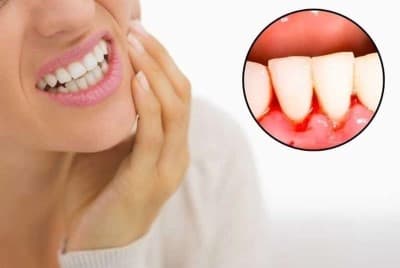
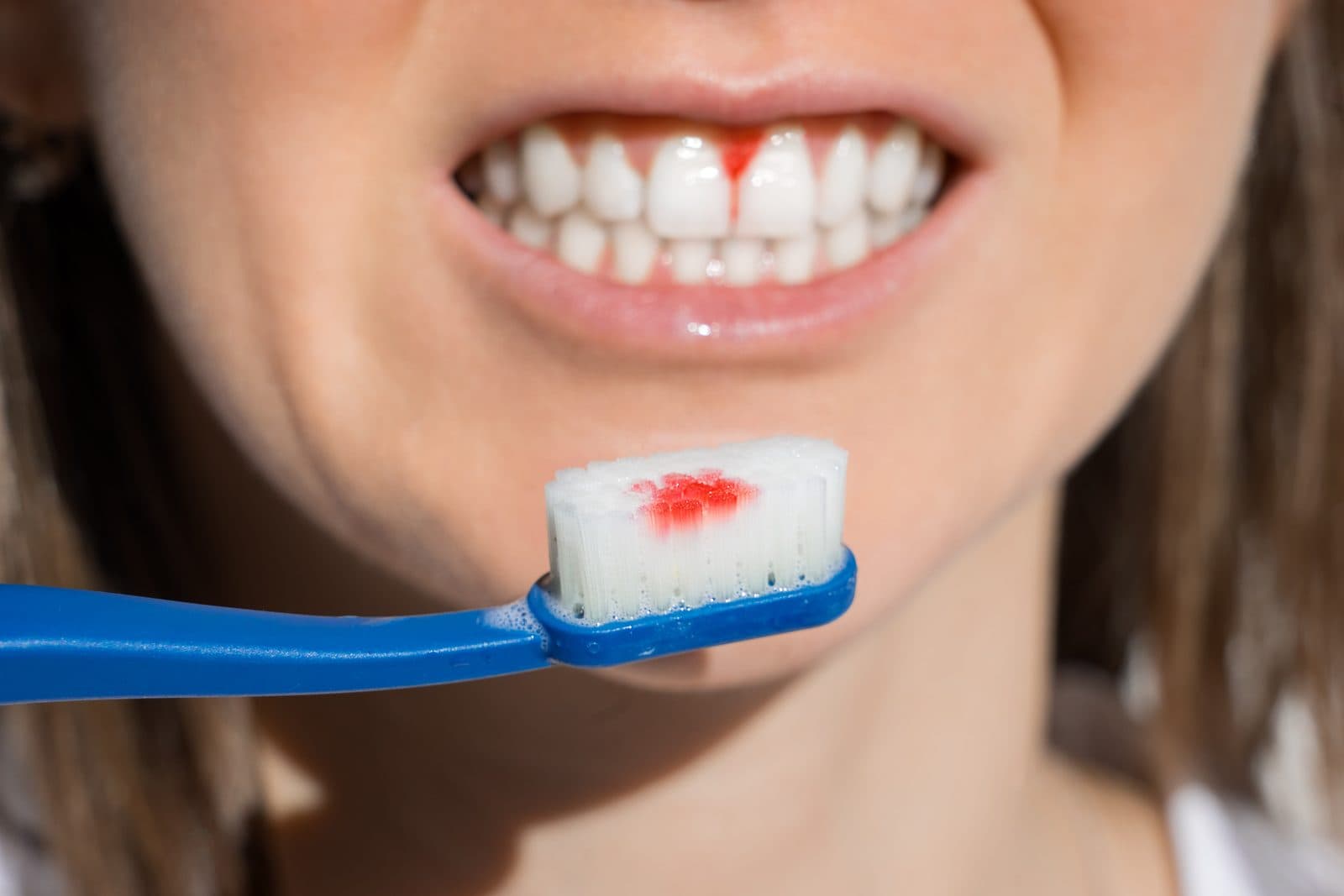
Bleeding is the earliest sign. Healthy gums do not bleed; if you see blood when brushing or flossing, the gums are not healthy. Healthy gums are light pink and firm; gums that stay red and swollen, or are tender to touch, very likely have gingivitis. For the range of causes behind bleeding gums, see what bleeding gums mean.
2. Unpleasant Mouth Odour
Bad breath is another obvious symptom. As plaque breaks down food residue it continuously releases an unpleasant odour. Bad breath has many causes — digestive problems among them — but if other signs of gingivitis are also present, gingivitis is the likely explanation.

3. Gum Recession and Slight Loosening of Teeth
If gingivitis persists without improvement, gum recession becomes more likely. Early on, the gums begin to pull away from the teeth, making them look longer and even exposing the roots; the teeth become more sensitive as the gums recede. If the condition becomes severe it damages the surrounding bone, teeth loosen slightly and the disease has become periodontitis. For management of recession, see gum recession causes and gum grafting.
4. Excessive Calculus on the Roots
People with gingivitis typically have heavy calculus deposits at the roots, and calculus is one of the main triggers of gingivitis. It forms when plaque between the teeth hardens; its rough surface attracts more plaque, and unless it is removed thoroughly the gums become inflamed and swollen again and again.
Gingivitis vs Periodontitis: At a Glance
Many people use "gingivitis" and "gum disease" interchangeably. The key difference is whether the bone has been damaged — which determines whether the condition is reversible, what treatment is needed, and how much it affects general health.
| Gingivitis | Periodontitis | |
|---|---|---|
| Extent of inflammation | Gum surface only | Spreads to the periodontal ligament and bone |
| Typical symptoms | Bleeding on brushing, red swollen gums, bad breath | All of the above plus: receding gums, teeth looking longer, widening gaps, loose teeth, pus from the gum |
| Pocket depth | Generally 3 mm or less | 4 mm or more |
| X-ray | Bone normal | Bone loss visible |
| Reversible? | Yes — gums recover fully once plaque and calculus are removed | No — lost bone does not return; the disease can only be controlled and stabilised |
| Treatment | Better home care plus professional scaling | Deep cleaning / root planing; periodontal surgery in severe cases; long-term maintenance |
| Effect on general health | Low inflammatory burden | The links with diabetes, cardiovascular disease, stroke and dementia relate mainly to periodontitis (see below) |
The dentist measures pocket depth around every tooth with a periodontal probe, adding X-rays where needed, to determine the stage. For a detailed explanation of the stages and pocket depths, see can periodontal disease heal on its own; for an item-by-item self-check of the eight warning signs, see periodontal disease warning signs.
How Does Gingivitis Occur?
Gingivitis is a very common oral inflammation among city dwellers, usually caused by poor daily habits; certain diseases also make the symptoms worse. If any of the following apply to you, pay extra attention to your oral health.
Poor Oral Hygiene Habits
People prone to gum inflammation usually have poor oral hygiene habits — not brushing morning and night, not brushing thoroughly, not flossing regularly, or using the wrong technique — all of which lead to poor oral hygiene.

Misaligned Teeth or Orthodontic Treatment
Crowded teeth, or braces during orthodontic treatment, create areas that are hard to clean. Over time plaque accumulates there and triggers gingivitis.
Smoking
Nicotine narrows the blood vessels in the gums and slows healing, so smokers develop gum inflammation more readily than non-smokers and are more likely to progress to severe periodontitis. Because of the reduced blood flow, smokers' gums may actually bleed less, which makes it easy to underestimate how serious the inflammation is.
Diabetes
People with diabetes have reduced immune function and slower wound healing, so the mouth recovers less well from bacterial invasion and gum inflammation tends to become progressively worse. The poorer the blood-sugar control, the higher the risk and severity of periodontal disease. The relationship runs both ways, as explained below.
Other Factors
Hormonal changes (pregnancy, menstruation) make the gums react more strongly to plaque — see swollen gums in pregnancy and pregnancy gingivitis; some medications (anti-epileptics, calcium-channel-blocker blood-pressure drugs, immunosuppressants) can cause gum overgrowth; and chronic stress and lack of sleep weaken the immune response.
How Does Inflammation in the Mouth Affect the Rest of the Body?
Periodontitis is not just "a bit of gum damage". In moderate to severe periodontitis, the inflamed surface area inside the periodontal pockets can add up to roughly the size of a palm — a long-term open wound through which bacteria and inflammatory products enter the bloodstream. Research points to two main routes:
- Direct route — bacteria in the blood. Brushing, chewing and even everyday activity can push bacteria from periodontal pockets (such as Porphyromonas gingivalis) briefly into the circulation. These bacteria and their components have been found in atherosclerotic plaques, the placenta and even brain tissue.
- Indirect route — systemic inflammation. Periodontal inflammation keeps the body releasing inflammatory mediators (C-reactive protein, interleukin-6, tumour necrosis factor-α), which impair the function of the blood-vessel lining, increase insulin resistance and promote atherosclerosis.
In other words, periodontitis is part of the body's total inflammatory burden. The four conditions below have the strongest evidence of a link — but the strength of evidence differs for each, and we set it out honestly.
Diabetes: A Two-Way Relationship with the Strongest Evidence
Of all the "periodontal disease and systemic disease" research, the link with diabetes is the best established and most consistent. The 2018 joint consensus report of the International Diabetes Federation (IDF) and the European Federation of Periodontology (EFP) concluded:
- Diabetes worsens periodontal disease: people with diabetes have roughly two to three times the risk of periodontitis, and the poorer the glycaemic control (the higher the HbA1c), the more severe the periodontitis and the faster the bone loss. High blood sugar impairs white-cell function, slows wound healing and amplifies tissue inflammation through advanced glycation end-products (AGEs).
- Periodontitis in turn affects blood sugar: people with periodontitis are at higher risk of dysglycaemia and insulin resistance; in people who already have diabetes, severe periodontitis makes blood sugar harder to control and raises the risk of complications such as kidney disease and cardiovascular events.
- Treating periodontitis improves blood sugar — and this is backed by randomised trials: the 2022 Cochrane systematic review (30 studies, 2,443 participants) found that periodontal treatment (deep cleaning / root planing) lowered HbA1c in people with diabetes by an average of 0.43% at 3–4 months, with moderate-certainty evidence; the authors concluded that periodontal treatment improves glycaemic control "by a clinically significant amount". For comparison, adding an oral diabetes medication typically lowers HbA1c by about 0.5–1%.
What this means in practice: a periodontal examination should be part of diabetes care. The IDF/EFP guidelines recommend that everyone with diabetes has a periodontal check at least once a year, and that bleeding gums, swelling or loose teeth are assessed promptly with periodontal treatment where needed. Equally, when a dentist finds severe periodontitis in someone not known to have diabetes, there is good reason to suggest a blood-sugar test.
Heart and Vascular Disease: An Association Independent of Smoking, but Causation Not Proven
The link between periodontal disease and atherosclerotic cardiovascular disease (coronary heart disease, heart attack, peripheral arterial disease) has been studied epidemiologically for more than twenty years. The current positions of the main professional bodies:
- American Heart Association (AHA) scientific statement, 2012: observational studies support an association between periodontal disease and atherosclerotic vascular disease that is independent of shared risk factors such as smoking, age and diabetes; but the evidence does not support a causal relationship, and there is no evidence that periodontal treatment prevents cardiovascular disease or changes its outcomes.
- EFP / World Heart Federation consensus, 2020: confirms a significant association between severe periodontitis and cardiovascular disease and summarises the mechanistic evidence — periodontal treatment reduces markers of systemic inflammation and improves endothelial function. The consensus also notes that bleeding must be managed carefully in cardiovascular patients taking anticoagulants (see below).
- Updated AHA scientific statement, 2025: periodontal disease is associated with heart attack, stroke, atrial fibrillation and heart failure. Shared risk factors explain part of the association, but emerging data suggest biological mechanisms (bacteria entering the blood, endothelial dysfunction, raised CRP and IL-6) may explain the rest. The statement reiterates that causality has not been established and that there is no direct evidence that periodontal treatment prevents cardiovascular disease, while noting that measures which reduce lifetime exposure to inflammation appear beneficial — and citing data that people who brush once a day or less have a 10-year cardiovascular risk of 13.7%, against 7.35% for those who brush three or more times a day.
How we read this evidence: periodontal disease is an independent risk marker for cardiovascular disease, not a proven cause. Controlling periodontal inflammation is no substitute for stopping smoking or controlling blood pressure and cholesterol; but it is safe, inexpensive, demonstrably lowers the body's inflammatory burden, and keeps your teeth. Regular periodontal check-ups and maintenance for heart patients are a reasonable step — which is why the AHA recommends regular dental screening and targeted periodontal care for people with cardiovascular risk factors.
Stroke: Roughly Double the Risk with Periodontal Disease, Lower with Regular Dental Care
The most substantial data on ischaemic stroke and periodontal disease come from the US Atherosclerosis Risk in Communities (ARIC) study:
- 10,362 middle-aged adults were followed for 15 years; 6,736 had a full periodontal examination, and 584 ischaemic strokes occurred during follow-up.
- After adjusting for age, smoking, diabetes, blood pressure and other factors, people with periodontal disease had roughly 1.9 to 2.2 times the risk of ischaemic stroke of those with healthy gums, and the more severe the disease and the more gingival inflammation, the higher the risk. The lead investigator described the risk as similar in size to that from high blood pressure.
- People who used dental care regularly had a 23% lower risk of stroke than those who only went when something was wrong (adjusted hazard ratio 0.77).
The 2025 AHA statement also lists stroke among the cardiovascular events associated with periodontal disease. As with heart disease, these are observational data showing association rather than cause — but the finding that regular dental care is associated with lower stroke risk is among the most direct evidence so far that keeping periodontal inflammation under control has practical benefit. After a stroke, reduced mobility or hand function often means oral hygiene deteriorates and periodontal disease can worsen rapidly, so the support of a dentist and carers matters even more (see below).
Dementia: Evidence Is Accumulating, but Still Shows Association Only
The relationship between periodontal disease and Alzheimer's disease and other dementias is one of the most active research areas of recent years — and, of the four conditions here, the one with the most preliminary evidence:
- Large long-term follow-up (US NHANES, 2020): a study supported by the US National Institute on Aging analysed more than 6,000 adults with up to 26 years of follow-up. In people aged 65 and over, antibody levels against P. gingivalis were associated with later diagnosis of, and death from, Alzheimer's disease; the association was stronger when this bacterium occurred together with other periodontal bacteria. The authors stress that population studies show association, not causation — dementia itself impairs oral hygiene and can in turn worsen periodontal disease.
- Brain-tissue study (Science Advances, 2019): researchers found P. gingivalis and the enzymes it secretes (gingipains) in the post-mortem brains of most Alzheimer's patients examined, at levels that correlated with the severity of brain pathology; in mice, oral infection with the bacterium led to its appearance in the brain and increased production of amyloid-β. This provides a plausible biological route, but causation in humans has not been shown.
How we read this evidence: it cannot yet be said that treating periodontal disease prevents dementia. Looked at the other way, periodontal inflammation is one of the few long-term sources of inflammation that can be changed, and keeping one's teeth, chewing ability and nutrition in older age is itself associated with better cognitive function. The practical advice for older people and their families is to make regular periodontal check-ups and scaling part of long-term health care, and — when cognitive decline begins — to work out a workable daily cleaning routine early, together with the dentist and carers.
So Does Controlling Periodontal Inflammation Actually Help with Chronic Disease?
Drawing the evidence together, our answer has three levels:
| Condition | Level of evidence | What controlling periodontal inflammation means in practice |
|---|---|---|
| Diabetes | Strong — two-way relationship by consensus; randomised-trial evidence that treatment improves HbA1c | Periodontal treatment is part of blood-sugar management; HbA1c falls by about 0.4% on average |
| Heart / vascular disease | Moderate — association independent of shared risk factors, mechanisms supported; causation and treatment benefit unproven | An independent risk marker; lowers inflammatory burden and improves endothelial function alongside standard cardiovascular care |
| Stroke | Moderate — large cohort shows roughly double the risk; lower risk among regular dental-care users | Regular periodontal maintenance is associated with lower stroke risk; extra help with cleaning is needed after a stroke |
| Dementia | Preliminary — association and a biological route shown; causation unproven | A modifiable source of inflammation; keeping teeth and chewing function has value in itself |
Periodontal treatment is safe and relatively inexpensive, and whatever the systemic benefit turns out to be, it has one certain return: keeping your teeth. So our advice is — do not treat periodontal disease as "just a tooth thing"; treat it as part of managing chronic disease. Dealt with at the gingivitis stage, the gums recover completely; at the periodontitis stage, deep cleaning and root planing are needed to bring the inflammation under control and stabilise it, followed by long-term maintenance.
The Long-Term Effect of Gingivitis on the Mouth
Apart from the possibility of progressing to more severe periodontal disease and the systemic effects above, gingivitis itself harms the mouth. It can lead to gum recession, exposing the roots and making the teeth look longer, which seriously affects appearance. Even once gingivitis has been treated and healed, receded gums cannot repair themselves, and the wider gaps between the teeth become more prone to plaque accumulation — permanent damage to oral health. That is why "the earlier, the better" applies.
What to Do If You Develop Gingivitis: Start Conservative
Gingivitis is the early, mild stage of gum disease and one of the first signs of periodontal disease. Handled badly it leads to more serious gum disease, so prompt action is needed. Treatment normally starts with the most conservative, basic measures:
1. Proper Oral Care
Early gingivitis improves with good oral care habits: correct brushing technique, rinsing straight after eating, and floss or interdental brushes every night, so that food debris and residual plaque are removed thoroughly. This stops calculus building up and prevents bleeding gums.
2. Quit Unhealthy Habits
People with gingivitis should avoid smoking and reduce nicotine intake to restore the gums' ability to heal. Foods rich in vitamin C support collagen synthesis and help keep the gums healthy.

3. Regular Check-ups and Professional Scaling
People prone to gingivitis should have regular dental check-ups and a scaling every six months to remove calculus thoroughly, reduce the risk of gum inflammation and stop gingivitis progressing to periodontal disease. Comprehensive scaling and cleaning at Home Dental Centre is carried out by a dental hygienist or dentist; for people with heavy calculus, diabetes or cardiovascular disease the dentist may recommend shortening the interval to every three to four months.
4. Once Periodontal Disease Has Developed — Deep Cleaning
If periodontal disease is diagnosed, root planing may be needed: under local anaesthetic, precision instruments reach the hidden root surfaces that routine scaling cannot, providing a thorough deep clean to eliminate periodontal pockets and prevent gum recession. Not every patient is suitable for this treatment; if you are troubled by this problem, consult your dentist. The procedure, number of visits and fees are explained in periodontal treatment: procedure and fees.
5. Severe or Recurrent Cases — Periodontal Surgery and Long-Term Maintenance
Deep pockets that remain uncontrolled after deep cleaning may need periodontal surgery by a periodontist; maintenance visits every three to six months afterwards are the key to preventing relapse — see maintenance and review after periodontal treatment.
Seeing the Dentist with Diabetes, Heart Disease, After a Stroke or with Dementia: What to Know
Periodontal examination and treatment are safe for patients with chronic conditions, but a little preparation makes treatment go more smoothly:
- Diabetes: tell us how well your blood sugar is controlled (your latest HbA1c) and what medication you take when you book; appointments are best in the morning, after food and medication, to avoid hypoglycaemia; bring your blood-sugar record. If control is poor (a markedly raised HbA1c), the dentist may start with basic cleaning and control of acute inflammation and defer larger procedures until blood sugar is stable.
- Heart disease or previous stroke, or taking anticoagulants or antiplatelet drugs (warfarin, aspirin, clopidogrel, rivaroxaban and others): do not stop your medication on your own — the risk of a clot from stopping far outweighs the risk of bleeding from periodontal treatment. Tell the dentist what you take; bleeding is managed with local measures, and where necessary we liaise with your cardiologist or physician. Patients with artificial heart valves or certain cardiac histories will be assessed for antibiotic prophylaxis according to their cardiologist's advice.
- After a stroke: if hand function or swallowing is affected, the dentist and hygienist can recommend an electric toothbrush, interdental brushes or adapted handles and work out a cleaning method together with carers; chair position and appointment length are adjusted as needed.
- Dementia: we suggest a family member or carer attends; treatment is planned in shorter, simpler sessions, and we show the carer how to carry out daily oral care.
- For everyone: bring a complete list of your medications, and tell us when booking about any recent hospital admission, surgery or change in medication.
Cases involving several chronic conditions or complex treatment can be managed by joint consultation within the 31-dentist team at Home Dental Centre, with no need to join a new waiting list.
Fee Guide for Gingivitis and Periodontal Treatment
The cost of treating gingivitis depends on severity. At Home Dental Centre's current published fees, early gingivitis usually needs only professional scaling: HK$800 with a dental hygienist or HK$980 with a dentist, the actual fee depending on the amount of calculus and the extent of treatment. If the examination finds periodontal pockets requiring deep cleaning and root planing, the fee is explained clearly after the examination according to the extent and severity — see periodontal treatment: procedure and fees and our fee transparency commitment.
About prices: before starting treatment, confirm whether the fee includes examination, X-rays and follow-up. Acting at the gingivitis stage is crucial — the bone is still intact and the tissues recover once calculus is removed; once periodontitis has developed, both the scope and cost of treatment rise sharply. After a clinical assessment our team explains the procedure, fees and time required, and treatment begins only with your consent.
Bleeding, Swollen Gums — or a Chronic Condition? Book a Periodontal Examination
Open seven days a week, with earlier slots available at our Causeway Bay and Tsuen Wan dental centres. Please tell us your medical history and current medications when you book.
Why Choose Home Dental Centre for Gingivitis and Periodontal Care?
- A team of 31 dentists — including periodontists and dental hygienists, so that from scaling at the gingivitis stage to deep treatment and surgery for periodontitis, the right person follows up according to how deep the inflammation goes.
- Arrangements for chronic conditions — for patients with diabetes, cardiovascular disease, previous stroke or dementia, we adjust appointment timing, bleeding control and session length according to your history, medications and your doctor's advice.
- Joint multi-specialty consultation — cases involving periodontal surgery, implants, wisdom teeth or abscesses are referred within the same team, with no new waiting list.
- Transparent fees — after examination and diagnosis we explain the procedure and fees clearly, and start only with your consent.
- Open seven days — earlier slots for acute gum pain, with same-day appointments at both our Causeway Bay and Tsuen Wan dental centres.
Medical References
The studies and consensus reports cited in this article are listed below; actual diagnosis and treatment must be decided by a dentist for each individual case:
- Oral Health Education Unit, Department of Health, Hong Kong: Periodontal disease
- Sanz M, Ceriello A, Buysschaert M, et al. (2018): Scientific evidence on the links between periodontal diseases and diabetes — consensus report and guidelines of the joint IDF/EFP workshop. Journal of Clinical Periodontology 45(2):138–149
- Simpson TC, et al. (2022): Treatment of periodontitis for glycaemic control in people with diabetes mellitus. Cochrane Database of Systematic Reviews, CD004714
- Sanz M, Marco del Castillo A, Jepsen S, et al. (2020): Periodontitis and cardiovascular diseases — consensus report of the EFP/World Heart Federation workshop. Journal of Clinical Periodontology 47(3):268–288
- Tran AH, et al. (2025): Periodontal Disease and Atherosclerotic Cardiovascular Disease — a scientific statement from the American Heart Association. Circulation
- Lockhart PB, et al. (2012): Periodontal disease and atherosclerotic vascular disease: does the evidence support an independent association? — a scientific statement from the American Heart Association. Circulation 125(20):2520–2544
- Sen S, et al. (2018): Periodontal Disease, Regular Dental Care Use, and Incident Ischemic Stroke (ARIC study). Stroke 49(2):355–362
- National Institute on Aging (NIA): Large study links gum disease with dementia — reporting Beydoun MA, et al. (2020) Journal of Alzheimer's Disease 75(1):157–172
- Dominy SS, et al. (2019): Porphyromonas gingivalis in Alzheimer's disease brains. Science Advances 5(1):eaau3333
Medical information notice: this article provides general dental health information and is not a substitute for an in-person examination, periodontal probing or imaging. The sections on periodontal disease and diabetes, cardiovascular disease, stroke and dementia summarise current research; apart from glycaemic control in diabetes, a preventive effect of periodontal treatment on these conditions has not been confirmed by randomised controlled trials. Consult your doctor before changing any medication for a chronic condition. If you have facial swelling, fever, pus from the gum, difficulty opening the mouth, severe pain or a loose tooth, seek care promptly.