

Complete Hong Kong Guide to Traditional Orthodontics Treatment
Why do you need traditional orthodontics?
In everyday Hong Kong conversations, the term “braces” (commonly known as “braces” in Cantonese) refers to traditional orthodontic treatment — a specialised dental procedure designed to gradually reposition misaligned teeth using constant and controlled force. This treatment improves not just the appearance of the smile, but also optimises oral health, bite function, and long-term joint stability.
Traditional orthodontics typically involves the use of fixed appliances made of metal or ceramic brackets and archwires. These components work together to apply gentle pressure that moves the teeth into their ideal positions over time. Treatment duration varies from 1 to 3 years, and once complete, patients are advised to wear retainers to maintain the results and prevent relapse.
In Hong Kong, braces remain one of the most effective and widely used orthodontic methods, especially for moderate to severe cases such as overcrowding, spacing, overbites, underbites, and jaw alignment issues. Compared to clear aligners like Invisalign®, traditional braces offer stronger control, more predictable outcomes, and are generally more cost-effective.
Orthodontic treatment is not just a cosmetic fix — it is a medical investment in long-term dental health, facial balance, and self-confidence. Routine cases can first be assessed by the general dental team at Home Dental Centre. Where clinical needs indicate further care in this area, Dr. David K. Leung (Specialist in Orthodontics), Dr. Richard Ho (Dentist) and Dr. Wilson Man (Dentist) at the centre provide the relevant treatment; the treating dentist is arranged according to clinical needs and the dentists on duty. Where a case involves more than one area of dentistry, dentists from different areas at the centre can jointly develop a combined treatment plan, without the patient needing a referral elsewhere.

Clinical judgement and individual design
Orthodontists in Hong Kong recommend an appliance type based on the patient's actual dental condition, daily habits and appearance preferences. The options include:
- Metal braces — durable, with predictable treatment control and good value.
- Ceramic braces — tooth-coloured brackets, less visible.
- Lingual braces — fitted on the inner surface of the teeth, hard to see from outside; suited to patients with higher appearance requirements.
Whichever method is chosen, the outcome depends on accurate diagnosis, ongoing monitoring and the patient's cooperation. Orthodontic treatment is not a short-term change — it combines clinical care, aesthetics and long-term planning.
What are the benefits of traditional orthodontics?
Traditional orthodontics offers many benefits that go beyond just improving appearance.
- Improves oral health: Properly aligned teeth make cleaning easier, which reduces the risk of tooth decay and gum disease.
- Solve occlusal problems: Correct bite, bite and backbite to prevent serious complications such as tooth enamel wear and jaw pain.
- Improved self-confidence: Patients often improve their self-image and self-confidence, which leads to better social interactions.
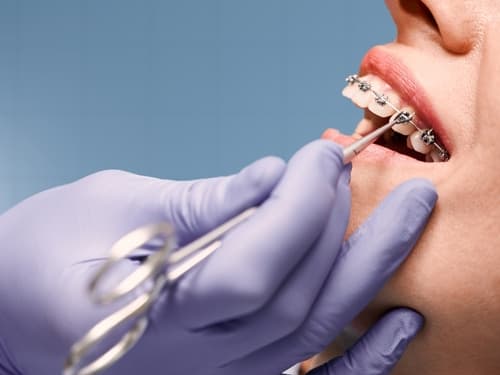
How fixed braces and clear aligners differ
Clear aligner systems such as Invisalign® are also available. The two approaches suit different situations:
| Comparison | Fixed braces | Clear aligners |
|---|---|---|
| Appearance | Visible metal or ceramic brackets | Nearly invisible, natural-looking |
| Range of cases | Can address a wide range of complex movements | Suited to mild to moderate misalignment |
| Control of tooth movement | High degree of control | Depends on the patient wearing them as instructed |
| Removable | Fixed — not removable by the patient | Removable, so eating is more flexible |
| Follow-up | Each adjustment is made and monitored directly by the dentist | Trays changed every few weeks, with review appointments to check progress |
Neither is better in every case. Which one suits you is decided at assessment, based on what your teeth and bite actually need.
What is the process of the traditional orthodontic treatment?
1. Initial consultation
- Meet with an orthodontist to assess dental health and alignment.
- X-rays , CT scans, and photographs are used to determine the need for treatment and its feasibility.
- Develop a personalized treatment plan and discuss different treatment options for braces.
2. Braces accessories
- Clean your teeth for the best bonding results.
- Connect the brackets with dental adhesives.
- Thread the archwire through the brace and secure the braces with an elastic band.
- Provide care instructions, including dietary restrictions and hygiene tips.
3. Regular follow-up
- The schedule is adjusted every 4 to 8 weeks, and the exact time varies from person to person.
- Monitor the alignment of tooth movements.
4. Final Stage
- Remove the braces after the alignment is achieved.
- Install a retainer to keep the tooth in place.

Services provided by Home Dental
Home Dental offers a comprehensive range of traditional orthodontic services designed to meet the unique needs of each patient. Features of our services include:
- Personalized Treatment Plan: Each patient receives a personalized assessment and treatment plan to ensure that their specific dental needs and cosmetic goals are effectively met.
- Advanced Technology: Our Hong Kong orthodontists utilize cutting-edge diagnostic tools, including digital imaging and 3D scanning, to provide precise treatment planning and monitoring, improving the effectiveness and efficiency of overall treatment.
- Diverse Treatment Options: We offer a wide range of orthodontic solutions, from traditional braces to innovative clear aligners, catering to a variety of preferences and ensuring that each patient can find an option that fits their lifestyle.
- Comprehensive Patient Education: We prioritize patient education, ensuring that everyone is fully informed about their treatment options and follow-up care approach so that they can play an active role in the orthodontic process.
- Post-treatment support: We offer customized retainers after treatment to help ensure orthodontic results and maintain long-term consistency, demonstrating our commitment to ensuring long-lasting oral health.
Frequently Asked Questions (FAQs)
1. How long does orthodontic treatment usually take?
The duration of orthodontic treatment varies depending on the complexity of the case and individual factors, and usually ranges from 12 to 36 months. At your initial consultation, our orthodontist will provide a tailored schedule after a thorough assessment. A minority of adult cases need a combined orthodontic and surgical assessment because the bite cannot be corrected by tooth movement alone.
2. Why shouldn't I always choose the lowest braces cost quote?
While a lower price for braces may be tempting, it may require you to compromise on certain aspects of your treatment. For example, a cheaper option may compromise the quality of treatment at the expense of materials or follow-up. It is advisable to carefully consider the overall value, including the experience of the orthodontist, the orthodontic technique used and the quality of customer service. Investing in high-quality orthodontic care is a long-term investment in your smile and oral health, and only you know if it's worth it. Timing changes the treatment plan considerably, which is why the orthodontic golden window for children is assessed before adult teeth are through.
3. Why do I need to choose traditional orthodontic treatment over clear aligners?
Clear aligners are popular for their aesthetics and comfort, but they are not for everyone. For severe misalignment, overcrowding, or complex bite problems, traditional orthodontic treatment may be required, as fixed braces can provide better control and achieve results more effectively. Our orthodontist will assess your needs and recommend the most appropriate braces option. Patients most often ask about before-and-after changes to mouth protrusion, which depends on how much the incisors are retracted.
Does having braces really hurt? I'm worried I won't cope
This is a common concern before a first course of treatment. In practice, there is often mild discomfort in the early stage — teeth feeling tender, or a sense of pressure in the jaw — which is the natural response as the teeth begin to move. Most people adapt within a few days, and it is not the same as toothache. If you feel clear pain, your dentist can check whether the force on the appliance needs adjusting.
What does it mean when orthodontic treatment "fails"? Is the time wasted?
"Failure" usually means the result was not as expected, or the teeth moved again afterwards. That is most often related to treatment being stopped part-way, review appointments being missed, or retainers not being worn as instructed. We provide follow-up support after treatment, including regular checks and a retainer made for you, so the result is held in place.
Why are elastics needed? Can I skip them?
Not everyone needs elastics, but where the bite relationship between the upper and lower jaws has to be corrected — for example protrusion or a deep bite — they matter a great deal. Your dentist decides how and how long they are worn. Once they are prescribed, wearing them as instructed is what allows the planned result to be reached and avoids the treatment dragging on.
Can braces cause gum recession or lasting problems?
The treatment itself does not directly cause gum recession, but if oral hygiene is not maintained and plaque accumulates, gum problems can develop. We therefore go through cleaning technique with you and check periodontal health regularly to avoid unnecessary complications. With a retainer and ongoing care after treatment, there are no expected long-term after-effects.
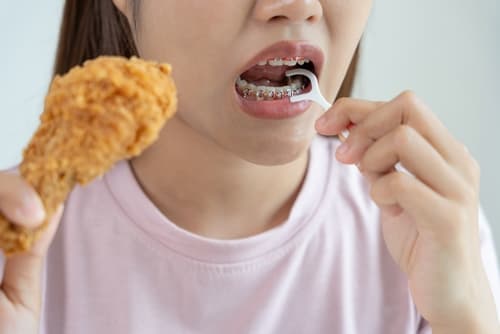
Common misconceptions
"I'm already an adult — am I still suitable for braces?"
Many people assume orthodontic treatment is only for teenagers. In fact, as long as the teeth and gums are healthy, it can be considered at any age. We have treated patients in their forties and fifties, and with careful planning and follow-up the improvement can be clear and natural-looking.
"Doesn't protrusion always need surgery? Can braces help at all?"
Not always. Where the protrusion is dental in origin, or moderate in degree, adjusting tooth position and bite angle with fixed braces often produces a marked improvement. Many patients find their side profile softens naturally without surgery.
"I've heard braces are painful and hard to get used to"
That impression comes from older techniques. Bracket design and archwire materials have improved considerably, with more attention to comfort. Most patients adapt within a few days and find it does not affect work or social life.
"Doesn't fixed treatment always mean metal braces?"
No. Fixed appliances come in several forms — metal, ceramic and lingual — each with its own advantages and suitable cases. We recommend an option based on your dental condition, appearance preferences and budget rather than applying one solution to everyone.
"Aren't fixed braces outdated? Shouldn't I use clear aligners instead?"
Fixed braces give a high degree of control where the bite is significantly off, the teeth are crowded, or there is protrusion. Clear aligners are discreet and flexible, but they are not suited to every case. Your dentist will explain which applies to your situation and why.
"Once the braces come off, that's the end of it?"
No. The retention period afterwards is what keeps the result. We make a retainer for each patient and arrange regular reviews, so the teeth stay in their new position rather than drifting back.
Should I have orthodontic treatment in Hong Kong or across the border?
This is a fair and common question, particularly where there is a difference in cost. Orthodontic treatment runs over the medium to long term, with frequent review appointments and technical adjustments along the way, so the decision is not only about price — it is about how the treatment will be delivered and followed up over one to three years.
Points worth weighing:
Training and registration
Dentists practising in Hong Kong are regulated under a statutory registration system. Qualifications, specialist registration and disciplinary records are publicly checkable through the Dental Council of Hong Kong. Many local dentists trained at the Faculty of Dentistry, University of Hong Kong, which is consistently ranked among the leading dental schools in the QS World University Rankings by Subject.
Communication
Treatment usually runs one to three years with repeated adjustments. Being able to describe discomfort and expectations precisely — in Cantonese or English — reduces misunderstanding at each visit.
Access when something goes wrong
Braces are an active treatment. A bracket comes loose, a wire moves, a tooth becomes sore. These need attention quickly. If the clinic is far away or an appointment is hard to arrange, progress can be delayed.
Transparency of fees and risks
Fees, treatment steps and risks should be explained clearly before treatment begins, so you can make an informed choice.
Continuity of care
From the first assessment through to the retainer stage, having the same dentist or team monitoring each step makes the result more predictable.
Location, budget and time are all legitimate factors, and they differ from patient to patient. As a locally registered dental team, we are happy to explain the treatment and what to expect, so you can decide what fits your situation.
Start your journey and change your smile
Home Dental's orthodontic team not only provides professional orthodontic services, but also emphasizes the individual needs of patients. Contact Home Dental today to schedule a traditional orthodontic consultation so that we can provide you with the most suitable treatment plan for your braces.
How to make an appointment
- WhatsApp button on the website (priority recommendation) - contact us now!
- Call 3956 9387 (Office Hours)
If you'd like to learn more about orthodontics, read our educational articles for a quick glance.
![[Canine Teeth Guide] Causes, Correction Options & Dental Risks | Trusted by HK Dentists](/_next/image?url=https%3A%2F%2Fuivazhssaweitolfbapb.supabase.co%2Fstorage%2Fv1%2Fobject%2Fpublic%2Fmedia%2F2025%2F05%2F17466355888220.jpg&w=3840&q=75&dpl=dpl_2DwfSVLhBnezqu5Ay8sjZvk91Jzc)