Dentist's Guide to Effectively Control Periodontal Disease
Reasons for Uncontrolled Periodontal Disease
-
Insufficient Treatment: Routine cleaning or scaling and root planing without thorough recording and follow-up may not completely remove subgingival calculus and periodontal pathogens, which is crucial for recovery.
-
Difficulty in Self-Assessment: Patients find it hard to determine whether subgingival calculus is entirely removed. Thus, trusting a skilled and detail-oriented dentist or periodontist is essential.
-
Inadequate Self-Maintenance: Good oral hygiene habits and regular self-care are vital for controlling periodontal disease.
Treatments for Periodontal Disease
-
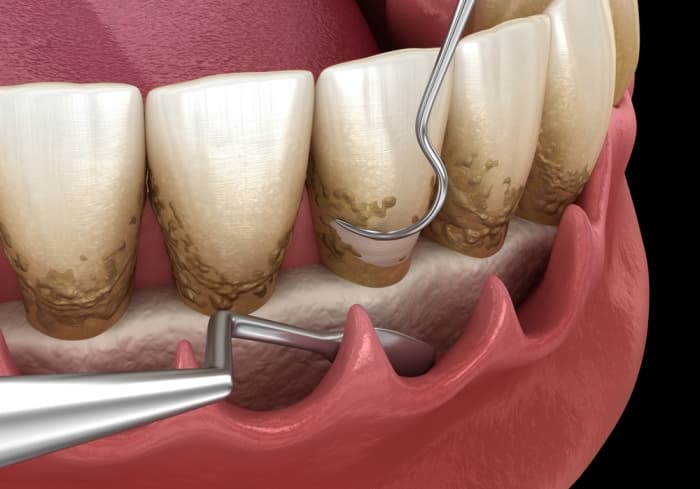
Non-Surgical Treatment: Scaling and root planing can remove plaque and calculus, reducing inflammation. (extended reading : periodontal disease causes, risk factors and treatment roadmap)
-
Surgical Treatment: In severe cases, surgery may be necessary to repair damaged gums and bone, including regenerative procedures to restore lost tissue.
-
Detailed Recording and Follow-Up: Professional periodontal treatment requires thorough medical records and post-treatment follow-up to ensure subgingival calculus and pathogens are completely removed.
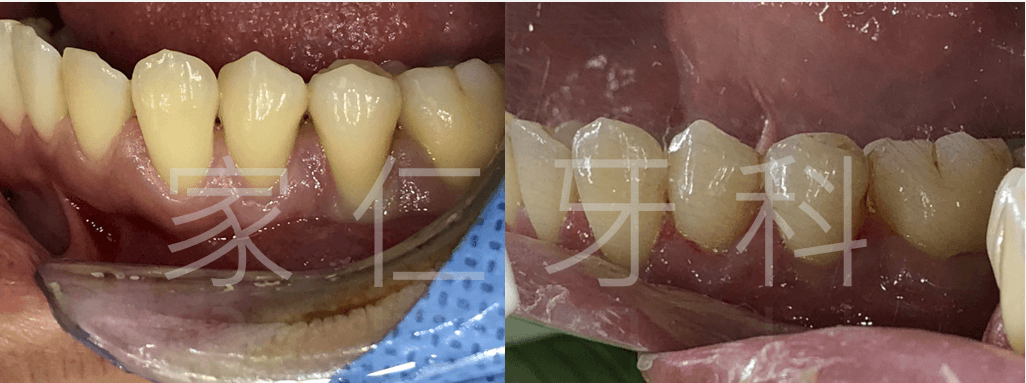
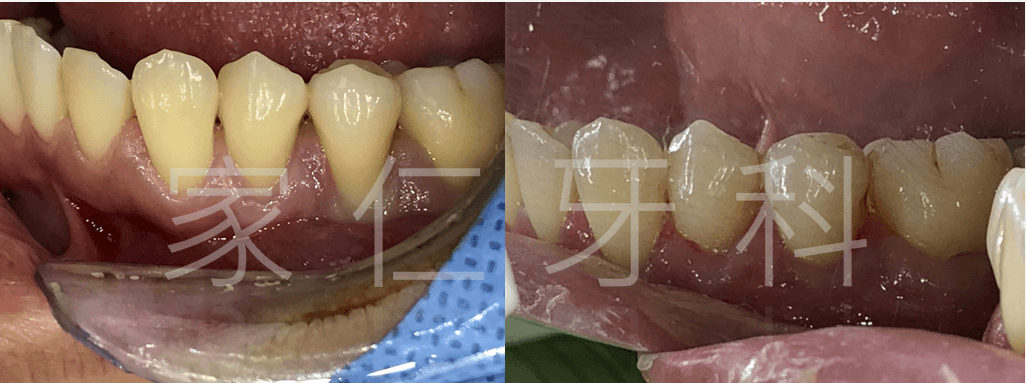
Gum graft surgery pre and post-op comparison to regenerate receded gums.
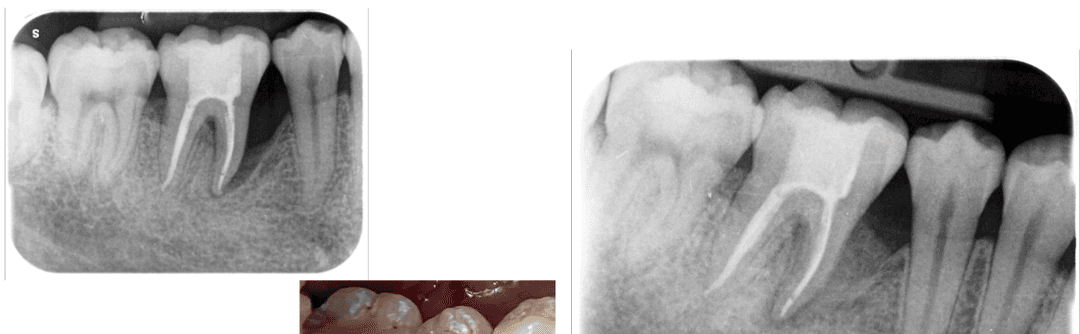
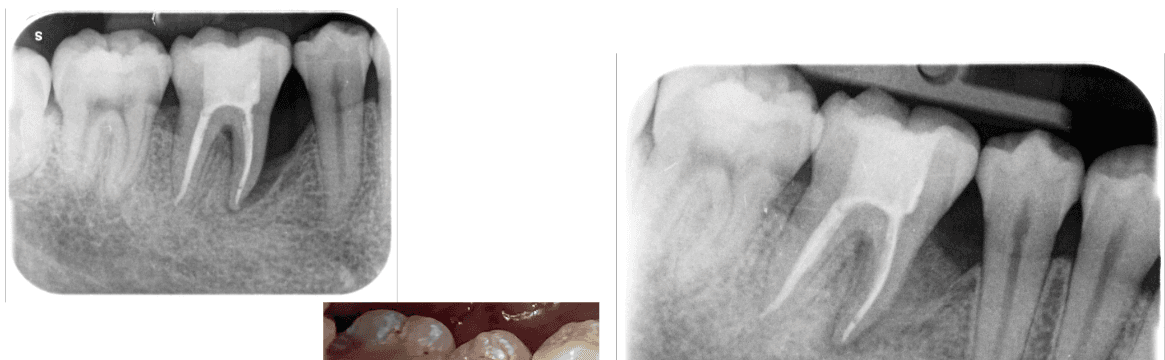
Pre and post-op X-ray comparison showing bone regeneration after regenerative surgery.
Periodontal fibre splinting: steadying loose teeth
Once periodontal disease has cost a tooth part of its supporting bone, individual teeth can become mobile — moving under pressure, weak in chewing, and because a loose tooth bears force unevenly, loosening tends to accelerate itself in a vicious cycle. Periodontal splinting addresses exactly this: the loose tooth is bonded to its steadier neighbours with a glass-fibre ribbon and tooth-coloured composite resin, turning several teeth into one mutually supporting unit — biting force is shared across the group instead of borne alone, and chewing function and comfort improve with it.
How is it done? Usually in a single visit: the tooth surfaces are thoroughly cleaned, the inner (tongue-side) surfaces are conditioned with etch-and-bond technique, a pre-measured glass-fibre ribbon is adapted onto them, covered in tooth-coloured resin, light-cured hard, then polished — and the bite is checked so the splint creates no occlusal interference. Minimal tooth structure is removed; the treatment is conservative and reversible, and in most cases no anaesthesia is even needed. The finished ribbon sits hidden on the inner surfaces — barely visible from the front.
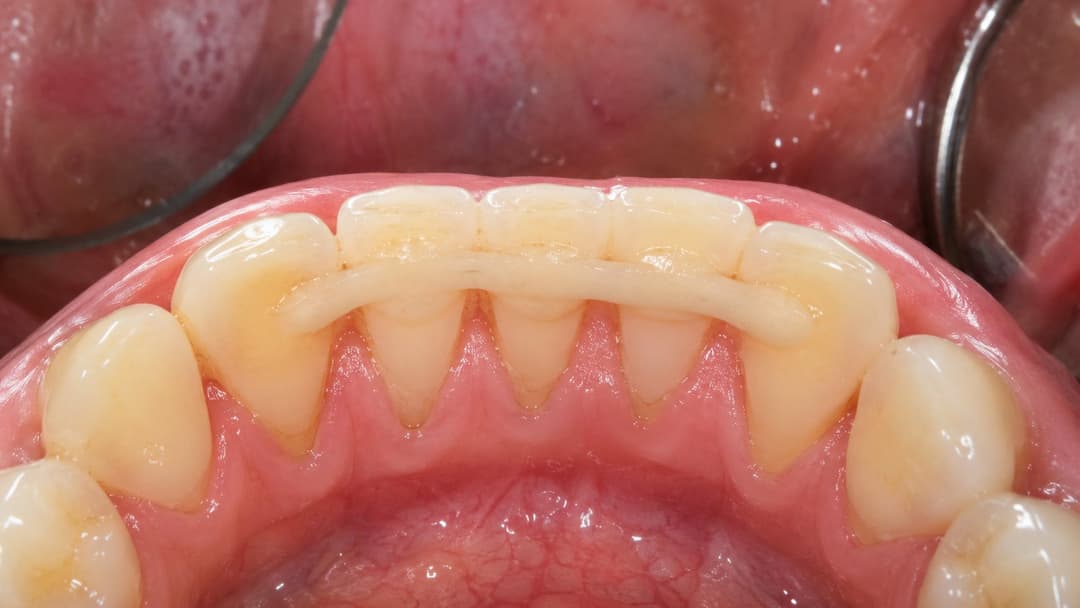
When is it used? Two main situations: ① after periodontal treatment has brought the disease under control, where individual teeth remain mobile from bone already lost and interfere with eating — splinting keeps these teeth in function, and is a common adjunct in the periodontal maintenance phase; ② teeth loosened by trauma, which need stabilising while the periodontal tissues heal.
Three honest points: first, splinting manages mobility — it does not treat the periodontal disease itself. Splinting over uncontrolled inflammation only hides a worsening problem, so the order is fixed: periodontal treatment first, disease confirmed stable, then splinting. Second, not every loose tooth qualifies — where bone loss is too advanced, splinting may merely delay the inevitable and can drag down the healthy neighbours it is bonded to; your dentist will assess honestly which teeth are worth keeping. Third, a splint can last for years but is not "once and forever" — the ribbon or resin can wear or chip over time and need repair or replacement, with longevity depending on periodontal status, bite force and cleaning habits.
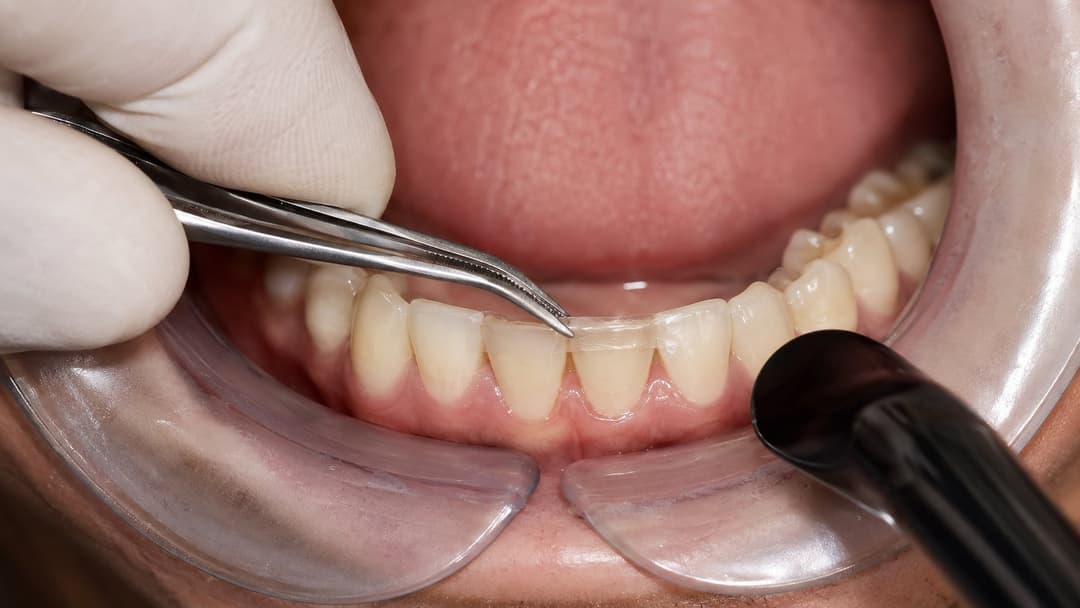
Afterwards: cleaning demands rise — the area beneath the ribbon and between the joined teeth needs interdental brushes and floss threaders (we will demonstrate), because poor cleaning lets periodontal disease recur beneath the splint. Regular reviews as instructed check the ribbon, the periodontal condition and the bite, with adjustments as needed. Splinting is typically used in the maintenance phase after deep periodontal treatment; whether it suits your case is assessed and advised by your dentist based on periodontal status, degree of mobility and your bite.
Key Steps for Successful Management of Periodontal Disease
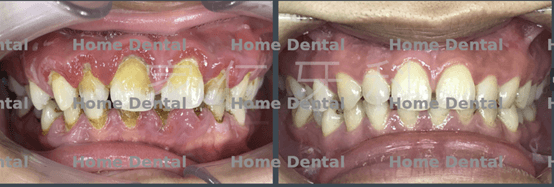
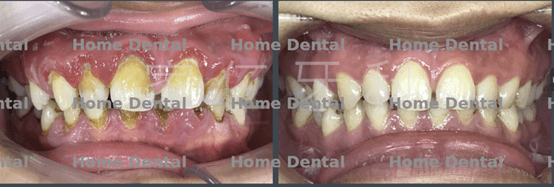
Periodontitis treatment before and after comparison, showing significant gum health improvement.
The Importance of Trustworthy Dentists and Periodontists
-
Thorough removal of subgingival calculus and periodontal pathogens, ensuring effective treatment.
-
Personalized oral hygiene guidance, creating a cleaning plan tailored to each patient's needs.
-
Regular monitoring and adjustments to ensure the patient's periodontal disease is continuously controlled.
The Importance of Patient Self-Maintenance
-
Good oral hygiene habits: Brushing and flossing daily to keep the mouth clean.
-
Regular follow-ups: Adhering to the dentist's recommendations for routine dental check-ups and cleanings.
-
Personalized cleaning methods: Using suitable cleaning tools and techniques as advised by the dentist.
Conclusion
Gum health in older patients is best assessed alongside general health — see our senior dental care page.
FAQs
1. Why should I think twice about cheap periodontal treatments?
Choosing the cheapest dental clinic might seem tempting, but it often comes with trade-offs that can affect your periodontal health. Higher fees at some clinics can reflect the quality of care provided, including the extent of deep cleaning or treatment necessary. More complex procedures demand greater time, resources, and expertise, which lower-cost options may not offer. Moreover, the experience level of the dentist plays a crucial role in outcomes. Specialists, with their advanced training, can deliver better results, justifying their higher rates. Some soft-tissue steps can be carried out with a dental laser, which we cover separately.
2. How does periodontal disease impact my overall health?
Periodontal disease isn't just about your mouth—it can affect your entire body! Studies have shown that untreated gum disease is linked to bigger health problems like heart disease, diabetes, and even respiratory issues. The inflammation from gum disease can ramp up systemic inflammation, making these issues worse. On top of that, poor oral health can complicate diabetes management since gum infections can throw a wrench in blood sugar control. So, keeping your gums healthy is crucial not just for your smile but for your overall well-being. Regular dental check-ups and preventative care can help you stay on top of your health game! Treatment makes more sense alongside the causes and complications of periodontal disease, including the effects beyond the mouth.
Schedule a professional periodontal treatment appointment today to safeguard your oral health.
You can schedule a consultation through the following methods:
• Click the WhatsApp button on our website (Preferred method) - Contact us immediately!
• Call 3956 9387 (during office hours)
If you would like to learn more about periodontal treatment, take a quick look at our educational articles.
Related reading
Teeth that look longer, exposed roots or sensitivity may be gum recession: gum recession causes, severity and gum grafting.
Bleeding gums, bad breath, receding gums or loose teeth? Check the 8 warning signs of gum disease.
Wondering whether gum disease can heal on its own, or what your pocket depths mean? See can periodontal disease heal on its own — pocket depth chart.
After treatment, how to stop it coming back: periodontal maintenance and review intervals.