Comprehensive Guide to Dental Implants in Hong Kong
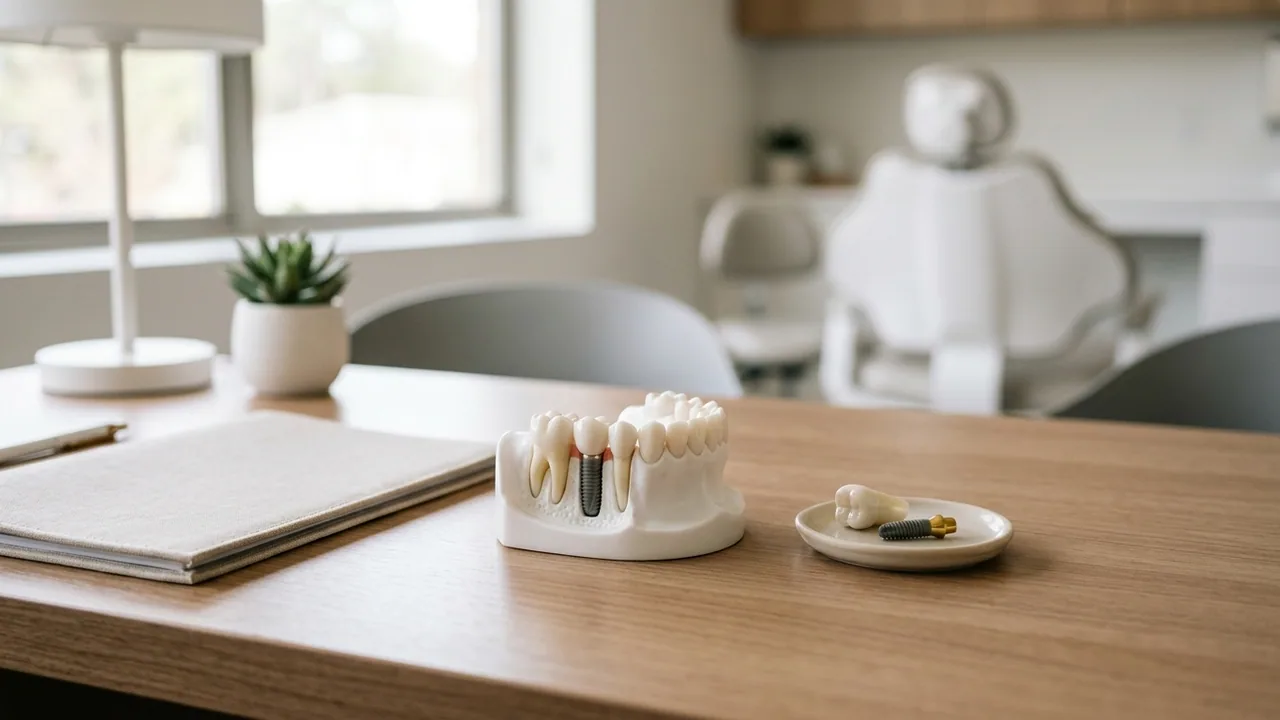
A dental implant is a surgical procedure that replaces missing teeth by inserting a biocompatible artificial root (usually titanium) into the jawbone. Once integrated with the bone, the implant supports a crown or bridge, offering stability, function, and aesthetics comparable to natural teeth. It is one of the most durable and reliable solutions in modern dentistry for tooth replacement. Implants are not the only route: where bone volume is limited, a bridge or a denture may restore function with less surgery.
When to Consider Dental Implants?
-
Severely damaged teeth: Teeth that are too damaged to withstand normal chewing forces, even if salvaged, may easily break again, such as large cavities or old fillings falling out.
-
Hidden cracks: Severe hidden cracks that may not be cured even with root canal therapy and crowns, affecting the patient's quality of life, such as chewing ability and pain. In such cases, implanting a tooth after breaking might be more durable than retaining a damaged tooth.
-
Periodontal disease: Periodontal disease causes gum and bone atrophy, and without proper treatment, the entire tooth may lose chewing ability or become severely loose.
-
Severe tooth inflammation: Severe tooth inflammation spreading to other parts of the body may cause serious complications or even be life-threatening, such as abscesses spreading to the eyes, neck swelling affecting breathing, or bacteria entering the bloodstream causing fever and other complications. In such cases, extraction might be the more immediate option.
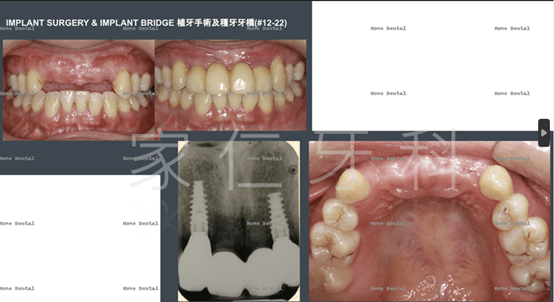
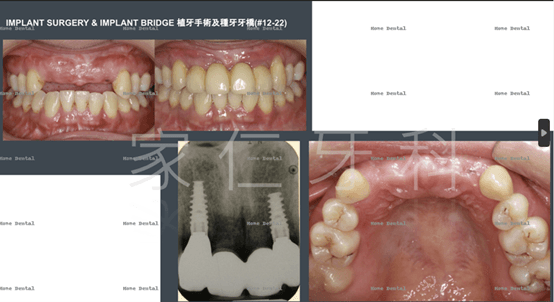
Anterior Aesthetic Implant Bridge Pre- and Post-Op Comparison
Implants vs Bridges vs Dentures — Which Tooth Replacement Is Right for Me?
When facing tooth loss, many patients wonder which option is best. Each method has its pros and cons depending on your oral health, function, and budget:
| Option | Dental Implant | Dental Bridge | Removable Denture |
|---|---|---|---|
| Stability | ✅ Excellent | ⚠ Depends on adjacent teeth | ❌ May shift or loosen |
| Chewing Function | ✅ Like natural teeth | ⚠ Acceptable | ❌ Weaker bite force |
| Need to grind teeth | ❌ No | ✅ Yes (adjacent teeth) | ❌ No |
| Aesthetic outcome | ✅ Natural appearance | ✅ Good (depending on material) | ⚠ Less realistic |
| Cost | 💲💲💲 | 💲💲 | 💲 |
| Suitable for | Good bone quality, long-term solution | When adjacent teeth are healthy | Short-term or budget-conscious patients |
Considering a dental implant over a bridge or denture? Routine cases can first be assessed by the general dental team at Home Dental Centre. Where clinical needs indicate further care in this area, Dr. Kenneth Chan (Dentist) at the centre provide the relevant treatment; the treating dentist is arranged according to clinical needs and the dentists on duty. Where a case involves more than one area of dentistry, dentists from different areas at the centre can jointly develop a combined treatment plan, without the patient needing a referral elsewhere. How implant fees are made up →
The Implant Process
-
Implanting the artificial root
-
Healing period
-
Installing the abutment
-
Fabricating and installing the crown
1. Patient's Condition
Adults over 60 considering implants may wish to start with our senior dental assessment, where suitability is advised on overall health and oral condition.
2. Detailed Preoperative Assessment
3. Follow-Up and Maintenance
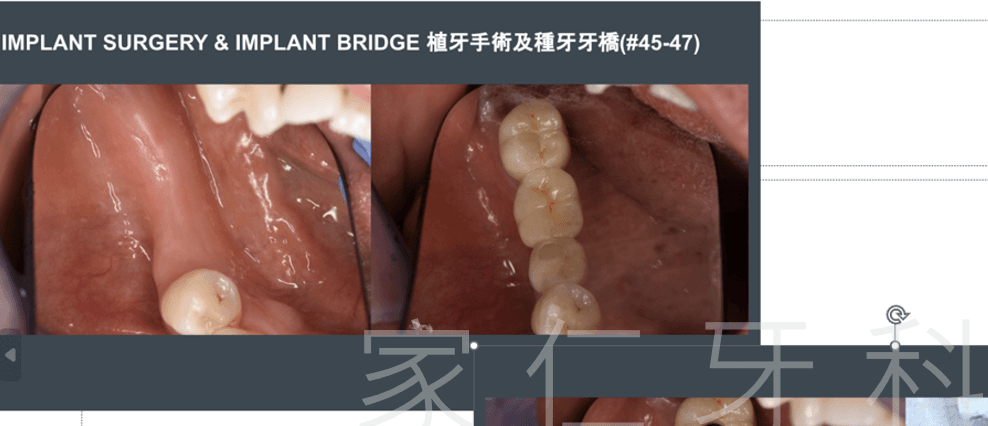
Posterior implant teeth replacement pre and post-op comparison, showing the condition before and after surgery.
Considerations for Choosing Implant Brands
Many people mistakenly believe that choosing a higher-end implant brand will result in better outcomes, but this is not always the case. Dentists typically select suitable implants based on each patient's clinical condition. For instance, some situations require shorter but stronger implants to avoid nerve damage, necessitating specific brand designs to meet these needs. Generally, to achieve the best lifespan and minimal complications, dentists will choose internationally renowned brands with a long clinical history, ensuring familiarity with the tools and maintenance procedures in the future.
Additionally, some clinics claim to use the same implants as internationally renowned brands but at a much lower price. Customers need to be aware that these implants might be older designs no longer offered or supported in other regions. The surface treatment and design of these implants might not be the latest technology. Brands continuously improve to achieve the highest clinical success rate and minimal complications. If issues arise in the future, it might be challenging to repair, potentially causing more significant damage.
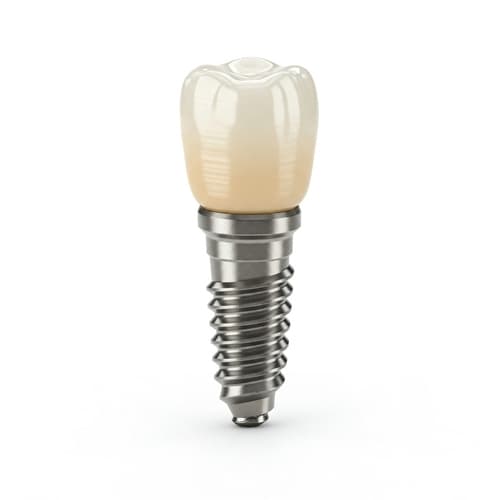
Dental Implant Brand Comparison: Straumann vs Nobel Biocare
In Hong Kong, two of the most trusted global implant brands are Straumann (Switzerland) and Nobel Biocare (Sweden). Both are well-established, clinically proven, and offer high success rates. Here’s how they differ:
| Brand | Key Features |
|---|---|
| Straumann | Swiss-made, known for advanced surface technology, faster healing time, ideal for patients with lower bone density |
| Nobel Biocare | Pioneer in modern implant systems, wide range of designs, excellent for aesthetic cases and complex reconstructions |
Brand choice ultimately depends on your bone quality, aesthetic priorities, and oral condition. Dentists will recommend the best fit based on your case — not just the name.
Development History of Implant Design and Surface Treatment
| Period | Inventions and Changes | Advantages and Improvements |
|---|---|---|
| 1970s | Mechanical processing surface Traditional smooth surface | Smooth surface, small bone contact area, initial stability is poor |
| 1980s | Sandblasting and acid etching to increase surface roughness | Increased bone cell adhesion, accelerated osseointegration |
| 1990s | Plasma-sprayed surface Coated with titanium or hydroxyapatite layer | Increased surface area, promotes faster bone growth |
| 2000s | Anodized surface Achieves thicker oxide layer through electrolysis | Increased surface roughness and oxide layer thickness, improved osseointegration |
| 2010s | Laser-microtextured surface Creates microgrooves and pits | Promotes cell adhesion and growth, enhances long-term stability |
Alleviating Patient Concerns
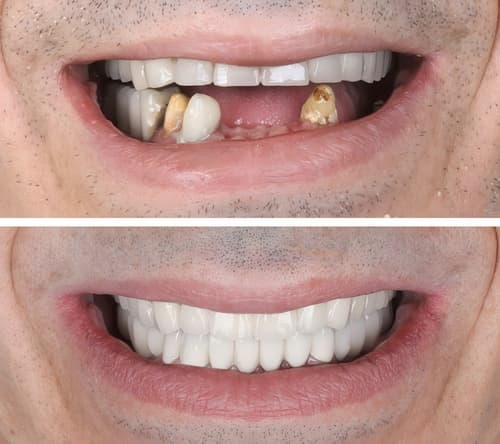
Dental Implant FAQs:
Q: Why shouldn't I choose the lowest price for dental implants?
A: Selecting the lowest priced implant option can often overlook essential factors such as the quality of the implant materials, the origin of these materials (made in China, Asia or Europe?), the dentist's expertise, and the aftercare guarantees provided. It's crucial to compare similar products rather than focusing on the implant price alone to ensure you receive a safe and effective treatment. For a direct cost comparison of dentures and implants, including what each fee covers, we set the figures out separately.
Want to see exactly what an implant fee is made up of? How implant fees are made up →
Q: What additional value does a well-established dental centre offer?
A: Established dental centres generally possess extensive experience and employ highly skilled professionals including implant dentists and even specialists. In addition to offering high-quality implant materials, they are likely to provide excellent aftercare service, including warranties, which can give you peace of mind in your investment.
Q: Are dental implants the only option for replacing missing teeth?
A: No, dental implants are not the only solution. Dentists usually prioritise preserving natural teeth whenever possible. Implants are considered mainly when other options, such as bridges or dentures, are not feasible, ensuring that each patient receives tailored care based on their specific oral health needs. For anyone considering dental implants, it is important to consult with a qualified professional dentist who can thoroughly evaluate your individual circumstances and suggest the most suitable treatment options for your dental health. Patients weighing up cost often ask about implant treatment in Hong Kong compared with going overseas, which we address separately.
Q: Does dental implant surgery hurt? How long is the recovery?
Thanks to modern minimally invasive techniques and local anesthesia, dental implant surgery is usually painless. You may experience mild swelling or soreness for 2–3 days, with most patients returning to daily routines within a week.
Post-op care tips:
-
Avoid hot or spicy foods for the first two days
-
Take prescribed medication and apply ice packs
-
Refrain from smoking or strenuous activity during healing
Patients with chronic conditions like diabetes should inform the dentist in advance so we can customise the recovery plan for a safe and stable outcome.
Anterior Aesthetic Implant Case: Two Implants Supporting a Three-Crown Fixed Bridge
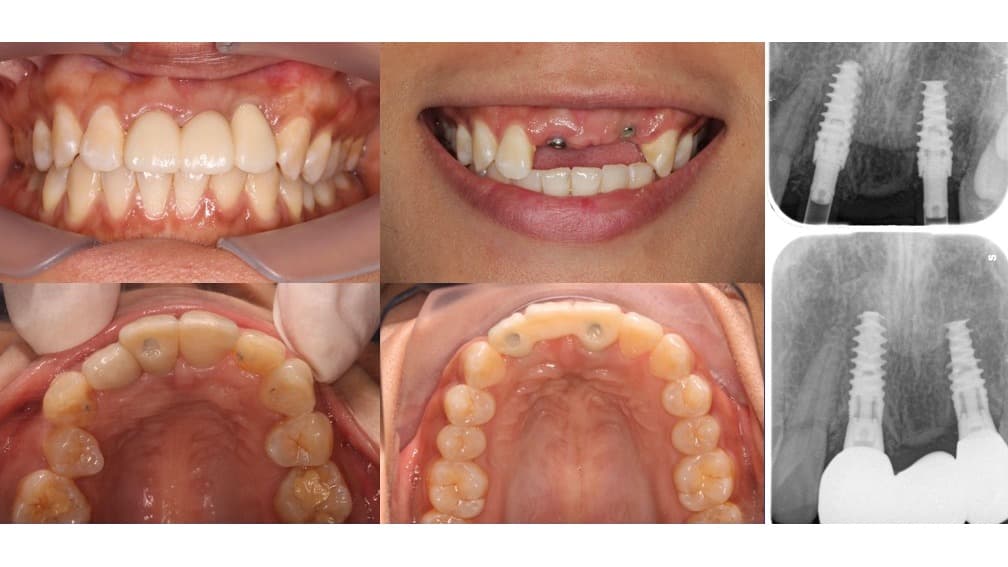
In the case above, the patient was missing three front teeth. After detailed assessment, the gap was restored with a fixed bridge of three connected crowns supported by two implants, avoiding an additional implant where bone and gum conditions were more limited.
Implant treatment in the anterior aesthetic zone is especially demanding to plan: the three-dimensional position, angle and depth of each implant directly determine the crown shape and gum contour. This requires in-depth knowledge of hard tissue (bone) and soft tissue (gum), together with careful distribution of the bite, to achieve the optimal aesthetic and functional result. Poorly planned implants can lead to failed cases where implant position compromises appearance and function, and may increase the risk of early implant loosening or component fracture.
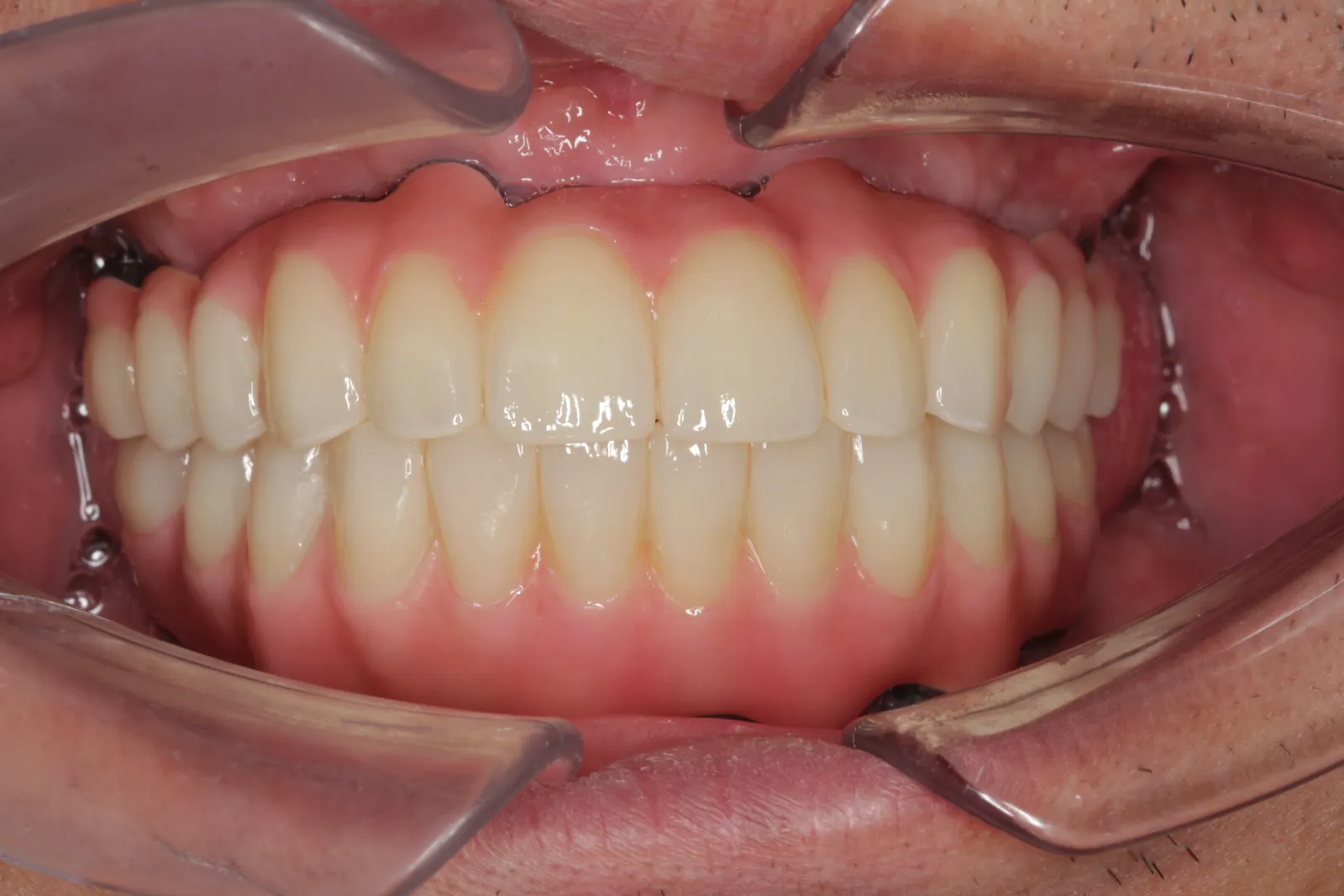
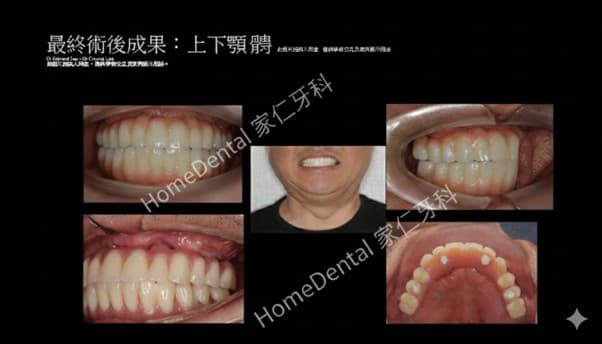
Cases with more missing teeth are more complex to plan — see our All-on-4 full-arch process and cost guide and real upper-and-lower All-on-4 immediate implant case. For the basics, read our implant education articles.
Contact Home Dental today to schedule an implant consultation and let us provide you with the most suitable treatment plan.
How to make an appointment
1. WhatsApp button on the website (priority recommendation) - contact us instantly!
2. Call 3956 9387 (during office hours)
If you would like to learn more about dental implants, read our educational articles for a quick look.
Anxious about this procedure? We offer anaesthetist-led dental sedation (MAC / IV) for both adults and children at our licensed Dental Day Procedure Centre. For longer implant visits, see implant sedation: evidence and safety arrangements.
Implant assessment and surgery are available at our Causeway Bay and Tsuen Wan clinics (we also have a TST Dental Consultation and Education Centre, by appointment). If, following the dentist's assessment, you are considering treatment under sedation, you can read more about dental sedation in Tsuen Wan (our Day Procedure Centre) — the Tsuen Wan clinic page covers the sedation service, opening hours and directions.