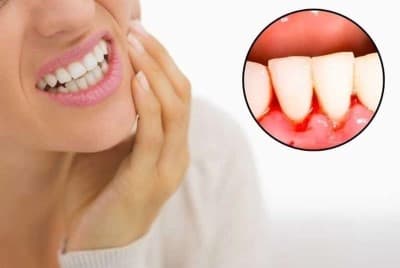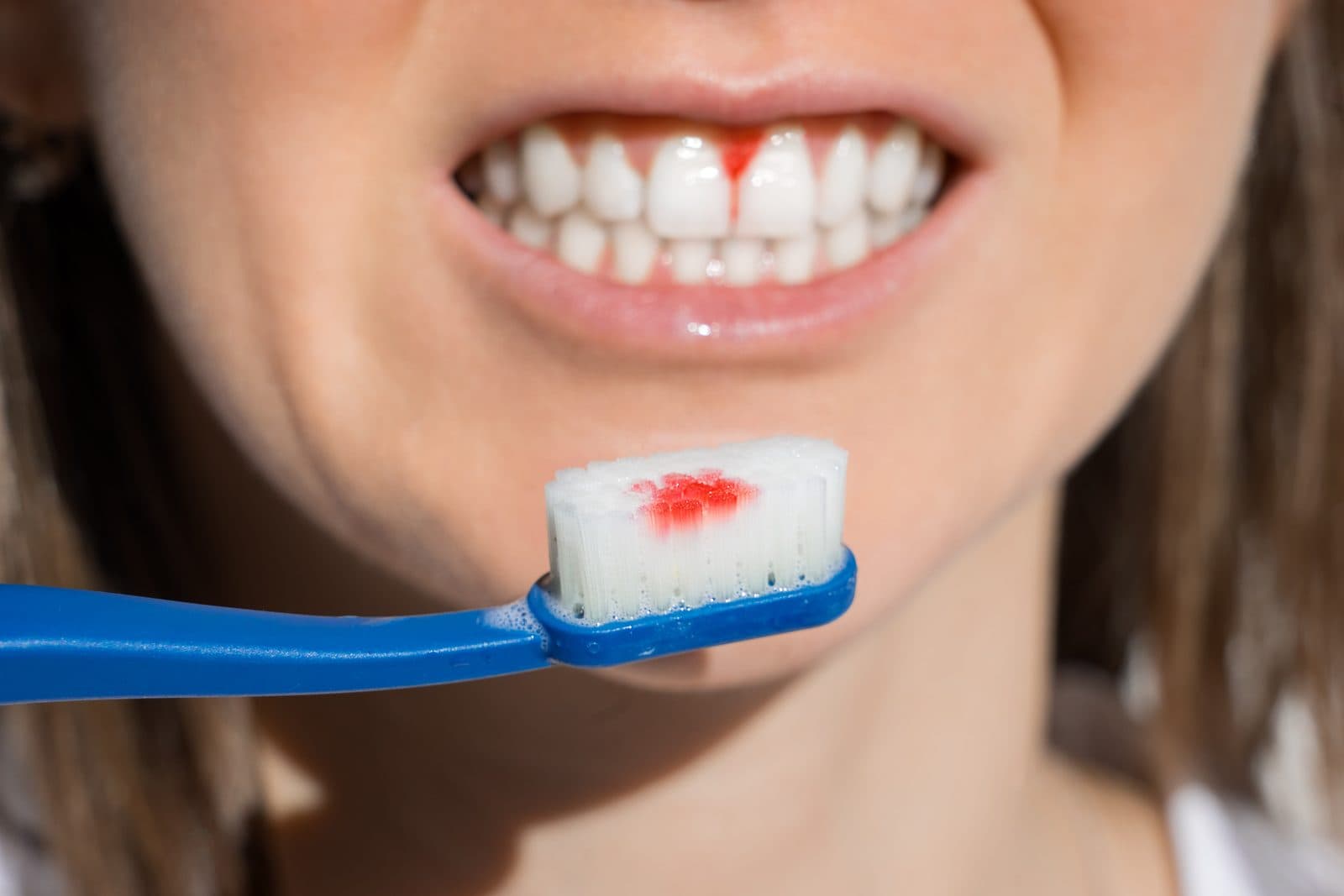
Is gum pain always linked to periodontal disease? Gum pain is typically the result of gum inflammation — toxins released by dental plaque infect and inflame the gum tissue — and if it is not dealt with promptly, it can in serious cases progress to periodontal disease. But gum pain has many causes, from incorrect brushing and gum overgrowth to wisdom teeth, mouth ulcers and other dental diseases. In this article the dental team at Home Dental Centre explains what you can do at home right now if you cannot see a dentist immediately (and what not to do); seven causes of gum pain, each with "what you can do at home"; when you must see a dentist; and why "relief" is not the same as "cure" — delay leads to irreversible damage to the gums, the bone and even general health.
Gum Pain: Which Group Are You In?
- Be seen the same day — obvious facial or gum swelling, fever, pus from the gum or a "gum boil", difficulty opening the mouth or swallowing, pain that stops you eating or sleeping, throbbing pain or pain across one side of the face. This is no longer ordinary gum pain; it may be an abscess or acute infection, and home relief will not do much. Contact our dental emergency service (open seven days, with same-day slots at both our Causeway Bay and Tsuen Wan dental centres), and see first aid for a dental abscess.
- Relieve at home first, then be examined within 48–72 hours — red, swollen, painful gums without facial swelling or fever; bleeding on brushing; pain that began after something got stuck between the teeth; pain at a wisdom tooth; a noticeably loose tooth; gums that have receded so the tooth looks longer. Use the seven steps below to control the pain while you book an examination.
- Self-care, routine check-up — only mild soreness or occasional bleeding, clearly improving within two or three days of better cleaning, no recurrence. No urgency, but an examination and scaling to remove the cause are still worthwhile.
For sudden severe pain in the tooth itself (rather than the gum), sensitivity to hot and cold, or pain on biting, see quick toothache relief methods and what to do about sudden tooth pain.
Sudden Gum Pain? Seven Steps to Relieve It at Home
If you cannot get to a dentist straight away and need temporary relief, these seven steps will help you control the pain for the time being. Each one explains why it works, so you can tell whether you are doing it right:
1. Warm Salt-Water Rinse
Dissolve half a teaspoon of salt in a cup (about 250 ml) of warm water, hold it in the mouth for about 30 seconds and spit it out, two to three times a day and especially after meals. Salt water reduces bacteria, helps flush out food debris and temporarily eases swelling and inflammation. Do not rinse forcefully or make the solution too strong — very salty water irritates the gums.
2. A Cold Compress on the Cheek (Not Heat)
Wrap ice or an ice pack in a thin towel and hold it against the cheek over the painful area for three to five minutes, rest, then repeat. Cold narrows the blood vessels and dulls the gum nerves, giving temporary numbing, pain relief and reduced swelling. Do not apply heat: heat dilates the vessels, and if there is an infection underneath, the swelling becomes more pronounced.
3. Keep Cleaning the Painful Area — Soft Brush, Light Pressure
Many people avoid the sore area for fear of pain, so plaque builds up and the pain persists. Use a soft brush, light pressure and small circles angled 45 degrees to the gumline (see proper brushing technique), covering the outer, inner and biting surfaces. Bleeding is a result of inflammation, not a sign that brushing is harmful.
4. Remove Trapped Food
Gum pain very often starts with a piece of food (a meat fibre, a fragment of seed) stuck between the teeth or under the gum. Remove it gently with floss or an interdental brush; the pain often eases noticeably within hours. Continue to clear food debris thoroughly after every meal, then rinse with warm water.
5. Avoid Irritants
For now, avoid very hot, hard, spicy or acidic food, and alcohol and tobacco — both make inflamed gums congested and slow healing. Choose mild, soft food and chew on the other side.
6. Painkillers — Short Term, as Directed on the Pack
Over-the-counter paracetamol (Panadol) or ibuprofen can temporarily relieve pain and inflammation. Take them at the dose on the pack, generally for no more than two or three days; if you have stomach or kidney problems, take anticoagulants or are pregnant, ask a pharmacist or doctor before using ibuprofen. Painkillers only mask the pain; they do not remove the cause. If the pain persists despite medication, seek care promptly. For which anti-inflammatory medicines are used for swollen gums, when they are appropriate and when you should never self-medicate, see 9 common questions about swollen gums.
7. Antibacterial Mouthwash — for Two Weeks at Most
There is high-quality evidence that chlorhexidine mouthwash reduces plaque and helps control gingivitis, but only as an adjunct to brushing and interdental cleaning, never a replacement; used continuously for four weeks or more it stains the teeth, so it is normally used for one to two weeks in an acute phase only. For everyday use choose an alcohol-free mouthwash — see how to choose a mouthwash.
What not to do: poke swollen gums with toothpicks or fingernails; "disinfect" the mouth with alcohol or spirits; press an aspirin tablet against the gum (it burns the tissue); buy antibiotics without prescription; assume herbal "cooling" drinks can replace cleaning; stop brushing the area because it hurts.
The 48–72-Hour Rule
With all seven steps in place, mild gum pain usually eases noticeably within two to three days and clears within one to two weeks. If after 48–72 hours the pain has not eased, eases and then returns, or is getting worse, there is a cause underneath that relief cannot reach — calculus, a periodontal pocket, decay, an impacted wisdom tooth or an infection — and only a dental examination will find it. Continuing to treat it at home simply pushes irreversible damage further down the road.
Seven Causes of Gum Pain — with "What You Can Do at Home" for Each
Knowing the cause tells you what has to happen after the relief. These are the seven most common causes:
1. Poor Oral Hygiene
Poor oral hygiene is one of the main culprits. People prone to gum inflammation usually lack good habits — not brushing morning and night, not brushing thoroughly, not flossing regularly, or using the wrong technique — so plaque and calculus build up between the teeth, and the gums swell and ache. At home: steps 3 and 4; once calculus has formed, brushing cannot remove it and a scaling is needed.
2. Incorrect Brushing
Apart from poor hygiene awareness, misusing a toothbrush or floss also causes gum pain and bleeding — brushing too hard, bristles that are too stiff, flossing too forcefully — leading to bleeding, swelling and gum damage, and in serious cases gum recession. At home: switch to a soft brush and light circular strokes; receded gums do not grow back, so for marked recession see gum recession causes and gum grafting.
3. Bite Problems and Teeth Grinding
An uneven bite is another cause. Crowded teeth, wide gaps or ill-fitting dentures all distribute biting pressure unevenly, and over time the gums ache from the load; many stressed city dwellers also grind their teeth in their sleep, which over time seriously damages the gums and supporting tissues. At home: avoid hard foods and chew on the other side; grinding needs a dental assessment for a night guard, and ill-fitting dentures need adjusting.

4. Wisdom Teeth
Erupting wisdom teeth cause many people considerable pain. Most wisdom teeth are impacted: with too little room, they erupt at an angle, and as they push against the tooth in front the pain can be intense. Being so far back they are also harder to clean, and trapped food debris breeds bacteria, leading to decay or repeated inflammation of the gum around them — another common cause of gum pain. At home: steps 1, 3 and 4 to control the inflammation; recurrent inflammation means considering removal — see how to deal with wisdom tooth inflammation and our wisdom tooth removal service. For the causes and symptoms of erupting wisdom teeth, see erupting wisdom teeth.
5. Gum Overgrowth
Some people's gums overgrow because of heredity or medication (certain anti-epileptics, blood-pressure drugs and immunosuppressants). When thickened gum covers part of the tooth surface it affects appearance and makes debris in the gum crevice hard to clean; plaque accumulates, gingivitis follows and the gums become very painful. At home: clean even more carefully, but the overgrowth itself needs a dentist's assessment and, where medication is the cause, a discussion with the prescribing doctor.
6. Mouth Ulcers
Mouth ulcers also cause gum inflammation and pain. They may follow herpes virus infection, irritating foods or medicines, trauma or lowered immunity, and the lining of the mouth, the gums and the tongue can all become red, hot, swollen and sore. At home: steps 1 and 5; most heal on their own in 7–14 days, but an ulcer that has not healed after two weeks should be examined promptly — see causes and grading of mouth ulcers.
7. Dental Disease
Most people with gum pain have an underlying dental disease — most commonly decay, gingivitis, an abscess or periodontal disease. When decay reaches the pulp, for example, pulpitis follows and the gum around the tooth aches too; left untreated it can turn into an abscess or periodontal disease. At home: relief only buys time — every condition in this group needs a dentist to treat the cause. For the difference between gingivitis and periodontitis see gingivitis: symptoms, causes and whole-body health; for the treatment ladder for gum inflammation see gum inflammation causes, symptoms and treatment.
Relief Is Not a Cure: What Happens If Gum Pain Is Left Untreated
Home relief deals with the symptom; the dentist deals with the cause. The distinction matters because periodontal damage has a clear line beyond which it cannot be reversed:
| Stage | What is happening | Reversible? |
|---|---|---|
| Gingivitis | Plaque and calculus make the gums red, swollen and bleeding; pain may come and go | Yes — the gums recover fully once calculus is removed and cleaning improves |
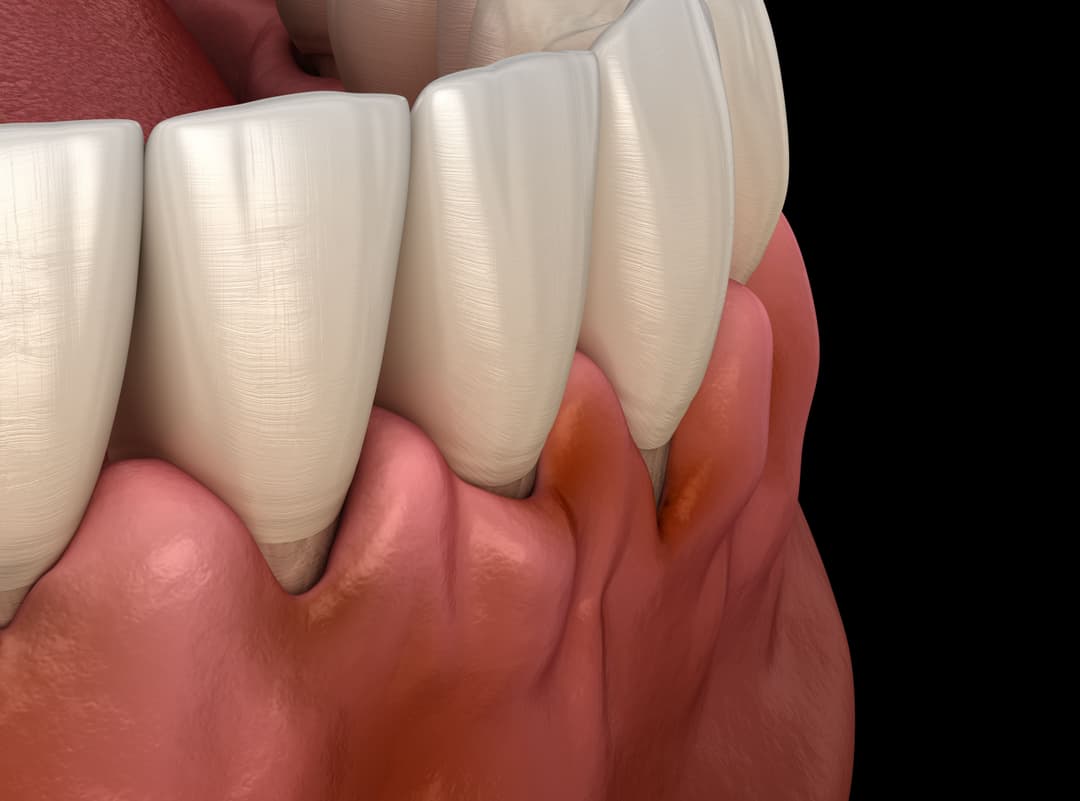
| Early periodontitis | Inflammation spreads below the gumline; pockets (4 mm or more) form and bone loss begins | Partly — it can be controlled and stabilised, but lost bone does not return |
| Moderate to advanced periodontitis | Substantial bone loss; receding gums make teeth look longer; widening gaps, loose teeth, pus from the gum | No — only deep treatment, surgery and long-term maintenance can keep the teeth |
| End stage | Teeth loosen and fall out or must be extracted; chewing, appearance and neighbouring teeth all suffer | — |
The lesson about timing: gingivitis-stage pain is the easiest to "relieve" — which is exactly why so many people wait until a tooth is loose before seeking care, by which time bone has already been lost and receded gums will not return.
And it is not only about the teeth. Periodontitis is part of the body's long-term inflammatory burden: its relationship with diabetes runs both ways (treating gum disease improves blood-sugar control, with randomised-trial evidence), and large studies show associations with heart disease, stroke and dementia. If you have a chronic condition, gum pain is all the more reason not to wait. For the scientific evidence and what patients with chronic conditions should know before dental treatment, see gingivitis and your whole body: diabetes, heart disease, stroke and dementia.
Solving Swollen, Painful Gums: How the Dentist Treats the Root Cause
There are countless folk remedies for swollen gums, but the only approach that actually works points in one direction — removing the cause. This is the order in which the dentist proceeds, starting with the basics:
Improving Oral Care Habits
Many people's brushing technique is not ideal, and few use anything beyond a brush and toothpaste. With sore gums, cleaning technique matters even more: brush morning and night with the bristles angled at 45 degrees, just touching the gum, covering the outer, inner and biting surfaces of every tooth; and add interdental brushes, floss or mouthwash to the routine. Your dentist or hygienist will show you the method that suits the way your teeth are arranged.
Regular Check-ups and Scaling
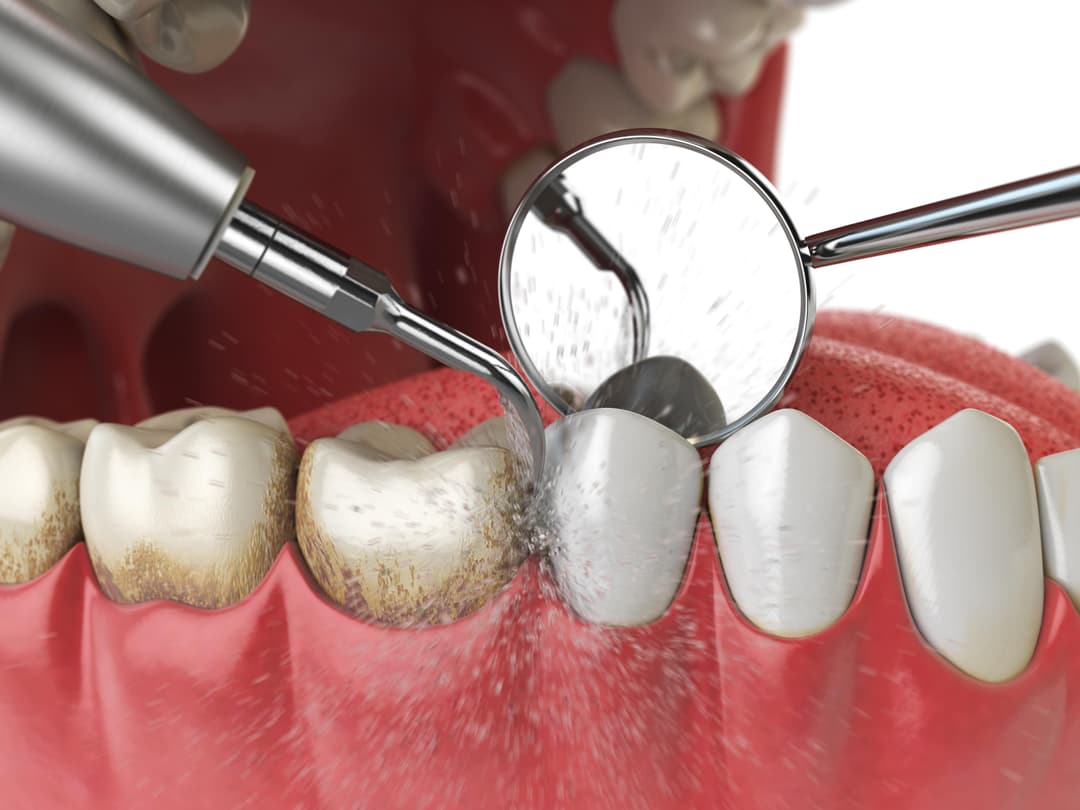
Gum problems are often not noticed by the patient at first, and by the time they hurt they are harder to manage. Regular check-ups let the dentist catch problems early and fix them before they worsen; at a scaling the dentist or hygienist removes the accumulated plaque and calculus, addressing gum pain at its source. Comprehensive scaling and cleaning at Home Dental Centre is generally recommended every six months, more often for people with heavy calculus or recurrent gum inflammation.
Once Pockets Have Formed — Deep Cleaning and Root Planing
If probing finds periodontal pockets (4 mm or more), calculus has collected below the gumline and routine scaling cannot reach it. Patients with periodontal disease need deep root planing to remove the bacteria and calculus lodged inside before the inflammation will settle. This treatment relies heavily on the dentist's experience and touch — an experienced dentist can be sure that the calculus hidden below the gum has been thoroughly removed, confirm at follow-up that the result is stable, explain the state of your mouth and give personalised guidance. The procedure, number of visits and fees are explained in periodontal treatment: procedure and fees, or see our periodontal treatment service directly.
Severe or Recurrent Cases — Specialist Assessment and Long-Term Maintenance
Deep pockets that remain uncontrolled after deep cleaning, marked bone loss or cases needing periodontal surgery can be referred within the same team to a periodontist; maintenance visits every three to six months afterwards are the key to preventing relapse — see maintenance and review after periodontal treatment.
Quit Smoking, Drinking and Other Harmful Habits
Smokers' gums tend to deteriorate early, with frequent swelling and sudden bleeding, and if gingivitis is already present smoking slows recovery. Alcohol is no friend to the gums either — drinking while the gums are inflamed raises the risk of bacterial infection, and already-inflamed gums become more congested and red after alcohol. Giving up both is the best route to resolving swollen, painful gums.
Everyone's gums are different. If your gum pain is severe or keeps returning, see a dentist early so that treatment and daily habits can be adjusted to your situation and the problem resolved sooner. For an item-by-item self-check of the eight warning signs of periodontal disease, see periodontal disease warning signs.
Fee Guide for Gum-Pain Examination and Scaling
At Home Dental Centre's current published fees, professional scaling is HK$800 with a dental hygienist or HK$980 with a dentist, the actual fee depending on the amount of calculus and the extent of treatment. If the examination finds periodontal pockets requiring deep cleaning and root planing, the fee is explained clearly after the examination according to the extent and severity — see periodontal treatment: procedure and fees and our fee transparency commitment.
About prices: before starting treatment, confirm whether the fee includes examination, X-rays and follow-up. After a clinical assessment our team explains the procedure, fees and time required, and treatment begins only with your consent.
Gum Pain Not Better After Two or Three Days? Book an Examination
Open seven days a week, with earlier slots available at our Causeway Bay and Tsuen Wan dental centres; same-day slots for acute swelling and pain.
Why Choose Home Dental Centre for Gum Pain?
- A team of 31 dentists — including periodontists and dental hygienists, so that from scaling to deep periodontal treatment, the right person follows up according to the cause.
- We find the cause, not just the pain — the examination includes periodontal probing and X-rays where needed, to establish whether it is calculus, a pocket, decay, a wisdom tooth or something else before deciding on treatment.
- Joint multi-specialty consultation — cases involving wisdom tooth removal, abscesses, decay or periodontal surgery are referred within the same team, with no new waiting list.
- Transparent fees — after examination and diagnosis we explain the procedure and fees clearly, and start only with your consent.
- Open seven days — earlier slots for acute gum swelling and pain, with same-day appointments at both our Causeway Bay and Tsuen Wan dental centres.
Medical References
The general clinical principles in this article draw on the following professional sources; actual diagnosis and treatment must be decided by a dentist for each individual case:
- Oral Health Education Unit, Department of Health, Hong Kong: Periodontal disease
- NHS (UK): Gum disease — symptoms, treatment and when to see a dentist
- American Academy of Periodontology: Gum Disease Information
- James P, et al. (2017): Chlorhexidine mouthrinse as an adjunctive treatment for gingival health. Cochrane Database of Systematic Reviews, CD008676 — high-quality evidence of plaque reduction, but only as an adjunct to mechanical cleaning; staining after 4 weeks or more
Medical information notice: this article provides general dental health information and is not a substitute for an in-person examination, periodontal probing or imaging. The home-relief measures described are for temporary relief only and do not remove the cause; take over-the-counter medicines as directed on the pack, and consult a pharmacist or doctor first if you have a long-term condition or take other medication. If you have facial swelling, fever, pus from the gum, difficulty opening the mouth, severe pain or a loose tooth, seek care promptly.