Common dental treatments such as teeth cleaning, filling, and tooth extraction may have been experienced by many people. But what is dental laser? When will it be needed?
The 30-Second Answer: What Can a Dental Laser Do — and Not Do?
Dental lasers are mainly used on the gums and soft tissues of the mouth — mouth ulcer relief, cold sores, desensitising sensitive teeth, frenectomy, gum depigmentation and minor soft-tissue procedures. Bleeding is usually less, and many minor procedures are more comfortable afterwards. But a laser cannot replace scaling and root cleaning; in gum disease treatment it is only an adjunct, and the evidence is limited. For services, procedures and fees see our laser dentistry service.
What Is a Dental Laser?
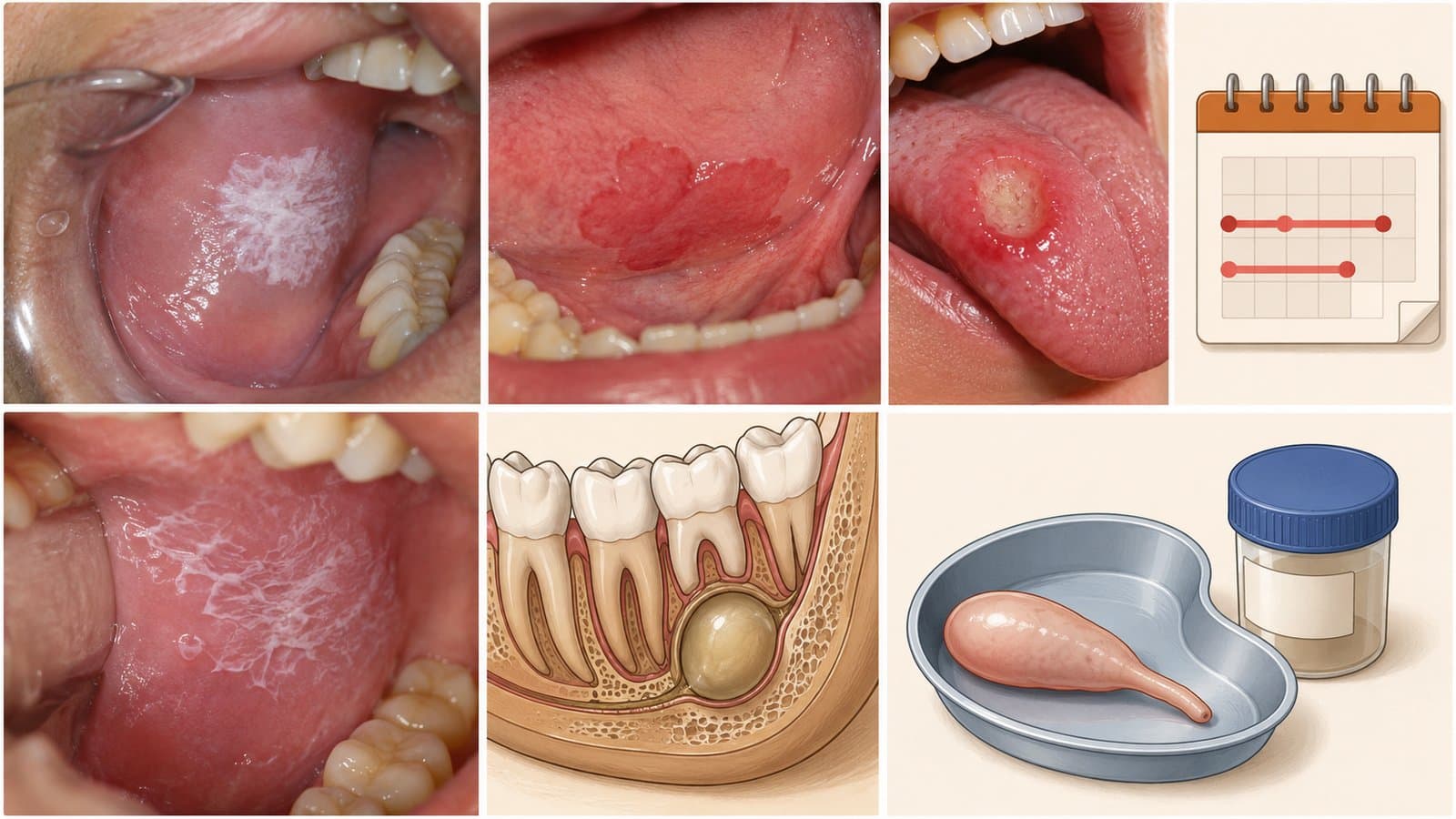
The use of lasers in dentistry actually has a long history. Dentists have used lasers in dental treatment since 1994. Lasers are extremely focused light beams with some germicidal effect, but they do not replace cleaning or antimicrobial treatment. It can help treat mouth ulcers and cold sores, and treat oral lesions such as pigmentation; white patches or lichen planus must first be examined by a dentist, with a biopsy if needed.
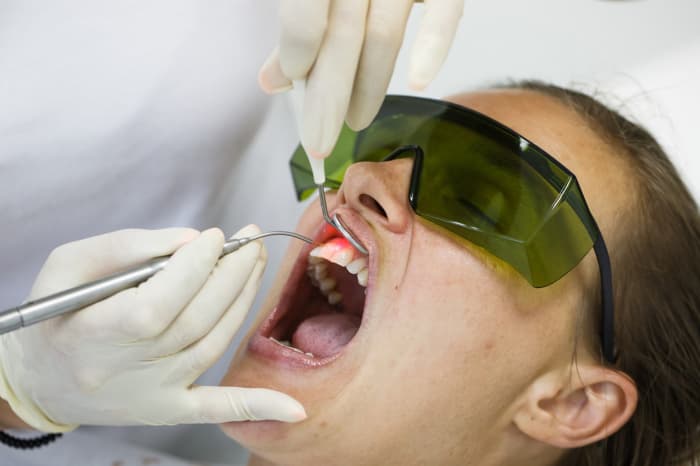
We use a soft-tissue (diode) laser, which works on the gums and oral lining — it is not used to drill teeth or treat bone.
What Can a Laser Treat? At a Glance
| Condition | What the laser does | Bear in mind | More |
|---|---|---|---|
| Mouth ulcers (recurrent) | Relieves pain on the ulcer surface | Does not cure or prevent recurrence; recurring ulcers need a cause found | laser ulcer relief |
| Cold sores | Eases discomfort when treated at the early tingling stage | The virus stays dormant; a laser cannot remove it | cold sore warning signs |
| Sensitive teeth | Treats exposed dentine to reduce sensitivity | Decay, cracks and gum problems must be ruled out first | laser desensitising |
| Tight lip or tongue tie | Releases the tight frenum | Feeding, speech or gap problems are assessed first | lip and tongue frenectomy |
| Gum pigmentation | Removes surface pigment from the gums | Cosmetic; pigment can return in some people | laser gum depigmentation |
| Gum overgrowth, gummy smile | Reshapes the gum line | If bone needs reshaping, conventional surgery is needed | crown lengthening surgery, gummy smile and crown lengthening |
| Small oral lumps | Removes them and sends them for testing | Any suspicious tissue must be examined in the laboratory | oral biopsy |
What Role Does a Laser Play in Gum Disease Treatment?
Laser has also become one of the tools to assist in the treatment of gum infection or periodontal disease, but periodontal patients should keep in mind that regardless of their condition, they must take proper care of their mouths and maintain oral hygiene, as well as receiving periodontal treatment recommended by their doctors. Non-surgical periodontal treatment and periodontal surgery, etc., can achieve ideal therapeutic effect.
What the evidence says: the European Federation of Periodontology's 2020 guideline reviewed the research and suggests not using lasers as a routine adjunct to root cleaning, because the evidence is limited. The foundation of periodontal treatment is thorough removal of tartar and bacteria from the pockets — deep scaling and root planing — followed by re-assessment and, where needed, periodontal surgery.
If you have bleeding gums, receding gums or loose teeth, check the 8 warning signs of gum disease and book a periodontal assessment; for whether gum disease can heal on its own, see can periodontal disease heal on its own.
Minor Soft-Tissue Procedures with a Laser
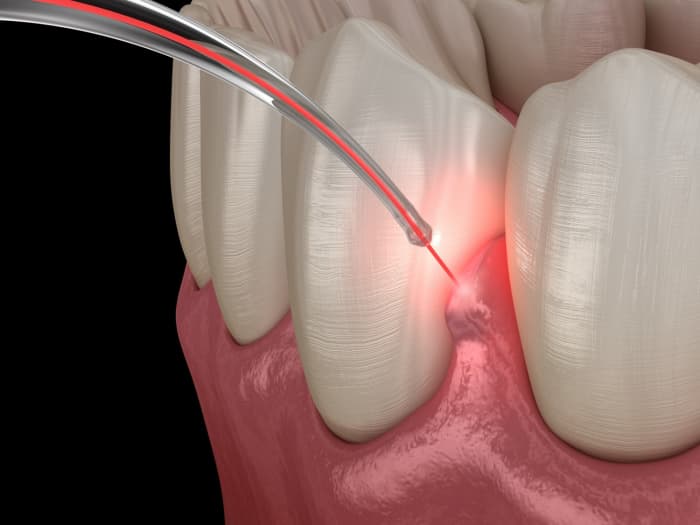
Lasers can also act as cutting tools to remove tissue or reshape gums. Common applications include removal of gum hyperplasia, crown lengthening, gum line modification, removing gum over wisdom teeth, biopsies, and removal of oral polyps. By using the laser, patients experience less bleeding during and after surgery, and less overall swelling. Laser treatment causes minimal trauma to the gums, teeth, and the surrounding area. Many minor procedures cause less discomfort afterwards, though healing time depends on the extent of treatment and the individual.
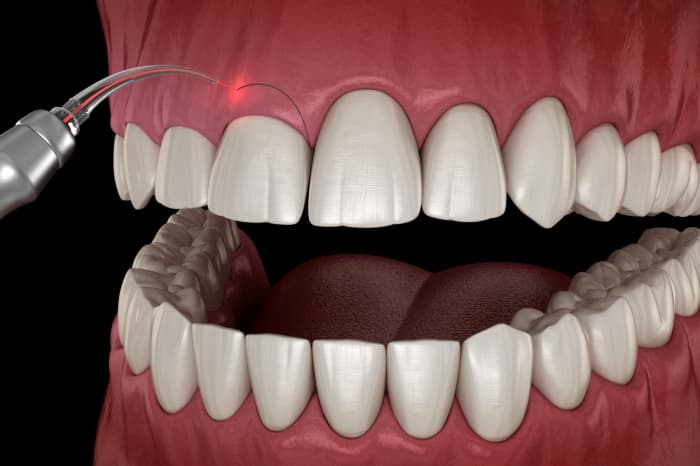
When is a laser not suitable? Bone reshaping, larger surgery, cleaning deep periodontal pockets, or complete removal of a suspicious lesion for testing usually need conventional methods. Your dentist will decide after an examination.
Does Laser Treatment Hurt? Is It Safe?
Many soft-tissue laser procedures need only surface or local anaesthetic, and most people feel only mild discomfort; patients and staff wear protective glasses throughout. Every procedure carries some risk — such as temporary sensitivity, slower healing or pigment returning — and your dentist will explain these beforehand.
Laser Treatment Fees
Fees depend on the procedure and its extent — ulcer relief and desensitising are simpler treatments, while frenectomy and gum depigmentation are priced by extent. See our laser dentistry service for itemised fees and the periodontal treatment page for gum disease treatment. Fees are explained clearly after the examination and treatment starts only with your consent; see our fee transparency commitment.
Book a Laser Assessment
Open seven days a week, with earlier slots at our Causeway Bay and Tsuen Wan dental centres. When you book, please tell us what you would like treated, how long it has been going on, and any medicines you take.
Why Choose Home Dental Centre?
- A team of 31 dentists — general dentists, dental hygienists and periodontists in one team, so laser procedures and periodontal care connect.
- Examine first, advise second — we find the cause first and do not use a laser for its own sake.
- Clear about limits — what a laser can and cannot do is explained before treatment.
- Transparent fees — after the examination we explain the procedure and fees clearly, and start only with your consent.
- Open seven days — same-day slots at both our Causeway Bay and Tsuen Wan dental centres.
Medical References
The general clinical principles in this article draw on the following professional sources; actual diagnosis and treatment must be decided by a dentist for each individual case:
- Sanz M, Herrera D, Kebschull M, et al. (2020): Treatment of stage I–III periodontitis — The EFP S3 level clinical practice guideline. Journal of Clinical Periodontology 47 Suppl 22:4–60 — suggests not using lasers as adjuncts to subgingival instrumentation (limited evidence)
- Oral Health Education Unit, Department of Health, Hong Kong: Periodontal disease
Medical information notice: this article provides general dental health information and is not a substitute for an examination. For a mouth ulcer, lump, or white or red patch that has not healed after two weeks, seek care promptly.