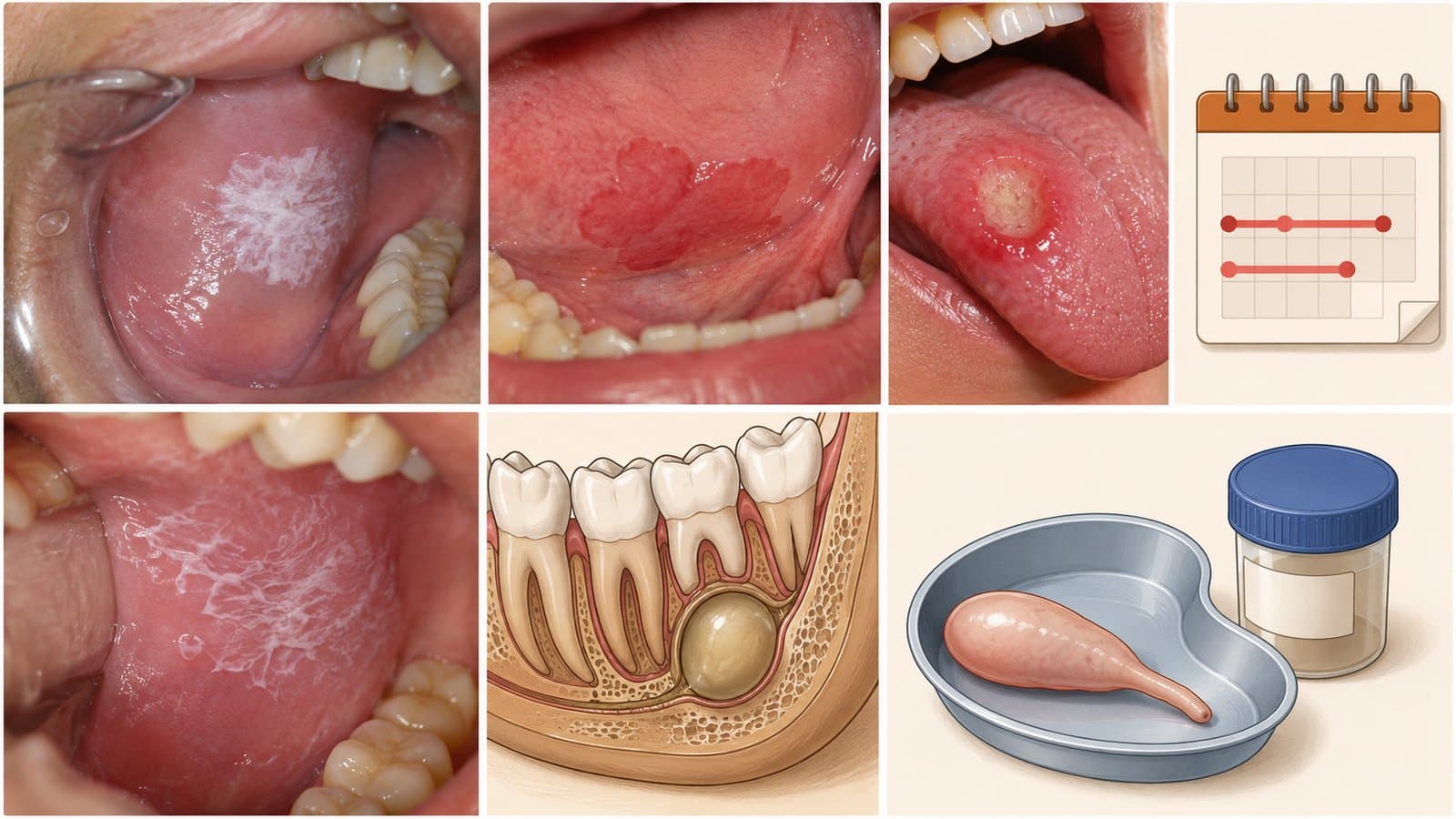
Key takeaways
Lip and tongue frenula are normal oral tissues; only when a frenulum is unusually short, thick or restrictively attached can it affect feeding, speech, the gap between the front teeth, gum health or denture stability. Not every "tight" frenulum needs surgery — the deciding factor is a functional assessment, not appearance. Where treatment is indicated, a frenectomy is a common minor procedure performed either conventionally (scalpel, with sutures where needed) or with a dental laser — which generally means less bleeding and usually no sutures, while the conventional method remains the better fit for thicker tissue or cases needing reshaping. Suitable candidates range from assessed infants and children to orthodontic, periodontal and denture-wearing adult patients. This article covers each in turn.
"The nurse says my baby is tongue-tied." "My child's speech is unclear — should the frenulum be cut?" "Is the gap between the front teeth caused by the lip tie?" These are the three questions parents ask most. The answers are less straightforward than expected: a short frenulum does not always need treatment, while some situations genuinely do. This article helps you tell the two apart — and explains who is a suitable candidate and how the laser and conventional methods compare.
What are lip and tongue frenula? What does "too short" mean?
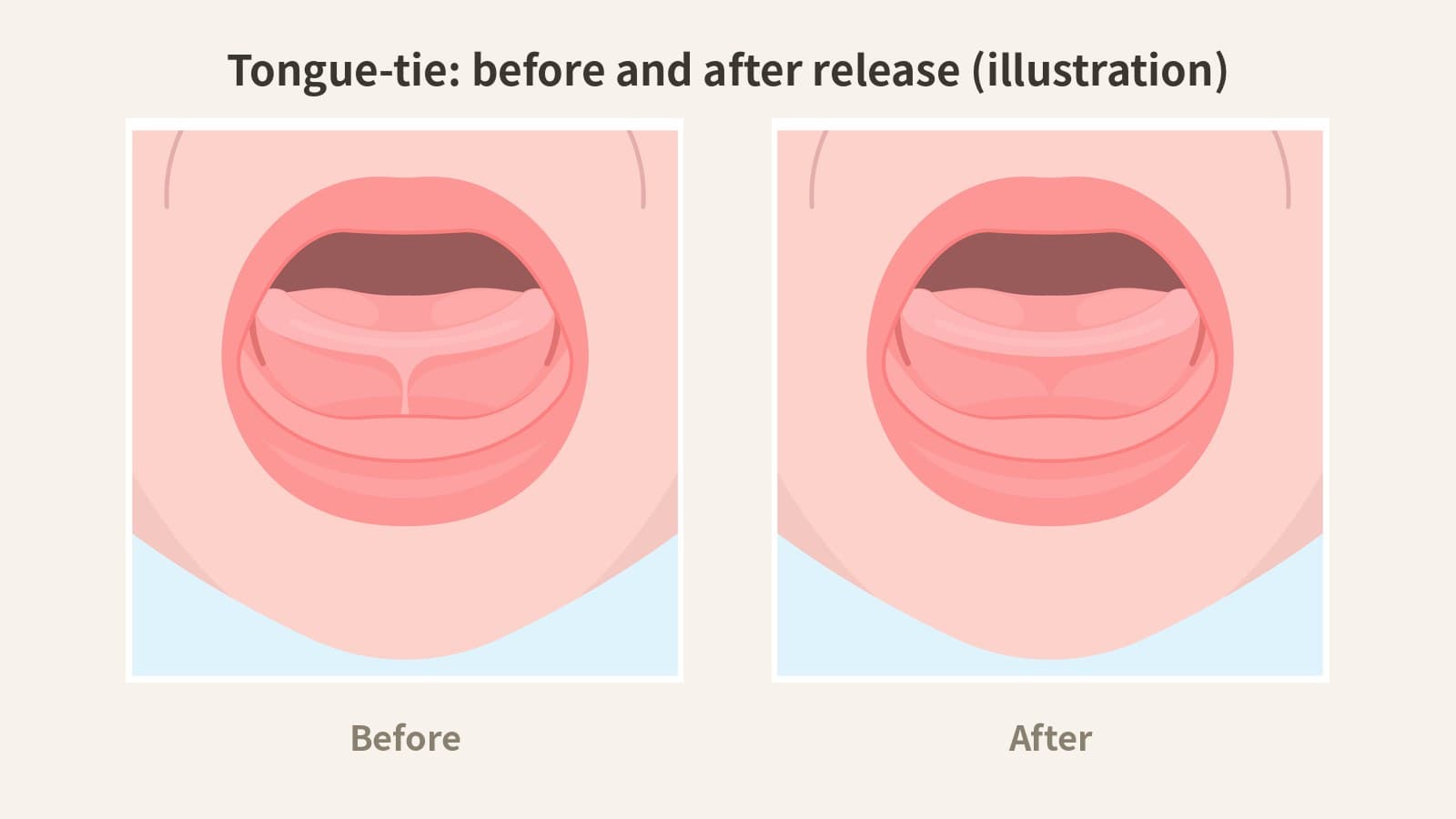
The lip frenulum is the band of tissue connecting the upper (or lower) lip to the gum; the tongue frenulum (lingual frenulum) connects the underside of the tongue to the floor of the mouth. Everyone has them — their presence is not a problem.
"Too short" (a tight frenulum, or ankyloglossia for tongue-tie) means the frenulum is short, thick or attached far forward enough to restrict lip or tongue movement. The key point: diagnosis rests on whether function is restricted, not on how the frenulum looks. Many frenula that appear tight function entirely normally.
Five common scenarios — which are frenulum-related?
① Infant feeding difficulty: a tight tongue frenulum can affect latch and sucking, making feeding difficult and nursing painful. But feeding difficulty has many other causes — a feeding assessment by a healthcare professional (doctor or lactation consultant) should come first, and treatment is considered only if the frenulum is confirmed as the cause.
② Speech: the sounds most affected are those requiring the tongue tip to lift — in English, sounds like t, d, n, l, s, r and th. If tongue mobility is genuinely restricted, these may sound imprecise or be substituted. Two points deserve emphasis: first, most childhood speech issues are unrelated to the frenulum — articulation typically matures around ages four to five, and developmental stage and language environment are far more common factors; second, even where the frenulum is a factor, surgery does not itself teach articulation — the release only removes a restriction, and speech therapy afterwards is what drives improvement. A speech therapist's assessment should therefore come first; frenectomy is not a general answer to unclear speech.
③ The gap between front teeth (midline diastema): a low, thick upper-lip frenulum can maintain a persistent gap between the front teeth. However, a gap during the mixed-dentition years is a normal developmental stage and often closes as the permanent teeth erupt. Whether and when to treat — and how it coordinates with orthodontic treatment — is a question of timing your dentist assesses.
④ Gum recession: excessive pull from a lower-lip or cheek frenulum can, over time, contribute to gum recession at individual teeth. These cases are assessed alongside the overall periodontal condition, and some are treated in combination with periodontal procedures such as gum grafting.
⑤ Loose dentures: an often-overlooked adult scenario — a frenulum attached too far forward, or pulling too strongly, can break the border seal of a removable denture, so the denture dislodges whenever the lip or tongue moves. Releasing the frenulum in these cases can improve denture fit and stability.
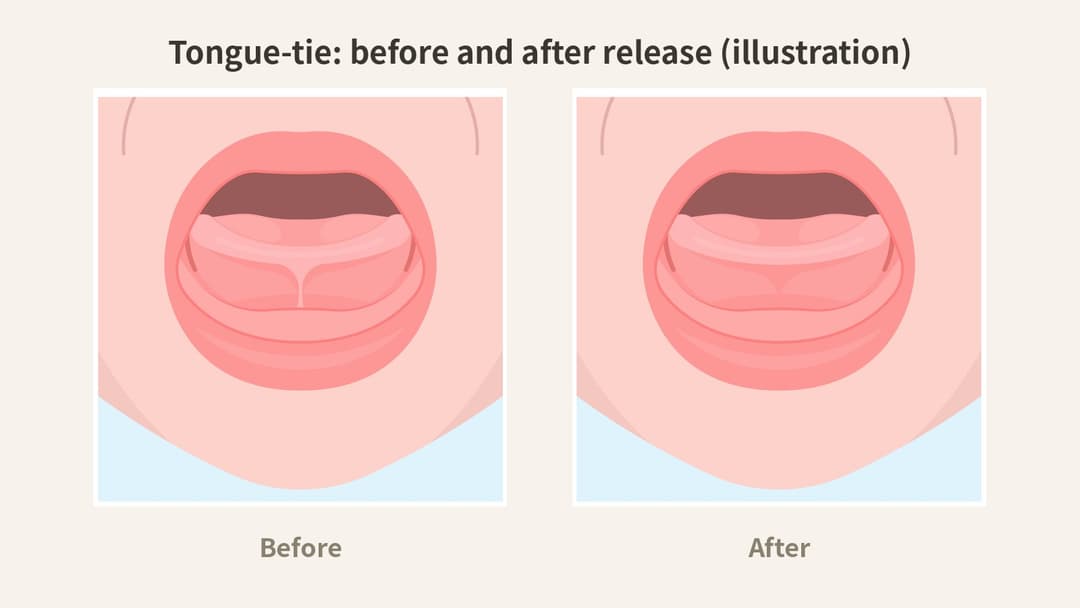
When surgery is NOT needed
A tight-looking frenulum with normal function; feeding or speech issues assessed as unrelated to the frenulum; a normal mixed-dentition gap — none of these warrant surgery. Operating only on clear functional indications is the responsible approach; "cut it because it looks tight" is not.
Who is a suitable candidate?
The principle: a functional problem confirmed by assessment makes someone a candidate. By group:
・Infants — where a feeding assessment (doctor or lactation consultant) confirms the difficulty relates to the tongue frenulum.
・Children — where a speech therapist confirms restricted tongue movement as a contributing factor, or where an orthodontic assessment finds the upper-lip frenulum interfering with gap closure and treatment timing is right. Children's cases are coordinated with paediatric dentistry, and sedation can be considered for children who find cooperation difficult.
・Orthodontic and periodontal patients — cases where the lip frenulum is treated as part of an orthodontic plan, or where frenulum pull contributes to gum recession and treatment coordinates with periodontal care.
・Denture wearers — adults whose frenulum position undermines denture fit and stability.
・Adults generally — a functional problem discovered at any age can be assessed; age itself is not a barrier.
The assessment also covers your medical history (for example bleeding disorders or blood-thinning medication); where relevant we coordinate with your doctor — these situations are not exclusions, just matters to plan properly in advance.
Two treatment methods: conventional surgery vs dental laser
A frenectomy releases or removes the restrictive frenulum tissue — a short minor procedure, usually under local anaesthesia. There are two main approaches:
① Conventional surgical method: the frenulum is excised or released with a scalpel (or electrosurgery), with sutures where needed; some cases include tissue repositioning or reshaping — for example deeper or thicker frenula, or periodontal cases combined with gum grafting. This long-established method has the broadest range of application and remains the appropriate, sometimes better, choice where tissue is thick or fine reshaping is required.
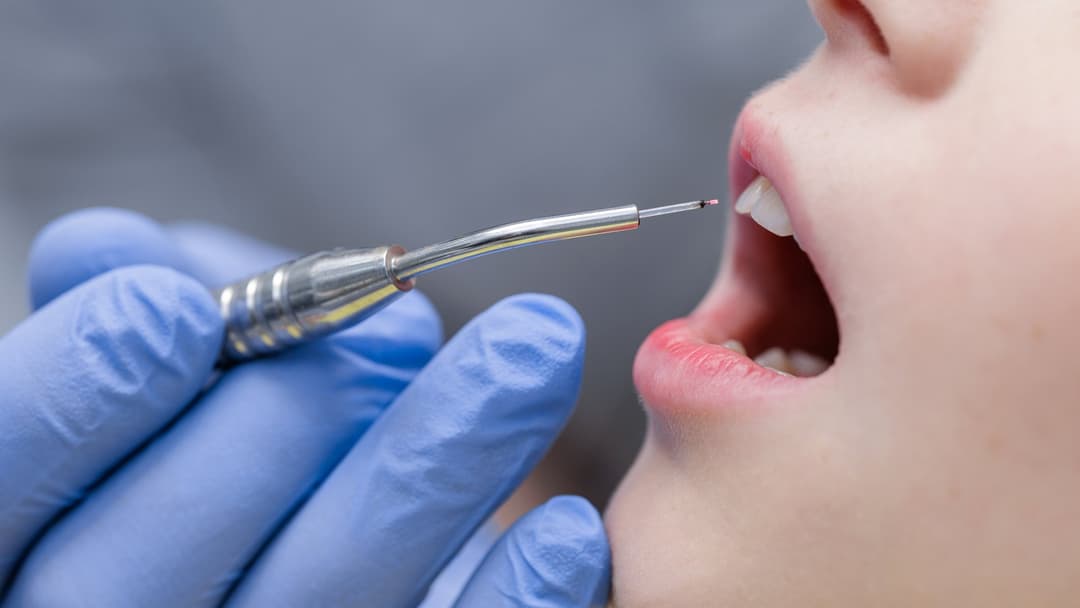
② Dental laser: laser energy cuts the soft tissue while sealing small blood vessels and nerve endings as it goes. Compared with the conventional method, the laser generally offers:
・Less bleeding — vessels are sealed as the laser cuts, keeping the field clear
・Usually no sutures — the wound generally needs no stitches, and no suture removal visit
・Generally shorter procedure time — especially for thinner, more superficial frenula
・Milder post-operative discomfort and swelling reported in many cases — recovery is generally more comfortable (individual experiences vary)
Our clinics are equipped with dental laser systems for suitable cases. That said, each method has its own indications — thicker tissue, reshaping needs or combined periodontal procedures may favour the conventional approach. The choice depends on frenulum position, thickness, patient age and cooperation, and your dentist will recommend accordingly. Complex cases, or those needing sedation, can be handled by our oral & maxillofacial surgery team.
Recovery
The wound generally heals within a short period, with mild discomfort managed by pain relief as directed and a soft, non-irritating diet. An important element is the prescribed stretching and mobility exercises — particularly for tongue-tie cases, where proper exercises reduce the chance of the tissue re-attaching as it heals. Feeding-related cases should continue follow-up with the lactation consultant; for speech-related cases, speech therapy after surgery remains the main driver of improvement.
Why choose Home Dental for frenulum assessment?
✓ Function-first assessment — if there is no functional indication, we will tell you plainly that surgery is not needed
✓ Both conventional surgical and dental laser methods available, recommended per case; oral & maxillofacial surgeons handle complex or sedation-assisted cases
✓ Children's cases coordinated with paediatric dentistry, and linked with orthodontic, periodontal and denture treatment where relevant
✓ Methods and aftercare explained in detail before treatment; fees clearly set out after assessment; available at Causeway Bay and Tsuen Wan
Fee reference
Consultation HK$800; frenectomy from HK$5,000, depending on the frenulum's position, the method and case complexity. Detailed fees are clearly set out after assessment.
Book your professional dental care at Home Dental
You can arrange a same-day consultation via:
• The WhatsApp button on this page (recommended) — reach us instantly
• Calling 3956 9387 (during office hours)
To learn more about children's dentistry, read: Paediatric dental care.
![[Canine Teeth Guide] Causes, Correction Options & Dental Risks | Trusted by HK Dentists](/_next/image?url=https%3A%2F%2Fuivazhssaweitolfbapb.supabase.co%2Fstorage%2Fv1%2Fobject%2Fpublic%2Fmedia%2F2025%2F05%2F17466355888220.jpg&w=3840&q=75&dpl=dpl_7uruiipM2qnwiVLn52JMWK51Hsbv)