What are canker sores and why do they happen?

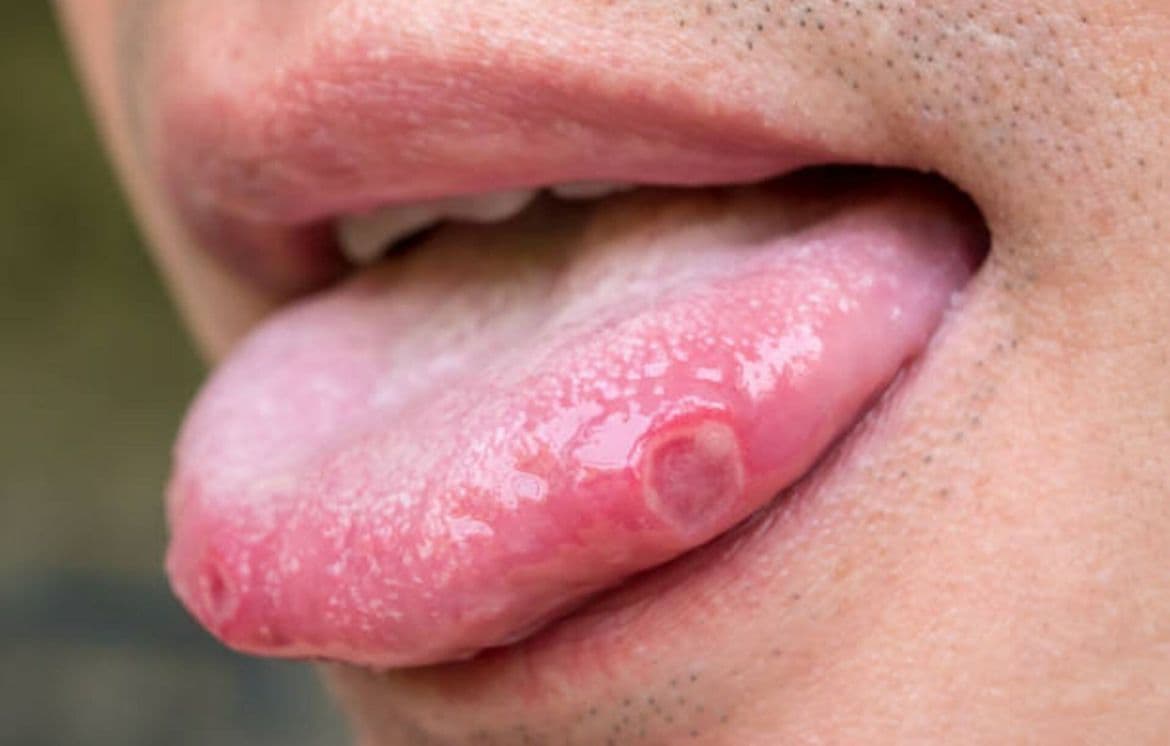
Canker sores — medically, recurrent aphthous ulcers — are shallow round or oval ulcers on the oral mucosa, with a grey-white centre and a reddened border, clearly painful to touch. There is no single agreed cause. Common triggers include stress, lack of sleep, local trauma (biting the cheek, toothbrush abrasion, friction from orthodontic appliances), certain foods, hormonal changes and some nutritional deficiencies. Most are the minor type and heal on their own within one to two weeks; but until they do, the pain affects eating, speaking and oral hygiene.
Most canker sores need no treatment at all
Minor canker sores generally heal on their own within one to two weeks, without scarring. If the pain is bearable and not affecting eating or sleep, the most sensible thing to do is let it heal — avoiding irritating foods, keeping the mouth clean, and using an ordinary oral gel or rinse if needed is usually enough.
We do not encourage patients to come in for laser every time they get an ulcer. Laser relief is worth considering when the pain clearly interferes with eating or speaking, when the ulcer is large or awkwardly placed, when several appear at once, or when orthodontic appliances keep causing them.
How does the laser help?

We irradiate the ulcer surface with a soft-tissue diode laser in low-energy mode. The effects commonly seen in practice are:
- Pain relief — it helps reduce the sensitivity of nerve endings at the ulcer surface. Some patients feel clear relief straight away; some notice little improvement.
- A protective layer — clinical observation suggests a covering forms over the treated surface, reducing irritation when eating and speaking; this is not supported by high-quality research.
- Support for healing — it helps stimulate tissue repair, and studies suggest healing time may be shortened; but minor ulcers heal by themselves within one to two weeks anyway, so the two are hard to separate clinically.
The overall quality of the research is limited, results vary between individuals, and there is no significant effect on ulcer size.
Results vary between individuals. The laser addresses the pain and healing of the current episode; it is not a method of preventing recurrence.
Being straight with you about the results
- Pooled analyses show low-level laser irradiation helps reduce canker sore pain and shorten healing time. However, the overall quality of that research is limited — studies differ widely and some lack adequate blinding — so the certainty of those conclusions is only low to moderate.
- It makes no significant difference to ulcer size.
- There is no evidence that laser reduces future recurrence — canker sores are a recurrent condition, and treatment addresses the current episode only.
- Because minor ulcers heal by themselves anyway, it is not easy to tell clinically how much of the improvement after treatment comes from the laser and how much from natural healing.
- Some patients notice little improvement.
We go through all of this before treatment. If you decide that simply letting it heal suits you better, we fully support that choice.
Given the evidence above, this is not something we actively recommend. If you would still like to try it having understood those limits, raise it at your assessment.
The process
- Assessment — the dentist examines the form, site, number and history of the ulcers to confirm this is an ordinary canker sore rather than a lesion needing further follow-up.
- Irradiation — a few minutes per ulcer, usually with no anaesthetic; where there are several, each is treated in turn.
- Immediate review — we check the change in sensation on the spot and explain aftercare (avoid irritating foods, keep the mouth clean).
- Follow-up where needed — large or deep ulcers may need a second session; where episodes are frequent we discuss trigger management with you.
When we assess first rather than simply treat
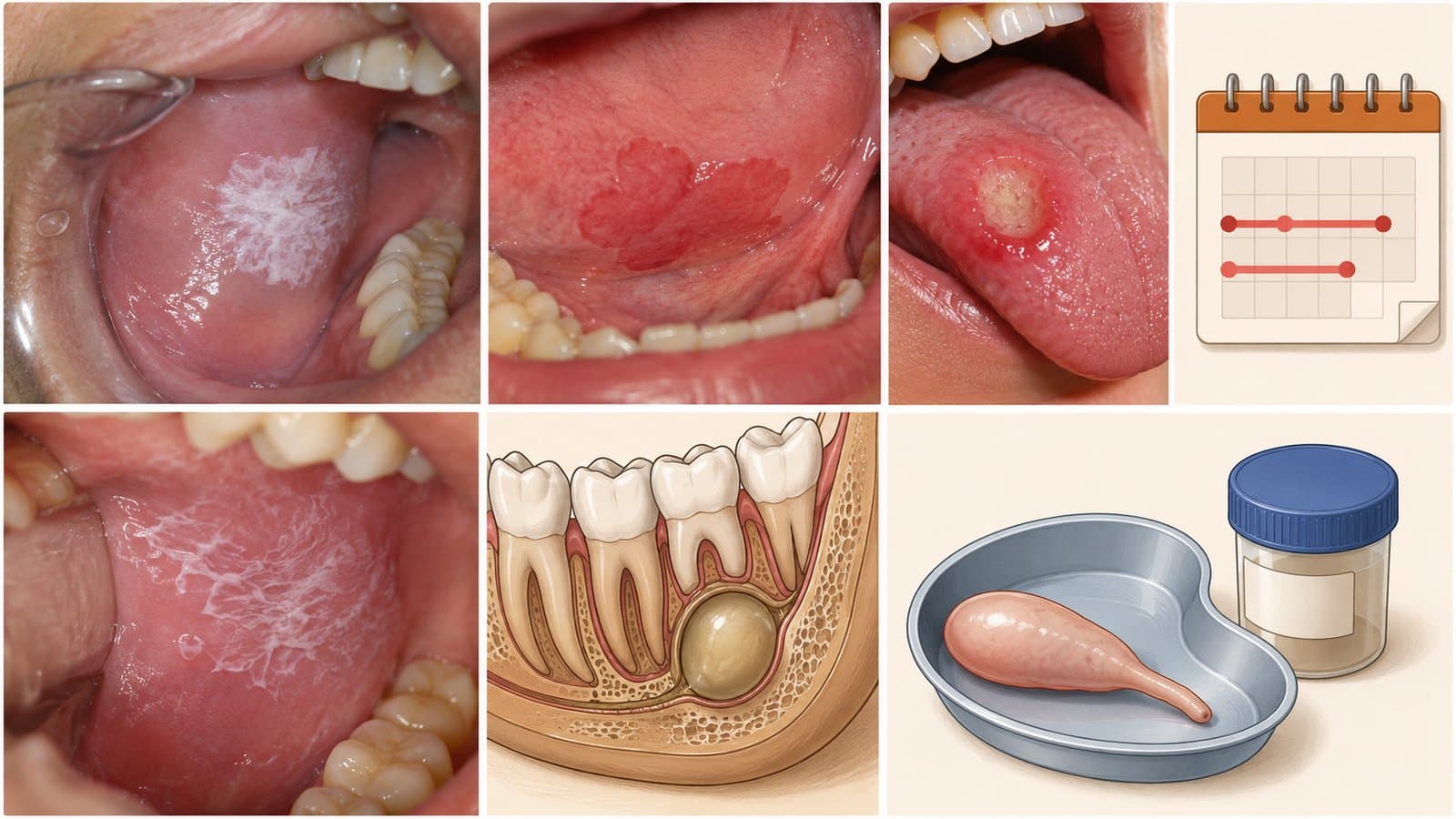
- An oral ulcer or mucosal lesion unhealed for more than two weeks — we assess first (within the same visit), arranging a biopsy or specialist referral where indicated to exclude other causes; once assessed, laser relief can be provided the same day — but relief is supportive only and never replaces diagnosis: until the underlying cause is found and managed, the ulcer will simply keep returning.
- Ulcers that keep recurring at the same site, are unusually large, have firm edges or are painless — same rule: assess before treating.
- Accompanying fever, systemic symptoms or widespread mucosal involvement — this may indicate a systemic problem, and we will advise the appropriate medical follow-up.
- Expecting "one treatment and they never come back" — canker sores are a recurrent condition and we make no cure claims.
Laser compared with other approaches
| Approach | Characteristics |
|---|---|
| Self-healing / medicated mouthrinse | Most minor ulcers need no treatment and heal in one to two weeks; if the pain is bearable, letting it settle is reasonable |
| Topical gel or oral patch | Helps protect and soothe; needs repeated application and is difficult to apply at awkward sites |
| Laser irradiation | One option when pain is marked, or ulcers are large, multiple or awkwardly placed. Studies suggest it may help pain and healing time, but the research is limited; no significant effect on ulcer size, and it does not reduce recurrence |
These approaches are not mutually exclusive; your dentist will suggest the combination that fits your situation.
An ulcer that hasn't healed in two weeks?
Any ulcer unhealed after two weeks should be assessed by a dentist, with further investigation where needed.
WhatsApp enquiry Call +852 3956 9387