💥 The Nightmare Before the Big Day: Understanding Cold Sores (Herpes Labialis)
Have you ever experienced that moment of dread: a crucial date, a job interview, or a photo shoot tomorrow, and suddenly you feel that familiar "tingling" or "prickly" sensation on your lip, followed by an itchy cluster of small blisters? It's not just painful—it's incredibly visible and impossible to hide, even with the best concealer!
Many people in Hong Kong mistakenly believe a sore on the lip or mouth corner is just a sign of being "heat-y" (internal heat) or a common canker sore (mouth ulcers). They drink traditional herbal tea (herbal tea), only to find it doesn't help. In reality, you are likely dealing with Cold Sores (cold sores), caused by the Herpes Simplex Virus Type 1 (HSV-1).
As your trusted oral health advisor, we're diving deep to demystify this frustrating "face-value" problem. When is the best time to apply cold sore cream? What exactly is cheilitis (cheilitis)? And what dental "black technologies" can offer rapid treatment? Read on to find out!
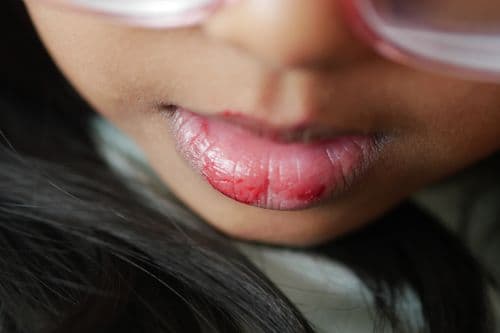
🔍 What are Cold Sores and Why Do They Keep Coming Back?
Cold Sores (Herpes Labialis) are a viral infection caused by the Herpes Simplex Virus Type 1 (HSV-1).
The cruel truth is: Once infected, the virus is latent for life. The cunning HSV-1 virus typically lies dormant in the Trigeminal Ganglion (the facial nerve cluster). When your body's resistance is good, it stays quiet; but when your immune system drops, the virus "awakens," travels down the nerve pathways, and forms fluid-filled blisters on the lip surface.
😫 The 5 Major Triggers of Cold Sore Outbreaks:
- High Stress and Lack of Sleep: A common Hong Kong syndrome—easy to catch when staying up late to meet a deadline.
- Illness and Low Immunity: Having a cold, fever, or recovering from surgery.
- Intense Sunlight (UV Exposure): Sun damage to the lips from boat parties or outdoor activities.
- Menstrual Cycle: Hormonal changes in women are a frequent trigger.
- Dental Treatment Trauma: (A little-known fact!) Pulling on the corner of the mouth or a local anaesthetic injection site can sometimes stimulate the nerve and reactivate the dormant virus.
🚑 Seize the Golden 24 Hours! Your Rapid Cold Sore Treatment Guide
A common question is: "Can I get fast herpes treatment?" The answer is: Yes, but you must act quickly! A cold sore develops in four stages, and the earlier you intervene, the faster you heal.
| Stage | Name | Key Symptoms | Crucial Action (Golden Treatment Period!) |
| 1 | Tingling Stage (Prodromal) | Nothing visible, but a prickling, burning, or itching sensation. | IMMEDIATELY apply antiviral cream (e.g., Acyclovir)! Using it now can suppress the virus and may prevent the blister from even forming, cutting the illness duration in half. |
| 2 | Blister Stage | A cluster of small, clear, fluid-filled blisters appears, which is extremely itchy. | Continue applying the cream. DO NOT POP THE BLISTERS! The fluid is highly contagious and spreads the virus. |
| 3 | Ulcer Stage | Blisters have ruptured, forming a wet, painful, open sore. This is the most painful and contagious peak. | Keep the wound clean and dry; avoid touching it with your hands. |
| 4 | Crusting/Healing Stage | The sore dries out and forms a yellow or brown crust/scab. | DO NOT pick the scab or it will bleed and potentially scar. Apply a moisturizing lip balm to prevent cracking. |
📊 Confused? Cold Sore vs. Canker Sore vs. Cheilitis
Many patients misdiagnose their mouth pain. If the treatment direction is wrong, it won't heal!
| Feature | Cold Sore (cold sores) | Canker Sore (mouth ulcers) | Cheilitis (cheilitis) |
| Cause | Viral infection (HSV-1) | Immune system, injury, vitamin deficiency | Allergy, dryness, bacterial/fungal infection |
| Location | On or around the lips (outside the mouth), corners of the mouth | Inside the mouth (mucosa, tongue, gums) | Whole lip area or just the corners (Angular Cheilitis - angular cheilitis) |
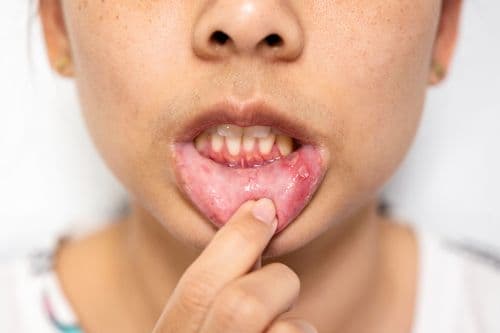
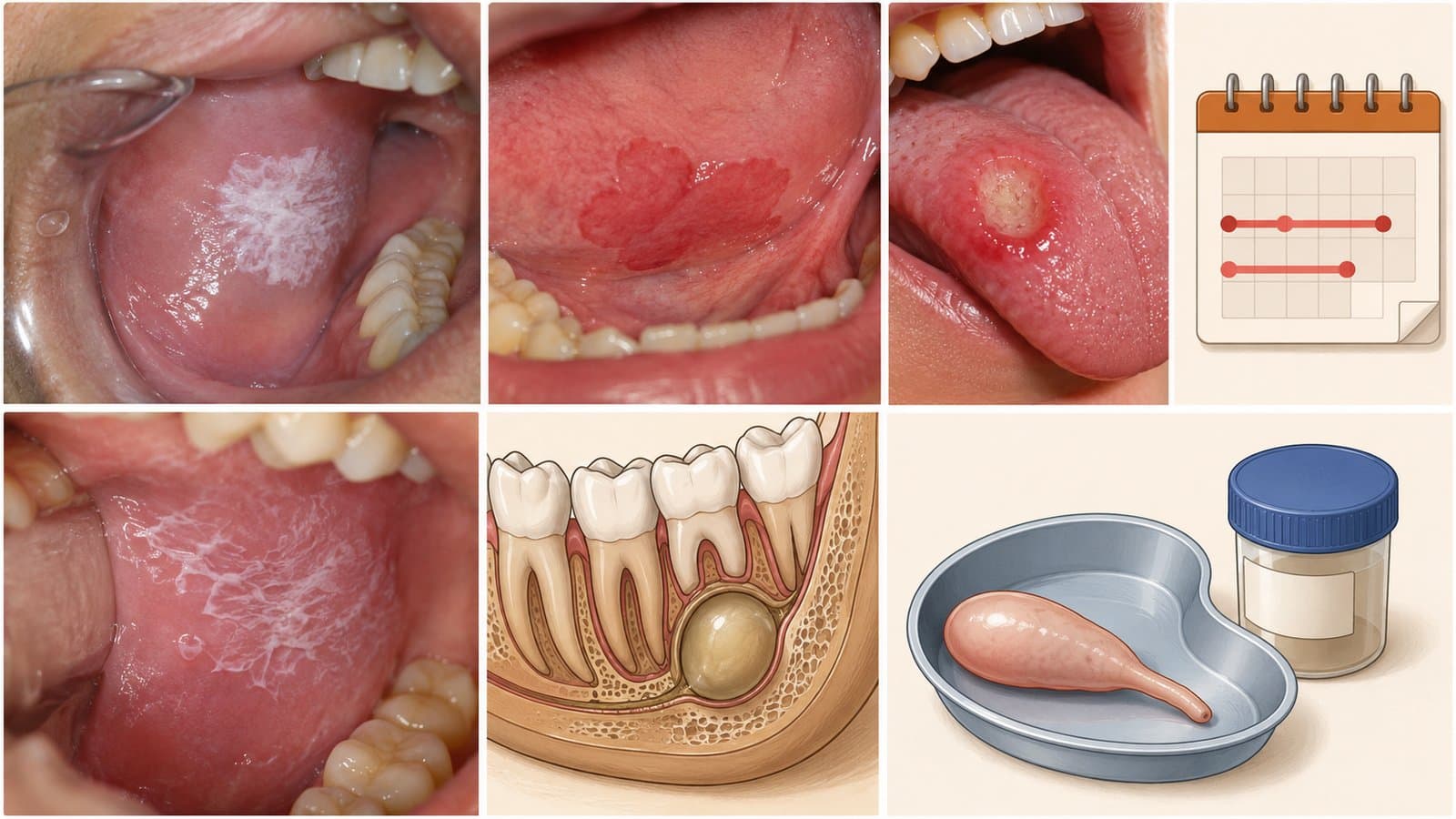
| Appearance | Cluster of fluid-filled blisters that later crust over. | White or yellow sunken ulcer with a red, inflamed border. | Dry, peeling, red, swollen, and cracked skin. |
| Contagious | Extremely High ⚠️ | None | None (Infectious Cheilitis may be) |
| Treatment | Antiviral cream/oral medication | Anti-inflammatory gel/Vitamin B & C supplements | Moisturizing lip balm/Steroid cream/Antifungal cream |
💡 Dentist's Special Note on Cheilitis: If your lips are chronically dry, peeling, and red, and applying cold sore cream makes it worse, you likely have Cheilitis (e.g., Contact Cheilitis, an allergy to lipstick or toothpaste). Stop using irritating products and seek medical advice. Misusing antiviral cream will only dry your lips out further!
💡 Beyond Creams: "Dental-Grade" Rapid Treatments
You might not know it, but a dental clinic can be your secret weapon against stubborn cold sores. If you need rapid treatment, especially before an important event (like a wedding), over-the-counter creams might be too slow.
- Low-Level Laser Therapy (Soft Tissue Laser): This is a dentist's "secret weapon." When the cold sore first starts (tingling stage) or is in the early blister stage, a specific wavelength of laser is used to treat the area.
- Pros: Non-contact and painless.
- Effect: Can instantly kill the virus, reduce pain, and significantly shorten the healing time (often from 10 days to 3-4 days). It can also lower the recurrence rate in that specific spot.
- Prescription Oral Antivirals: For patients with very frequent or severe outbreaks, a dentist or doctor may prescribe oral antiviral medication (e.g., Valaciclovir). This is most effective when taken right at the very beginning of an outbreak.
🏁 Conclusion: Don't Let Cold Sores Affect Your Confidence
While cold sores cannot be completely "cured," by understanding their nature, acting quickly during the tingling stage, and maintaining a healthy lifestyle, you can absolutely live peacefully with them.
If your outbreaks are too frequent, or your lips are persistently peeling and red and you can't distinguish between cheilitis and herpes, stop playing doctor and applying random creams. This could be a warning sign from your immune system or an indication of another underlying oral health issue.
If cold sores keep recurring, spread or interfere with daily life, you can book laser cold-sore treatment at Home Dental; a dentist assesses suitability first. Available in Causeway Bay and Tsuen Wan.