Four Factors That Drive Root Canal Costs in Hong Kong
Endodontics

Four Factors That Drive Root Canal Costs in Hong Kong

Why root canal fees vary so much in Hong Kong: tooth type, case complexity, root condition and the dentist's qualifications all shape the final price.

When the tooth nerve is infected by bacteria and causes irreversible pulpitis or nerve necrosis, it can no longer be repaired by simple fillings. Part or all of the infected or necrotic pulp tissue needs to be removed, thereby requiring the root canal treatment. Quotations differ partly because whether the tooth also needs a crown is sometimes priced separately.

Root canal treatment is more expensive than fillings?

Patients may worry about the high cost after receiving the doctor's recommendation to do the root canal treatment. It is true that the cost of root canal treatment will be higher than the cost of fillings. However, since the teeth have missed the opportunity to be repaired by fillings, if we need to fix the problem, a more complex treatment such as root canal treatment must be performed. Therefore, patients may need to be prepared to incur higher costs.
root canal treatment cost

Is there a unified standard for comparison?

As with fillings, the cost of root treatment can vary depending on various factors.

Different dental centres and clinics may have different treatment charges for each case of root canal treatment, because whether the equipment of the relevant center or clinic are advanced, whether the doctors have rich qualifications, whether the materials used are of high quality, and whether the maintenance and follow-up treatments are covered by the charges are all critical factors that can affect the final treatment cost. Price differences largely reflect what separates a durable root canal from one that fails — technique, time and follow-up.

The four most common factors that affect the cost of root canal treatment are as follows:

1. The type of teeth

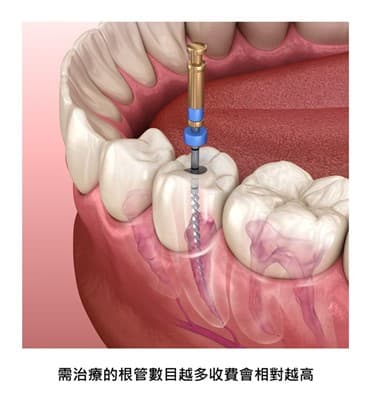
Front teeth are easier to handle than posterior teeth, not because of their location in the mouth, but because of the number of root canals. Incisors have one root canal, while premolars may have one or two, and molars have at least two to three root canals or even four or more. When there are more root canals that need to be treated, the cost of treatment will become higher.
root canal treatment cost

2. The complexity of the case

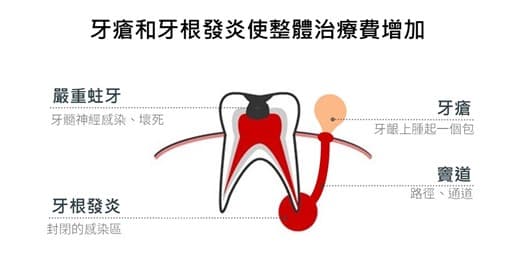
If there is a tooth abscess that requires a doctor to discharge pus, the number of treatments and follow-up visits will increase, and the overall treatment cost will naturally increase. More severe root inflammation will result in more follow-up visits or treatments. In addition, the re-treatment of root canal treatment is also more complicated than the first root canal treatment. Due to the failure of the previous treatment, the root canal re-treatment generally requires more precise handling, and the old filling material will also need to be removed, which will further increase the treatment time and the number of required tools. Cost comparisons change again if the tooth qualifies for vital pulp therapy, which is a smaller procedure than a full root canal.
root canal treatment cost

3. The condition of the tooth root

In addition to the number of root canals, the condition of the root can also affect the treatment difficulty. Roots that have been inflamed for a long time may have the problem of root calcification, resulting in the closure of the root canal. At this time, the dentist may need to spend more time on finding the root canal. In addition, long and crooked root canals can be difficult to manage, since the goal of root canal treatment is to completely remove all the nerves of the tooth to the apex.

4. Physician's qualifications

Dentistry has different specialties, and each speciality has the relevant master's qualifications and specialist's qualifications. The higher the doctor's qualifications, the higher the treatment cost will be, because the experience and skills of the doctor are also reflected in the total treatment costs. Specialist also have their own methods for dealing with difficult cases, and the relative cost of treatment somehow reflects the difficulty of treatment. Most of the dentists when performing the root canal treatment will use a magnifying microscope in order to increase the level of precision in the treatment.

Root canal treatment is the last resort of repairing a tooth, so the success of the treatment is crucial to the patient's ability to retain the real tooth. Early treatment to eliminate the root cause can help you save the overall treatment costs in the long run.

Article Info

First published: 6 April 2022

Last reviewed: August 2026

Share

FAQ

Frequently Asked Questions

  • How much does root canal treatment cost?

    Root canal treatment typically starts from HK$7,000 per tooth, but the final cost depends on which tooth needs treatment, the number of root canals, and case complexity. Front teeth with one canal are less expensive than molars with three or four canals. Long-term success depends on locating every canal (upper molars often have a fourth), cleaning curved canals to working length and sealing the filling — incomplete treatment can re-infect, and re-treatment costs more than the first. After a clinical assessment we explain the fee components clearly, and treatment starts only with your consent. WhatsApp us for a personalised quote after clinical assessment.

  • Why is root canal treatment more expensive than a filling?

    Root canal treatment is more complex than fillings because it involves removing infected or dead nerve tissue from inside the tooth, often requiring multiple visits, specialised equipment like magnifying microscopes, and precise handling of curved or calcified root canals. The higher cost reflects the additional time, skill, and materials needed.

  • How many visits does root canal treatment usually take?

    The number of visits depends on the severity of infection and the complexity of your case. Simple cases may be completed in one or two appointments, while more severe inflammation, abscesses requiring drainage, or re-treatment of a previously failed root canal may need additional visits for proper healing.

  • What happens if I don't do root canal treatment when recommended?

    If the tooth nerve is already infected or dead, delaying treatment allows bacteria to spread further, potentially causing abscesses, bone loss, or tooth loss. Root canal treatment is often the last chance to save the natural tooth — extraction would then be the only remaining option.

  • Does the dentist's experience affect the treatment cost?

    Yes. Dentists with specialist qualifications or advanced training in endodontics typically charge more because their expertise allows them to handle difficult cases — such as calcified or curved canals — with higher success rates. The cost reflects both their skill and the precision equipment they use. Long-term success depends on locating every canal (upper molars often have a fourth), cleaning curved canals to working length and sealing the filling — incomplete treatment can re-infect, and re-treatment costs more than the first. After a clinical assessment we explain the fee components clearly, and treatment starts only with your consent.

  • Is root canal re-treatment more expensive than the first treatment?

    Re-treatment is generally more complex and costly because the dentist must remove old filling material, locate canals that may be blocked or calcified, and address the reason the first treatment failed. This requires more time, precision, and often specialist-level skill.

Still wondering about something? Our team is happy to chat.

Reminder: You have the right to choose a Hong Kong dentist based on your individual needs. We recommend referring to the list of registered dentists published on the official website of the Dental Council of Hong Kong to make a choice best suited to your personal needs. The above content is intended to give you a brief introduction to the nature and effects of the relevant dental procedures, so that you can make informed decisions when choosing a dentist and related treatment options. All treatments have advantages and disadvantages — the key is that you must have a basic understanding of different treatments and procedures and be aware of the associated risks. The above content does not represent the professional opinion or views of any dentist or dental institution. For the sake of your health, please consult your family dentist for formal medical advice.

This article is compiled by the Public Education Team of Home Dental and has been reviewed and approved by the Content Review Committee of Home Dental. The Committee comprises members of our Board of Directors, legal advisors, and relevant professionals, and is responsible for vetting all externally published health education content to ensure it is professional, accurate, relevant to the local context, and regularly updated to meet Hong Kong dental service standards.

This content is originally produced by Home Dental, all rights reserved. Unauthorized reproduction, modification, or publication is prohibited. Violators will bear legal responsibility. For citation or partnership inquiries, please contact our center for written permission.

Last updated: Aug 2026

Root Canal Treatment? Checklist to identify failed ones

Want to know more about Endodontics?

31 general & specialist dentists · Licensed daycare procedure centre