Introduction to Pulp Therapy
The term "root canal treatment" is familiar to many, and most people hope they won't need this procedure. Traditionally, root canal treatment involves completely removing the infected dental nerve, thoroughly disinfecting the pulp cavity (including the pulp of the crown and the root canal), placing medication, and then sealing the tooth cavity to reduce the risk of bacterial recontamination leading to inflammation and pain.
However, in recent years, a new technique has emerged to address this issue, known as "pulp therapy." Today, let's explore this innovative dental treatment.
What is Pulp Therapy?
Pulp therapy is a treatment method used to preserve teeth. Typically, teeth may develop root inflammation after trauma, decay, or deep restorations. Once the decay reaches an irreversible stage, traditional root canal treatment (endodontic therapy) or tooth extraction becomes necessary. Still, if a dental professional determines that the inflammation has not reached an irreversible stage, pulp therapy can be considered.
Differences Between Pulp Therapy and Root Canal Treatment (RCT)
Pulp therapy is traditionally used for treating the pulp of primary teeth or immature permanent teeth. Its significant advantage is the preservation of nerve vitality, providing better conditions for the repair and preservation of pulp tissue, aiming to maximize the retention of the tooth's native structure.
Traditionally, this treatment may not be applied to fully developed permanent teeth in adults. When the pulp tissue becomes inflamed and degenerates, other tissues are inevitably affected, necessitating the complete removal of all inflamed nerve fibers and blood vessels to effectively reduce the chances of complications.
However, recent advancements in technology and research have led to the exploration of using pulp therapy in fully developed permanent teeth, attempting to preserve healthy nerve fibers for patients.
Previously, when repairing deep cavities or addressing nerve fibers in teeth, even after thorough removal of decay, there was a risk of overstimulating the pulp tissue due to the materials used for restoration, leading to nerve death.
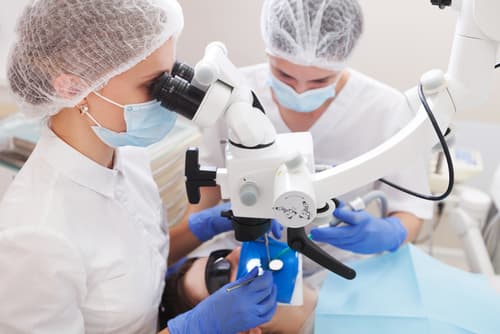
In performing pulp therapy, careful and precise procedures using specialized magnification tools are essential. The dentist's choice of materials and the immediate sealing of the tooth cavity to prevent infections are crucial factors for the success of this procedure.
Innovative Approaches in Pulp Therapy
Dentists with extensive experience in managing pulp therapy may opt for innovative synthetic biomaterials as tooth fillings. These materials directly interact with pulp tissue, stimulating natural stem cell populations for the repair and regeneration of pulp tissue and surrounding dentin.
Risks Associated with Pulp Therapy
Certainly, the success of the treatment often depends on the self-healing capabilities of the patient's pulp tissue. Every medical procedure carries inherent risks, and no dentist can guarantee a 100% success rate. Therefore, teeth undergoing pulp therapy still have a relatively low risk of recurrence.
"Permanent Tooth Pulp Therapy" is a new technology, lacking long-term clinical research data and not being the preferred option for most dentists. Individual dentists must rely on their professional knowledge and experience to make the final judgment. Patients are advised to understand the risks and potential follow-up situations before proceeding with the proposed treatment.
If a tooth fails to heal on its own after completing pulp therapy and experiences subsequent infection and necrosis, the last resort may be a complete removal of the tooth's root (root canal treatment) to prevent further deterioration. This is an important point for patients to be aware of.
As mentioned earlier, not all teeth are suitable for this innovative treatment. In fact, most severely infected or intensely painful teeth are likely to require traditional root canal treatment for a thorough resolution of the problem.
For any questions or concerns, it is recommended to consult with your trusted family dentist.
Vital pulp therapy is only suitable when pulp inflammation is still reversible, and a dentist has to confirm this by examination. If the pulp is irreversibly inflamed or has died, conventional treatment through our root canal treatment service is usually still required.