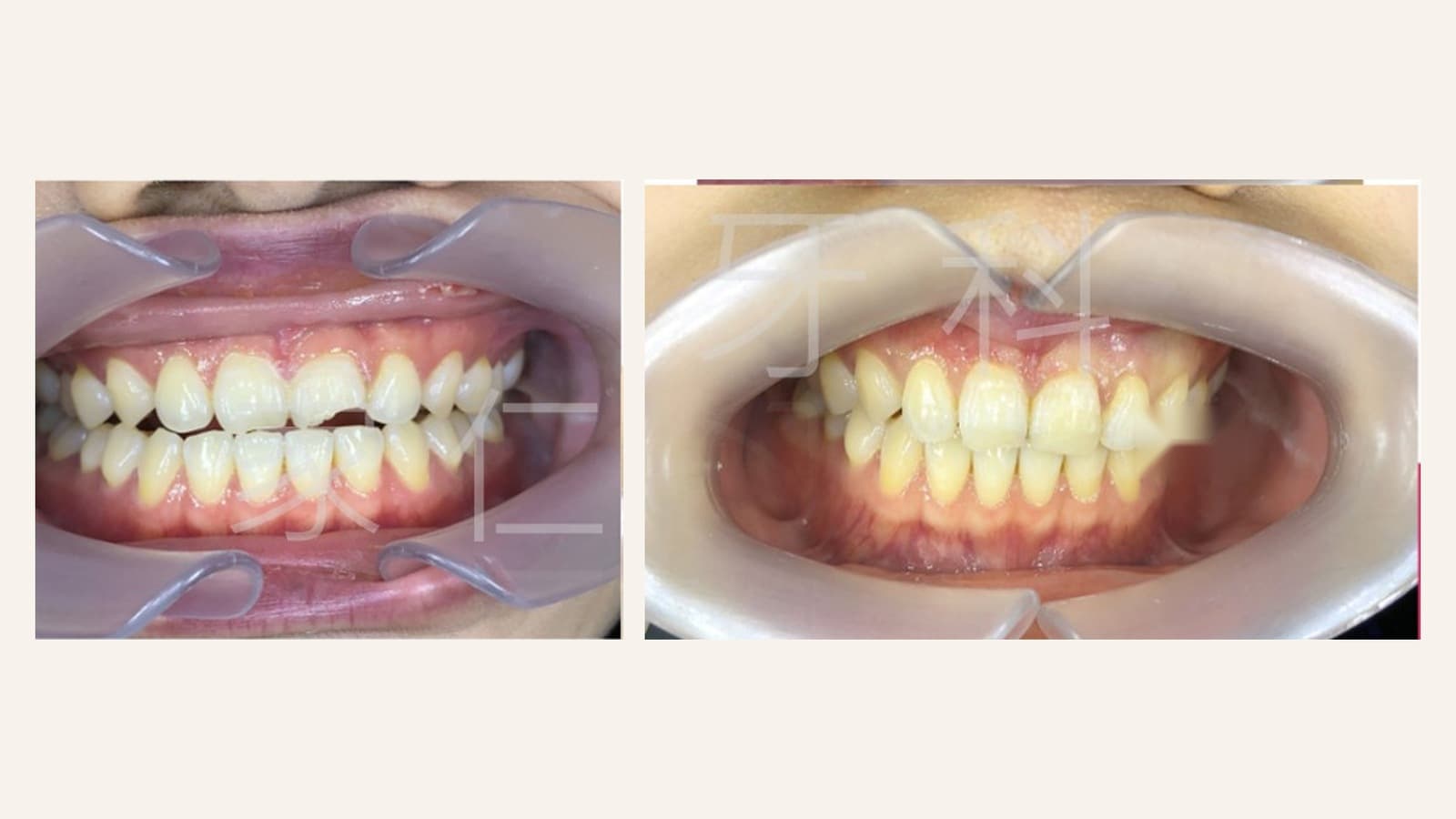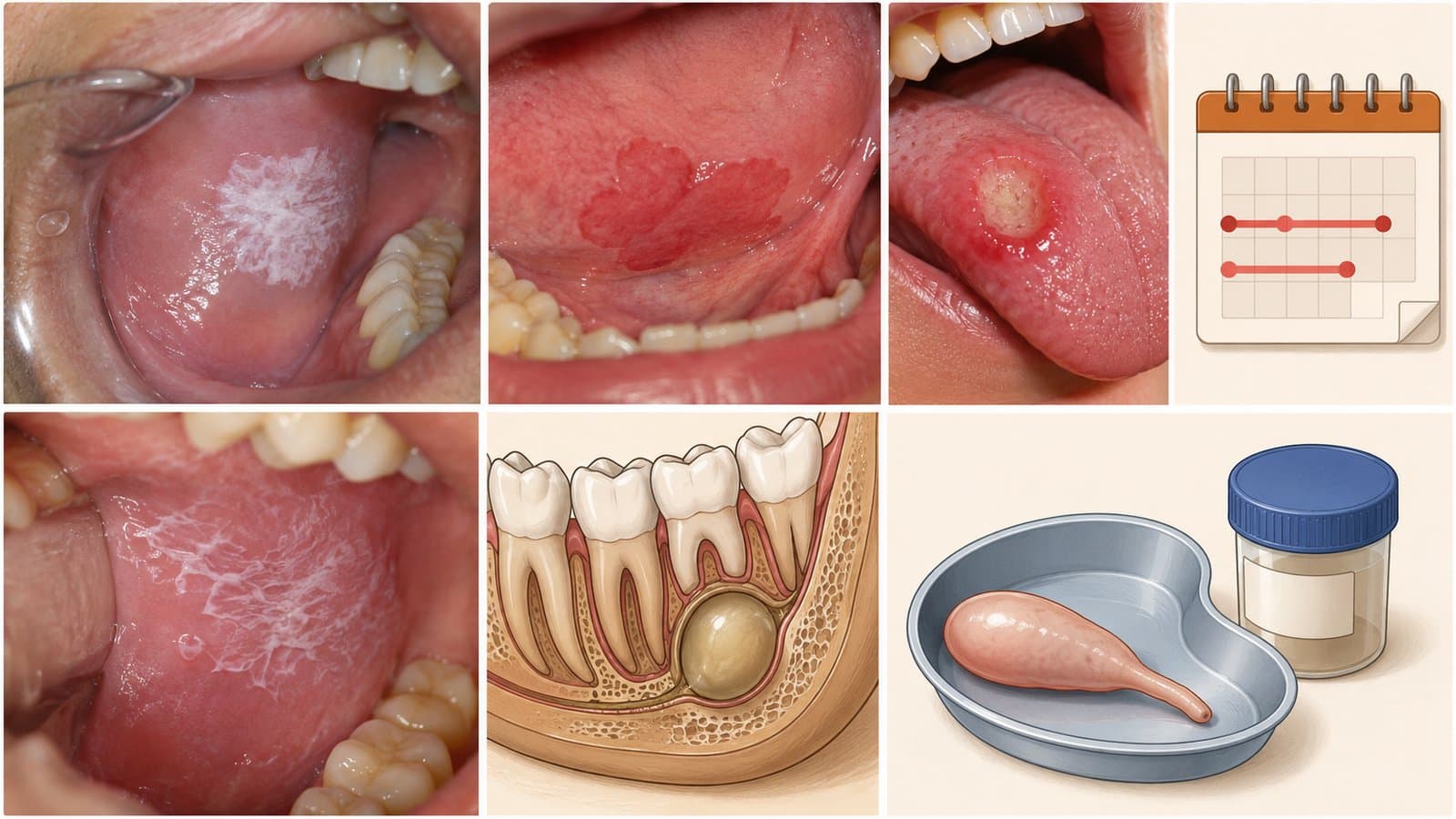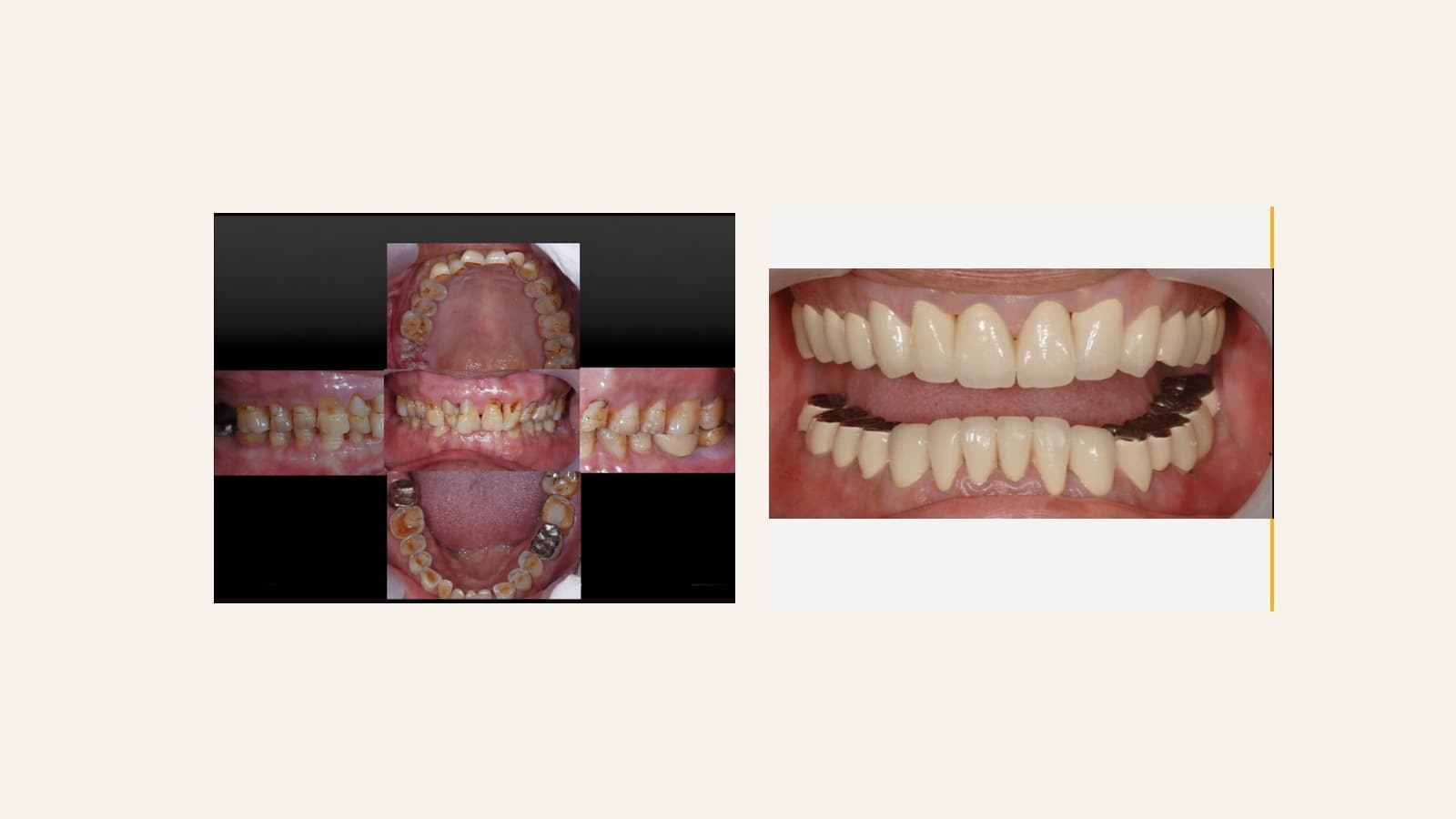
First, tell them apart: is the tooth chipped, or worn?
The treatment logic is completely different.
Chipping is usually a single event — biting something hard, a knock, or a tooth whose structure was already weakened splitting under one particular bite. It is mostly confined to one or two teeth, and how it is treated depends on the site and the depth.Chipped a Tooth? Treatment, Fillings and Repair Costs for Front Teeth and Molars
Wear, by contrast, is a process. It usually progresses slowly, and many people only notice once the appearance of their teeth, their sensitivity or the feel of their bite has changed. By the time a patient clearly sees in the mirror that their teeth have become shorter, it has usually been accumulating for a considerable time.
Wear is harder to deal with because pathological wear tends to show a particular pattern across several teeth, rather than a single defect.
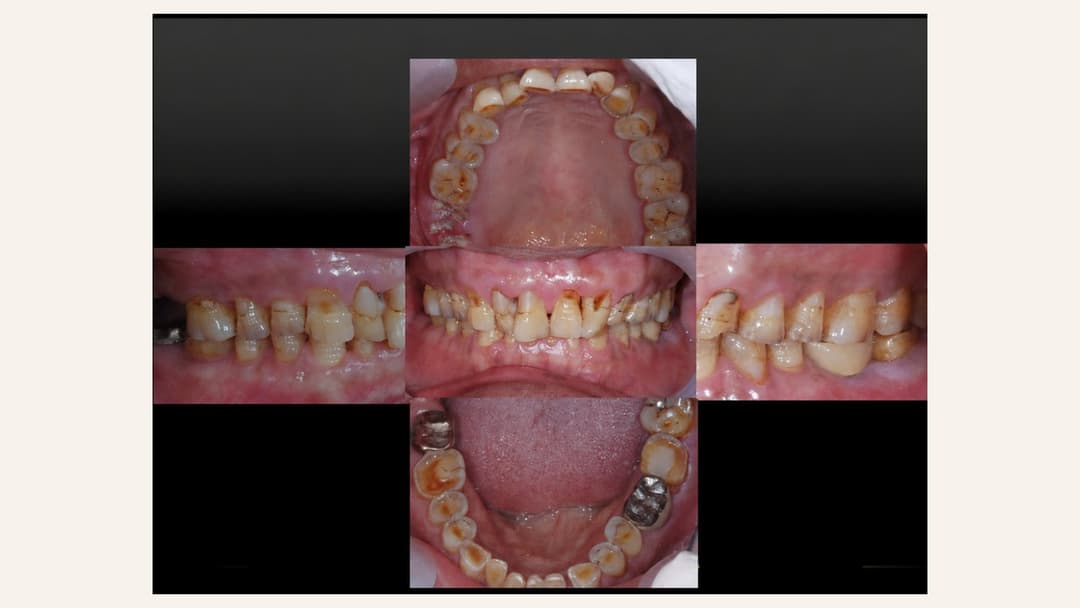
Tooth wear is common, but not all wear needs treatment
Teeth undergo a degree of physiological wear with age and everyday use. What genuinely needs attention is wear whose rate or extent goes beyond what is expected for the age, and which begins to affect tooth structure, appearance, sensitivity, the bite or quality of life.
Studies in Hong Kong and elsewhere both show that tooth wear can start accumulating young and becomes more common with age. One local study examined 600 university students aged 18 to 21, of whom about 44% already showed early signs of erosion — but this does not mean 44% need restorative treatment. It only shows that wear can begin at a very young age.
Different studies use different definitions and scoring methods, so “wear was found” cannot be read straight across as “full mouth reconstruction is needed”. Whether treatment is required depends on whether the wear is still progressing, whether dentine is widely exposed, the restorative space, the symptoms, and the actual effect on function and daily life.
When can it be monitored, and when is a whole-mouth assessment worthwhile?
| Situation | General direction |
|---|---|
| Mild wear, little change over many years, no symptoms | Record a baseline (photographs / models / intraoral scans), control the causes, compare at intervals |
| One or two teeth worn or chipped, the rest stable | Localised restoration can be considered; whole-mouth planning is not required |
| Several teeth visibly shortened, dentine widely exposed, restorations fracturing repeatedly | Full records and occlusal analysis are advised before the scope is decided |
| Appearance, chewing or speech already noticeably affected | A whole-mouth assessment is advised, comparing conservative and reconstructive options |
Where does wear come from? Four common mechanisms
| Type | Cause | Typical presentation |
|---|---|---|
| Attrition | Friction between tooth and tooth, mainly from grinding and clenching | Smooth, matching wear facets on the occlusal surfaces |
| Erosion | Non-bacterial acid — acid reflux, or frequent carbonated and fruit-acid drinks | Cupping of the occlusal surfaces, with a smooth, glazed surface texture |
| Abrasion | External physical friction, most often long-term over-vigorous horizontal brushing | Wedge-shaped defects at the necks of the teeth |
| Abfraction | Lateral occlusal forces placing bending stress on the tooth neck | Sharply defined notches at the gingival margin |
In clinical practice several factors are usually present at once, and it is unhelpful to force every case into a single cause. It is still necessary to work out which factors dominate: if erosion is among them and the source of acid is not controlled, then however precisely the reconstruction is carried out, the new restorations will wear in the same environment. That is like laying a new floor somewhere it keeps raining.
Two causes that are especially common in Hong Kong
Grinding and clenching. Research shows that sleep bruxism and awake clenching are both common. Awake clenching is more easily overlooked than night-time grinding, because the person concerned usually assumes it is just a natural response to concentrating or working to a deadline.
Acid reflux. Meta-analysis shows a clear association between acid reflux and dental erosion. A situation that arises regularly in clinic is that a patient attends because of a dental problem and only then realises for the first time that they have reflux.
For a patient, what matters is not remembering the percentages, but working out whether their own pattern of wear is related to clenching, dietary acid, stomach acid or other habits.
A common misconception: if the teeth have worn shorter, has the bite height necessarily dropped?
The answer is — not necessarily.
This is the most important point in this article, and the one least often explained clearly.
While teeth wear, they may continue to erupt gradually, and the surrounding supporting tissues compensate as well. So although the crowns become shorter, the vertical distance between the jaws when they close does not necessarily fall by the same amount.
A classification widely used in the prosthodontic literature (Turner and Missirlian, 1984) divides severe wear into three situations:
| Situation | What it means for the patient | General direction of planning |
|---|---|---|
| The bite height has clearly reduced | Both the lower third of the face and the occlusal space have changed | The height may need to be re-established as a whole |
| The height has not clearly reduced, but restorative space remains | The teeth are shorter, but after compensation there is still room to restore them | Localised or section-by-section treatment may be possible |
| The height has not reduced, and restorative space is lacking | The tooth form needs rebuilding, but there is not enough room | Space has to be created separately, or the plan adjusted |
This classification is still commonly used as a starting point for understanding worn dentitions, but the actual plan still has to draw on modern imaging and digital or model analysis.
Why does this distinction matter? Because it directly affects the answer to the question of whether the bite should be opened up. Seeing short teeth and increasing the height as a matter of course is wrong; seeing short teeth and assuming the height has already collapsed is equally wrong. Both have to be confirmed through records and analysis, not judged by eye.
Full mouth rehabilitation does not mean a crown on every tooth
“Full mouth” refers to the fact that the diagnosis and the occlusal design have to be considered as a whole. It does not mean the same restorative approach is used on every tooth.
Depending on each tooth’s remaining structure, position and degree of wear, one treatment plan can contain all of the following at the same time:
- Monitoring for now, with records at intervals (teeth whose structure is still intact)
- Composite build-ups (mild wear, where a small amount of form needs restoring)
- Inlays and onlays (moderate loss, where more tooth tissue can be preserved)
- Ceramic veneers (front teeth, where appearance is the main concern and enough tooth tissue remains)
- Crowns (where the remaining structure is clearly insufficient, or the tooth has had root canal treatment)
- Orthodontics or an individual implant (problems of position, or a missing tooth)
The guiding principle should be to preserve as much healthy natural tooth tissue as possible while still achieving function and stability. For how to choose between the different restorative approaches, see the comparison of the four approaches.
Where does the restorative space come from? Three directions
Once teeth have worn short, restoring the form they ought to have requires space. Space does not appear from nowhere; clinically there are three main directions:
- Increasing the bite height within a physiologically acceptable range — where there is adequate indication, the vertical distance between the jaws can be increased to obtain restorative space. The amount should follow the principle of “enough, and as little as possible”; it cannot be settled by one generic figure in millimetres.
- Using the difference between the joint reference position and the everyday biting position — in some patients the two do not entirely coincide. That difference is a factor to weigh in diagnosis and design, but whether it can be converted into usable restorative space still has to be decided from a full occlusal analysis.
- Creating space locally — in some cases orthodontics, adjusting the position of individual teeth, or crown lengthening can provide the room a particular tooth needs for restoration.
Which direction is chosen depends on the distribution of the wear, the condition of the joints, the periodontal situation and the aesthetic requirements. This has to be worked out first on models or in a digital design; it is not decided on the spot in the chair.
Diagnosis begins with a full set of records: models, digital scans and occlusal analysis
A complex full mouth rehabilitation cannot be decided from a single intraoral examination. The dentist normally needs to record the distribution of the wear, the occlusal contacts, the relationship between the jaws and the teeth, the periodontal condition, the appearance, speech and jaw movement. Depending on the case, the records may include intraoral scans or models, photographs, X-rays, bite records, and facebow and articulator analysis.
The purpose of a facebow and an articulator is to carry part of the intraoral and jaw relationship onto models outside the mouth, to assist analysis and the making of restorations. They are one of the professional tools available, and should not be described as the only reliable form of diagnosis in every case. Whether they are needed depends on the scope and complexity of the reconstruction.
Two terms that are often misunderstood
- A repeatable bite record. In some cases a simple device or technique is used first to reduce the interference of existing muscle and biting habits, before the reference position of the lower jaw is recorded.
- The joint reference position and the everyday biting position. In a good many people these do not entirely coincide. That difference does not necessarily indicate disease, but where extensive reconstruction is needed it can be important information when choosing the reference position for treatment.
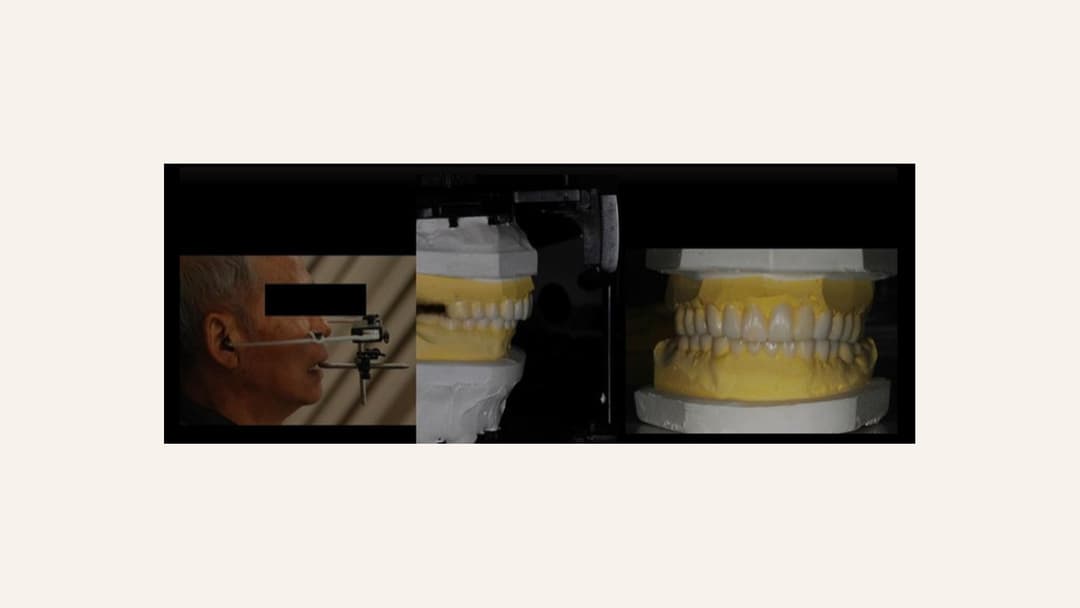
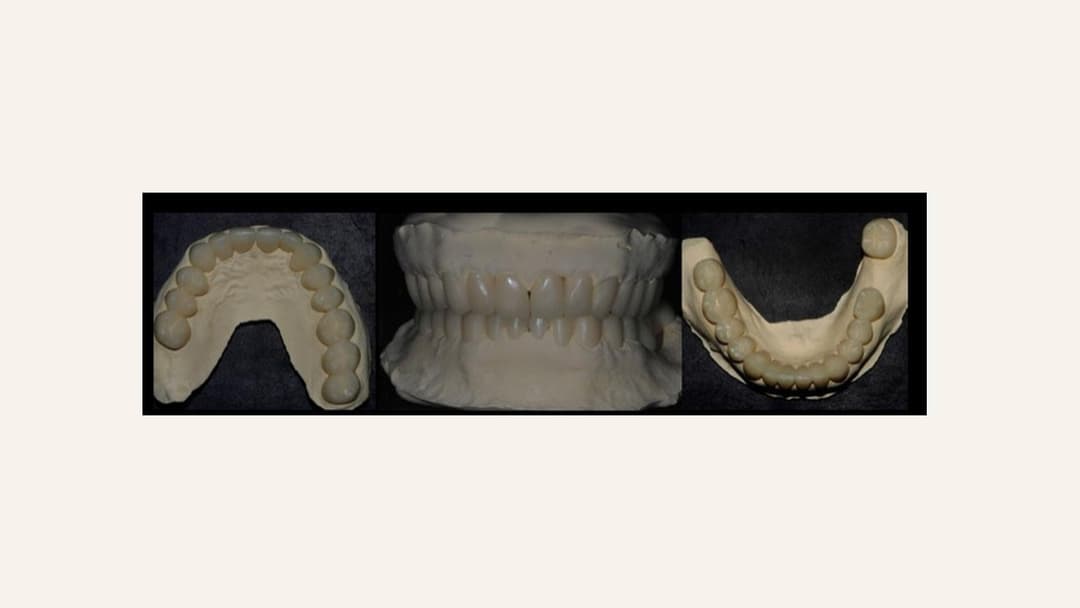
The diagnostic wax-up: do it on the models first, then decide whether to do it in the mouth
A diagnostic wax-up is not decoration. It is the treatment blueprint.
On the mounted models, or digitally, each tooth is rebuilt to the form it ought to have, and four things are decided at the same time: the length and incisal position of the teeth, the angle of the anterior guidance, the posterior occlusal plane, and how much space each tooth needs to be prepared for.
Once the wax-up is complete it can be copied into provisional restorations, turning the design on the models into a version that can actually be tried in the mouth. In other words, what the patient wears is not a makeshift temporary tooth, but the first physical version of the design. Adjustments may still be needed along the way from wax-up to provisional and on to the final restorations.
The provisional stage: living with the new bite first
This is the step in full mouth rehabilitation that is most often misunderstood. Many people assume provisional teeth are simply something to bridge the gap until the final crowns are ready. In fact they have a clear clinical purpose: to let the patient confirm for themselves, in everyday life, whether this new bite position is acceptable.
The provisional stage calls for observing both the patient’s everyday experience and the clinical findings, including:
- Muscles and temporomandibular joints — does anything feel tight on waking? Do the chewing muscles feel tired? Is there any discomfort in the joints?
- Speech — certain sounds that involve the position of the front teeth can help assess the length of the front teeth and the space between the upper and lower front teeth, but are not used on their own to decide the bite height.
- Chewing — can food be bitten through? Does the bite feel even, or is one point contacting noticeably early?
- Appearance — are you yourself satisfied with the length and form of the teeth and with the smile line?
- Clinical examination — whether the restorations are intact, how the occlusal contacts are distributed, whether they are easy to clean, and whether the periodontal tissues show any inflammatory response.
The subjective part of that is a set of questions only the patient can answer. A dentist can measure distances and check contact points, but only you can tell us whether it is uncomfortable to live with.
On this step, we want to put it accurately
It should be explained that the current research evidence does not demonstrate that adding a provisional evaluation stage necessarily improves the final treatment outcome — a 2025 systematic review concluded that increasing the bite height can succeed both with and without an evaluation stage.
The same review, however, notes that the value of this stage lies in helping to manage patient expectations and to sequence treatment, and that fixed provisional restorations should be used; the removable appliances in the studies tended instead to cause difficulty chewing, unclear speech and dissatisfaction with appearance, and are not recommended for evaluating bite height.
Whether a separate provisional evaluation stage is needed should therefore be decided by the scope of treatment, how irreversible it is, the patient’s own uncertainty and the clinical need. For extensive and irreversible treatment, fixed provisional restorations are particularly useful in letting the patient confirm appearance, function and adaptation before the final work is made.
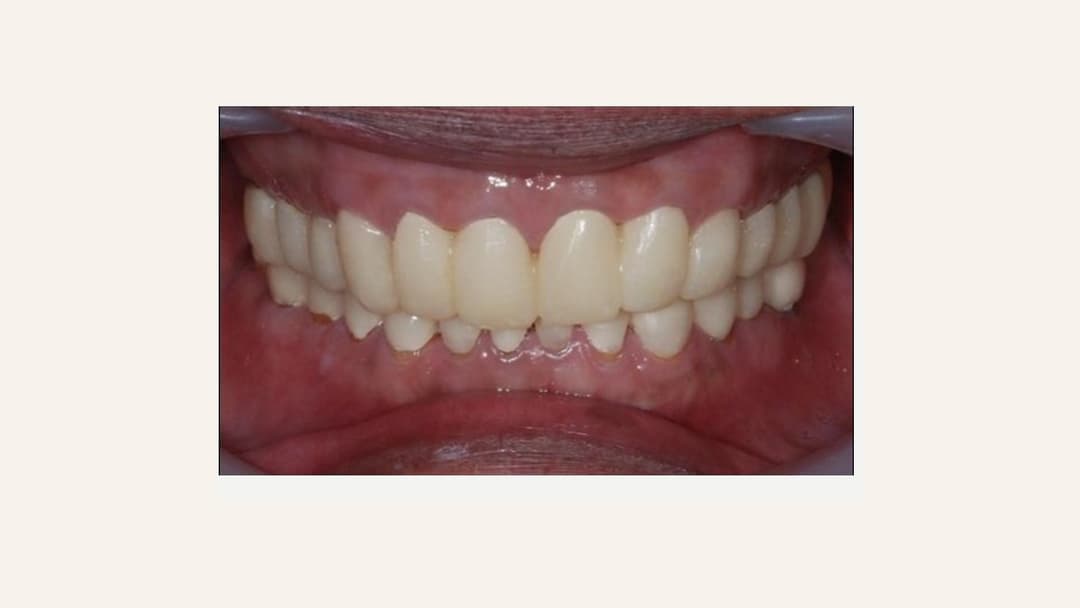
Teeth getting shorter does not necessarily mean a full mouth reconstruction is needed
The assessment first establishes whether the wear is still progressing, whether the bite height has genuinely changed, and whether monitoring, localised restoration or whole-mouth planning is appropriate. Causeway Bay and Tsuen Wan centres, open seven days.
WhatsApp us to ask or book a bite assessmentCall +852 3956 9387Explore our restorative dental servicesMaterial choice has to balance occlusal load, tooth preservation and appearance
Once the design is confirmed, materials come next. The order of priority here runs contrary to many people’s instinct — appearance is not the only consideration, but neither is it unimportant.
For cases with a higher occlusal load or a marked grinding habit, the choice of material has to give particular weight to fracture resistance, thickness, the restorative approach, the condition of the opposing teeth and repairability. Metal, high-strength ceramics and other approaches each have their indications; the decision is not made on appearance or a single strength figure alone.
The trade-off differs between front and back teeth in any case: anterior teeth are led by appearance and guidance function, posterior teeth by durability. Using different materials at the front and the back in the same patient is a common and reasonable arrangement.
It should be said frankly that research findings are not entirely consistent on whether grinding necessarily raises the failure risk of every ceramic restoration. The clinical emphasis is therefore not simply on avoiding one particular material, but on controlling the causes, allowing adequate thickness, designing an appropriate occlusion and providing long-term protection.
For the differences between crown materials, see how to choose crown materials.
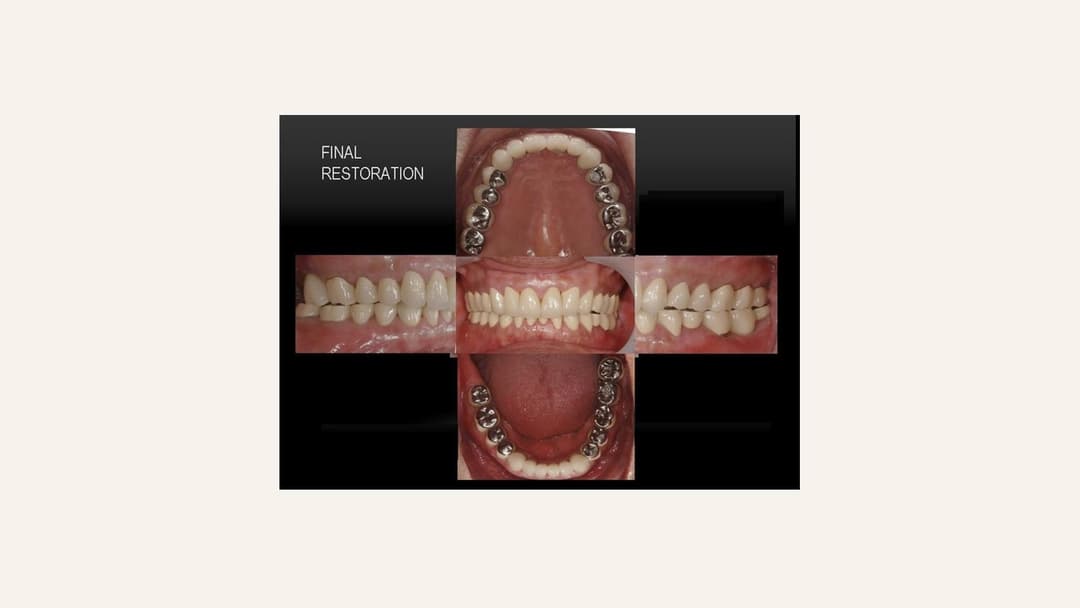
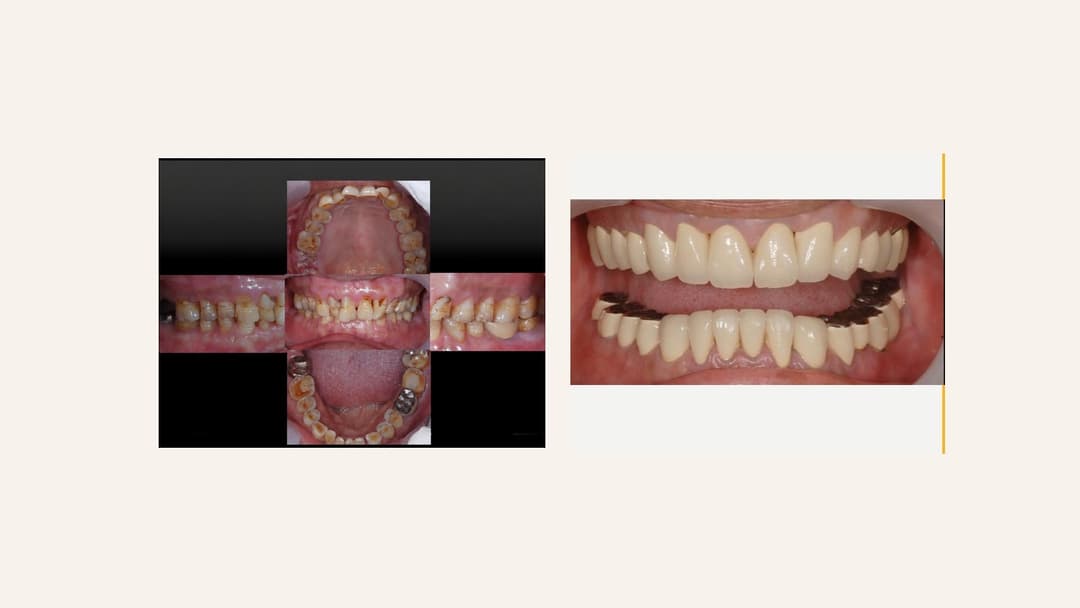
The order of treatment
Full mouth rehabilitation is not a matter of replacing every tooth in one go. It is a process to be staged according to risk and to what depends on what. If decay, periodontal disease, erosion or other underlying problems are not stable, the long-term performance of the final restorations will suffer.
- Stabilisation — dealing first with decay, periodontal problems and any teeth requiring root canal treatment. No rebuilding while the foundation is unsound.
- Controlling the cause — sources of erosion such as acid reflux need to be managed together with a physician; a grinding or clenching habit needs to be brought into long-term management.
- Records and diagnosis — models, digital scans, bite records and analysis are selected according to the scope, and a diagnostic wax-up is then made.
- Provisional stage — fixed provisional restorations are worn as required, confirming the new bite in everyday life.
- Final restorations — completed section by section, copying the confirmed form into the final restorations.
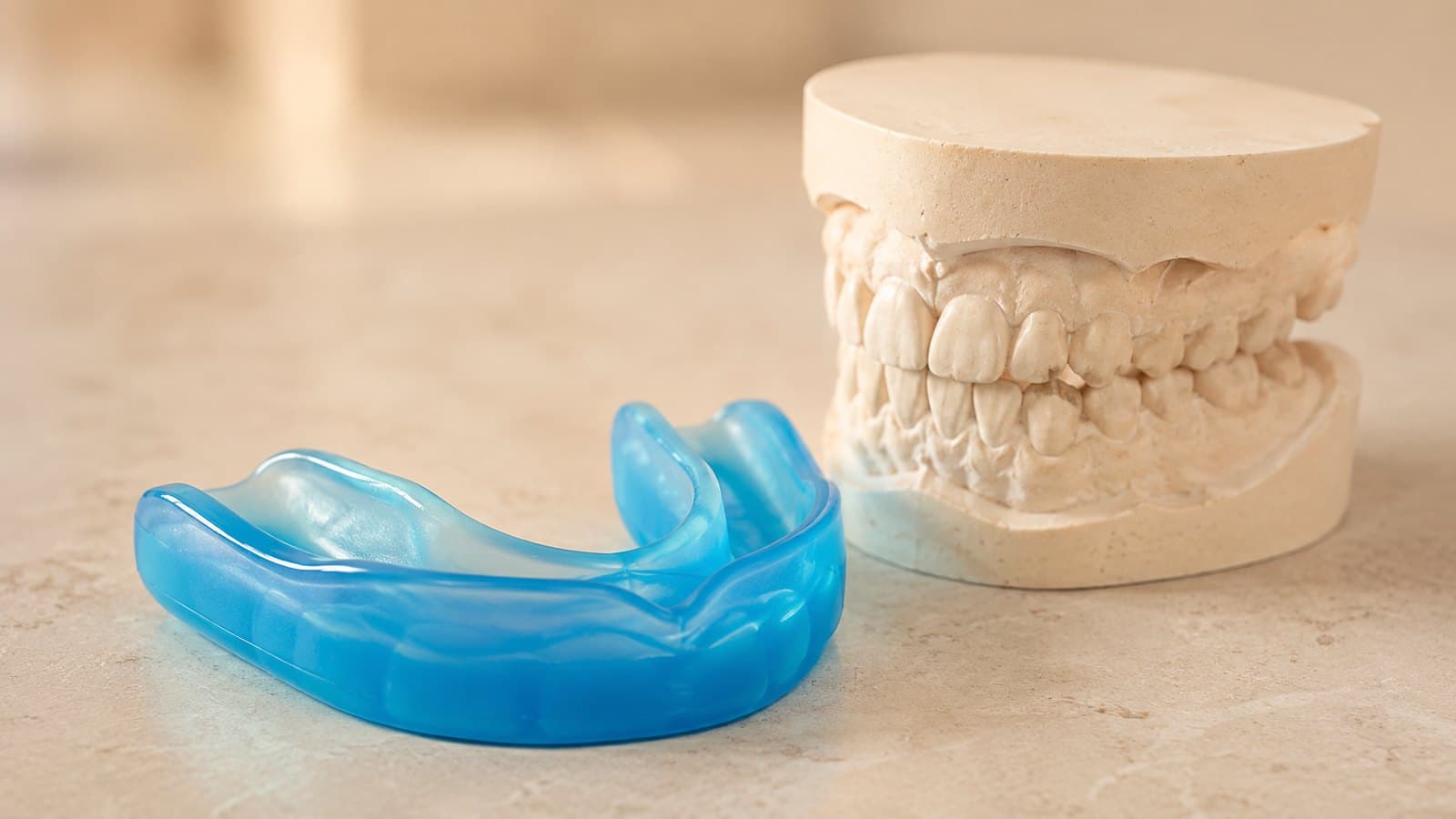
- Protection — a grinding or clenching habit does not necessarily disappear once the restorative work is finished. For patients at risk, a night-time occlusal guard may be part of the long-term protection plan.
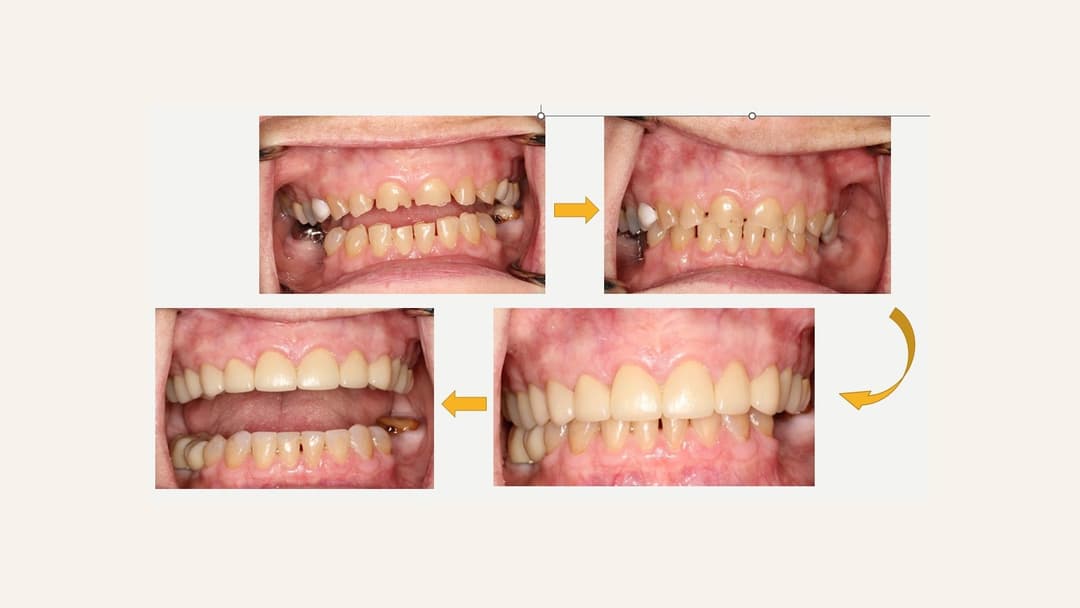
When can it be monitored, and when is it unwise to keep waiting?
The easiest thing to overlook about wear is that it usually does not hurt.
Mild, stable wear can be recorded and compared at intervals; it does not necessarily have to be restored straight away. Physiological wear is usually very slow and hard to detect by eye over a short period. What is genuinely useful is comparing photographs, models or intraoral scans taken at different times.
What it really is unwise to keep waiting on is the following:
- Wear that is still visibly progressing
- Dentine that is widely exposed
- Teeth or restorations that fracture repeatedly
- Sensitivity or pain that is gradually increasing
- Restorative space that is gradually reducing
- Appearance and chewing that already clearly affect daily life
Research shows that severe tooth wear can affect confidence in appearance, oral comfort and the ability to eat; after appropriate restoration, some patients also see an improvement in quality of life. The international expert consensus description of pathological wear likewise notes that this kind of wear, if it continues to progress, leads to complications of steadily increasing complexity.
But the timing of treatment should be decided by the individual’s problems and the rate of progression, not by starting a full mouth reconstruction merely because of age or a particular wear score.
Full mouth rehabilitation is not the same as full-arch implants
These two terms are often confused in Hong Kong, but they address completely different situations.
| Full mouth rehabilitation / occlusal reconstruction | Full-arch implant solutions |
|---|---|
| Mainly preserves and rebuilds natural teeth that can still be restored | For cases where several teeth can no longer be kept, or are already missing |
| May include localised fillings, inlays, crowns, orthodontics or implants | The whole prosthesis is supported by implants |
| Does not mean a crown has to be made for every tooth | Nor is it simply a matter of “upgrading” natural teeth to implants |
| Suitability depends on how far each tooth can be preserved | Depends on bone quality, general health, the bite and the restorative design |
Where natural teeth can reasonably be kept, they should not all be taken out as a matter of course merely because the treatment would otherwise be more involved.
The two are also not mutually exclusive. In some cases an individual tooth genuinely cannot be kept during reconstruction, and implants then become part of the overall plan.
Some situations in which we do not recommend starting straight away
This runs contrary to instinct, but it is our position.
- The cause of the wear is not yet established. If it is not yet clear whether the problem comes mainly from erosion, grinding, diet, medication, a dry mouth or several factors acting together, the assessment should be completed first, rather than starting irreversible restorative work.
- The cause of the erosion is not under control. Rebuilding before acid reflux has been dealt with means the new restorations will wear in the same acidic environment.
- Periodontal disease is still active. While the supporting tissues are unstable, no restoration has a reliable foundation.
- The wear is mild and stable. In that situation, monitoring at intervals with study models or intraoral scans and recording the rate of change is itself a reasonable and responsible choice — not all wear needs rebuilding straight away.
Appropriate treatment is not only about knowing when to start. It is also about knowing when to control the causes first, to observe, or to take a more conservative approach.
Why choose the restorative dentistry team at Home Dental?
- Establish the scope first, then discuss reconstruction — the first assessment establishes whether the wear is still progressing, whether the causes are under control, and whether monitoring or localised restoration would be appropriate, rather than assuming a whole-mouth reconstruction.
- Led by a dentist with the relevant training, with joint cross-disciplinary assessment — diagnosis and design are carried out by a dentist with advanced training and experience in prosthodontics, with joint assessment alongside colleagues in periodontics, endodontics, orthodontics and oral surgery as the case requires, and no need for referral elsewhere.
- A record and design process chosen to suit the case — models or intraoral scans, bite records, a diagnostic wax-up and fixed provisional restorations, used according to the scope and complexity of the reconstruction. Every decision rests on records and analysis rather than an estimate by eye.
- A written, staged treatment plan — before treatment begins you receive a written plan setting out the order, the content and the fees. You confirm it first; then we start.
- The same treatment at both the Causeway Bay and Tsuen Wan centres — the Tsuen Wan centre additionally houses a Department of Health-regulated day procedure centre (DPC), which can support complex cases requiring monitored anaesthesia.
- No public hospital waiting list — a clinical assessment and records can be arranged as early as your situation requires, so that which category the wear falls into is established early.
References
- Van't Spijker A, Rodriguez JM, Kreulen CM, et al. Prevalence of tooth wear in adults. Int J Prosthodont. 2009;22(1):35–42.
- Chu CH, Pang KKL, Lo ECM. Dental erosion and caries status of Chinese university students. Oral Health Prev Dent. 2015;13(3):237–244.
- Chawhuaveang DD, Yu OY, Yin IX, et al. Erosive tooth wear among non-institutionalised older adults in Hong Kong: a cross-sectional study. BMC Oral Health. 2024;24:53. (University of Hong Kong Faculty of Dentistry)
- Turner KA, Missirlian DM. Restoration of the extremely worn dentition. J Prosthet Dent. 1984;52(4):467–474.
- Abduo J, Lyons K. Clinical considerations for increasing occlusal vertical dimension: a review. Aust Dent J. 2012;57(1):2–10.
- Chantler J, et al. Importance of an evaluation phase when increasing the occlusal vertical dimension: a systematic review. J Esthet Restor Dent. 2025.
- Wójcicki M, et al. Global prevalence of sleep bruxism and awake bruxism: a systematic review and meta-analysis. J Clin Med. 2024;13:4259.
- Yanushevich OO, Maev IV, Krikheli NI, Andreev DN, Lyamina SV, Sokolov FS, Bychkova MN, Beliy PA, Zaslavskaya KY. Prevalence and risk of dental erosion in patients with gastroesophageal reflux disease: a meta-analysis. Dent J (Basel). 2022;10(7):126.
- Loomans B, Opdam N, Attin T, et al. Severe tooth wear: European consensus statement on management guidelines. J Adhes Dent. 2017;19(2):111–119.
The content of this article is general information and cannot replace an individual clinical diagnosis. All clinical photographs are of cases treated at our centre and are used with patient consent. Individual cases vary.
Not sure whether it is normal wear, or something that needs whole-mouth treatment?
Teeth becoming shorter, or restorations fracturing repeatedly, does not necessarily mean a full mouth reconstruction is needed. The first assessment looks at whether the wear is still progressing, whether the causes are under control, the bite height and the restorative space, and then compares the feasibility of monitoring, localised restoration and whole-mouth reconstruction. The plan, timing and fees are set out in stages only once the necessary records are complete.
WhatsApp us to ask or book a bite assessmentCall +852 3956 9387Explore our restorative dental services