Accidents, osteoporosis, or oral diseases can lead to tooth loss. Regardless of the cause, it is important to consider replacing missing teeth to prevent the remaining teeth from being overburdened, restoring chewing and speech functions. If not addressed promptly, it may lead to more extensive and costly treatments.
Is It Necessary to Treat Missing Teeth?
Whether due to accidental breakage, age-related bone loss, or severe periodontal disease (extended reading: periodontal disease can increase the risk of heart disease or stroke), it is crucial to seek professional treatment promptly if tooth loss occurs. If left untreated, tooth loss can result in:
-
Impaired chewing, hindering nutritional intake
-
Food debris easily getting stuck in gaps, worsening tooth decay
-
Lack of support in the mouth, leading to gum recession and shifting teeth
-
Facial muscle atrophy, altering facial shape
Tooth loss can also impact personal image, social situations, and job prospects, reducing the quality of life and overall health. Therefore, it is essential to seek help from a professional dentist immediately if you have missing teeth. Whichever option suits the case, comprehensive treatment for missing teeth explains how the assessment is carried out.
Dentures: Removable Dentures
Removable dentures are dentures that can be installed and removed from the mouth. The dentist customizes the dentures based on the patient's oral condition, using metal hooks to anchor them to the real teeth for support, filling the missing tooth part. Removable dentures are cheaper but have a strong foreign body sensation and poor chewing ability, requiring regular adjustments.
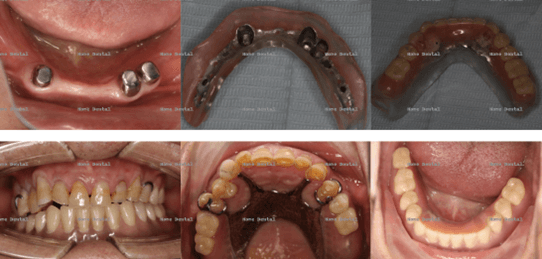
Images show the use of remaining dental roots for magnet connection to secure dentures more stably, aiding in the restoration of function and aesthetics.
Removable dentures are affordable, but they cause a foreign body sensation in the mouth and do not achieve the same level of chewing power as real teeth. If the oral condition changes or more teeth are lost, new removable dentures need to be made.
Fixed Dentures (Bridges)
Fixed dentures involve grinding down the real teeth on both sides of the missing tooth, placing porcelain teeth on them, and securing them with adhesive. Fixed dentures are suitable for patients with only a few missing teeth, as overloading the bridge can lead to failure. The chewing ability after treatment is better than removable dentures.
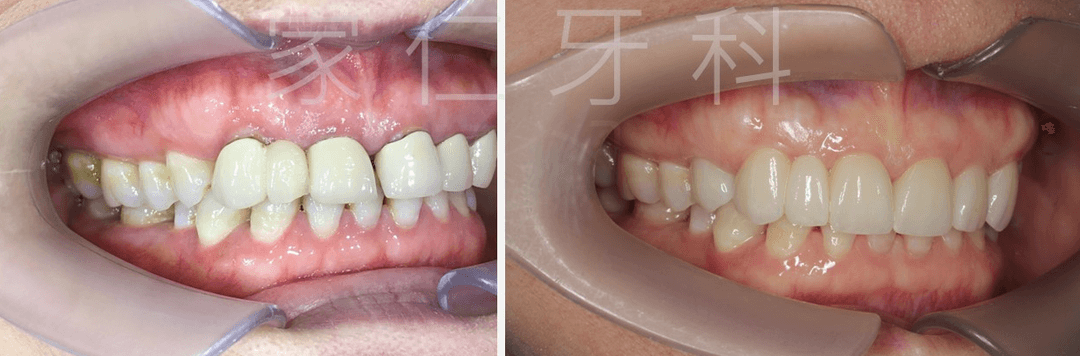
Before and after images of a failed and unesthetic 6-unit dental bridge remake and changeover case, showing significant improvement in dental aesthetics and function.
This method provides better chewing ability than removable dentures, but the real teeth ground down cannot be restored to their original condition. Proper post-surgery care and oral hygiene are essential to prevent damage to the real teeth supporting the bridge.
Dental Implants
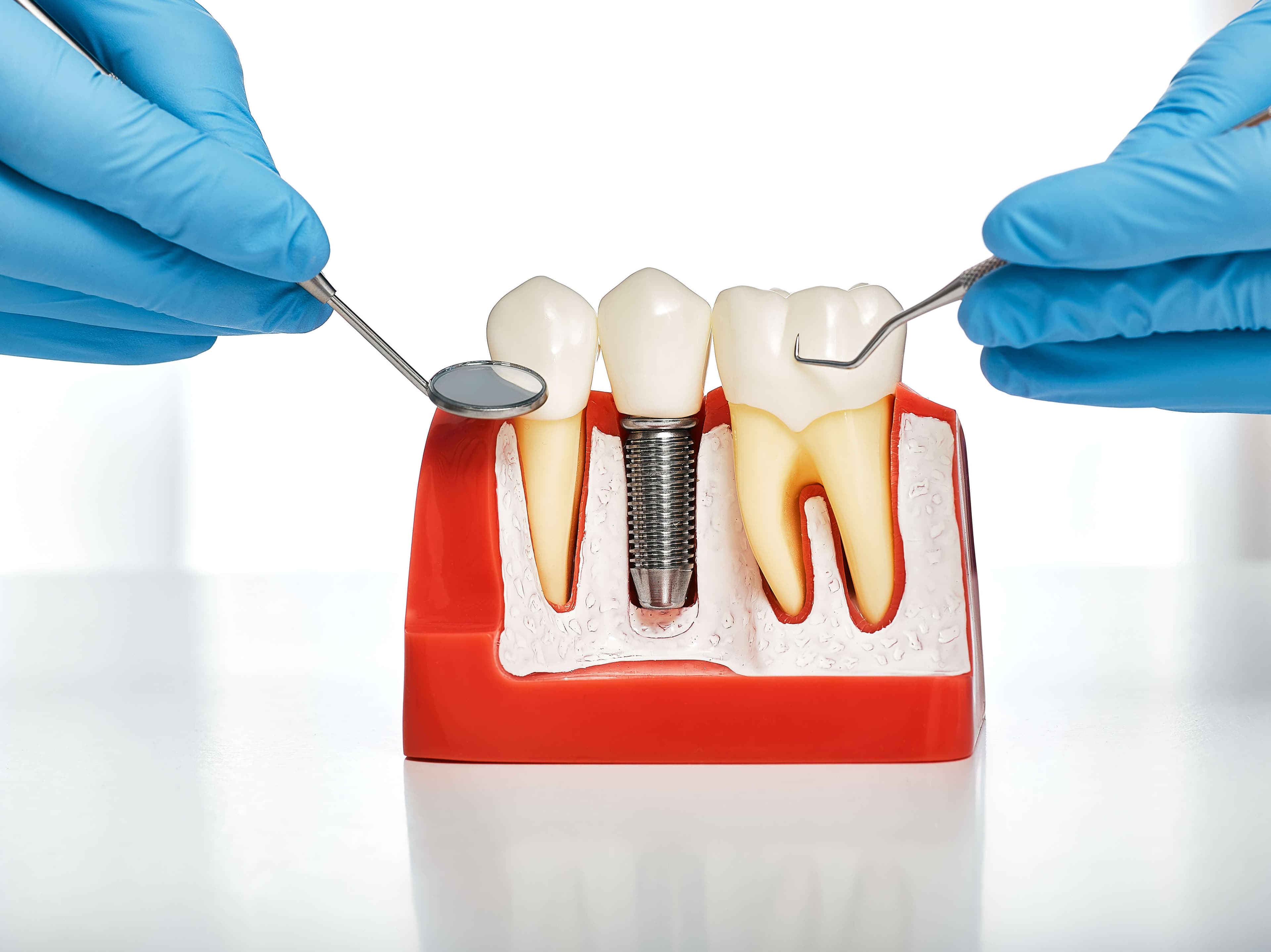
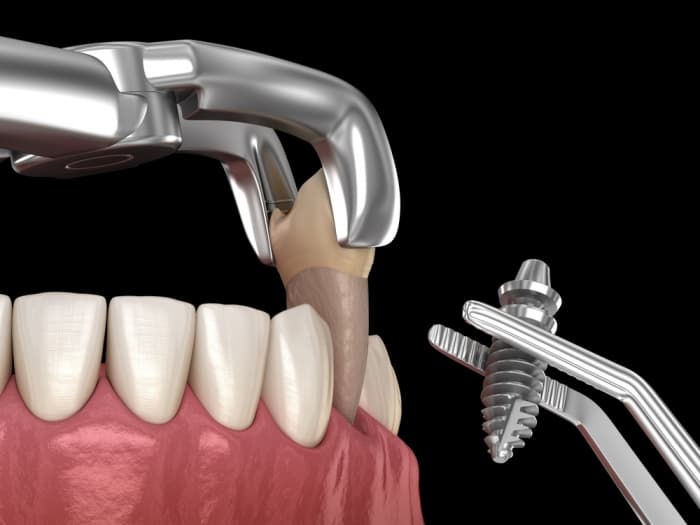
Dental implants involve drilling into the jawbone, placing an implant, and once the wound heals and the implant stabilizes, attaching a porcelain tooth. Dental implants provide chewing power close to real teeth and do not have the metal hook issue of removable dentures.
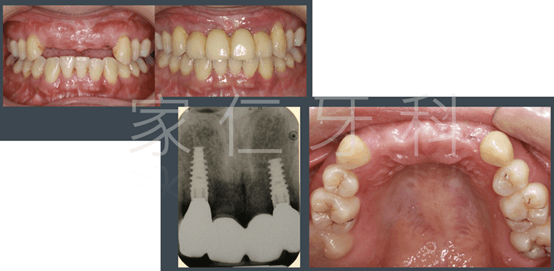
Images show before and after a carefully planned and executed implant for anterior teeth, enhancing the aesthetics and function for the patient.
Dental implants are more expensive and require a longer treatment time. They are not suitable for patients with osteoporosis or blood disorders. (Extended reading: Which implant option is right for you?)
Resin Bonded Bridges / Maryland Bridges
These bridges use resin adhesive to fix the artificial tooth to adjacent real teeth, requiring minimal tooth structure alteration. However, their durability and chewing power may not be as good as other fixed dentures.
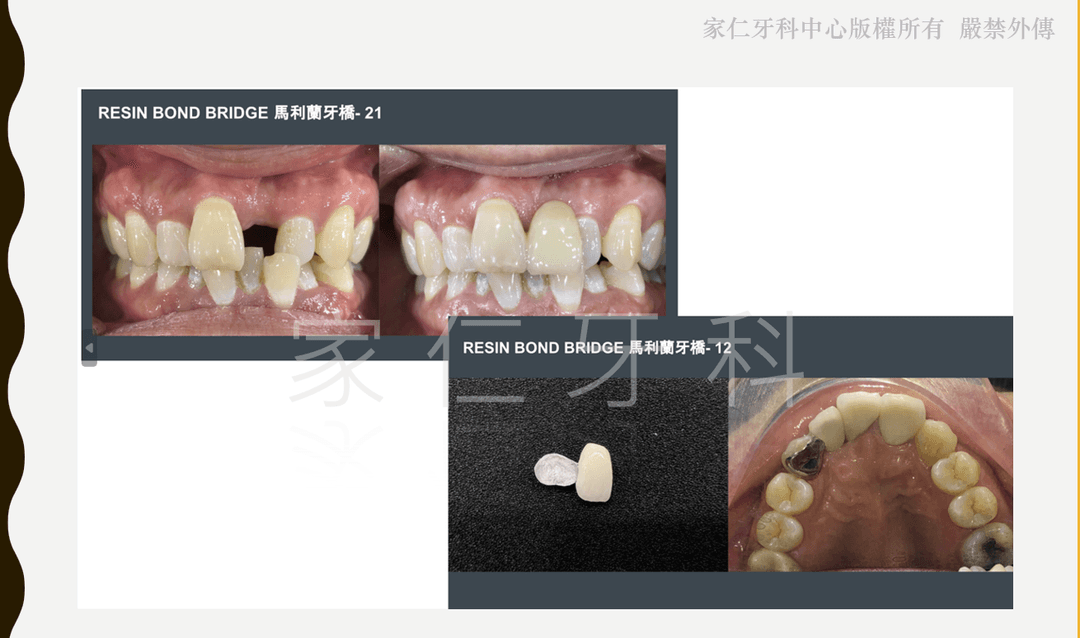 Resin bonded bridge before and after treatment images showing aesthetic improvement in a minimally invasive way.
Implant-Supported Dentures
Including All-on-Four and more extensive full-mouth reconstructions, All-on-Four is a newer technique that uses a few implants to support the entire arch of dentures. This method provides strong bite force and stability and can often avoid bone grafting. It is an ideal choice for patients with total tooth loss, though it is more costly and complex. However, All-on-Four has its limitations and advantages that both patients and operators need to be aware of:
-
Only relies on 4 implants; if one implant fails, the entire prosthesis fails.
-
It can only be done once in a lifetime, and it is very difficult to redo because it avoids bone graft by bone reduction, which requires trimming away a lot of bone to gain sufficient width and space for the prostheses.
-
There is a possibility of nerve injury, sinus infection, or implant dislodgement into the sinus if not done properly.
-
It is not suitable for segmental missing teeth replacement or if the majority of teeth are healthy.
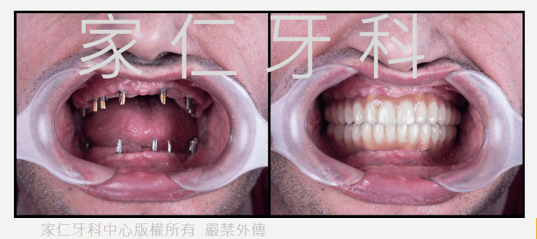
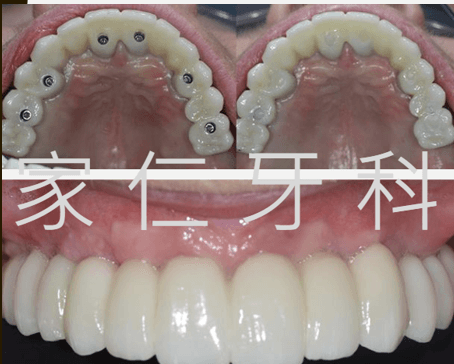
Before and after images of an implant-supported denture case, showing the improvement in aesthetics and function through careful planning and execution
Comparative Table: Dentures vs Implants
|
Treatment Method |
Removable Dentures |
Fixed Dentures (Bridges) |
Dental Implants |
|---|---|---|---|
|
Procedure |
Custom-made removable dentures, not affecting real teeth |
Grind down real teeth, place porcelain teeth supported by adjacent teeth |
Surgical insertion of implants into jawbone, attach porcelain teeth, closely mimicking real teeth |
|
Treatment Time |
Shortest |
Moderate |
Longest |
|
Post-Surgery Effect |
Longest and most unpredictable adaptation period |
Moderate |
Closest to real teeth |
|
Maintenance Time |
Regular adjustments needed |
10-15 years depending on usage and care |
20 years or more depending on usage and care |
|
Usage Sensation |
Foreign body sensation |
Possible foreign body sensation |
Most natural |
|
Cost |
Cheapest |
Moderate |
Most expensive |
|
Suitable Patients |
Limited budget |
Wisdom tooth loss |
Good health for implant surgery |
Cost of replacement treatment
The cost of replacement / prosthetic treatment varies depending on the treatment method and the material of the prosthesis . Prosthesis are made of metal or porcelain, with metal dentures being cheaper and porcelain dentures being more expensive.
-
Ordinary Metal: Cheapest, using nickel and chromium with lower stability, long-term use may cause allergies
-
Semi-Precious Metal: Moderate price, using gold, platinum, palladium, and silver with better stability and resistance to discoloration
-
Precious Metal: Most expensive, using alloy of gold, platinum, palladium with silver, copper, and zinc, natural color, and unlikely to cause allergy.
-
Porcelain Crowns: Metal dentures with porcelain coating to mimic real teeth.
-
All-Porcelain Teeth: Completely made of porcelain, best resemblance to real teeth, no odor, and unlikely to cause allergies
Importance of Quality Prosthetic Treatment
Choosing a quality dentist and dental centre ensures successful treatment and provides professional post-surgery care, helping patients recover quickly and avoid unnecessary complications. Quality dental services include advanced technology, experienced medical teams, and personalized post-surgery care.