Key takeaways
"Will anaesthesia affect my child's intelligence?" is the question parents worry about most — and it has been directly answered by high-quality research: the GAS randomised trial (The Lancet, 2019), the sibling-matched PANDA study (JAMA, 2016) and the MASK study (2018) consistently found no association between a single, short anaesthetic and reduced IQ. The US FDA's caution concerns repeated or 3-hour-plus anaesthesia under age three, and it explicitly advises against delaying needed procedures. Dental sedation (MAC) is lighter than the general anaesthesia those studies examined, and is performed under continuous monitoring in a licensed Day Procedure Centre (DPC). This article walks through the evidence, the safety arrangements and the practical points — with links to authoritative sources parents can verify themselves.
When sedation or anaesthesia is recommended alongside dental treatment, the first question for many parents — and many adult patients — is not "will it hurt" but "is it safe", and especially "will it affect the brain". These concerns are entirely reasonable, and they deserve a serious answer rather than a reassuring wave. This article sets out the scientific evidence, the positions of international regulators, and how sedation is regulated in Hong Kong — with a verifiable source for every key claim.
First, three different things: local anaesthesia, sedation, general anaesthesia
Local anaesthesia — the "numbing injection". You are fully awake; only the treatment area loses sensation. Sufficient for the great majority of dental treatment.
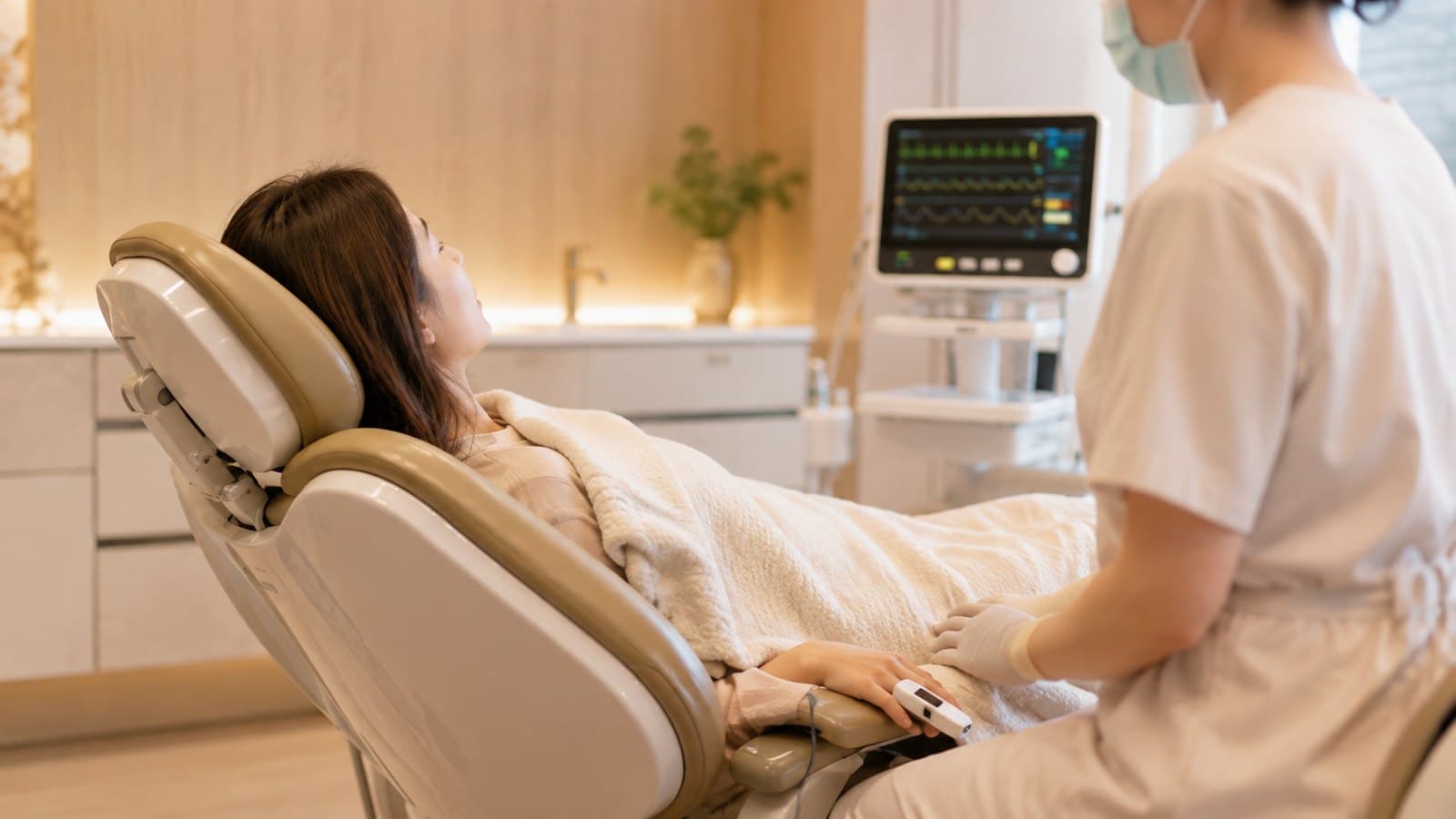
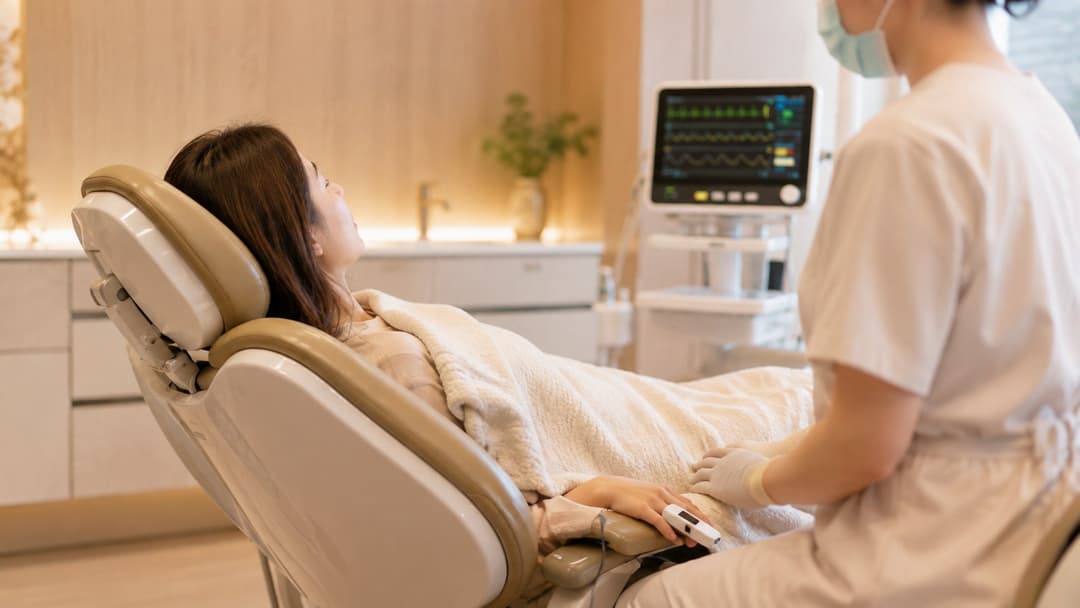
Sedation / Monitored Anaesthesia Care (MAC) — intravenous medication brings you into a relaxed, light-sleep state; you breathe on your own throughout, while one registered specialist anaesthetist continuously monitors blood pressure, heart rate and oxygen levels. Suited to dental anxiety, strong gag reflexes, longer procedures (surgical wisdom tooth removal, implants) and patients who find cooperation difficult.
General anaesthesia — complete loss of consciousness with deeper airway management, generally in hospitals or appropriately equipped facilities; in dentistry it is usually reserved for specific situations, such as very young children needing extensive treatment.
The international studies discussed below concern general anaesthesia — deeper than the sedation commonly used in dentistry. This matters: if the evidence on general anaesthesia is reassuring, it is all the more so for lighter sedation.
"Will it affect intelligence?" — what three major studies found
This question has been a priority of international anaesthesia research for over a decade — it has not been ignored. Three rigorously designed studies reached consistent conclusions:
① The GAS trial (randomised controlled trial, The Lancet, 2019) — over seven hundred infants randomly assigned: one group received a single general anaesthetic of about an hour for hernia repair, the other an awake-regional technique. IQ measured at age five: no difference between the groups. Randomised trials are the highest grade of medical evidence.
Source: PubMed (McCann et al., The Lancet 2019)
② The PANDA study (JAMA, 2016) — compared children who had one general anaesthetic before age three with their own unexposed siblings: no difference in IQ. Sibling matching removes family-environment factors.
Source: PubMed (Sun et al., JAMA 2016)
③ The MASK study (Mayo Clinic, 2018) — single exposure: no association with intelligence or learning deficits; children with multiple exposures showed modest differences in processing speed and fine motor skills but not IQ — and as an observational association, not proven causation.
Source: PubMed (Warner et al., Anesthesiology 2018)
In short: for a single, short anaesthetic, the best available evidence consistently shows no association with reduced intelligence. Nothing in science is "one hundred percent", but this question has been tested repeatedly with the most rigorous methods available.
What the regulators say
The US Food and Drug Administration (FDA) issued a safety communication on anaesthesia in young children with two key points — both worth stating: first, its scope is repeated procedures, or single procedures longer than three hours, in children under three — not single short procedures; second, the FDA explicitly states that medically needed procedures should not be delayed, because postponing treatment carries harms of its own.
Source: FDA Drug Safety Communications (fda.gov)
SmartTots, a partnership between the FDA and the International Anesthesia Research Society, maintains ongoing public summaries of the research consensus that parents can read directly.
Source: SmartTots (smarttots.org)
The other side of the scale: untreated disease has costs too
A safety assessment cannot count only the anaesthesia side. Severe decay and oral infection bring persistent pain, disrupted eating and sleep, and the risk of spreading infection; in children they also affect the developing permanent teeth and school life. And forcing treatment on a terrified child carries its own psychological cost. The role of sedation is to let necessary treatment be completed safely, thoroughly and in one visit — often reducing the total burden compared with repeated, distressing attempts. Your dentist's job is to weigh this with you: which treatment is genuinely needed, and which approach carries the least overall risk.
Wondering whether sedation suits your case or your child's?
Message us on WhatsApp or call 3956 9387 — we will arrange an assessment and explain each point.
How is dental sedation regulated in Hong Kong — and how do we run it?
Under Hong Kong's Private Healthcare Facilities Ordinance (Cap. 633), premises performing scheduled procedures — including dental intravenous sedation/anaesthesia — must hold a Day Procedure Centre (DPC) licence regulated by the Department of Health: the same regulatory regime as hospitals, with explicit requirements on facilities, equipment, staffing and emergency arrangements.
Source: Office for Regulation of Private Healthcare Facilities, Department of Health (orphf.gov.hk)
Our group operates a licensed Day Procedure Centre, and sedation procedures take place within it. The arrangements include:
・Pre-treatment assessment of medical history, medications and fasting requirements, with the process explained clearly
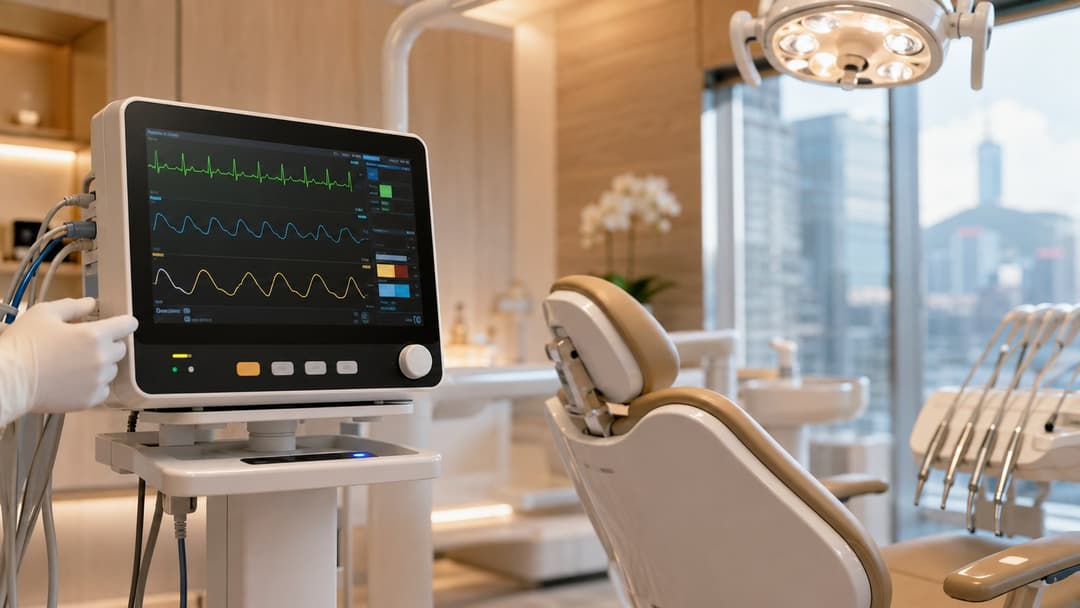
・Vital signs (blood pressure, heart rate, oxygen saturation) monitored throughout by one registered specialist anaesthetist — treatment and anaesthesia are separate roles
・Monitoring and emergency equipment as required by the DPC licence
・Observation in the recovery area until awake and stable before leaving, with an adult escort home and no driving that day
Who should discuss their situation in advance?
Most healthy people are suitable candidates for sedation, but the following should be raised at assessment so arrangements can be planned properly (these are matters to plan for, not exclusions): chronic conditions (heart or lung disease, diabetes), sleep apnoea, drug allergies, current medications (including blood thinners), pregnancy, and higher BMI. Children's cases are assessed jointly with the paediatric dentistry team — age, weight and treatment needs together determine whether behavioural guidance, sedation or another arrangement fits best. Sedation is never the default; it is used where it is needed.
Why choose Home Dental for sedation dentistry?
✓ Licensed Day Procedure Centre (Department of Health), with sedation performed inside the centre as the licence requires
✓ Treatment and anaesthesia as separate roles: one registered specialist anaesthetist monitors vital signs throughout the procedure
✓ Detailed pre-treatment assessment and explanation — fasting arrangements, risks and recovery; fees clearly set out after assessment
✓ Children's cases assessed jointly with paediatric dentistry; consultations at Causeway Bay and Tsuen Wan
Book your professional dental care at Home Dental
You can arrange a same-day consultation via:
• The WhatsApp button on this page (recommended) — reach us instantly
• Calling 3956 9387 (during office hours)
Related services: Sedation / Monitored Anaesthesia Care · Paediatric dentistry