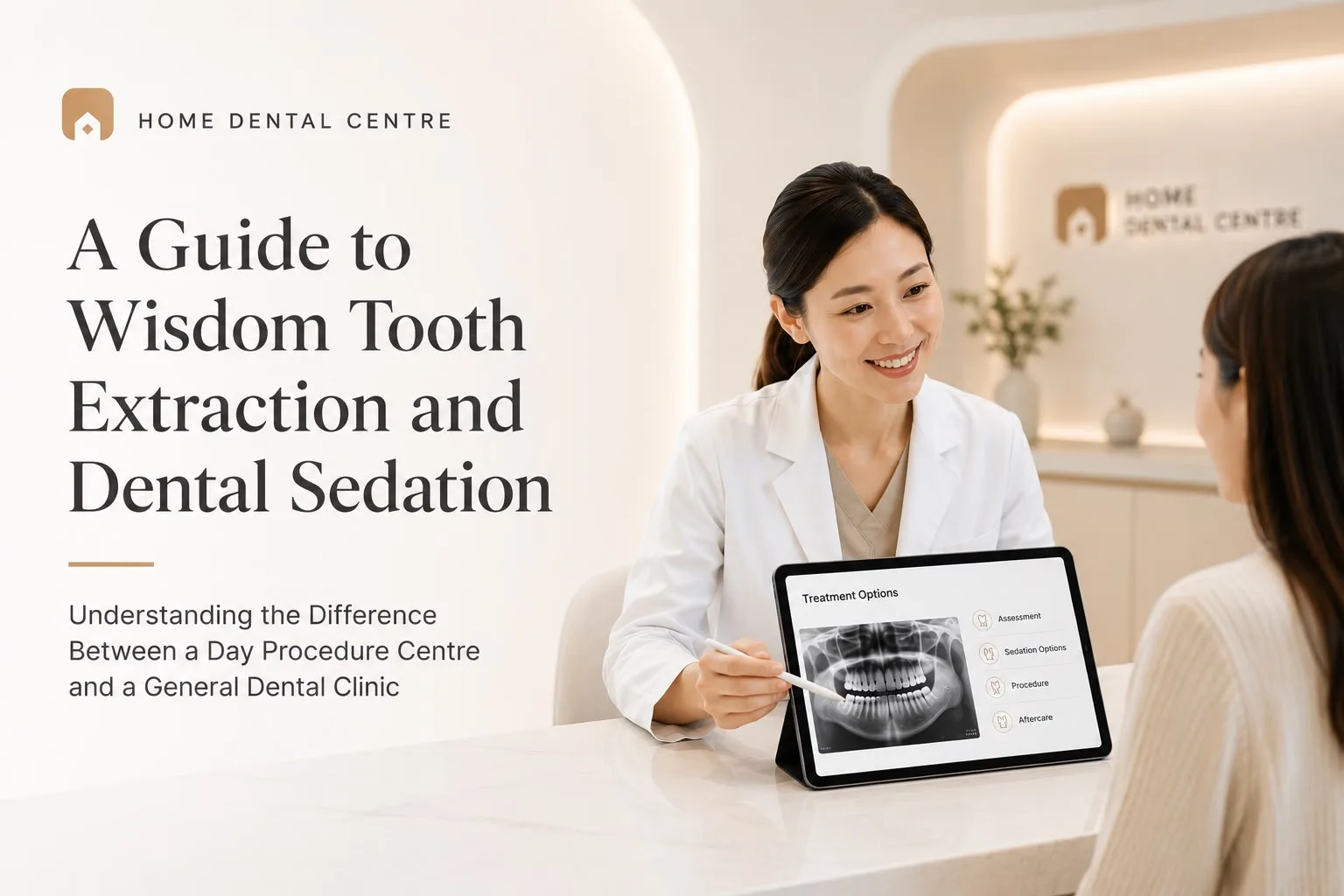
Wisdom Tooth Removal & Dental Sedation in Tsuen Wan: How a Day Procedure Centre Differs from an Ordinary Clinic
Sedation/TMD

Wisdom Tooth Removal & Dental Sedation in Tsuen Wan: How a Day Procedure Centre Differs from an Ordinary Clinic

Nervous about wisdom tooth removal? Understand the difference between local anaesthesia, sedation and general anaesthesia — and how a licensed Day Procedure Centre differs from an ordinary clinic.

Dental health education article | Last updated: July 2026

Introduction: fear of pain should not be the reason you keep putting off wisdom tooth surgery

People searching for wisdom tooth removal in Tsuen Wan are often less worried about the surgery itself than about "will it hurt?" and "I'm so anxious — can I get through the whole procedure?" Parents also ask: is there a gentler option for a child, or an elderly family member, who is terrified of the dentist?

The key lies in the type of anaesthesia — and the class of facility providing it. This article explains the difference between local anaesthesia, dental sedation and general anaesthesia, and how a licensed "Dental Day Procedure Centre" differs from an ordinary dental clinic. It provides general information only; whether surgery is needed, and which anaesthesia option suits you, must be assessed clinically by a dentist.

When does a wisdom tooth need to come out?

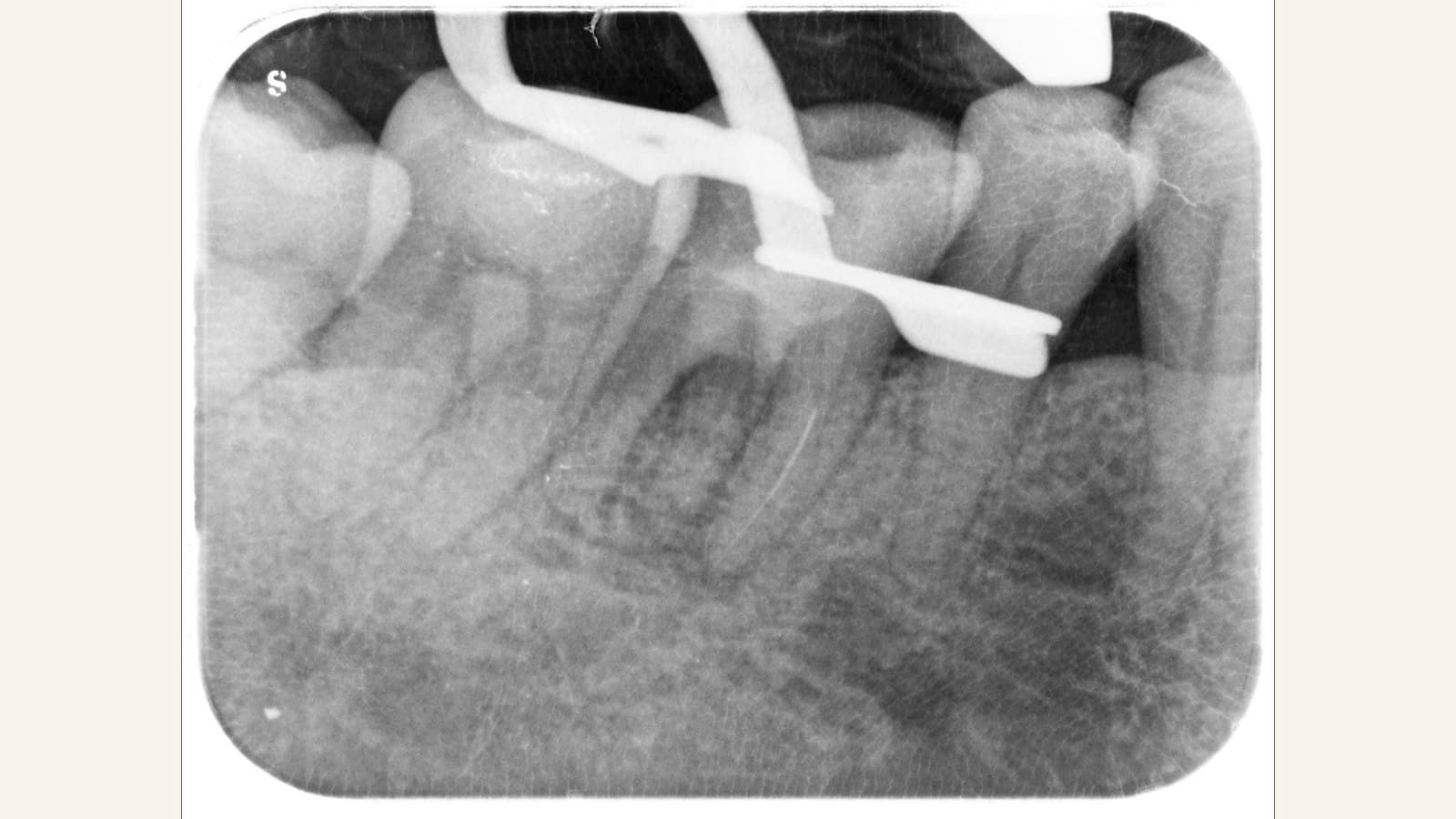
Not every wisdom tooth needs removal. Broadly, if a wisdom tooth causes recurrent inflammation, pain, decay, pressure on the neighbouring tooth, cleaning difficulty or impaction (including horizontal impaction), the dentist may recommend extraction after assessment; a normally erupted, cleanable wisdom tooth without disease may not need treatment at all. Before surgery, the dentist carries out a clinical examination with X-ray or 3D imaging to assess the tooth's position, its distance from the nerve and the surgical risk, and explains the surgical plan, what to expect, possible discomfort and after-care.

Three anaesthesia options: local, sedation, general

Local anaesthesia (an injection)

The most common approach: the dentist injects local anaesthetic around the surgical site, and you stay fully awake with no pain at the site. For most simple-to-moderate wisdom tooth cases, local anaesthesia is entirely sufficient — and any registered dental clinic can provide it.

Dental sedation (moderate to deep)

Sedation builds on local anaesthesia: medication brings you into a relaxed, lightly-asleep to deeply-asleep state, with vital signs monitored throughout by anaesthesia professionals. It typically suits patients with dental anxiety, highly anxious children, a sensitive gag reflex, special needs, or cases needing lengthy or multiple treatments in one visit — suitability is always assessed by the dentist case by case. Note: under Hong Kong regulation, moderate-to-deep sedation must take place in a licensed Day Procedure Centre or hospital facility.

General anaesthesia

You are fully unconscious, and the procedure takes place in a hospital operating theatre. It is generally reserved for cases where the dentist's assessment shows it is genuinely required — for example, several complex procedures performed together. Such cases are usually referred by a dental specialist to a private hospital, with post-operative care followed up under the referral arrangement; hospital fees are quoted directly by the hospital.

How does a Day Procedure Centre (DPC) differ from an ordinary clinic?

A "Dental Day Procedure Centre" (DPC) is not a marketing phrase — it is a statutory licence category regulated by the Department of Health. The differences fall into three areas:

  1. Regulation and oversight — a licensed DPC must meet statutory standards for fire safety, ventilation, equipment, resuscitation facilities and staffing, with regulatory requirements comparable to day surgery centres in private hospitals. An ordinary dental clinic does not hold this licence.
  2. Depth of anaesthesia available — local anaesthesia is available at any registered dental clinic; under the licensing regime, moderate-to-deep sedation must take place within a licensed DPC or hospital facility.
  3. Monitoring arrangements — during sedation at a licensed DPC, the patient's vital signs are monitored throughout by anaesthesia professionals; afterwards the patient rests in a recovery area until fully awake and confirmed fit to leave.

What does sedated wisdom tooth surgery in Tsuen Wan look like, step by step?

  1. Clinical assessment — the dentist examines you with X-ray or 3D imaging to determine whether extraction is needed, how complex the surgery is, and whether sedation is suitable; sedation cases also undergo a pre-operative health check.
  2. Written plan and quote — after assessment you receive a written treatment plan and itemised fee list; for sedation cases, the Day Procedure Centre provides a separate quotation for anaesthesia and the operating room, and no chargeable treatment starts without your consent.
  3. On the day — the procedure takes place inside the licensed DPC, with anaesthesia professionals monitoring your vital signs throughout the sedation.
  4. Recovery and follow-up — you rest in the recovery area until fully awake and confirmed fit to leave, with review appointments arranged afterwards.

Children and elderly family members who are terrified of the dentist

For children who are extremely anxious, younger in age, have special needs, or need multiple cavities treated at once, a licensed Day Procedure Centre can arrange paediatric dental sedation with continuous monitoring by a specialist anaesthetist. Before treatment, the paediatric dentist carries out a clinical assessment and discusses the anaesthesia plan, pre- and post-operative instructions and risks with the parents. Parents are welcome to accompany their child, and the child rests in the recovery area until fully awake before leaving. If a case requires general anaesthesia, the paediatric dentist refers the child to a private hospital, with post-operative care followed up under the referral arrangement.

How are fees calculated?

Wisdom tooth removal fees generally depend on the tooth's position, degree of impaction and surgical complexity; it is wise to ask any clinic for a written quote and itemised fee list before treatment begins. For sedation cases, the Day Procedure Centre usually provides a separate quotation for anaesthesia and the operating room. Ask the clinic directly about consultation fees and what they include before booking.

A final word

Fear of pain and fear of the chair are completely normal — and modern dentistry has arrangements designed for exactly these needs. The most important first step is a clinical assessment by a dentist: understand the actual state of your wisdom teeth, the viable options, and the pros, cons and fees of each — and only then decide.

Article Info

First published: 7 July 2026

Last reviewed: July 2026

Share

FAQ

Frequently Asked Questions

  • Can I be asleep for my wisdom tooth removal in Tsuen Wan?

    For suitable cases, yes. A licensed Dental Day Procedure Centre (DPC) can, subject to the dentist's assessment, arrange moderate-to-deep sedation — you complete the surgery in a lightly-to-deeply asleep state, with vital signs monitored throughout by anaesthesia professionals. Suitability is always a clinical assessment by the dentist.

  • How much does wisdom tooth removal cost in Tsuen Wan?

    The cost varies depending on the complexity of the case and the type of anaesthesia used. Simple extractions under local anaesthesia typically range from HK$2,000–5,000 per tooth, whilst cases requiring sedation at our licensed Day Procedure Centre may range from HK$8,000–20,000. WhatsApp us for a personalised quote after clinical assessment.

  • What is the difference between dental sedation and general anaesthesia?

    Sedation relaxes you into a light-to-deep sleep and takes place in a licensed Day Procedure Centre, monitored by anaesthesia professionals; general anaesthesia renders you fully unconscious and must take place in a hospital operating theatre. Cases requiring general anaesthesia are usually referred by a dental specialist to a private hospital, with follow-up continued under the referral arrangement.

  • What's the difference between sedation and general anaesthesia?

    Sedation brings you into a relaxed, lightly-asleep to deeply-asleep state whilst your vital signs are monitored by anaesthesia professionals — you breathe on your own and typically wake quickly. General anaesthesia means you are fully unconscious in a hospital operating theatre. Most anxious patients find sedation sufficient; general anaesthesia is reserved for cases where the dentist's assessment shows it is genuinely required.

  • What is a Dental Day Procedure Centre (DPC), and how does it differ from an ordinary clinic?

    A DPC is a statutory licence category regulated by the Department of Health, with legal requirements for fire safety, ventilation, equipment, resuscitation facilities and staffing — oversight comparable to a private hospital's day surgery centre. Local anaesthesia is available at any registered dental clinic; under the regulations, moderate-to-deep sedation must take place within a licensed DPC or hospital facility.

  • Why does sedation have to be done in a Day Procedure Centre?

    Under Hong Kong regulation, moderate-to-deep sedation must take place in a licensed Day Procedure Centre or hospital facility. A DPC is regulated by the Department of Health and must meet statutory standards for fire safety, ventilation, equipment, resuscitation facilities and staffing — comparable to day surgery centres in private hospitals. Ordinary dental clinics do not hold this licence.

  • Who is dental sedation suitable for?

    Typically patients with dental anxiety, highly anxious children, a sensitive gag reflex, special needs, or cases requiring lengthy or multiple treatments in one visit. Whether an individual case is suitable is always determined by the dentist through clinical assessment and a pre-operative health check.

  • How long does the whole sedation procedure take?

    The surgery itself typically takes 30 to 60 minutes depending on the case. Afterwards you rest in a recovery area until fully awake and confirmed fit to leave — usually one to two hours. Plan for half a day in total, and arrange for someone to accompany you home as you should not drive or operate machinery for the rest of the day.

  • Are there risks or side effects with sedation?

    Sedation is designed to minimise discomfort and anxiety, but like any medical procedure it carries some risk. Common side effects include drowsiness, nausea or a dry mouth. Serious complications are rare when performed by qualified professionals in a licensed facility with proper monitoring. Your dentist will assess your medical history and explain the risks specific to your case before proceeding.

  • My child is terrified of the dentist — can paediatric sedation be arranged in Tsuen Wan?

    Yes. The licensed Tsuen Wan Day Procedure Centre can arrange dental sedation for anxious children or those with special needs, monitored throughout by a specialist anaesthetist; the paediatric dentist assesses the child first and explains the plan and risks to the parents, and the child rests in the recovery area until fully awake before leaving.

  • How much does sedated wisdom tooth removal cost?

    The dentist first carries out a clinical and X-ray assessment, then provides a written treatment plan and itemised fee list; for sedation cases, the Day Procedure Centre provides a separate quotation for anaesthesia and the operating room. Consultation fees vary between clinics — ask the clinic directly about the fee and whether it is credited towards treatment before booking.

  • Do all wisdom teeth need to be removed?

    No. If a wisdom tooth causes recurrent inflammation, pain, decay, pressure on the neighbouring tooth, cleaning difficulty or impaction, the dentist may recommend extraction after assessment. A normally erupted, cleanable wisdom tooth without disease may not need treatment at all. Clinical examination with X-ray or 3D imaging determines whether surgery is necessary.

  • Do wisdom teeth always need to be removed?

    No. A normally erupted, cleanable wisdom tooth without disease may not need treatment; wisdom teeth causing recurrent inflammation, pain, decay, pressure on neighbouring teeth or impaction may be recommended for extraction after assessment. The actual decision rests on the dentist's clinical examination and X-ray assessment.

  • Can I use my dental insurance for sedation at the Day Procedure Centre?

    We accept most major dental insurance plans. Coverage for sedation varies by policy — some plans cover it fully, others partially, and some exclude it. WhatsApp us with your insurance details and we'll help you check what's covered before you proceed.

  • Can I go straight home after a sedation procedure?

    You rest in the recovery area first, until you are fully awake and confirmed fit to leave. The dentist also goes through after-care and review arrangements; we recommend having a friend or family member accompany you home.

Still wondering about something? Our team is happy to chat.

Reminder: You have the right to choose a Hong Kong dentist based on your individual needs. We recommend referring to the list of registered dentists published on the official website of the Dental Council of Hong Kong to make a choice best suited to your personal needs. The above content is intended to give you a brief introduction to the nature and effects of the relevant dental procedures, so that you can make informed decisions when choosing a dentist and related treatment options. All treatments have advantages and disadvantages — the key is that you must have a basic understanding of different treatments and procedures and be aware of the associated risks. The above content does not represent the professional opinion or views of any dentist or dental institution. For the sake of your health, please consult your family dentist for formal medical advice.

This article is compiled by the Public Education Team of Home Dental and has been reviewed and approved by the Content Review Committee of Home Dental. The Committee comprises members of our Board of Directors, legal advisors, and relevant professionals, and is responsible for vetting all externally published health education content to ensure it is professional, accurate, relevant to the local context, and regularly updated to meet Hong Kong dental service standards.

This content is originally produced by Home Dental, all rights reserved. Unauthorized reproduction, modification, or publication is prohibited. Violators will bear legal responsibility. For citation or partnership inquiries, please contact our center for written permission.