😬 Still Bleeding After a Regular Cleaning? You May Need Deep Cleaning, Not “Another Wash”
Many people in Hong Kong have a habit of getting their teeth cleaned once or twice a year.
However, dentists often see a very common situation:
- You have already done scaling, but bad breath keeps coming back
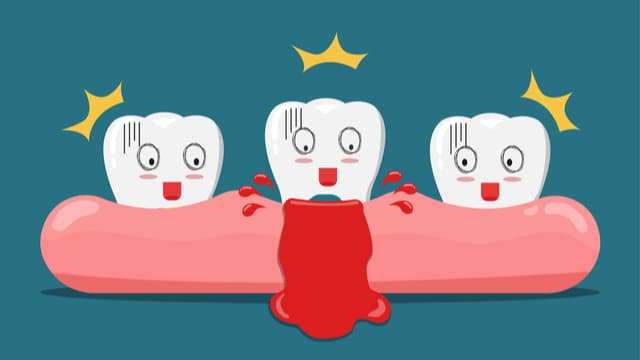
- Your gums still bleed when brushing
- The gumline feels swollen or tender
- Some patients even feel their teeth are “less firm” than before
This leads to understandable questions:
“Am I not brushing well enough?”
“Do I need to clean more often?”
“Is the dentist trying to recommend extra treatment?”
In reality, the issue is often not frequency.
It is that regular scaling and deep cleaning are two very different procedures, with different goals and depths.
🦷 What Is Regular Scaling (Standard Cleaning)?
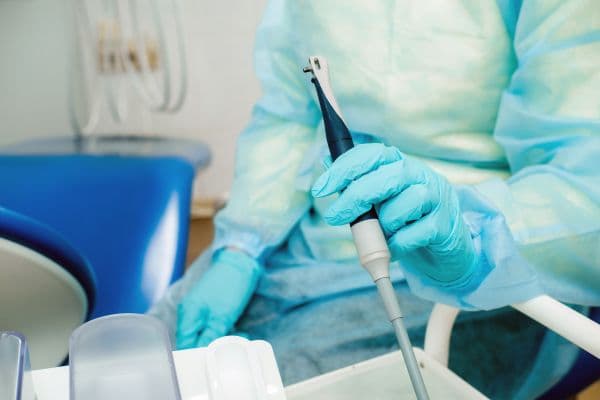
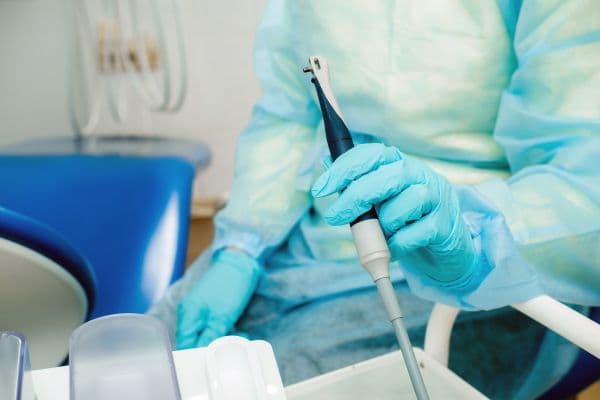
The “normal cleaning” most Hong Kong patients refer to is professional scaling.
Its main purpose is to remove:
- Plaque buildup
- Tartar above the gumline
- Surface stains and deposits
This is considered preventive care, similar to a routine health check.
Regular scaling is most suitable for patients who:
- Have tartar mainly along the gumline
- Do not have periodontal pockets
- Only experience occasional mild bleeding
- Want to maintain fresh breath and healthy gums
For most people with healthy gums, regular scaling every 6–12 months is sufficient.
🧠 The Real Problem of Gum Disease Often Lies Below the Gumline
Many people believe gum disease is simply “gum inflammation.”
Clinically, periodontal disease is a chronic bacterial infection that damages not only the gums, but also the supporting bone around the teeth.
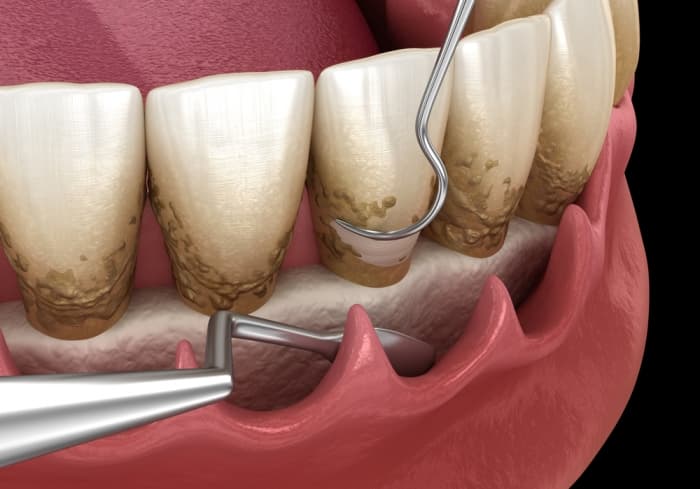
When plaque accumulates for a long time, the gums become inflamed and begin to separate from the teeth, forming:
Periodontal pockets
A periodontal pocket is like a deep bacterial space:
- Toothbrushes cannot reach it
- Mouthwash cannot flush it out
- Regular scaling may not clean it thoroughly
- Bacteria continue to grow and release toxins
This is why some patients still experience bad breath even after a standard cleaning — the source may be hidden under the gums.
✅ What Is Deep Cleaning? (Scaling and Root Planing)
Deep cleaning is usually recommended during the treatment stage of gum disease, not just prevention.
It typically includes:
- Subgingival scaling (below the gumline)
- Root planing (smoothing the root surface)
The goal is not simply “removing tartar,” but:
- Eliminating bacteria inside periodontal pockets
- Reducing infection and inflammation
- Helping the gums reattach to the tooth surface
- Preventing further bone loss
In simple terms:
- Regular scaling = maintenance and prevention
- Deep cleaning = periodontal infection treatment
🔍 Deep Cleaning vs Regular Scaling: Key Differences
1. Cleaning depth
- Regular scaling: above the gumline
- Deep cleaning: below the gumline, inside periodontal pockets
2. Who needs it?
Deep cleaning may be recommended if you have:
- Frequent gum bleeding
- Swollen gums or pus
- Persistent bad breath
- Loose-feeling teeth
- Periodontal pocket depth greater than 4mm
3. Treatment approach
- Regular scaling is usually completed in one visit
- Deep cleaning is often done in sections (quadrants), allowing the gums to heal gradually
4. Does deep cleaning hurt?
This is one of the most common concerns among Hong Kong patients 🙂 Because deep cleaning reaches below the gums, some patients may feel sensitivity or soreness.
For comfort, dentists often use local anesthesia. In most cases, the discomfort comes not from the procedure itself, but from the fact that the gums are already inflamed.
🦠 Why Deep Cleaning Can Improve Bad Breath
Many cases of stubborn bad breath come from anaerobic bacteria living inside periodontal pockets. These bacteria release volatile sulfur compounds (VSCs), producing the classic “rotten egg” or sulfur smell. Regular scaling cleans the surface, but deep cleaning removes the hidden bacterial source.
After deep cleaning, many patients notice:
- Fresher breath
- Reduced swelling
- Less bleeding when brushing
- More stable gum health
💡 Does Needing Deep Cleaning Mean Severe Gum Disease?
Not necessarily.
Gum disease progresses in stages: early, moderate, and advanced. Deep cleaning is often recommended in the early-to-moderate stage to prevent progression and avoid periodontal surgery later. In other words, it is often a sign of early intervention, not “too late.” 🙂
💰 Why Deep Cleaning Costs Vary in Hong Kong
Pricing differences depend on:
- Severity of periodontal pockets
- Number of areas treated (localized vs full mouth)
- Whether anesthesia is required
- Whether follow-up evaluations are included
- Dentist experience and clinical complexity
The best approach is not simply asking “how much,” but understanding whether your condition requires preventive scaling or therapeutic deep cleaning.
Common Misconceptions vs Dental Reality
Misconception 1: Deep cleaning is just a way to charge more
✅ Reality: Deep cleaning treats infection inside periodontal pockets that regular scaling cannot address.
Misconception 2: Cleaning creates bigger gaps between teeth
✅ Reality: Tartar was filling the space. After removal, the true gum condition becomes visible.
Misconception 3: One deep cleaning cures gum disease forever
✅ Reality: Periodontal care requires long-term hygiene, flossing, and regular maintenance visits.
If you experience recurring bleeding, persistent bad breath, or chronic gum swelling, it is best not to guess. A periodontal evaluation can clarify whether you need routine maintenance or deep cleaning treatment. Early care makes it much easier to prevent irreversible bone loss and long-term gum damage.
To review the routine scaling procedure and teeth scaling cost components, see the teeth-scaling service page.
Needing deep cleaning usually means the gums are already affected — see our periodontal treatment service for how the course and reviews are arranged.