![[Blue Light Teeth Whitening in Hong Kong] A Dental Centre’s Full Guide to Procedure, Effectiveness & Safety Tips](/_next/image?url=https%3A%2F%2Fuivazhssaweitolfbapb.supabase.co%2Fstorage%2Fv1%2Fobject%2Fpublic%2Fmedia%2F2020%2F02%2F15829583016149.jpg&w=3840&q=75&dpl=dpl_2rk7DdbCpT3xZF4aqp76ujYbqDe6)
[Blue Light Teeth Whitening in Hong Kong] A Dental Centre’s Full Guide to Procedure, Effectiveness & Safety Tips
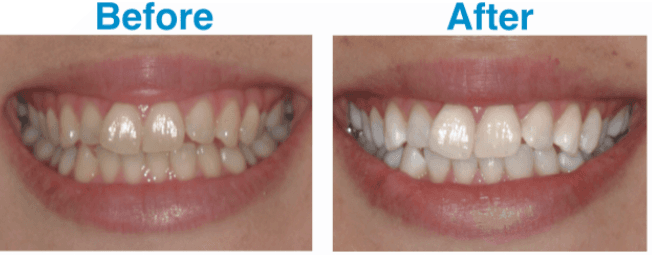
A perfect smile requires more than straight teeth — tooth colour plays an equally important role. As we age, daily habits like drinking coffee, tea, or smoking can stain our enamel, causing teeth to appear yellow or dull. Blue light teeth whitening is a professional dental treatment that uses high-intensity blue LED light to activate a whitening gel (typically hydrogen peroxide), allowing it to penetrate the tooth structure and break down stains through oxidation. Known for its speed, safety, and visible results, this method has become a popular choice in Hong Kong. In this article, we’ll walk you through how blue light teeth whitening works, who it’s for, and what to expect before, during, and after the procedure — all based on real clinical practices in Hong Kong. Where discolouration is intrinsic rather than surface staining, whitening will not shift it and dental veneers are usually the more predictable option.
Do I need to have blue light teeth whitening? Why would my teeth turn yellow?
![[Blue Light Teeth Whitening in Hong Kong] A Dental Centre’s Full Guide to Procedure,…](/_next/image?url=https%3A%2F%2Fuivazhssaweitolfbapb.supabase.co%2Fstorage%2Fv1%2Fobject%2Fpublic%2Fmedia%2F2019%2F12%2F15753482635329.jpg&w=1080&q=75)
People often have wrong impressions about teeth discolouration, thinking that only smoking or coffee drinking will cause yellowish teeth. In fact, there're many factors in aour daily lives that can affect the colour of the teeth, and therefore everyone may have a need for teeth whitening.a
Causes of Teeth Discolouration
|
Status |
Cause |
Description |
Remarks |
|
Teeth turn yellow with age |
Ageing |
Enamel wears down over time and the lower layer of dentine is exposed, making the teeth look yellow. |
Dentin is a yellowish tissue that will gradually darken its colour as it ages. |
|
Drinking of tea or coffee, smoking |
Pigmentation |
The dark pigment in tea or coffee is easily attached to the teeth and even penetrates into the enamel. Tobacco contains substances such as nicotine and tar which do not dissolve in water but accumulate on the teeth. |
Although pigmentation can be easily removed by scaling, the effect is limited and difficult to maintain for a long time. |
|
Overexposure to fluoride products |
Excessive ingestion of fluoride |
Uneven white or grey spots appear on the surface of the enamel or dentin, which are uneven pigmentations caused by the combination of fluorine and calcium, resulting in dental fluorosis. |
Excessive use of fluoride products will cause the fluoride to replace calcium ions in the teeth, forming fluorosis. |
Regardless of the cause, once enamel pigments settle deep into the tooth structure, daily brushing or scaling may no longer be enough. That’s where professional whitening — especially with blue light and peroxide technology — becomes effective.
How does blue light teeth whitening work? Restore your bright white teeth by oxidation
All of the above reasons may affect your teeth colour. What's the principle of blue light to whiten the teeth?
The principle of blue light teeth whitening
Blue light teeth whitening treatment applies high-intensity blue light as a catalyst to penetrate an appropriate amount of hydrogen peroxide (a whitening agent) into the dentin through oxidation to remove the pigment. It's generally known as a fast, safe, long-lasting and effective method of teeth whitening treatment.

Process of blue light teeth whitening: Restoring your bright white teeth step by step
Blue light teeth whitening treatment will usually go through the following 6 steps:
1. Confirming teeth colour
The whitening shade guides are used to measure your current teeth colour, to compare the colour before and after treatment.
2. Protecting the gums
Before treatment, the dentist will first use a cheek retractor to fix the patient's mouth, apply a protective agent to the gums to prevent the light and whitening agent from injuring the gums.
3. Applying whitening agent
After confirming that the gums are well protected, the dentist will apply the whitening agent on the teeth.![[Blue Light Teeth Whitening in Hong Kong] A Dental Centre’s Full Guide to Procedure,…](/_next/image?url=https%3A%2F%2Fuivazhssaweitolfbapb.supabase.co%2Fstorage%2Fv1%2Fobject%2Fpublic%2Fmedia%2F2019%2F12%2F15753485591472.jpg&w=1080&q=75)
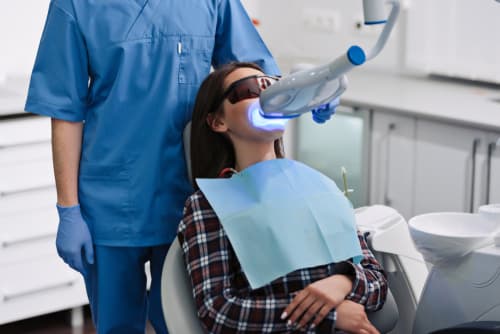
4. Exposing to the blue light
The teeth coated with the whitening agent will then expose to the blue light for 2 to 3 times. Slight soreness may be felt during the course, and the symptoms vary from person to person.
5. Cleaning after treatment
After the blue light exposure, the whitening agent and the gum protectant will be cleaned.
6. Tooth colour contrast
After all the procedures, the dentist will use the previous shade guides to compare your teeth colour before and after treatment.
How long does the whitening last?
The results of blue light whitening typically last from 6 months to 1 year, depending on your diet and oral care habits. Avoiding staining foods like coffee, tea, red wine, and tobacco, especially in the first 48 hours after treatment, can help extend the whitening effect. Your dentist may also recommend periodic touch-ups or whitening toothpaste to maintain results.
Make sure to have a good oral condition for a safe teeth whitening treatment
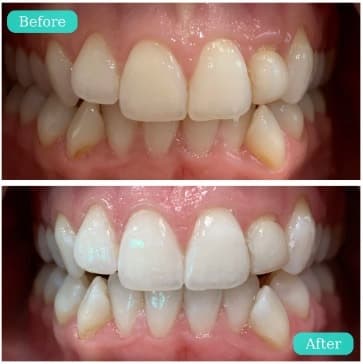
The procedure of blue light teeth whitening seems simple and fast, but before deciding to take the treatment, you need to carefully examine your physical condition and oral condition to achieve the best results.
3 conditions when blue light teeth whitening is not recommended
|
Condition |
Reason |
|
Dental caries |
If the whitening agent penetrates through the decayed tooth, it may cause damage to the dental pulp. It's recommended to treat caries and examined by professional dentist first, before taking the blue light teeth whitening treatment. |
|
During pregnancy and breastfeeding |
It's recommended not to have blue light teeth whitening for women during pregnancy or breastfeeding to avoid harm to the fetus. |
|
Sensitive Teeth |
Whitening agent and blue light can cause irritation to the teeth. For those having sensitive teeth, it's less recommended to have blue light teeth whitening treatment. |
These contraindications do not mean whitening is unsafe — they simply highlight the importance of timing and dental screening. For most healthy adults with no active decay or severe sensitivity, blue light whitening is a safe and effective aesthetic option.
Seek professional advice to have reliable and efficient blue light teeth whitening treatment
The physical and oral condition vary from person to person. It's recommended to have diagnosis and evaluation by the dentist and complete oral treatments first before having blue light teeth whitening to avoid irreversible damage to the teeth. It's crucial to have a careful assessment of your condition and advice of a professional dentist for reliable and safe blue light teeth whitening treatment. Consult a professional dentist about the details of blue light teeth whitening treatment.
To compare whitening options and what suits your teeth, see our teeth whitening service, where the dentist advises after assessing your enamel and gum condition.
#BlueLightTeethWhitening #HongKongDentist #TeethWhiteningHK #ToothColour #CosmeticDentistryHK #WhiteningTreatment #ToothStains #SmileMakeover Whitening is often combined with other cosmetic treatment options where shape as well as shade needs attention.