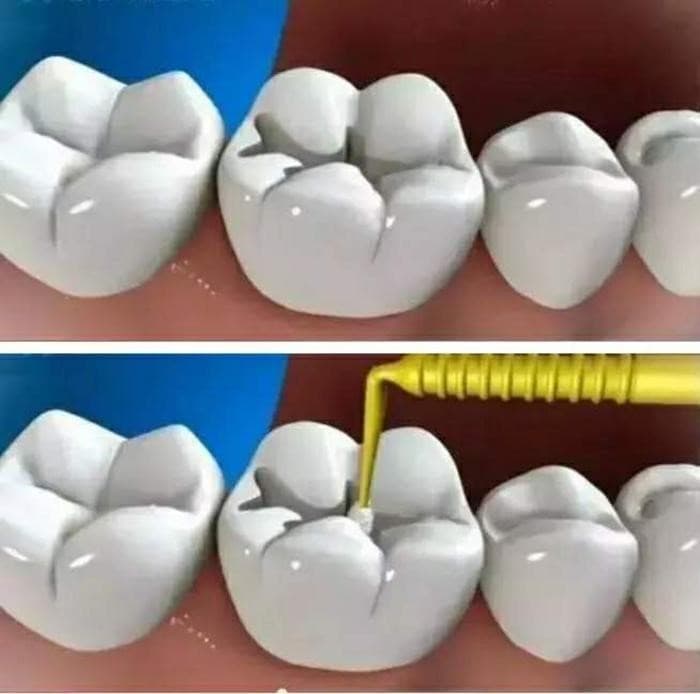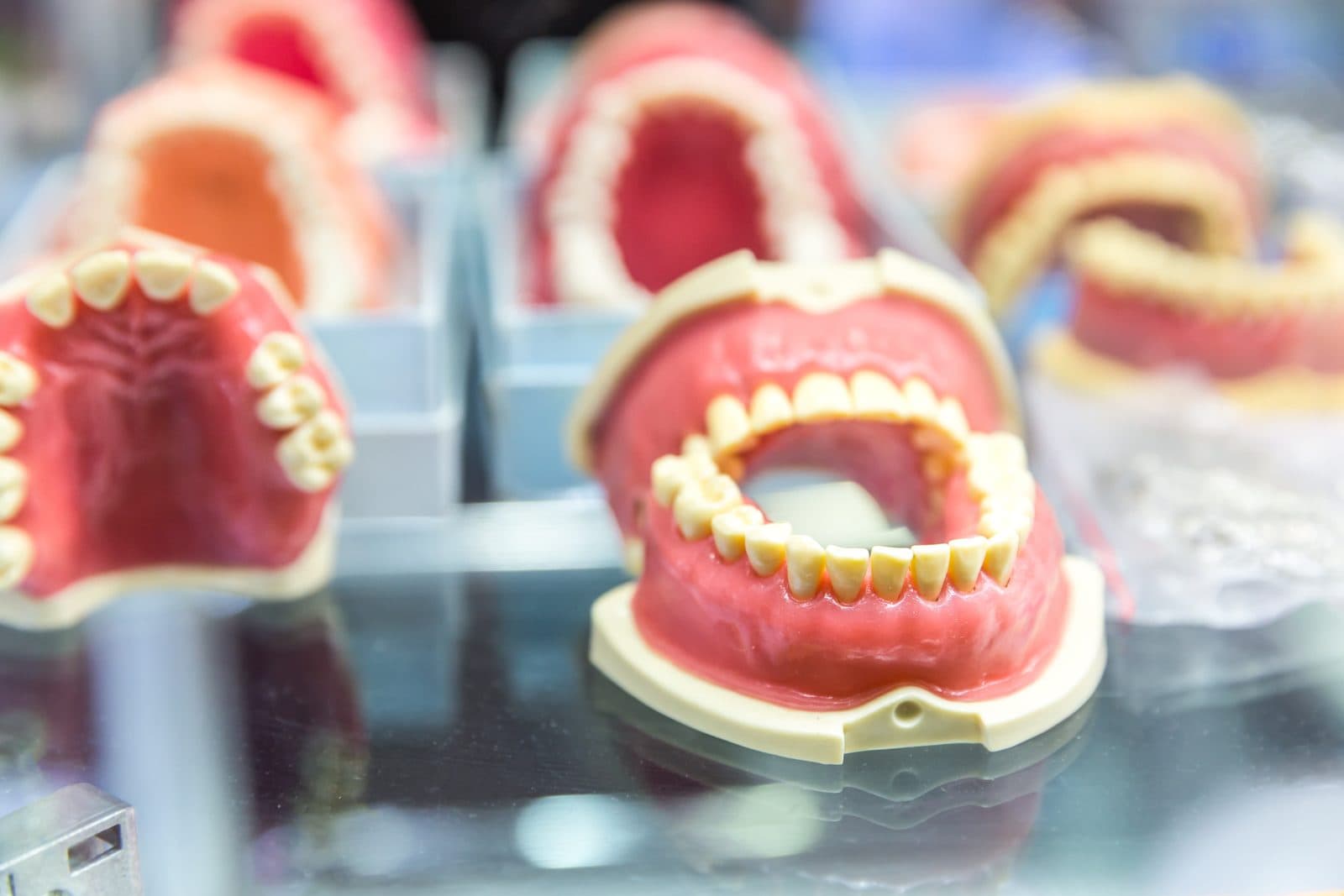

Dental crown, as the name implies, is placed on a tooth, also known as artificial crown, and is a method of restoring teeth. When the tooth is difficult to repair by dental filling or it is badly damaged due to different reasons, such as tooth decay, severe worn off, cracked tooth, and fractured tooth, etc., dentist may recommend that the patient can choose to make artificial crown with different materials. The crown restores the tooth to its normal shape, size, and function, also can make the tooth stronger or improve the way it looks. In addition, the tooth that has received root canal treatment is usually recommended to make a dental crown covering it, because the tooth is already very fragile, having crown on it is to avoid broken teeth. Where several adjacent teeth are missing, a single crown will not restore the span and bridges and dentures become the realistic options.
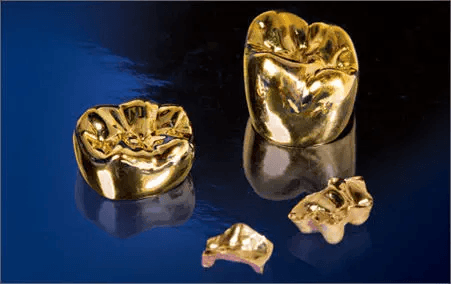
The types of dental crowns are mainly distinguished by the materials used. There are three types of dental crowns: metal crown, ceramic/porcelain-metal crown, full-ceramic crown. Metal crown is the most similar material to enamel, its features are very close to that of real teeth, and the durability is very high, they wear down quite slowly, just like the natural enamel. And gold crowns are the strongest and highly resistant comparing to other metals. Metal crowns require the least reduction of the tooth. A thin layer of metal could give enough protection and support to the tooth, less proportion of your natural tooth needs to be removed. However, because the metal crowns maintain the color of their metal, they are not suitable for anterior teeth from aesthetic concern. For posterior teeth and people with heavy bite force, who have the habit of grinding teeth and like to eat hard foods, metal crown will be more durable. By the way, the best metal is gold alloy, it is a combination of copper and other metals, and the higher the gold content, the more expensive the price. Where enough sound tooth remains, an inlay or onlay instead of a full crown preserves more of the natural structure.
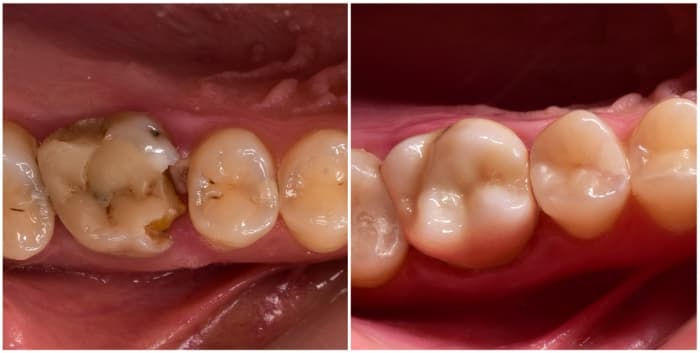
Ceramic/porcelain-metal crown is made of metal in the inner layer and ceramic in the outer layer. You can choose the color of the crown, which has a better aesthetic effect than metal crown. However, because the crown has two layers, it is thicker than metal crown, the natural tooth needs to be reduced more. On the other hand, the transparency of the inner metal layer is not good and it makes the crown easy to appear dead white, and the gum margin may appear metallic black shadows. When the bite force is too heavy, there is higher chance of the ceramic on the surface of the crown peeling or breaking.
Full-ceramic crown is having the highest likeness of appearance with natural tooth. Its inner and outer layers are both made of ceramics. The light transmittance is high, and the gum margin looks more natural. Full-ceramic crown is less in strength than metal crown. Considering on the position of the teeth, the bite force, and the effect on aesthetics, all factors determine the choice of materials. The anterior teeth have a lower bite force, but the aesthetic requirements are greater. More transparent materials such as glass ceramics can be used, but the relative strength is lower; the posterior teeth need to be stronger, so porcelain firing increases the strength to avoid the problem of ceramic peeling or breaking.
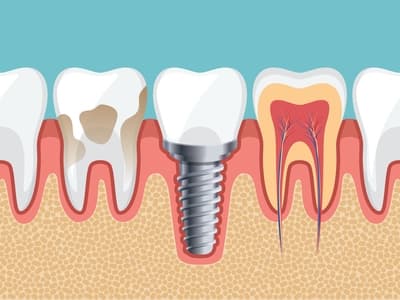
The process of making crowns depends on different clinics, different dentists, and different dental conditions. The general process is nothing more than grinding the tooth to make space for the crown, impression or scanning with 3D technology, testing the mold in the patient's mouth, and cementing the crown after confirming that there is no problem with the appearance and occlusion. Basically, the daily care and application of teeth with crowns is similar to that of natural teeth, and you can chew food as usual without special taboos. Where appearance is the main concern rather than strength, crowns and bridges in aesthetic restoration explains how the shade and shape are planned.
Crown fees: beyond material, marginal fit is what matters
Crowns generally start from HK$6,500, with metal, porcelain-fused and full-ceramic options priced differently. But a crown's long-term success often depends less on the material tier than on fabrication and cementation quality: how tightly the crown margin fits the tooth determines whether plaque can lodge, decay can restart at the edge or the gum becomes inflamed; an imprecise bite adjustment overloads the crown or the opposing tooth. We check fit at every step — preparation, impression or 3D scan, and try-in — and quote clearly after assessment.
Filling, crown or implant? It depends on whether the tooth can be saved
The three address different stages: if the tooth structure is damaged but the root is healthy, a filling or inlay may be enough (filling vs inlay vs crown); once root canal treatment is needed, a crown is the standard follow-up; only when a tooth truly cannot be saved does implant-based replacement come in (see implant cost). Keeping your own tooth is always the first option — we assess the remaining structure and X-rays to recommend the right path (restorative dental services).
#dentalcrown #ceramicmetalcrown #porcelainmetalcrown #fullceramiccrown