Dentist phobia? Dentists always have a solution.
Sedation/TMD

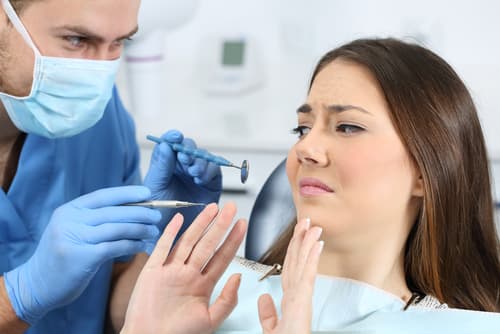
Dentist phobia? Dentists always have a solution.

Afraid of the dentist? Sedation options from laughing gas and oral sedatives to IV sedation help anxious patients complete treatment calmly and comfortably.

Many people dread going to the dentist because of a bad dental experience, and some people are nervous about the feeling of losing control of themselves when having their teeth treated by a dentist. Most dentists understand this concern and try to help the patient feel comfortable with deeper anesthesia technique, such as nitrous oxide sedation, intravenous anesthesia, or general anesthesia, allowing the patient to complete the treatment in a more relaxed or lethargic state.

Intravenous Sedation / Monitored Anesthesia (IV Sedation)

Sedatives are drugs that are often used to monitor anesthesia. Anesthesiologists provide local or sedative anesthesia to depress the central nervous system and/or reflexes, allowing the patient to relax and calm, and to go to sleep at any time. There is no memory once the procedure is over, no lengthy recovery period is required after use, and it is a very comfortable sedation option.

Benefits of using intravenous sedation for dental sedation:

•    Immediate effect: When the sedative drug is injected intravenously into the bloodstream, all tension will be relieved and worries will disappear.

•    Long lasting effect: Dentists can closely monitor IV medications from start to finish to keep patients calm throughout the procedure.

•    Safe and comfortable: allow the patient to complete the treatment in the deep sleep area without the pain of injection.

•    Can be used in multiple ways: It can be administered to patients through oral and injection routes.

•    Adjustable dosage: Dentists can monitor the patient's heartbeat, electrocardiogram, blood pressure and blood oxygen levels to ensure optimal drug dosage. The sedation and treatment program can be ended at any time if necessary.

•    Multiple treatments: Dentists can perform multiple treatments at one time when the patient is comfortable and relaxed.

•    No memory: For patients with dental anxiety, the real beauty is that they don't remember any of the procedures after they're done, and they are completely unaware of any sounds, sights, or details of the procedure.

Potential risks of receiving sedatives:

•    Delayed body protective reflexes: Monitoring anesthesia may temporarily disable neurophysiological reflexes such as the vomiting and coughing reflexes. Monitoring anesthesia requires the patient to fast for 6-8 hours and stop drinking liquid drinks including water 2 hours before. If not fully fasted, serious consequences such as aspiration of a foreign body or aspiration pneumonia may occur.

•    Affecting breathing: Sedatives depress the central nervous system and may also inhibit the muscle activity of the respiratory system, which may affect breathing, resulting in airway obstruction, hypoventilation and hypoxia.

•    Affects the cardiovascular system: Some sedatives may affect the cardiovascular system, causing instability in blood pressure and heart rate, which may lead to serious complications such as myocardial infarction and stroke.

•    Excessive sedative effect: The sedative effect is longer than expected, and the patient may still feel drowsy after the treatment ends.

Suitable patients for dental intravenous sedation:

•    Patients who need relatively complex or multiple treatments for the full mouth

•    Children

•    Dentist phobia

There are always other options.

Dentists do not force anxious patients to perform any dental exams that they are not comfortable with, and when needed, they may recommend patients to receive some dental sedation (not necessarily anesthesia), which specialist anesthesiologists and dentists coordinate with each other depending on the treatment condition.
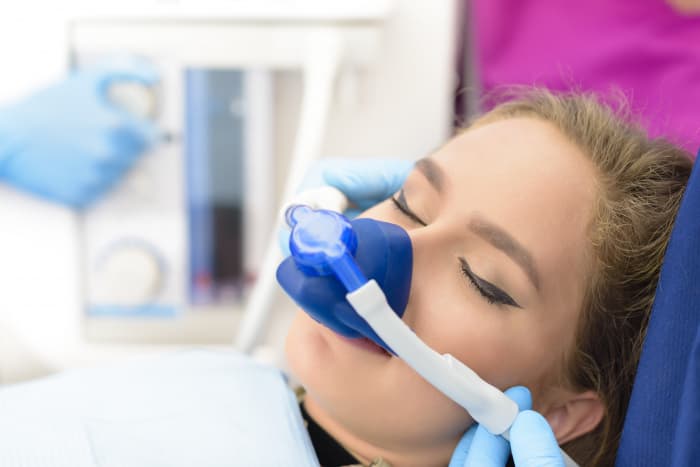
1.    Nitrous oxide or "laughing gas"

Nitrous oxide, commonly known as "laughing gas", is a safe and effective sedative, and nitrous oxide has been mainly used for sedative purposes in the dental industry for many years. It is an inhalable gas that is fragrant, non-irritating, colorless, and safe.
 
Breathing normally through the nose, the patient should begin to feel the effects of the gas within a few minutes, such as dizziness, tingling in the arms and legs, or heaviness in the extremities. In the end, the patient will feel calm and comfortable, and relax to let the dental procedure go smoothly. After taking off the mask, the effects of nitrous oxide disappear quickly, and the patient can go home safely.


Monitored anaesthesia care

Benefits of using nitrous oxide for sedation:

•    The depth of sedation can be changed at any time, increasing or decreasing the level of sedation.

•    There will be no sequelae, such as temporary amnesia like a "hangover".

•    Inhalation of nitrous oxide is relatively safe and has no side effects on the heart and lungs.

•    Inhalation of nitrous oxide can effectively reduce nausea.

•    Reach the brain within 20 seconds for a quick effect. Relaxation and pain relief for patients in as little as 2-3 minutes.

Is laughing gas sedative safe?

As with any surgical procedure, nitrous oxide sedation carries risks. For competent and experienced dentists, nitrous oxide is generally considered the safest method of relaxation with very limited side effects.

The most common side effect is nausea, which is easily controlled by reducing the percentage of sedatives in the gas mixture. Most of the risks are related to improper use of gases, such as hypoxia or complications in patients who are not suitable for sedative dentistry.

2.    Oral sedatives

Oral sedatives are suitable for people who experience high levels of anxiety when visiting the dentist. The related drugs that are most commonly used in dentistry for dentist phobia belong to the "benzodiazepine" class of drugs, and they are used as sedatives and anxiolytics, by combining and reducing "fear" in the brain. 

Higher doses act as sedatives and induce sleep in most cases, while lower doses also reduce anxiety without sedation. Some drugs are highly targeted to areas of the brain that focus on sleep, while others target fear centers in the brain.

Benefits of using oral sedatives for dental sedation

•    Allow the patient to relax so that the treatment can be completed.

•    Helps the patient to remain stable for a long time so that the dentist can complete the time-consuming treatment.

•    Multiple treatments or full mouth restorations can be performed at the same time during one consultation.

•    Reduce discomfort after treatment.

However, the absorption and function of oral sedatives have different effects on each patient, and the effect of oral sedatives varies from person to person compared to other sedation methods.

3.    General anesthesia

Anesthesia is the use of drugs to put a patient to sleep so that dental procedures can be performed comfortably and easily. When all other options, such as nitrous oxide, oral sedation, and intravenous sedation have failed, general anesthesia will provide a pain-free, anxiety-free, and even memory-free dental experience, making even the most frightening, anxious dental experiences calm and relaxing.

However, due to the relatively high risk of anesthesia compared with other methods, it is generally only used for very long-term operations or when there are other special reasons to consider its use in dental treatment.
 
If you're struggling with dental anxiety and it's preventing you from getting the dental care you need, talk to your trusted family dentist for more information on dental sedation.

Article Info

First published: 24 July 2021

Last reviewed: July 2026

Share

FAQ

Frequently Asked Questions

  • How much does dental sedation cost?

    The cost of dental sedation depends on the type of sedation used and the complexity of your treatment. IV sedation typically starts from HK$3,000, though the final price varies based on procedure length and monitoring requirements. We provide a personalised quote after assessing your needs — WhatsApp us to arrange a consultation.

  • What's the difference between nitrous oxide and IV sedation?

    Nitrous oxide (laughing gas) is a mild sedative you inhale through a mask — you stay awake and aware but relaxed. IV sedation is deeper, administered through a vein, and puts you in a sleep-like state with no memory of the procedure. Your dentist will recommend the option that suits your anxiety level and treatment complexity.

  • Is IV sedation safe for dental treatment?

    IV sedation is generally safe when administered by a qualified anaesthesiologist who monitors your vital signs throughout. However, it does carry risks such as delayed reflexes, breathing changes, and cardiovascular effects. You must fast for 6–8 hours beforehand. A thorough health assessment is essential before proceeding.

  • How long does it take to recover after IV sedation?

    Most patients feel drowsy for a few hours after IV sedation ends. You'll need someone to accompany you home, and you shouldn't drive or operate machinery for the rest of the day. Full alertness usually returns within 24 hours, though this varies by individual.

  • Can children receive dental sedation?

    Yes, children who are anxious or need complex treatment can receive dental sedation. Nitrous oxide is often used for mild cases, while IV sedation may be recommended for longer procedures. Our team assesses each child individually to determine the safest and most appropriate option.

  • Will I remember anything during IV sedation?

    No, one of the key benefits of IV sedation is that you won't remember the procedure afterwards. You'll be in a deep sleep-like state and have no recollection of sounds, sights, or any details of the treatment — ideal for patients with severe dental anxiety.

Still wondering about something? Our team is happy to chat.

Reminder: You have the right to choose a Hong Kong dentist based on your individual needs. We recommend referring to the list of registered dentists published on the official website of the Dental Council of Hong Kong to make a choice best suited to your personal needs. The above content is intended to give you a brief introduction to the nature and effects of the relevant dental procedures, so that you can make informed decisions when choosing a dentist and related treatment options. All treatments have advantages and disadvantages — the key is that you must have a basic understanding of different treatments and procedures and be aware of the associated risks. The above content does not represent the professional opinion or views of any dentist or dental institution. For the sake of your health, please consult your family dentist for formal medical advice.

This article is compiled by the Public Education Team of Home Dental and has been reviewed and approved by the Content Review Committee of Home Dental. The Committee comprises members of our Board of Directors, legal advisors, and relevant professionals, and is responsible for vetting all externally published health education content to ensure it is professional, accurate, relevant to the local context, and regularly updated to meet Hong Kong dental service standards.

This content is originally produced by Home Dental, all rights reserved. Unauthorized reproduction, modification, or publication is prohibited. Violators will bear legal responsibility. For citation or partnership inquiries, please contact our center for written permission.

Complete Guide to Monitored Dental Sedation in Hong Kong

Want to know more about Sedation/TMD?

31 general & specialist dentists · Licensed daycare procedure centre