Dental health education article | Last updated: July 2026
Introduction: there is no single "best" Tsuen Wan dentist — but there is a standard method
If you search for a recommended dentist in Tsuen Wan, you will find plenty of advertising, forum threads and word-of-mouth opinions. The problem: everyone's teeth, budget, schedule and level of dental anxiety are different, so a clinic that suits your friend may not suit you.
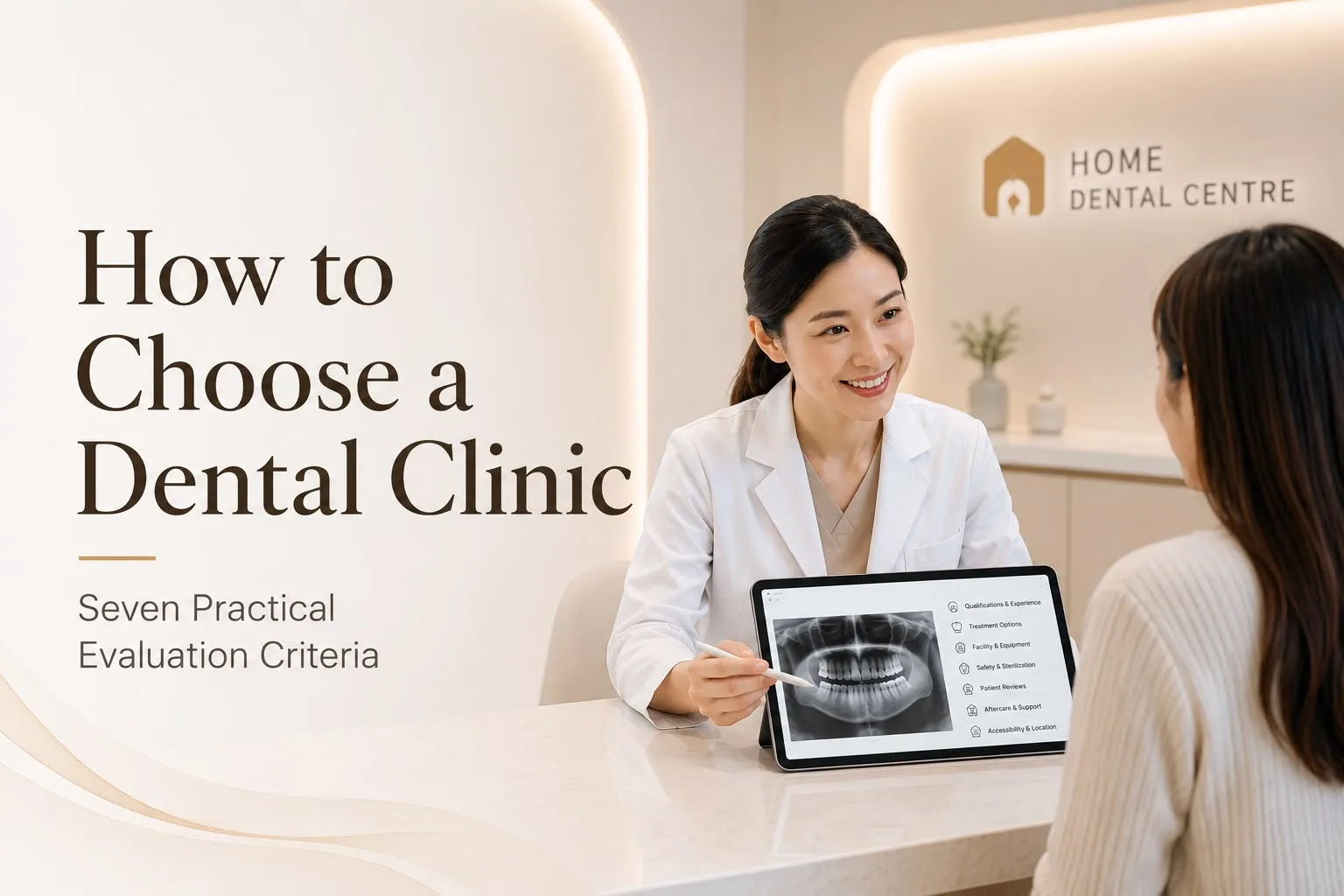
Rather than chasing a single answer, it is more useful to learn a set of criteria you can verify yourself. The seven standards below apply to comparing any dental clinic in Hong Kong, and each comes with a way to check it for yourself.
Standard 1: Licensing and facilities
Every practising dentist in Hong Kong must be registered with the Dental Council of Hong Kong, whose register is publicly searchable. At clinic level, if your treatment may involve sedation or more complex surgery, check whether the facility operates a licensed Day Procedure Centre (DPC) regulated by the Department of Health. A licensed DPC must meet statutory standards for fire safety, ventilation, equipment, resuscitation facilities and staffing — comparable oversight to day-surgery facilities in private hospitals. Under Hong Kong regulation, moderate-to-deep sedation must take place in a licensed Day Procedure Centre or hospital facility; an ordinary dental clinic is not required to hold this licence.
How to verify: simply ask the clinic, "Are you a licensed Day Procedure Centre?" A licensed facility can show its licence details.
Standard 2: Make-up of the dental team
A clinic run by a single general dentist is perfectly adequate for check-ups and fillings. But with complex cases — impacted wisdom teeth, root canal complications, periodontal surgery, or managing an anxious child — you may need external specialist referrals and end up coordinating between providers yourself. A clinic with resident dentists across several fields can consult and follow up within one team.
How to verify: read the clinic's dentist list and look for fields beyond general dentistry — paediatric dentistry, oral and maxillofacial surgery, orthodontics, endodontics and periodontics.
Standard 3: Emergency arrangements
Toothache does not pick a convenient day. With sudden pain, a chipped tooth, a lost crown or an inflamed wisdom tooth, what matters most is being seen the same day. Ask in advance: does the clinic reserve daily emergency slots? Does it open on Saturdays, Sundays and public holidays? How quickly can an urgent case be arranged?
How to verify: try contacting the clinic on a holiday or outside office hours and see how fast it responds and whether a same-day visit is possible.
Standard 4: Fee-transparency practices
Most fee disputes come from finding out the price only after treatment has started. The more reliable practice is assessment first, quote up front: the dentist examines you (with X-rays where needed), then provides a written treatment plan and itemised fee list covering each stage, and the decision to proceed rests with you.
How to verify: ask, "Are itemised fees explained after assessment?" and "If there is more than one viable plan, will you set out the pros, cons and cost differences of each?"
Standard 5: Anaesthesia and sedation options
A typical dental clinic offers local anaesthesia (an anaesthetic injection). If you or a family member is very anxious, has a sensitive gag reflex, has special needs, or needs several treatments completed in one visit, find out whether sedation monitored throughout by anaesthesia professionals is available — and, where general anaesthesia is genuinely required, how the referral works: are you handed off, or does the original team continue your post-operative care? Suitability for sedation is always a matter for the dentist's assessment.
How to verify: ask, "Who monitors vital signs during sedation?" and "If general anaesthesia is needed, who arranges it and who follows up?"
Standard 6: Holiday hours and booking convenience
For working adults and families, whether a clinic opens on Sundays and public holidays directly affects whether you can keep up regular visits. Booking channels matter too: if a toothache strikes late at night, or you need to reschedule on a holiday, can you message the clinic any time?
How to verify: check the published opening hours (note the public-holidays line), and try booking by WhatsApp or phone to gauge the response.
Standard 7: Communication and informed consent
A good dentist explains as well as treats. Before any course of treatment begins, you should understand: why is this treatment needed? What are the benefits and risks? Are there viable alternatives? How are fees calculated? Treatment should only start once you fully understand and agree — and the same applies when a plan changes mid-course.
How to verify: your first consultation is the most direct test — notice whether the dentist gives you time to ask questions and whether the explanations actually make sense to you.
To sum up: verify each standard yourself
Whichever clinic you end up considering, each of the seven standards above can be checked yourself: search the Dental Council register, ask the clinic directly about its licence and sedation-monitoring arrangements, confirm that itemised fees are explained after assessment, note the published public-holiday hours, and use your first consultation to gauge the communication. Understanding these arrangements before treatment begins makes for a far more confident decision.
A final word
"Which is best" is always relative: the right clinic for you is the one that performs well on the standards you care about. We hope these seven standards make your next choice of dentist a little less guesswork and a little more certainty. This article provides general information only; actual treatment plans must be determined by a dentist through clinical examination.
Whichever clinic you choose, the first step is a full examination and quotation. To see what general dental check-ups and treatment include, refer to our general dental services.