How is the dental implant surgery performed?
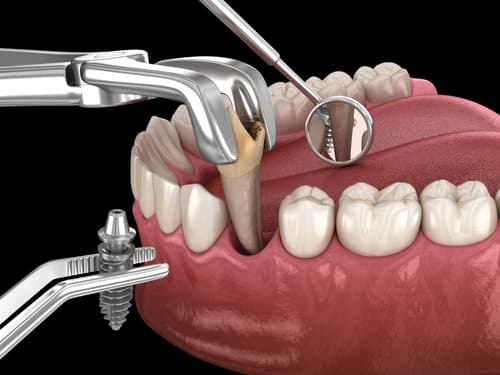
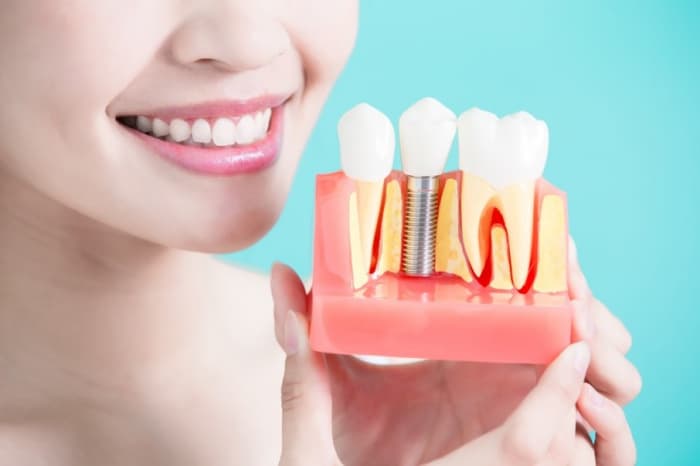
Dental implant surgery involves the placement of a fixed artificial implant in the area where a tooth is missing. The implant is typically made of titanium, as titanium integrates well with bone tissue. This method eliminates the need to grind adjacent teeth or construct bridges. The appearance and feel closely resemble natural teeth.
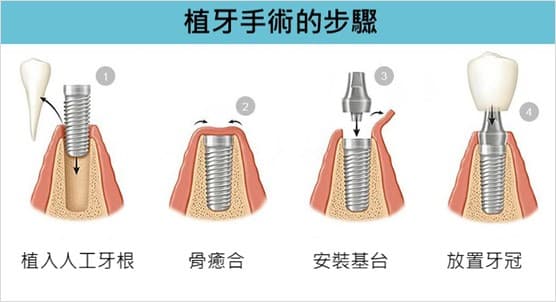
The most suitable type of dental implant depends on the quality of your jawbone. The dental implant procedure generally includes the following four steps:
-
Incision and Implant Placement: The dentist cuts the gum and places the implant into the jawbone.
-
Waiting for Healing: A waiting period of several months is necessary for the implant to fuse with the jawbone, becoming exceptionally stable.
-
Attaching the Abutment: After the jawbone has healed, an abutment is attached to the implant.
-
Placement of the Crown: A dental crown is placed on the abutment, completing the restoration.
It's important to note that these steps may vary based on individual cases, and the entire process may take several months to complete. Additionally, thorough assessment and planning are conducted before the surgery to ensure the success of the dental implant.
Counting down the three major dental implant methods!
The "Single-stage" dental implant surgery is the most common approach. Today, there are also choices like "Two-stage" and "Immediate" for clinically suitable conditions. In Hong Kong, dentists rely on experience and professional knowledge to provide patients with advice on the most suitable dental implant surgery options based on individual circumstances. Which approach is possible depends on available bone, and sinus lift surgery is what makes the upper molars treatable.
- Single-stage Dental Implant Surgery
A small incision is made in the gum for implantation, and a longer implant is usually used. After the gum tissue is sutured, the implant head protrudes above the gum, avoiding the need for further surgery to cut the gum when placing the dental crown.
After 6-8 weeks of healing, the dentist can place the dental crown, completing the use of the new tooth.
- Two-stage Dental Implant Surgery
The two-stage dental implant is more suitable for patients with less than ideal jawbone conditions, requiring a longer fusion time for implant stability.
The first stage involves implanting the implant into the jawbone. Unlike the single-stage dental implant mentioned above, the dentist sutures the cut gum, burying the implant deep in the gum, allowing better and more stable fusion with the bone. During the healing process, a temporary denture can be used to replace the missing tooth.
After 4-6 months of healing and fusion of the implant with the bone, the second stage can proceed. Since the implant was buried deep in the gum previously, the dentist will cut the gum again, locate the implant, and install the abutment and dental crown.
After the two-stage surgery, the new tooth is successfully implanted.
- Immediate Dental Implant Surgery
The aforementioned single-stage and two-stage dental implant surgeries involve separating the extraction and implantation procedures, allowing sufficient time for gum recovery after tooth extraction before implant surgery.
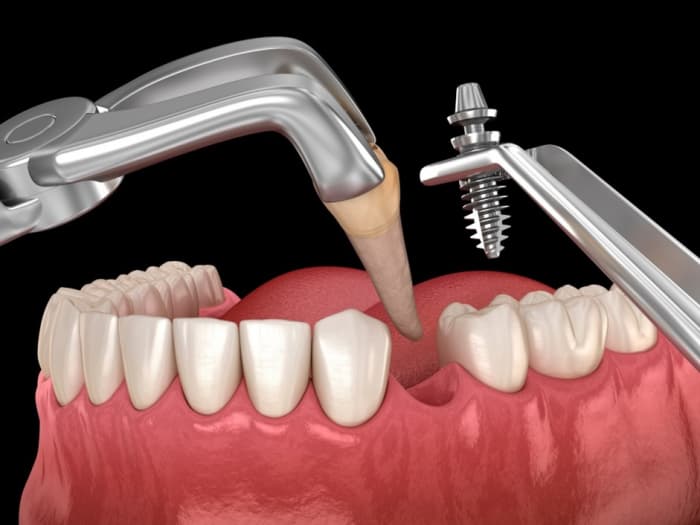
However, for some suitable cases, dentists may recommend an "Immediate Load" approach, where the artificial implant is immediately placed after tooth extraction, followed by waiting for bone healing.
This method is attractive to patients busy with work or those finding it challenging to make multiple follow-up appointments, as it compresses tooth extraction and implantation into the same day, effectively shortening the overall treatment time. It is suitable for single-tooth or full-arch extraction cases and allows for immediate use of temporary dentures. Since the implant needs to firmly attach to the bone, patients must have a sufficient quantity and relatively high density of bone tissue to be suitable for immediate dental implant surgery. For a worked example of the full-arch approach, a full-arch All-on-4 case follows one patient from failing teeth to fixed teeth.
Can you accept the cost of "immediate placement"?
After the artificial implant is immediately placed, it cannot bear too much chewing force, so dietary control is needed for about 3-6 months. If the patient does not want to control their diet, this method may not be suitable. Failure to adhere to dietary habits or applying excessive force to the implanted teeth may be detrimental to health, and premature chewing of hard foods may cause the implants to loosen.
Failure to adhere to dietary habits or applying excessive force to the implants may lead to loosening, extending the overall treatment time. Whichever method is used, how implants hold up after ten years depends more on maintenance than on the original technique.
The "immediate placement" approach requires comprehensive coordination, such as maintaining good oral hygiene, avoiding smoking, refraining from taking prescription drugs, and not exerting excessive force on the teeth. These are challenging-to-control factors but are crucial in determining the success or failure of the "immediate placement" dental implant procedure.
To make an informed decision, it is essential to understand the details of the treatment. Patients should consider various factors based on their actual situation and needs when choosing dental implants.
If you have any questions, it is advisable to consult with a trusted dental implant specialist.
Whether a one-stage, two-stage or immediate approach is used is recommended by a dentist based on jaw bone quality and the individual case. To see how implant assessment and treatment are arranged, refer to our dental implant service.