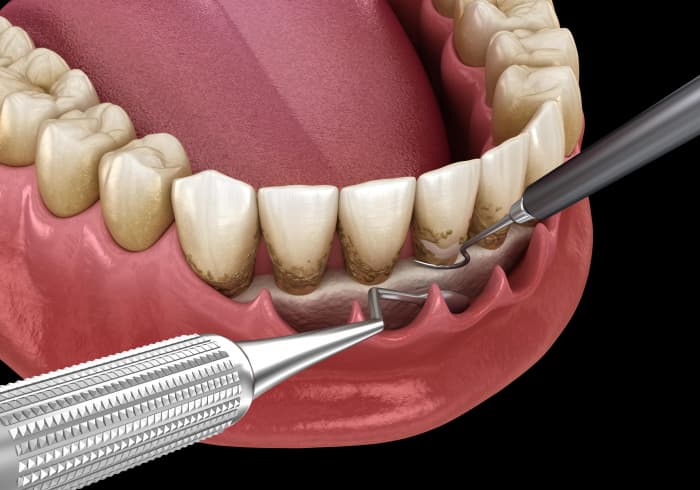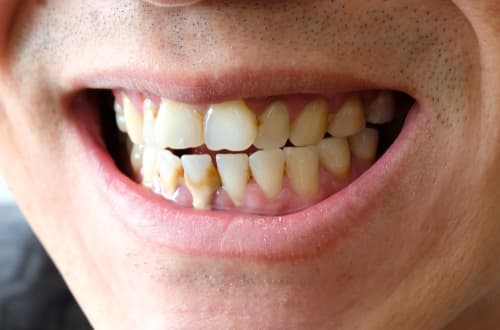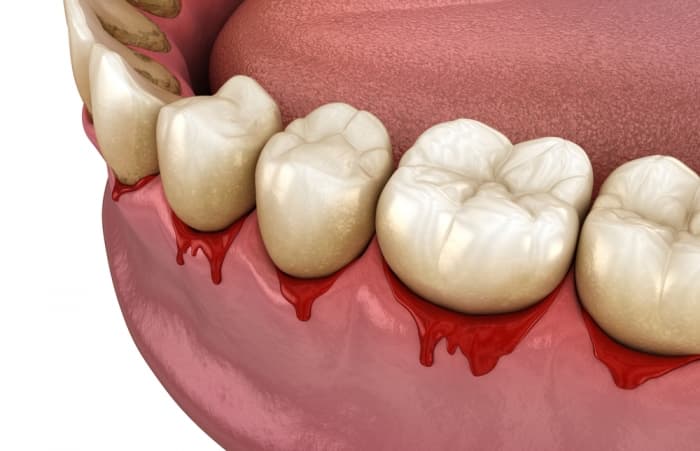
For patients with moderate to severe periodontal disease, or after deep root debridement, there are still deep periodontal pockets of more than 5 mm and accompanied by bleeding gums, they should consider another way to treat periodontal disease. When the deep part of the periodontal pocket cannot be completely removed by mean of root debridement, open-flap debridement is required. This operation is the most common periodontal surgery. After turning over the gum under local anesthesia, the calculus and inflamed tissue on the surface of the tooth root are more thoroughly removed under the condition of direct vision, and then the wound is sutured. Periodontal surgery results in better access to furcations, complex root surfaces, and infrabony pockets (those apical to the crest of bone, surrounded by bone on one or more sides), areas that are the most difficult to treat by scaling and root planing.
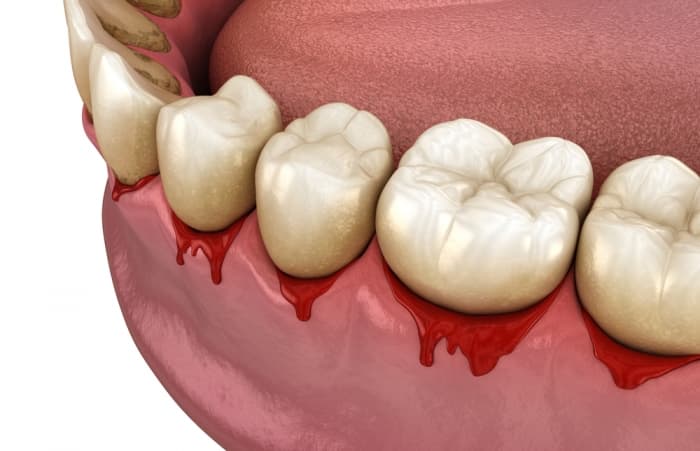
If clinical conditions allow, artificial bone material and/or regeneration membranes and other biological materials can be implanted in the part of the bone defect when the gum is opened, thereby inducing the regeneration of periodontal cells, repairing the previously damaged alveolar bone, and restore the function of teeth. This kind of surgery is called regeneration surgery. The purpose of the surgery is to promote the regeneration of alveolar bone. Compared with only performing debridement, a better treatment result can usually be obtained. However, it should be noted that not all bone defects can be repaired. Whether the shape of the bone defect is properly placed with regenerative materials is a factor that affects the possibility and effect of regenerative surgery.
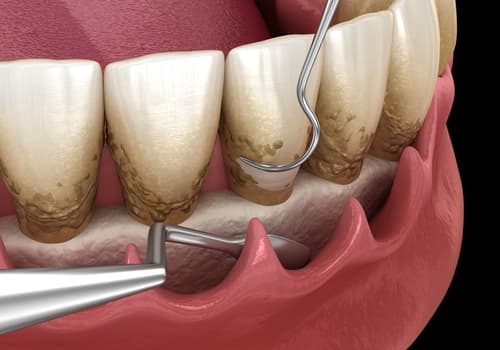
However, if the bone around the teeth has been severely damaged and the periodontal tissue has been lost, there is no guarantee that those teeth that have serious problems will never fall out after the periodontal treatment is completed. Sometimes, the doctor may suggest that the patient remove the affected tooth in order to avoid further damage to the surrounding tissues. Considering the success rate of the operation and the predicted lifespan of the tooth, tooth removal may be a more recommended option.
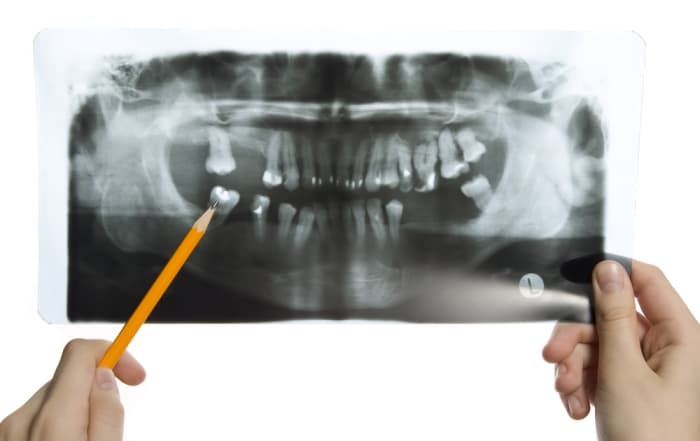
When the treatment is completed, the doctor will determine whether the patient can enter the maintenance phrase. Depending on the condition of each patient, the doctor will set the time for the patient's follow-up. The follow-up appointment is usually within three months after the completion of the treatment. After the condition is stable, the follow-up may be changed to every six months or one year. And when the periodontal health is satisfactory, if the patient wants to repair the appearance of the gum, the doctor can then evaluate the possibility of gum repair.