Lily has fine facial feature but is always smiling shyly avoid showing her teeth. She thinks that her smile is not pretty, as lots of gum would be showed when she smiles. Also, her teeth look shorter than normal teeth. In clinical terms, it is called excessive gingival display. If really concern about this appearance, can consider doing ‘Crown Lengthening’ to correct the proportion of gum and teeth.
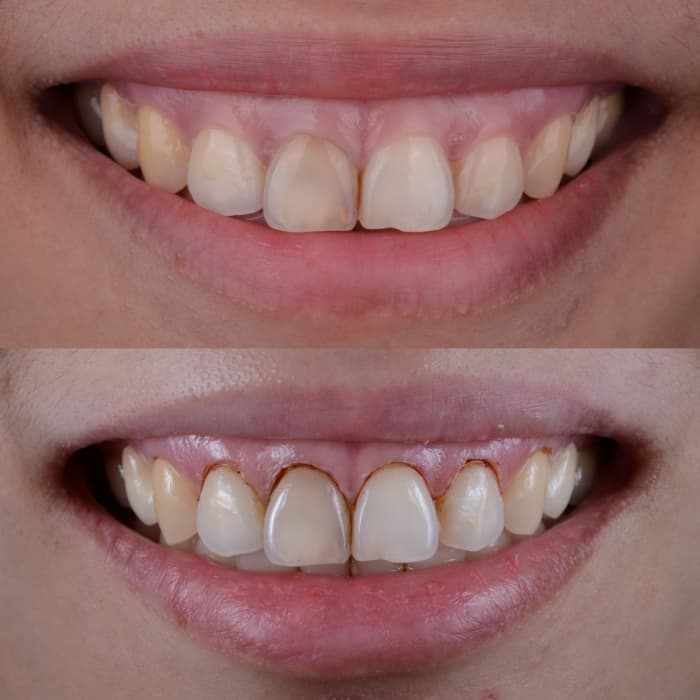
Crown lengthening is a procedure to increase the length of the crown. The dentist will have examination of the patient’s oral condition, and at the same time, to decide how many teeth need to be operated. The purpose is to remove excessive gingival and bone to increase the length of the teeth. After surgery, the gums will be shortened, and more teeth surfaces will be exposed, which can improve the appearance when smiling. The traditional surgical method is performed with a scalpel or electric knife, and some doctors tend to use laser technology to cut the gums to reduce bleeding and swelling after surgery.
In addition to aesthetic factors, there are other situations that require crown lengthening. For example, teeth are broken due to accidents such as falls or impacts. These people need to make dental crowns for the teeth to restore normal function of teeth and appearance. However, when the tooth is damaged too deeply and it breaks under the gums, the tooth structure cannot well support the crown. At this time, it is necessary to perform crown lengthening to expose healthy tooth structures, so that the edges of the crown can be fitted to the tooth margin.
Another example is to deal with the caries that happens under the gum. It is difficult for the dentist to completely remove the caries without being affected by saliva and blood near the gum margin. The filling is not easy to be applied to the tooth surface, which increases the risk of inflammation and tooth decay in the future. In fact, whether it is a crown or a filling, it must be away from the bone about two to three millimeters (biological width) to coexist peacefully with the gums and bones without causing long-term inflammation of the gums in the future. Therefore, patients need to make up for the above situation with crown lengthening.
However, if the tooth is damaged or the tooth breaks too deep under the gum, it will increase the difficulty of the treatment. It may be necessary to perform periodontal surgery and reshape the alveolar bone before crown lengthening. If you do not know whether you are suitable for crown lengthening, you should discuss the details with the dentist before making decision.
#crownlengthening #periodontalsurgery #reshapealveolarbone