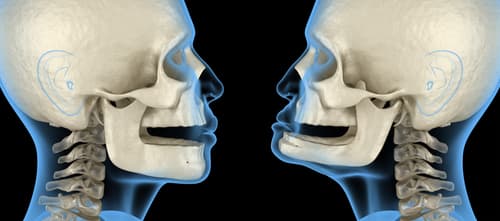
Amy mustered up the courage to see a dentist today, not for an ordinary dental examination, "Doctor, I have seen many dentists, and they have told me that my case cannot be done with orthodontics only, as surgery needs to be done at the same time to achieve better results. After struggling for years, I feel it is time to make up my mind to make some radical changes for myself. I know the process takes a long time, can you tell me how it actually works?”
Can braces alone solve the problem?
Some patients who need orthodontics are just like Amy. They first make an appointment with a general dentist/orthodontic specialist for orthodontic evaluation. When the tell them braces alone could not achieve the desired effect, and jawbone surgery would be needed to solve the existing problem, the news often caught them off guard, because this type of jawbone revision/orthognathic surgery usually involves much more time, risks and costs than normal orthodontic treatment.
When is orthognathic surgery (jaw surgery) required?
The more common problems that require surgical treatment include:
- improper bite due to bone structure
- protruding, receding or asymmetrical jawline
- gummy smile
- Severe incisor opening affects eating
How to perform jaw correction surgery with orthodontics?
Generally, when the attending dentist or orthodontist decides that surgery is needed to deal with the problem, they will arrange the patient to meet with a specialist in oral and maxillofacial surgery with relevant surgical experience.
A specialist in oral and maxillofacial surgery will conduct a detailed examination and diagnosis. If necessary, they will make a joint assessment with the orthodontist to formulate a treatment plan to maximize the benefit to the patient.
For example, how long should orthodontics take before surgery? Oral and maxillofacial surgeons need to know how the orthodontists are going to cooperate in moving the teeth to successfully preserve space and make the required corrections to ensure an ideal occlusal function after correction? How long will it take to fine-tune the bite after correction?
After judging these conditions, the oral and maxillofacial surgeon will explain the procedure and the scope of the operation to the patient. To achieve the facial shape commonly known as the golden ratio, should the surgery treat one or two jaws? This will depend on what the patient wants to improve or whether the above-mentioned congenital jawbone problem is involved.
In addition to a series of data collection and examinations, including full mouth X-rays, 3D computed tomography scans, oral impressions, etc., according to individual oral conditions, patients may also need to complete other adjuvant treatments, such as dental fillings, tooth cleaning or tooth extraction before receiving the formal orthodontic treatment.
Orthodontics first, surgery later
Before jawbone surgery, it usually takes nine months to a year and a half to receive orthodontic treatment. The main purpose is to make the teeth more aligned and prepare for the subsequent surgery. When the teeth are moved to the ideal position and aligned relatively neatly, the oral and maxillofacial surgeon will update all records, and then use these materials and 3D models to do a simulated surgery assessment and use a surgical guide (surgical guide / wafer) to raise the surgery accuracy rate.
Undergo a preoperative anesthesia assessment
Next, the patient needs to see an anesthesiologist for a health assessment, as jaw surgery is usually performed in a hospital under general anesthesia. An anesthesiologist will assess whether the patient has any chronic medical conditions to understand whether there is anything that may increase the risk of anesthesia. If the evaluation result is all normal, the patient will need a simple blood test before admission.
Precautions after jaw surgery
Depending on the scope of correction, jawbone surgery generally takes about 4 to 6 hours. After the operation, the patient generally needs to stay in the hospital for one to two days, and the doctor will evaluate the patient's postoperative condition.
Diet will become slightly inconvenient in the first few days after surgery, requiring nutrient fluids as the main source of nutrition. After the operation, the swelling will be more serious. It is necessary to apply ice to the face frequently. Normally, the patient will feel better day by day, and the swelling will gradually disappear.
In general, the entire orthodontic treatment with jawbone surgery takes about three to four years. Patients need to have adequate psychological preparation and adhere to the treatment plan to achieve ideal results.
If in any doubt, please consult your trusted family dentist.