Root Canal Failure in Hong Kong: Complete Guide to Re-RCT and Apicoectomy
Root canal treatment (commonly known in Hong Kong as "root canal treatment") is a procedure used to treat infections in the dental pulp. It is one of the most important techniques in dentistry for preserving natural teeth. While many Hong Kong patients use the term “root canal treatment” casually to refer to the procedure, the process itself is complex and precise — it’s far more than simply removing a nerve. This article is based on actual clinical practices in Hong Kong and aims to explain primary root canal treatments, retreatment (Re-RCT), and apical surgery (apicoectomy), so that you can make informed choices about your dental care.
Root canal therapy, or "root canal treatment," is typically used for teeth affected by bacterial infection in the root. It is designed to preserve the natural tooth. Generally, after root canal treatment, the affected tooth becomes non-vital (nerve removed), and no longer feels pain. Root canal treatment has a high success rate overall, but there are still some cases in which the treatment may fail.
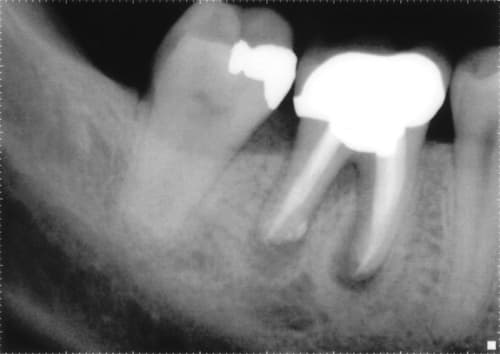
Illustration: Dental X-ray image of a tooth that has undergone root canal treatment, showing the crown restoration and root canal filling. The lower right molar shows a possible periapical radiolucency, indicating potential reinfection.
Causes of Root Canal Treatment Failure
If the tooth continues to hurt, develops a gum boil, shows signs of persistent infection, or exhibits a dark area near the root tip on an X-ray some time after treatment, it may be a sign that the root canal treatment has failed.
Common causes of root canal failure include:
-
Incomplete cleaning of the root canal, allowing bacteria to remain and cause reinfection.
-
Missed lateral or accessory canals or complex root anatomy.
-
Poor sealing of the canal filling, allowing bacteria to re-enter.
-
Delay in crown placement after treatment, leading to reinfection.
-
Tooth fracture or cracks that allow bacteria to invade.
-
Poor oral hygiene or habits such as chewing hard foods or consuming sugary snacks, which can reintroduce bacteria.
Failure may also occur if the patient does not return for follow-up checks, or if the crown (cap) was poorly constructed, leading to microleakage. In Hong Kong, dentists generally recommend that a crown be placed within a few weeks after root canal treatment to seal and protect the tooth from reinfection or structural damage.
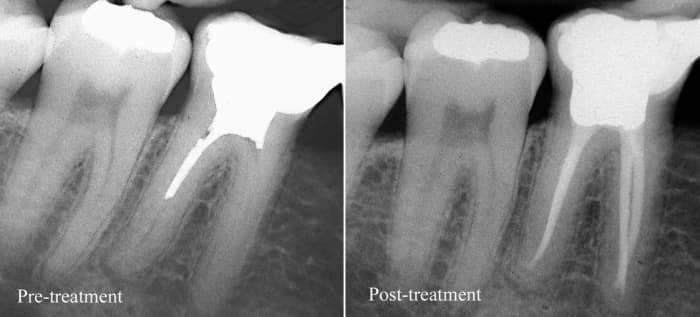
Retreatment: What If Root Canal Treatment Fails?
If a tooth that previously had root canal therapy becomes symptomatic again, your dentist may recommend root canal retreatment (Re-RCT). Bacteria in previously failed root canals are often more resistant and harder to eliminate, so the success rate for retreatment is slightly lower than for the initial procedure. Retreatment is also more technically complex, and is typically performed by an endodontist using a microscope and advanced instruments.
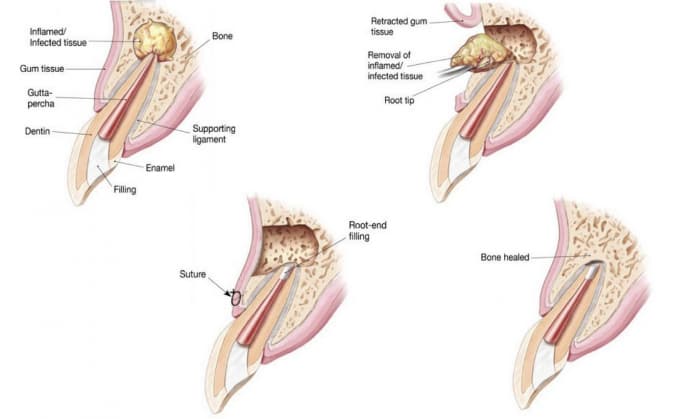
In some cases, root canals may be severely curved or have additional lateral branches, making them difficult to navigate. Files used during treatment may fracture and remain inside the canal. If the canal has been thoroughly disinfected, the remaining instrument can sometimes be considered sterile and safely left in place. However, if infection or inflammation arises at the root tip due to retained instrument fragments or unresolved bacteria, apicoectomy may be considered — a surgical procedure to remove the infected tip and surrounding tissue.
It's worth noting that Re-RCT often deals with cases involving highly resistant bacteria or complex root structures, such as curved canals, multiple roots, or calcification. These treatments are usually carried out with magnification and advanced imaging (like 3D CBCT) to increase precision and success rates.
Should You Just Extract the Tooth?
Some people may consider tooth extraction immediately upon experiencing pain. However, if the tooth is assessed to be restorable, every effort should be made to preserve it. Whether through primary root canal treatment, retreatment, or apicoectomy, the goal is always to preserve the natural tooth whenever possible.
Of course, every patient’s situation is different. The decision to save or extract a tooth should be based on clinical findings, the patient’s lifestyle, oral function needs, and financial considerations. If the tooth is fractured below the gum line or there is extensive bone loss, implant-supported or prosthetic reconstruction may be considered.
Frequently Asked Questions: Re-RCT and Root Canal Failure
1. Why do root canal treatments (root canal treatment) fail? What are the most common causes?
Common reasons include:
-
Incomplete cleaning and persistent bacteria.
-
Missed or hard-to-detect root canals.
-
Poor sealing of the filling materials.
-
Delay in placing a crown.
-
Structural cracks or fracture lines in the tooth.
2. What is root canal retreatment (Re-RCT), and how is it different from the first treatment?
Re-RCT is a second attempt at treating a tooth after the original root canal has failed. It involves removing the previous filling material, thoroughly cleaning and disinfecting the canals, and refilling them. The process is more complex, and the success rate is slightly lower, but under expert care, it can still achieve 70–80% success.
3. What is the difference between Re-RCT and apicoectomy? When is apical surgery necessary?
Re-RCT is a nonsurgical procedure to re-clean and re-fill the canal. Apicoectomy, on the other hand, is a minor surgery where the root tip and surrounding infected tissue are removed. It is considered when Re-RCT is not feasible (e.g. due to crown blockages or canal calcification).
4. How much does Re-RCT cost in Hong Kong? Is it covered by insurance?
In Hong Kong, Re-RCT typically costs between HK$10,000 and HK$25,000, depending on the tooth's location and treatment complexity. Some dental insurance plans may partially cover the cost — it's best to check with your insurer for exact details.
5. How can I prevent root canal treatment failure?
-
Choose an experienced endodontist with appropriate equipment.
-
Place a crown promptly after treatment.
-
Maintain good oral hygiene and attend regular check-ups.
-
Avoid chewing on hard objects with the treated tooth.
6. Is Re-RCT painful? How long does it take to recover?
Re-RCT is performed under local anesthesia and is generally painless. Mild soreness or discomfort may occur for 1–3 days after the procedure and typically subsides within a week. If the infection is severe or the treatment is complex, healing may take longer.
7. If a tooth with prior root canal therapy develops a gum boil, does it mean extraction is necessary?
Not always. Gum boils (or sinus tracts) may be caused by reinfection or inflammation at the root tip. If the tooth structure remains viable, Re-RCT or apicoectomy may help save it. Extraction is considered only when structural damage is severe or other treatments fail.
8. What is apicoectomy, and when is it recommended?
Apicoectomy is a surgical procedure to remove the infected root tip and nearby tissue. It is recommended when:
-
Re-RCT has failed or is not possible;
-
Persistent radiolucency or infection exists at the root tip;
-
Broken instruments remain inside the root canal;
-
The patient wishes to preserve a key functional or aesthetic tooth.
It is a minimally invasive outpatient procedure.
9. How does Re-RCT compare with dental implants?
| Aspect | Root Canal Retreatment (Re-RCT) | Dental Implants |
|---|---|---|
| Natural tooth | ✅ Preserved | ❌ Removed |
| Invasiveness | Low to moderate | Moderate to high |
| Cost | HK$10,000–25,000 | HK$20,000–40,000 |
| Recovery Time | 1–2 weeks | 2–3 months |
| Ideal When | Tooth is structurally intact | Tooth is beyond saving |
Final decisions should be based on tooth condition, chewing needs, long-term prognosis, and professional dental advice.
10. How can I improve the success rate of Re-RCT? Can all dentists perform it?
To improve Re-RCT success:
-
Choose a dentist with endodontic specialty training and a dental microscope.
-
Use 3D imaging (CBCT) for accurate diagnosis.
-
Complete all appointments and follow aftercare instructions.
-
Place a crown promptly after treatment.
-
Attend regular follow-ups to detect signs of recurrence.
While most general dentists can perform basic root canals, complex cases with broken instruments, curved canals, or repeated failures should be referred to an endodontist.
Conclusion: What if your root canal-treated tooth becomes infected again?
A failed root canal does not necessarily mean the tooth must be removed. With retreatment (Re-RCT) or apicoectomy, many patients have successfully preserved and restored their teeth. If you are experiencing recurring gum boils, root pain, or X-ray findings of shadowing around a previously treated tooth, consult an experienced Hong Kong endodontist as early as possibl
#rootcanaltreatment #rootcanalretreatment #endodonticsurgery #