One-Minute Summary
1. All-on-4 is a full-arch rehabilitation approach in which four implants support a complete fixed bridge; in most cases a provisional bridge is fitted on the day of surgery, so patients avoid a period without teeth.
2. Unlike conventional removable dentures, an All-on-4 bridge is fixed to the implants — there is nothing to take out daily, and chewing power and stability are generally higher than with removable dentures.
3. It is not for everyone — bone volume, periodontal condition, general health and lifestyle habits such as smoking all affect the assessment.
4. Team experience is critical: if an implant fails, further bone loss at that site can make a redo considerably harder, so the quality of planning and execution directly affects the long-term outcome.
5. Completion is not the end — cleaning under the bridge and regular professional maintenance are the keys to long implant service life.
Initial Presentation: When the Teeth Could No Longer Be Saved
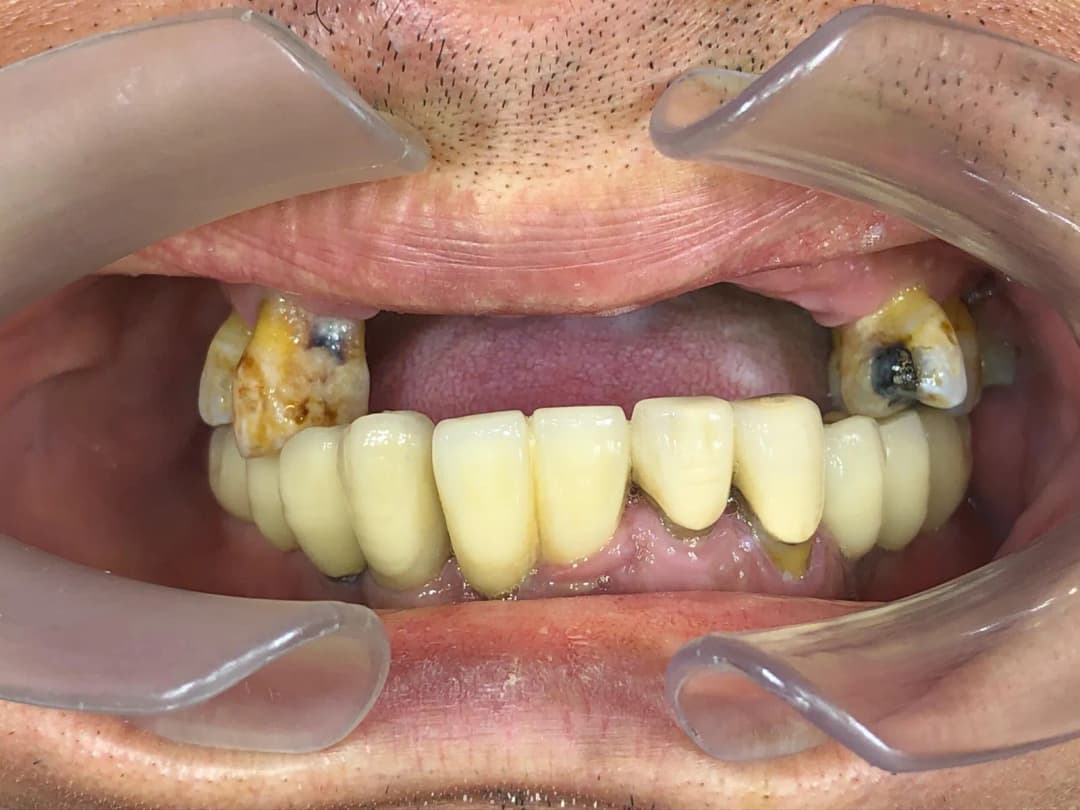
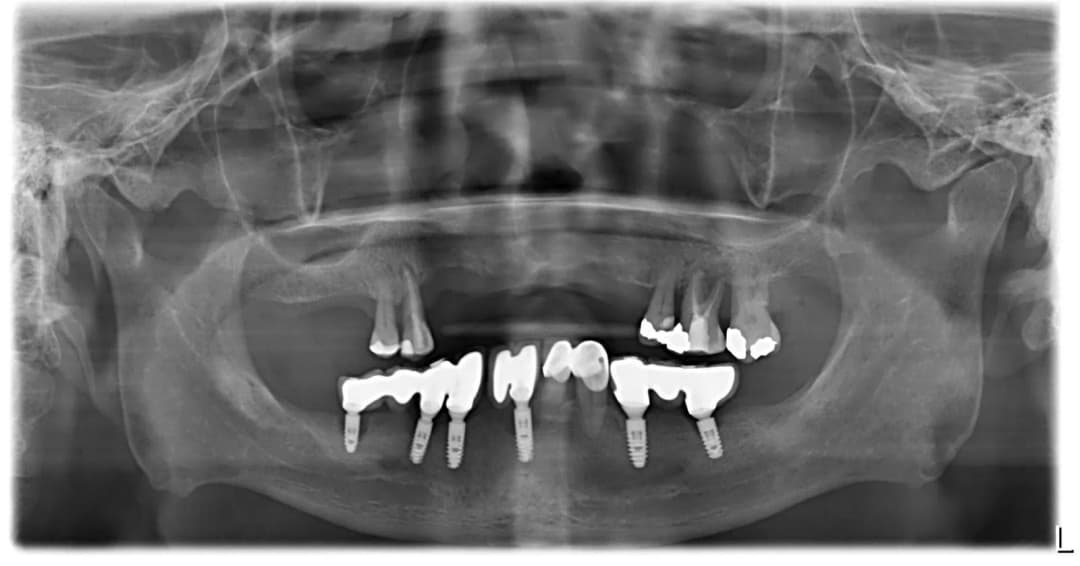
The patient presented with multiple severely decayed and mobile upper teeth, and an old implant in the lower jaw that had become inflamed, making chewing difficult and affecting appearance. Many patients at this stage ask the same question: "Is there anything left to save?" On clinical assessment, the decay and mobility of the remaining upper teeth ruled out tooth-by-tooth repair, and the inflamed lower implant also required removal. Even if retained, these teeth could not withstand chewing forces long term, and the time and cost of repeated treatment would be hard to justify. At this point, full rehabilitation of both arches became the more practical choice.
Why All-on-4? How Does It Compare with Other Options?
For complete or near-complete tooth loss, there are three common directions, each with its own role:
Conventional removable dentures: no surgery and lower cost, but they rest on the gums, chewing power is limited, they can loosen and shift, some patients need adhesive, they must be removed daily for cleaning, and some report effects on taste and speech.
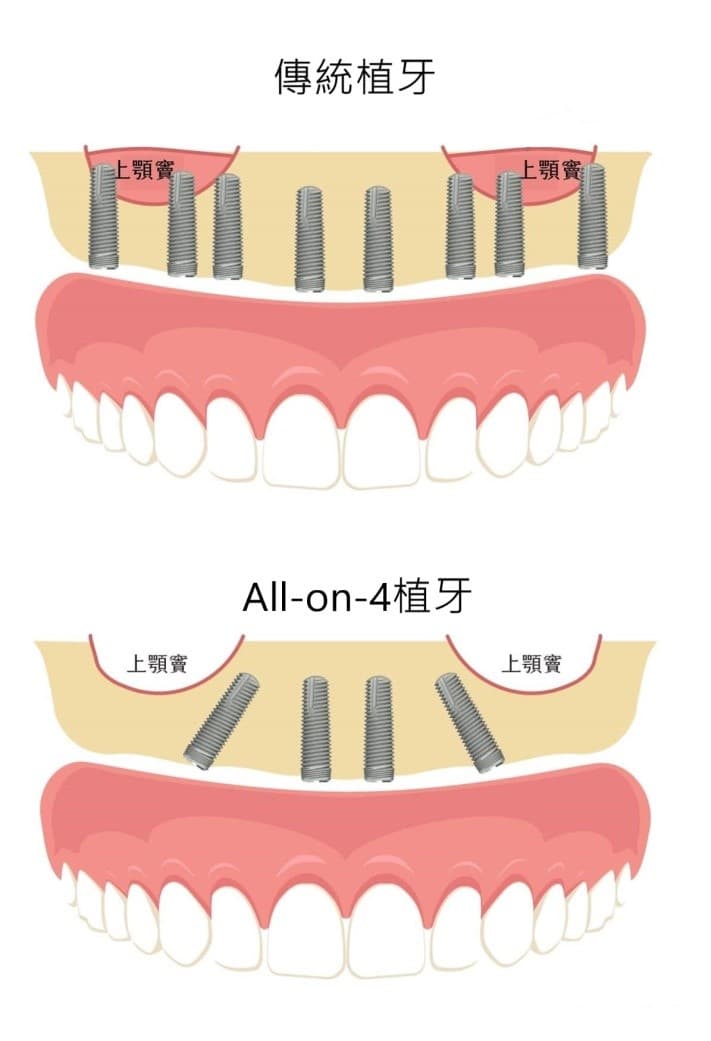
Tooth-by-tooth / multi-implant reconstruction: a dental implant is placed for each missing tooth, with results closest to natural teeth — but full-mouth reconstruction may require eight to ten or more implants, demands good bone volume, may need grafting in places, and involves a longer and costlier course of treatment.
All-on-4 fixed bridge: four implants (the two posterior ones tilted) support a complete fixed bridge. The tilted design makes use of the better bone in the anterior jaw and avoids structures such as the maxillary sinus and the inferior alveolar nerve, so many cases need no additional grafting; fewer implants are involved, surgery is more contained, and most cases can have a provisional bridge fitted on the day of surgery. The bridge is fixed to the implants and is not removed by the patient.
Between the two sits the implant-supported overdenture: a small number of implants "clip" a removable denture in place — more stable than a conventional denture, but still removed daily for cleaning. The key difference is that an overdenture is a removable denture that clips on more securely, while All-on-4 is a bridge fixed onto implants. Which is appropriate depends on bone volume, budget, lifestyle and patient preference, assessed together.
Why Isn't It for Everyone? Assessing Suitability
Although All-on-4 demands less bone than tooth-by-tooth implant treatment, prerequisites remain. The dentist will generally assess:
1. Bone volume and quality: CBCT imaging measures the height, width and density of the anterior jawbone — the basis for planning implant positions and judging whether same-day loading is possible.
2. Gum and periodontal history: even where the remaining teeth already require extraction, a history of periodontal disease can still raise the risk of peri-implantitis and affect long-term implant maintenance.
3. General health: uncontrolled diabetes, certain osteoporosis medications and a history of head-and-neck radiotherapy can all affect bone healing and must be discussed with the dentist in detail.
4. Lifestyle: smoking significantly impairs wound healing and long-term implant success, while bruxism (night grinding) increases the load on the bridge and implants and may call for a night guard.
5. Occlusion and the opposing teeth: both jaws must be considered together to ensure a sensible distribution of biting forces.
After assessment, some patients may be better served by other options, or may need periodontal or bone issues addressed first. "Not everyone can have it straight away" is precisely part of a responsible assessment.
Why the Right Team Matters — Failure Costs More Than You Think
Many patients don't realise this: with All-on-4 there are only four implants per arch, and every one is a load-bearing pillar with no spare. If an implant fails, it is not just the bridge that suffers — the failed site often loses further bone, and the ideal anterior implant positions are limited to begin with. At a redo, the remaining bone may no longer allow the original plan, and grafting — or even the far more demanding zygomatic implant approach — may be needed, at much greater time, cost and complexity. This case is a real example: the patient's old lower implant had failed with inflammation and ultimately had to be removed and re-planned, a clear illustration of why implant treatment should be done right the first time.
Getting it right first time matters far more than "fix it if it fails". That is also why this case used a multidisciplinary model: the oral and maxillofacial surgeon was responsible for surgical planning and execution — implant angle, depth and primary stability determine whether same-day loading is possible — while the prosthodontic team handled occlusal design and bridge fabrication, where the even distribution of biting forces directly affects implant longevity. The two specialties each played their part and cross-checked one another, supported by CBCT-guided planning and the facilities of a licensed Day Procedure Centre, managing the controllable risks one by one.
Diagnosis and Planning
Before treatment, a detailed pre-operative examination and CBCT (cone-beam CT) assessment measured bone quality and mapped the nerves and maxillary sinuses, allowing the angle and depth of all eight implants across both arches to be planned and the provisional bridges to be designed in advance, so that surgery day would run smoothly.
Surgical Phase (Oral & Maxillofacial Surgery)
On the day of surgery, the oral and maxillofacial surgeon removed the remaining upper teeth and the inflamed old lower implant, and placed eight implants the same day (four upper, four lower). Surgery took place in a licensed Day Procedure Centre, with anaesthesia or sedation arranged to suit the patient, allowing the procedure to be completed in a more relaxed state under the supervision of a professional team. Primary stability was measured as each implant was placed, and same-day loading proceeded only once the target values were met.
Immediate Restoration: Fixed Teeth the Same Day
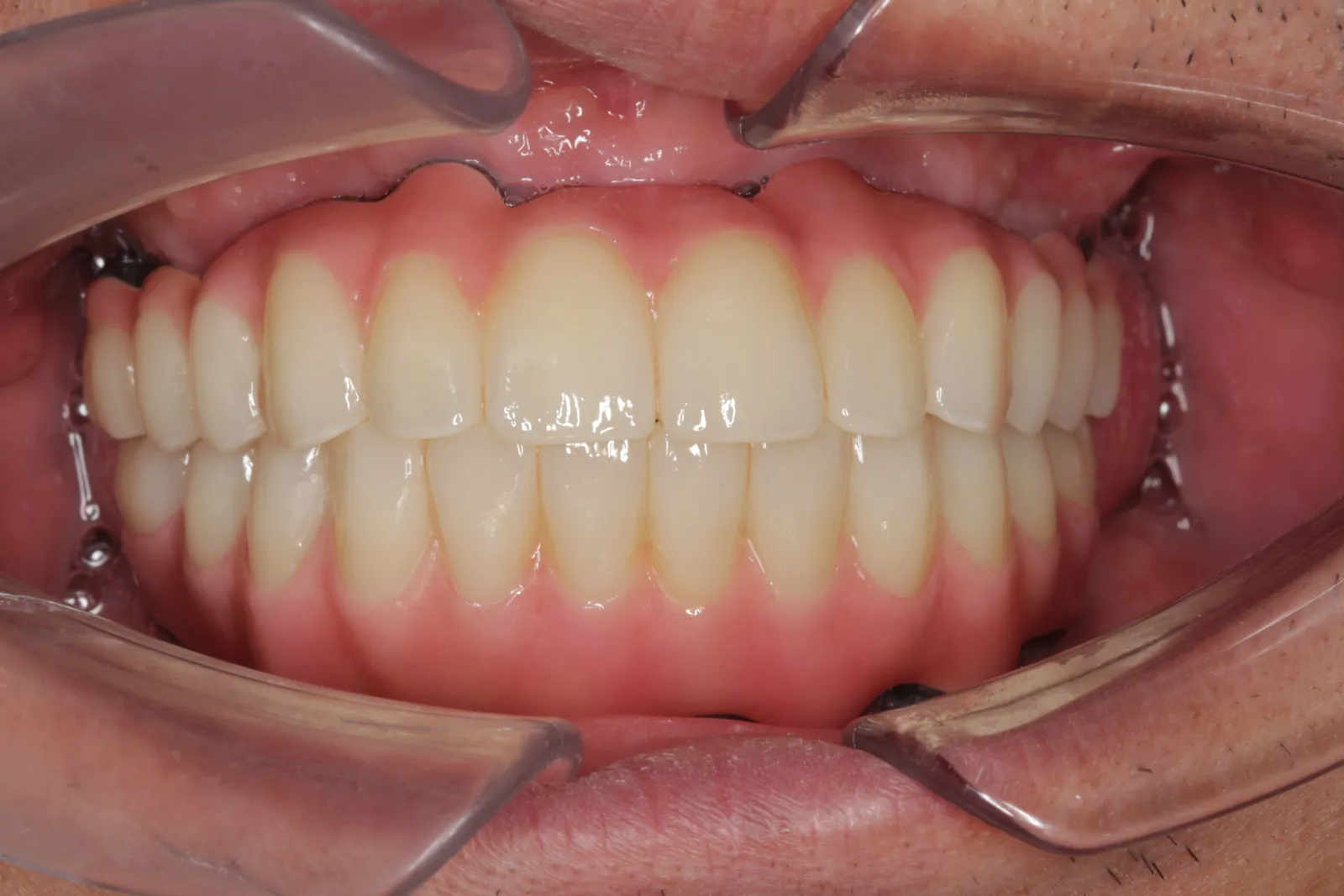
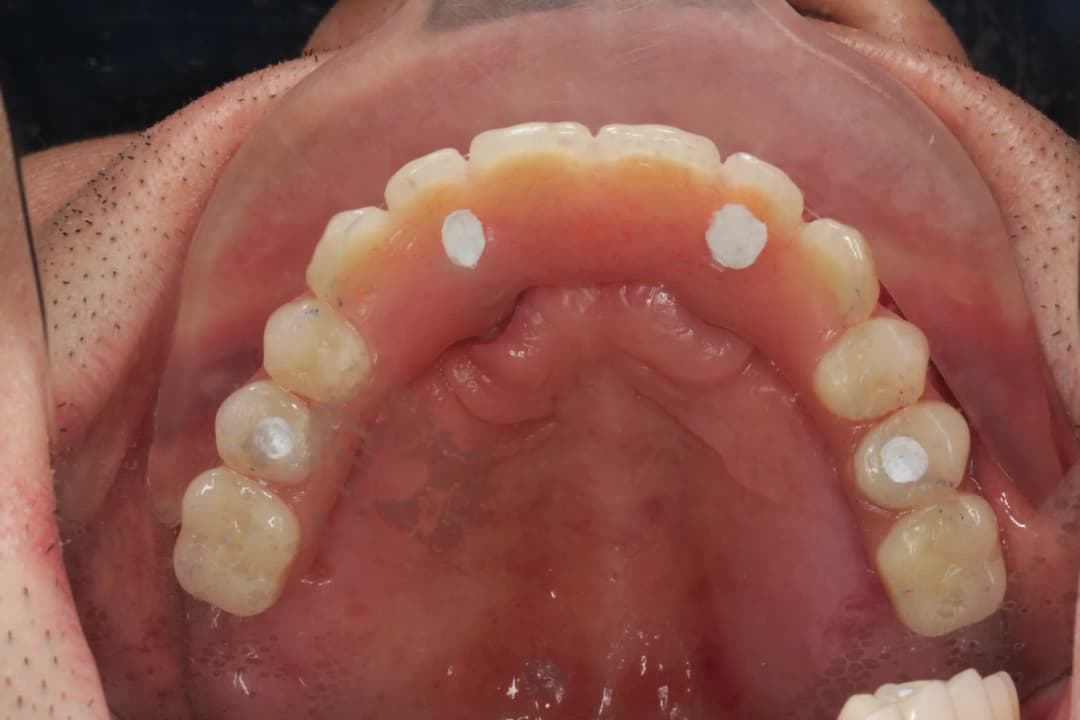
Once the implants reached sufficient primary stability, the patient received immediate provisional bridges the same day — fixed teeth restored on the day of surgery, with appearance and basic eating re-established immediately. The provisional bridge does more than provide "teeth to be seen with": through the healing period it stabilises soft-tissue form and guides gum remodelling, laying a more accurate foundation of fit and occlusion for the final restoration.
Recovery: What to Watch During the Three to Four Months
During osseointegration the implants gradually fuse with the bone — the critical window for the whole treatment. Patients generally need to keep to a soft diet initially and avoid biting hard foods with the provisional bridge; maintain oral hygiene and care for the surgical sites as instructed; stop smoking, or at least cut down substantially; and attend reviews on schedule so healing can be monitored. Any abnormality — persistent pain, a loosening bridge, swelling — should prompt an early call to the clinic rather than waiting for the next review.
Prosthetic Phase (Prosthodontics)
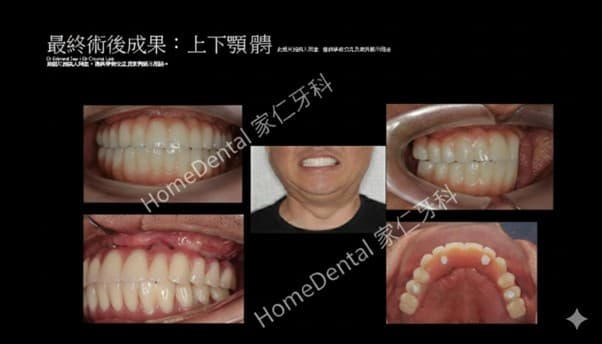
After around three to four months of osseointegration, the prosthodontic specialist designed and fitted the final implant-supported fixed bridges, fine-tuning occlusal contacts and appearance so that chewing forces are distributed more evenly, with fit and aesthetics a further step up from the provisional bridges.
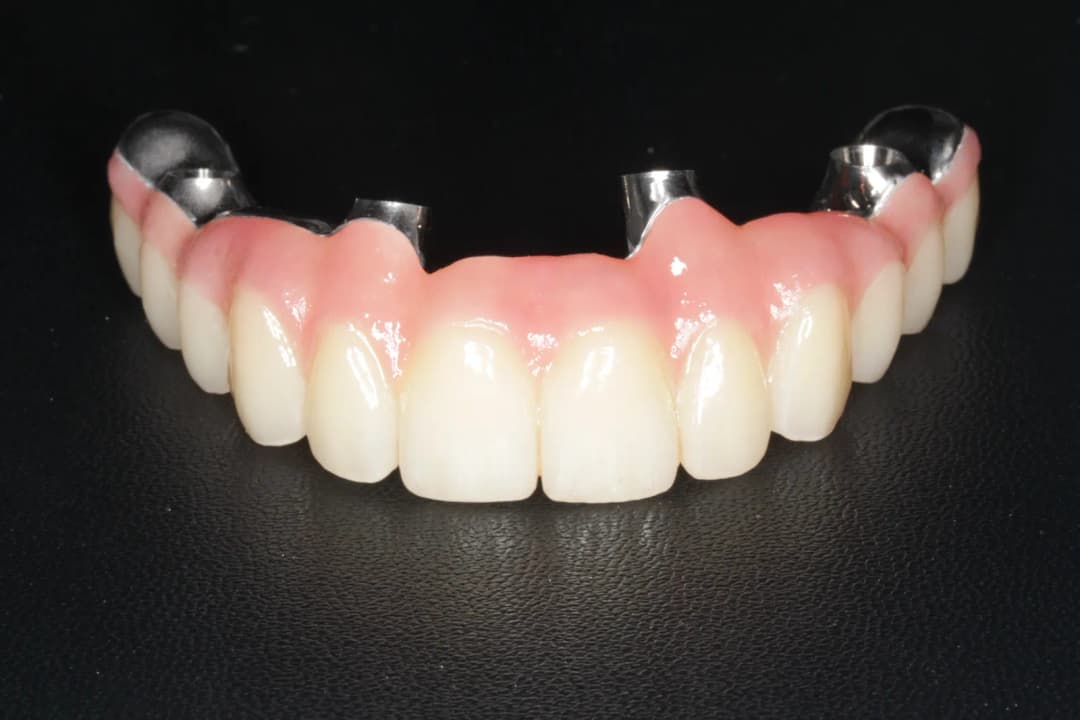
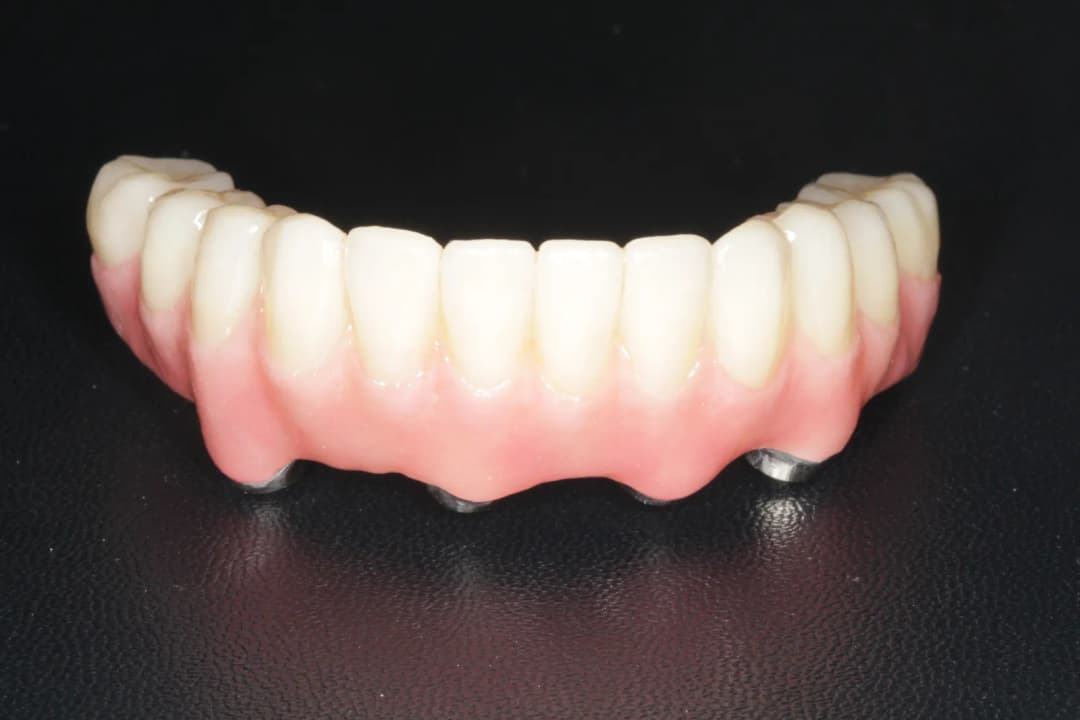
Completion and Maintenance: Why "Finished" Is Only the Beginning
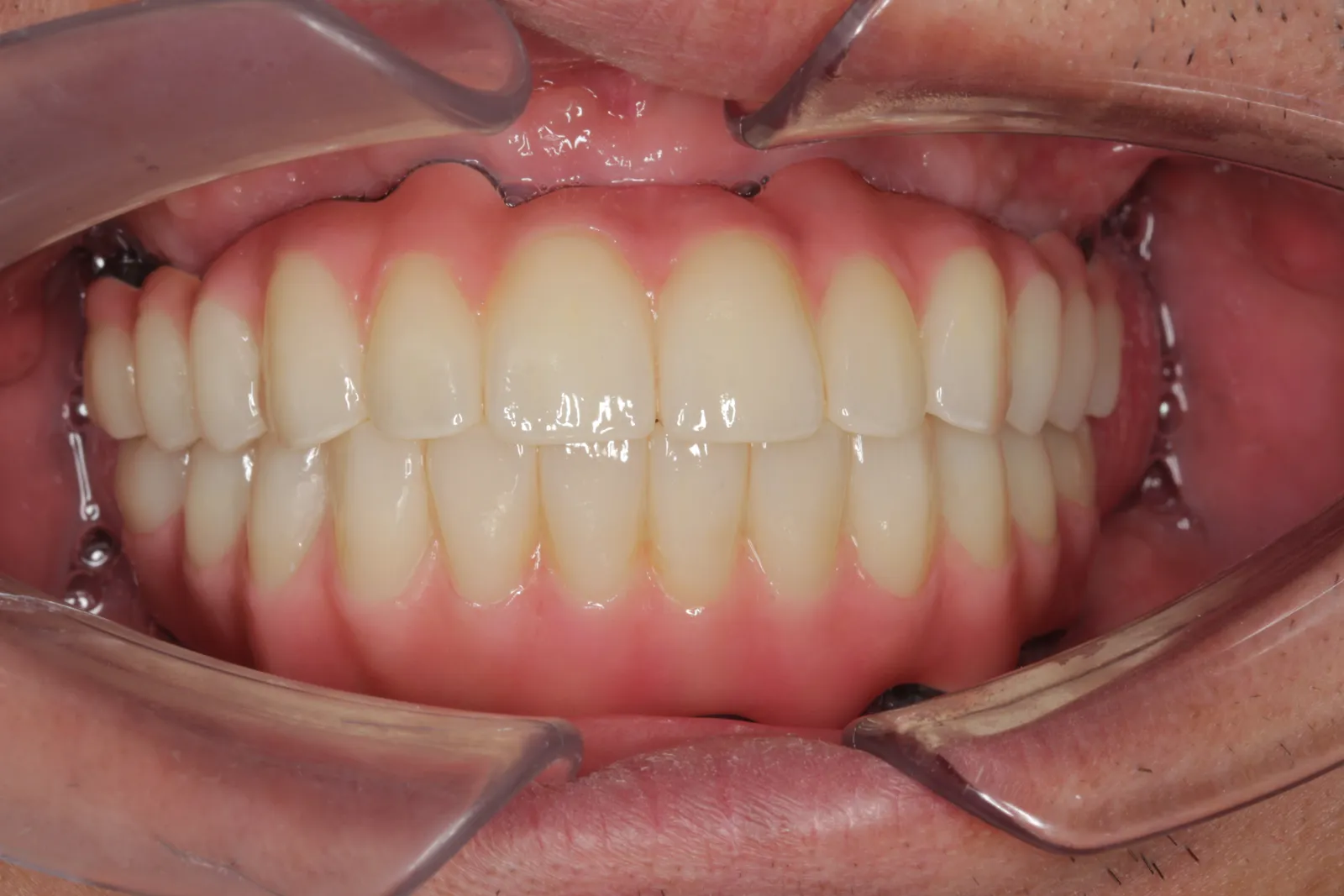
With treatment complete, the patient regained fixed teeth, with clear improvements in eating and appearance. But the fact that implants cannot decay does not mean they carry no risk: the tissues around implants can also become inflamed (peri-implantitis), often with no warning pain. Long-term maintenance advice includes:
1. Clean under the bridge daily — the space between bridge and gum is the key cleaning zone, generally needing interdental brushes, a water flosser or special floss.
2. Regular professional maintenance — attend reviews as advised for peri-implant checks, professional cleaning and occlusal checks, so problems are caught early.
3. Protective appliances — patients who grind their teeth at night should wear a night guard as advised to reduce the load on bridge and implants.
With good maintenance, an implant-supported bridge can serve for the long term. Individual treatment results vary from person to person.
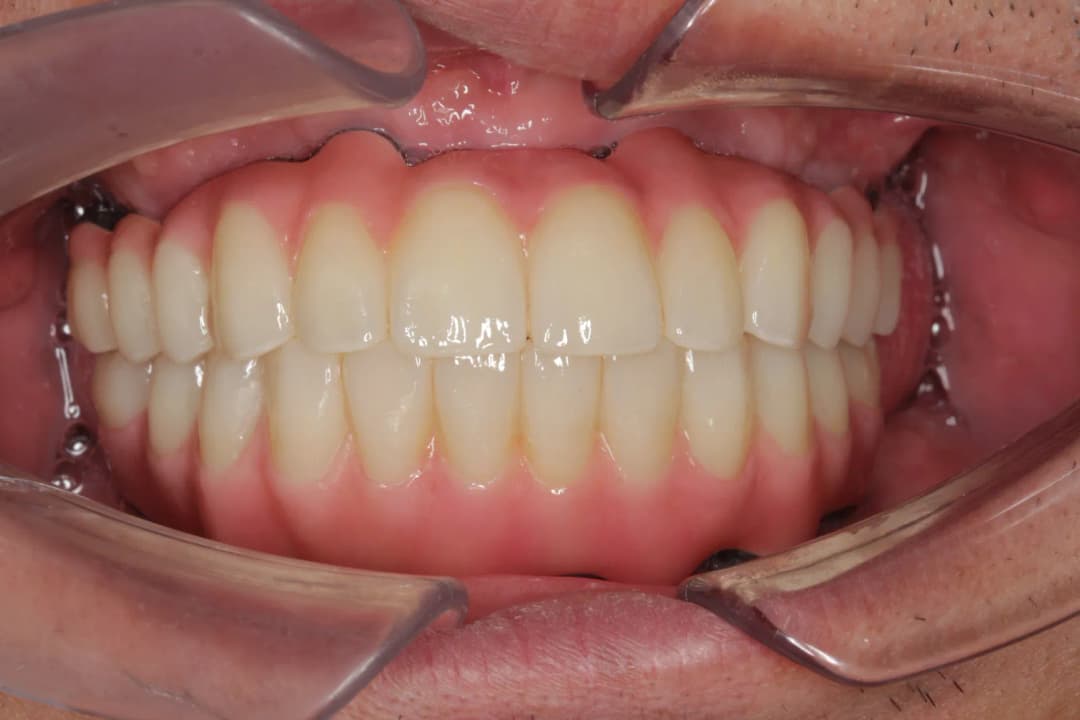
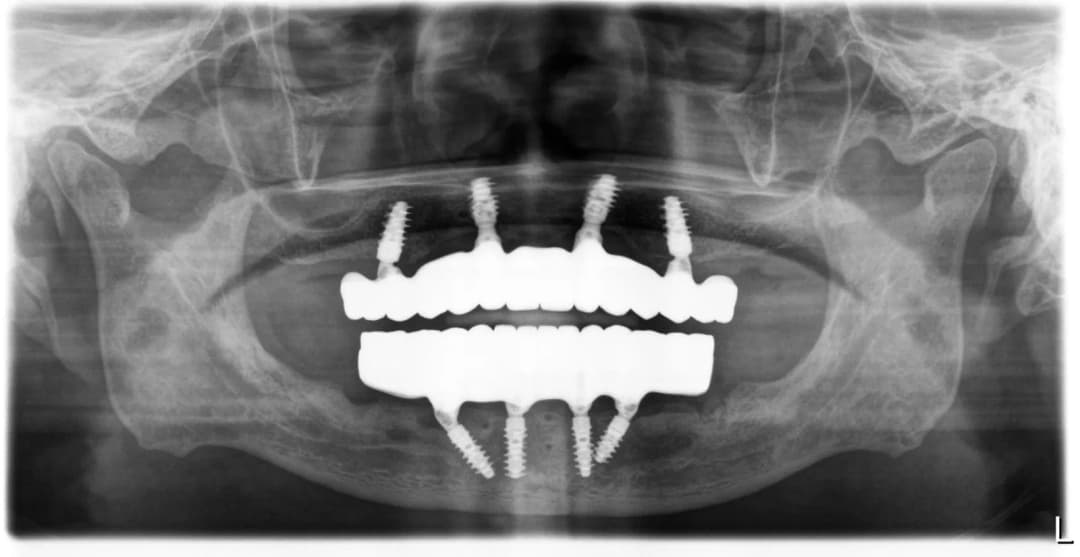
Common searches: readers often reach this article when searching for "All-on-4 Hong Kong", "full-mouth dental implants", "All-on-4 cost", "same-day teeth" or "full-arch rehabilitation". For the fee structure of implant treatment, see our implant cost page.
Disclaimer
This article describes a real treated case and is provided for reference only. The comparisons of treatment options and the indications discussed are general information, not advice directed at any individual reader. Individual results, treatment details and risks vary from person to person, and any treatment decision should be made after clinical assessment by a dentist.