The Role of Crowns and Bridges in Aesthetic Dental Restoration
In aesthetic dental restoration, crowns and bridgework are vital techniques for repairing damaged teeth. For issues such as broken, aged, or imperfect front teeth, these techniques not only restore dental aesthetics but also enhance overall oral health, delivering a confident, natural smile. Here, I’ll discuss the applications of crowns and bridges in various situations and their importance in aesthetic restoration.
Common Restoration Issues and Challenges
Many patients opt for full crowns or extended bridges as a quick solution for restoration, but these simplified approaches may present the following challenges:
1. Improper Crown or Bridge Design: Extended bridges or large restoration areas may not conform well to the tooth structure, creating gaps filled with adhesive, which can lead to gum inflammation and redness.
2. Cleaning Challenges: The complex structure of bridges makes it difficult to thoroughly clean interdental spaces, especially with floss or interdental brushes, increasing the risk of plaque and cavities.
3. Insufficient Aesthetic Considerations: Some restoration plans may not fully consider the patient’s facial proportions and the shape, width, and height of the teeth, impacting the overall appearance and natural look.
4. Loose Margins: When crown or bridge margins are not tightly sealed, bacteria can seep into the tooth structure, causing decay and potentially leading to tooth fracture.
High-Quality Aesthetic Restoration Plans
To achieve optimal aesthetic and functional results, I implement a phased restoration plan, beginning with expectation discussions and simulated testing to ensure the final shape, color, and alignment of restored teeth meet the patient’s requirements. This simulation not only satisfies aesthetic needs but also provides reassurance to the patient, helping to avoid discomfort after restoration.
Importance of Simulated Testing
Through simulated testing or temporary crowns, patients can preview the results of their restoration, ensuring that the tooth proportions, smile line, and color align with expectations, achieving the best aesthetic outcome. When necessary, the shape and height of the gums can also be adjusted for a more harmonious and natural look.
Risk and Technical Expertise Required
Secondary restoration is often more challenging and poses higher risks than the initial procedure. This is because the tooth structure is often worn down or reduced during the initial restoration, requiring specific protective techniques to minimize additional damage during re-restoration. In such cases, precision in margin design is crucial, as it avoids excessive reliance on adhesives, ensuring the stability and durability of the restoration.
Additionally, excessive tooth adjustment should be avoided, as overly sharp, triangular cuts can weaken fixation. Overall, when using crowns or bridges, tooth stability and durability must be considered, ensuring that the restoration is not only aesthetically pleasing but also secure and long-lasting.
Porcelain Veneers: Advantages, Limitations, and Suitable Applications
Many patients inquire about using porcelain veneers as an alternative to crowns. While porcelain veneers conform closely to teeth and are less invasive, their application is limited. For patients with weak enamel or deep bites, veneers may not be robust enough. Choosing veneers requires careful case selection and bite testing to ensure stable and durable bonding.
Doctor-Patient Communication: A Key to Successful Restoration
Good communication is key to a successful aesthetic restoration. By understanding the patient’s expectations and needs and incorporating professional recommendations into the restoration plan, a satisfying result can be achieved. In cases of poor occlusion or weakened tooth structure, appropriate orthodontic treatment may be a necessary first step, preventing excessive tooth damage, reducing muscle discomfort, headaches, or bite issues, and ensuring long-term comfort and health.
Crown and Bridge Services at Home Dental
Home Dental offers specialized crown and bridge restoration services, dedicated to providing aesthetic and functional solutions tailored to each patient’s needs. Key features of our services include:
- Personalized Treatment Plan: Each patient receives a customized assessment and treatment plan to address their specific oral health and aesthetic requirements.
- Advanced Technology: Our dental team employs state-of-the-art digital imaging and 3D scanning technology to deliver precise treatment planning and monitoring, enhancing treatment effectiveness and accuracy.
- Diverse Restoration Options: We offer a range of restoration options, from traditional crowns and bridges to innovative porcelain veneers, catering to different needs and lifestyles, and ensuring a natural, harmonious look.
- Comprehensive Patient Education: We prioritize patient education, helping each patient fully understand their treatment plan and follow-up care, allowing them to take an active role in their restorative journey.
- Post-Treatment Support: After treatment, we provide personalized care recommendations to ensure the long-term stability of crowns and bridges, underscoring our commitment to lasting oral health.
Frequently Asked Questions (FAQ)
-
How long does dental restoration take?
The duration of dental restoration varies depending on the complexity of the case and individual factors, generally ranging from a few weeks to several months. Our dentist will provide a personalized timeline during your initial consultation. -
Why should I choose high-quality restoration materials over cheaper options?
While lower-cost restorations may seem economical, they may compromise on material quality or follow-up care, impacting the outcome. We recommend considering the overall value, including the experience of the dentist, technology used, and service quality. High-quality restorations are a long-term investment in your smile and oral health. -
Why choose crowns or bridges over porcelain veneers?
While porcelain veneers are aesthetic and minimally invasive, crowns or bridges may be more suitable for patients with weak enamel or deep bites. Traditional restoration techniques provide greater stability and durability in these cases. Our dentist will evaluate your situation and recommend the most appropriate option.
Start Your Restoration Journey and Transform Your Smile
The restorative team at Home Dental provides not only professional services but also emphasizes personalized care. Contact Home Dental today to schedule a consultation, and let us develop the best restoration plan for you.
How to Make an Appointment
-
WhatsApp Button on the Website (Priority Recommendation) – Contact us now!
-
Call 3956 9387 (Office Hours)
Bonus: Case Studies
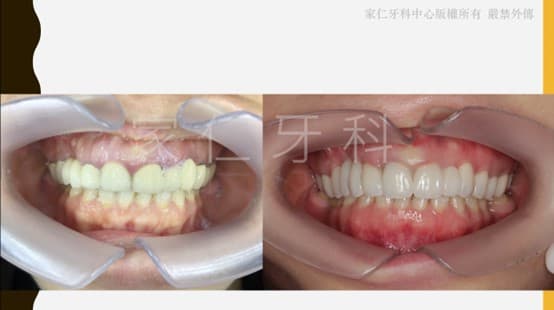
Left (Before Improvement - Poorly Designed Bridge with Gingivitis)
The left image shows a poorly designed bridge that doesn’t match the shape and color of the surrounding natural teeth, appearing bulky and unnatural. Due to the loose fit of the bridge margin, gum inflammation is present, evidenced by redness and swelling around the area, indicating irritation and discomfort. This design not only impacts aesthetics but also negatively affects gum health.
Right (After Improvement - Precision Design and Gingival Health Improvement)
The right image displays a redesigned bridge, perfectly matching the shape, size, and color of the surrounding natural teeth, providing a natural appearance. The bridge margin is tightly sealed, with healthy gums and no signs of redness. This result demonstrates that precise design can enhance aesthetic appeal and help maintain gum health, preventing inflammation.
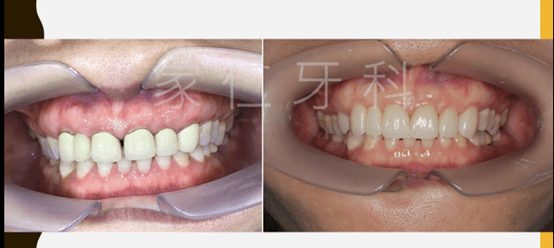
Left (Before Improvement - Poorly Designed Bridge with Noticeable Periodontal Issues)
The left image shows a poorly designed bridge, with visible gaps between teeth that indicate periodontal tissue degeneration and tooth shifting, suggesting signs of periodontal disease. The bridge’s shape and size appear unnatural and lack harmony with adjacent teeth. Additionally, the gums are red and swollen, likely due to an inadequate bridge margin fit, resulting in prolonged gum irritation and inflammation. This poor restoration affects not only aesthetics but also continually harms gum health.
Right (After Improvement - Precision Design and Periodontal Health Restoration)
The right image displays a redesigned bridge, with harmonious shape, size, and color in line with the patient’s natural teeth. The gap issue is resolved, and the bridge margin is tightly fitted, preventing food residue buildup and improving cleanliness. The gums appear healthy with no redness, showing that inflammation has been eliminated. This design not only enhances aesthetics but also promotes periodontal health recovery, preventing further degeneration.
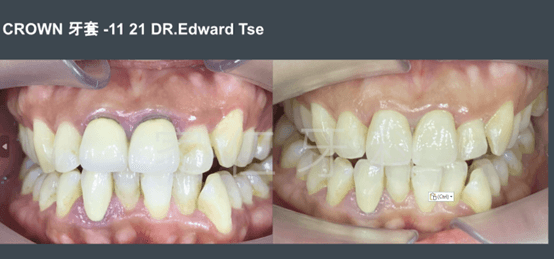
Left (Before Improvement - Poor Marginal Fit and Disproportionate Proportions)
The left image shows a poorly designed crown with a rough outcome despite using the same porcelain material as the right image. The crown margin is not well-fitted, exposing discolored parts of the natural tooth, detracting from the appearance. The crown's length-to-width ratio has not been carefully adjusted, making it incompatible with the patient’s facial structure and smile curve, resulting in an unnatural look that lacks aesthetic appeal.
Right (After Improvement - Precision Marginal Fit and Proportionate Design)
The right image shows a carefully designed crown, where the same porcelain material achieves a significantly different effect. The crown margin perfectly conforms to the tooth, with no exposed discoloration, achieving a natural, harmonious look. The length-to-width ratio has been meticulously adjusted, perfectly complementing the patient’s facial structure and smile curve, achieving optimal aesthetic and functional effects for a more confident and balanced smile.
Further Details? Please watch our exclusive video - Solving Common Dental Crown Issues — Expert Tips for Fixing Unsatisfactory Treatments